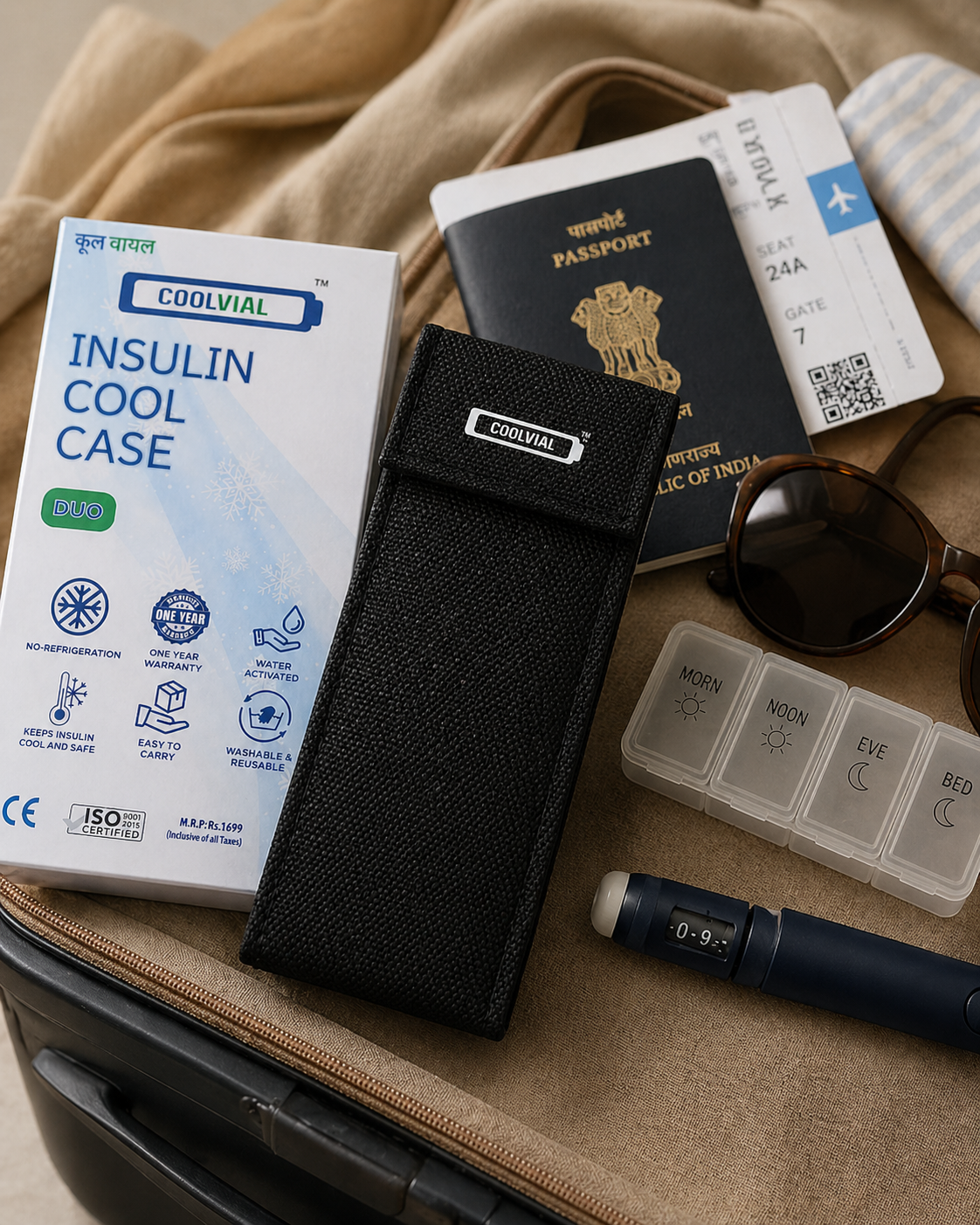
Reviewed by the COOLVIAL Editorial Team — specialists in insulin storage for Indian climate conditions.
Chennai, with its vibrant culture, scorching summers, and often unpredictable monsoon downpours, is no stranger to power cuts. For the nearly 1 in 5 adults living with diabetes in Tamil Nadu (Source: ICMR-INDIAB study, 2020), ensuring insulin remains viable during these outages is not just a concern, it’s a critical health priority. Insulin, a life-saving medication, is highly sensitive to temperature fluctuations and can lose its efficacy if not stored correctly, typically between 2-8°C when unopened. This comprehensive power cut survival guide for Chennai diabetics offers practical, actionable strategies to keep your insulin safe and potent, whether the outage lasts 30 minutes or extends beyond 24 hours. Based on analysis of insulin storage queries from Chennai diabetics, we understand the unique challenges faced in this bustling city and provide tailored solutions.
This guide will walk you through Chennai’s specific power patterns, equip you with an essential emergency kit, and outline what to do in various outage scenarios. From the brief flickering lights in T Nagar to prolonged monsoon-induced blackouts in Adyar, being prepared is your best defence.
Table of Contents
- Chennai’s Unique Power Landscape: Understanding Outage Patterns
- The Golden Rule of Insulin Storage: Why Temperature Matters
- Your Personal Power Cut Survival Guide Kit: Essential Preparations
- Scenario 1: The Short Snag (30 Minutes to 2 Hours)
- Scenario 2: The Extended Interruption (2 Hours to 6 Hours)
- Scenario 3: The Day-Long Dilemma (6 Hours to 12-16 Hours)
- Scenario 4: The Long Haul (24 Hours and Beyond)
- Beyond the Grid: Chennai’s Evolving Power Backup Solutions
- Proactive Steps for Every Chennai Diabetic
- Frequently Asked Questions (FAQ)
- Conclusion
- Methodology Note
- Medical Disclaimer
1. Chennai’s Unique Power Landscape: Understanding Outage Patterns
Chennai’s electricity supply, managed primarily by TANGEDCO (Tamil Nadu Generation and Distribution Corporation), faces distinct challenges throughout the year. Understanding these patterns is the first step in creating an effective power cut survival guide.
- Monsoon Outages (October-December): The Northeast monsoon, unlike the rest of India, is Chennai’s main rainy season. Heavy rains, strong winds, and occasional cyclones frequently lead to power disruptions.
- Affected Areas: Low-lying areas and older neighbourhoods in South Chennai (Adyar, Velachery, OMR) and North Chennai (Perambur, Tondiarpet) are particularly vulnerable to cable faults and transformer issues due to waterlogging and falling trees.
- Peak Summer Load Shedding (April-June): Chennai’s summers are intense, with temperatures often soaring between 35-40°C. The surge in air conditioning usage puts immense strain on the grid, leading to planned and unplanned load shedding.
- Affected Areas: This affects all parts of the city, but areas with older infrastructure or high population density, like parts of West Chennai (Anna Nagar, Vadapalani), can experience more frequent and longer cuts.
- Old Building Challenges: Many parts of Central Chennai (T Nagar, Nungambakkam) and older sections of Anna Nagar feature older buildings that may lack modern wiring or robust backup power solutions, making them more susceptible to prolonged outages without immediate relief.
- Maintenance Outages: Routine maintenance work can also cause scheduled power cuts, though these are usually announced in advance.
Being aware of these local patterns allows you to anticipate and prepare. For example, knowing that monsoon season brings higher risks means proactively charging devices and preparing your insulin cooling solutions. Pin codes such as [Verify in 2026] in Velachery or [Verify in 2026] in Tondiarpet are historically known for higher outage frequencies, making preparedness even more crucial for residents there.
2. The Golden Rule of Insulin Storage: Why Temperature Matters
Insulin is a protein, and like many proteins, its structure is sensitive to temperature extremes. Both freezing and excessive heat can irreversibly damage insulin, rendering it less effective or even completely inactive. Using compromised insulin can lead to uncontrolled blood sugar levels, posing serious health risks.
- Unopened Insulin: Should be stored in a refrigerator, ideally between 2-8°C, until its expiry date.
- Opened Insulin: Can be kept at room temperature (typically up to 25-30°C, depending on the specific insulin type) for 28-42 days after opening. However, in Chennai’s hot and humid climate, where ambient temperatures regularly exceed 30°C, even opened insulin should ideally be kept as cool as possible.
Table: Insulin Storage Guidelines
| Insulin State | Recommended Storage Temperature | Max Duration at Room Temperature (typically <25-30°C) | Key Action in Chennai’s Heat (>30°C) |
|---|---|---|---|
| Unopened Vials/Pens | 2-8°C (Refrigerator) | Not recommended for prolonged periods | Keep refrigerated until needed. |
| Opened Vials/Pens | Room Temp (up to 25-30°C) | 28-42 days (check specific brand) | Use an evaporative cooling case like COOLVIAL Duo to stay below 30°C. |
| During Power Cut | Maintain <25-30°C | As long as possible, monitor carefully | Isolate in a cooler, use cooling cases. |
For more detailed advice on handling the local climate, refer to our article on How to Store Insulin in Chennai Summer Heat — A Local’s Guide.
3. Your Personal Power Cut Survival Guide Kit: Essential Preparations
A well-stocked emergency kit is your first line of defence against power outages. Think of it as your personal power cut survival guide, always ready for action.
- Insulin Cooling Solutions:
- COOLVIAL Duo: An essential evaporative cooling case that holds 2 pens + 1 vial, keeping insulin cool for 12-16 hours without electricity. It’s water-activated, reusable, and perfect for Chennai’s climate.
- Ice Packs/Gel Packs: Several reusable gel packs, kept frozen in your freezer.
- Insulated Cooler Bag: A small, well-insulated bag or box specifically for insulin.
- Monitoring Tools:
- Digital Thermometer: A small, accurate thermometer to monitor the temperature inside your cooler or fridge.
- Torch/Headlamp: For visibility during blackouts.
- Communication & Information:
- Fully Charged Power Bank: To keep your phone charged for emergencies.
- Important Contact Numbers: Your doctor, nearest 24-hour pharmacy (e.g., Apollo Pharmacy or MedPlus), and a trusted neighbour, written down or easily accessible offline.
- TANGEDCO Customer Care Number: For outage updates.
- Backup Insulin Supply: If possible and advised by your doctor, keep a small emergency supply of insulin that can be used if your main stock is compromised.
Checklist for Your Power Cut Emergency Kit:
- COOLVIAL Duo insulin cooling case
- Frozen gel packs (at least 2-3)
- Small insulated cooler bag
- Digital thermometer
- Power bank
- Torch/headlamp
- Emergency contact list (doctor, pharmacy, neighbour)
- Backup insulin (if medically advised)
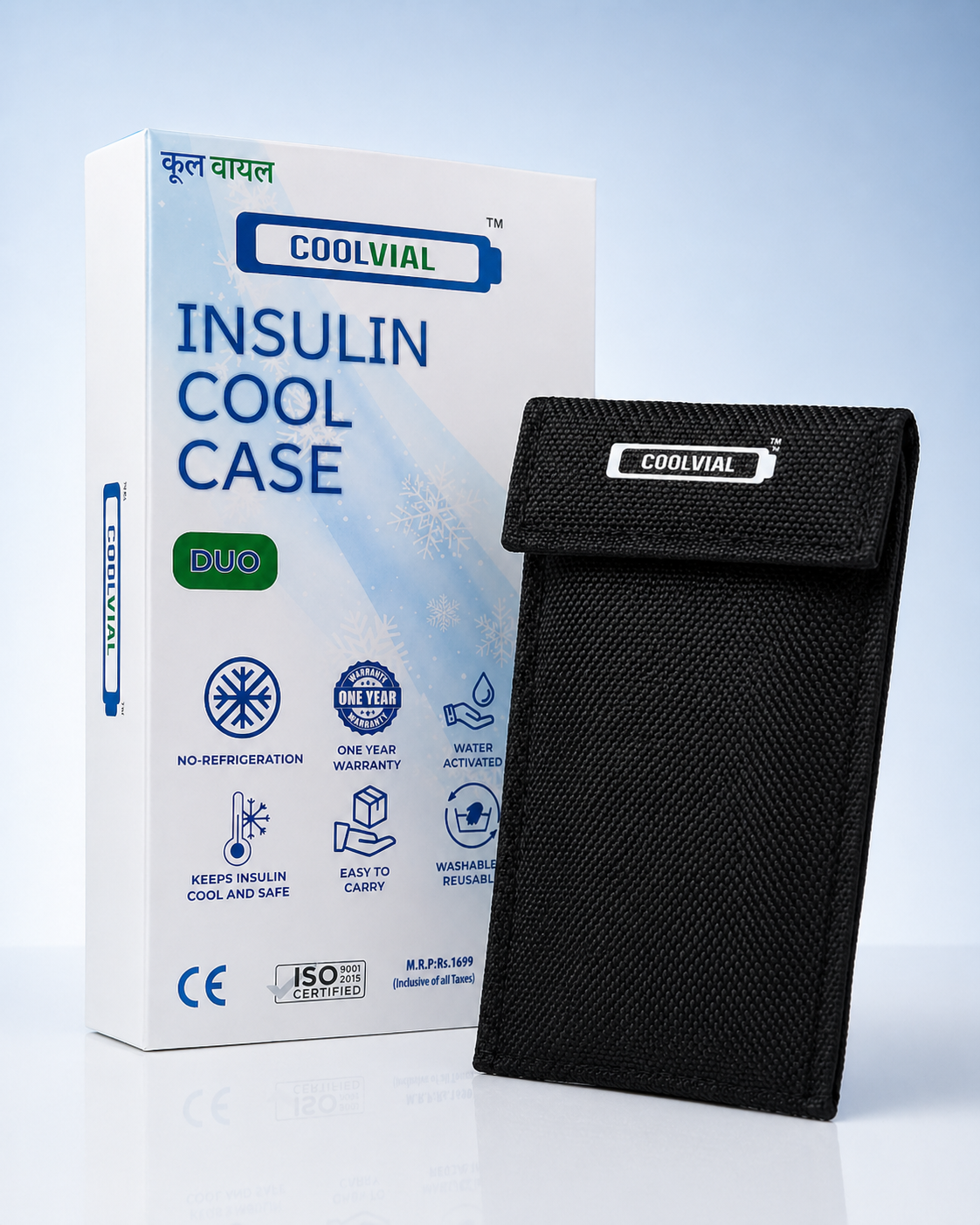
5 Essential Power Cut Survival Strategies for Diabetics in Chennai — What To Do When the Grid Goes Down
COOLVIAL keeps insulin safe in India's heat. 48+ hours, no electricity needed.
4. Scenario 1: The Short Snag (30 Minutes to 2 Hours)
Chennai experiences numerous brief power cuts, often lasting under two hours. While frustrating, these usually pose minimal risk to refrigerated insulin if handled correctly.
- Do Not Open the Refrigerator: The most crucial rule. A closed refrigerator can maintain its internal temperature for several hours if not opened. Every time you open the door, precious cold air escapes, and warm ambient air rushes in.
- Monitor the Situation: Keep an eye on the power status. If it’s a scheduled cut, you’ll likely know the duration. For unexpected outages, check TANGEDCO’s social media or call their helpline (if your phone is charged).
- Temperature Check (After Power Restored): Once power returns, allow the refrigerator to cool down completely before checking the internal temperature with your thermometer. If it’s still within the safe range (2-8°C), your insulin is likely fine.
Actions for Short Power Cuts:
- Keep refrigerator door firmly closed.
- Avoid unnecessary opening of fridge/freezer.
- Monitor power restoration updates.
- Once power returns, allow fridge to stabilize, then check temperature.
5. Scenario 2: The Extended Interruption (2 Hours to 6 Hours)
When a power cut extends beyond two hours, especially during Chennai’s hot summers or humid monsoons, it’s time to take more active measures to protect your insulin.
- Prepare Your Cooler: Retrieve your pre-frozen gel packs from the freezer and place them in your insulated cooler bag.
- Transfer Insulin: Carefully transfer your insulin pens and vials from the refrigerator into the cooler bag.
- Avoid Direct Contact: Ensure the insulin does not directly touch the frozen gel packs, as this could cause it to freeze, which is as damaging as excessive heat. Wrap insulin in a cloth or paper towel, or use a separate compartment if your cooler has one.
- Monitor Cooler Temperature: Place your digital thermometer inside the cooler to monitor the temperature. Aim to keep it between 2-8°C, or at least below 25-30°C for opened insulin.
- Minimize Opening: Just like your refrigerator, open the cooler only when absolutely necessary to maintain the internal temperature.
Using an insulated cooler with gel packs can effectively keep insulin cool for several hours. For instance, a quality cooler in Chennai’s 30-35°C ambient temperature can maintain sub-10°C temperatures for 4-6 hours, depending on insulation quality and initial chill.
6. Scenario 3: The Day-Long Dilemma (6 Hours to 12-16 Hours)
This is where passive cooling methods, like evaporative cooling cases, become indispensable, especially in Chennai’s challenging climate. If the power cut extends for half a day or more, your COOLVIAL Duo is your best friend.
- Activate Your COOLVIAL Duo: This is where the magic of evaporative cooling comes into play. The COOLVIAL Duo is designed to keep insulin cool for 12-16 hours, even in ambient temperatures of 25-40°C, without any electricity, ice, or refrigeration. It works by simply immersing it in water.
- Immerse: Submerge the inner pouch of your COOLVIAL Duo in cold water for 5-10 minutes.
- Drain: Remove the pouch and gently shake off excess water.
- Insert: Place your insulin pens and/or vials into the activated pouch.
- Enclose: Insert the pouch into the outer case.
- How it Works: The special crystals in the pouch absorb water and expand into a gel, which then slowly evaporates, drawing heat away from the insulin inside. This creates a consistently cool environment.
- Product Advantage: The COOLVIAL Duo holds 2 pens and 1 vial, making it ideal for managing multiple insulin types or a full day’s supply. It’s CE certified, ISO 9001:2015 compliant, and comes with a 1-year warranty, offering peace of mind. As a Made in India product, it’s specifically engineered for local conditions.
- Comparison: While other brands like FRIO offer similar evaporative cooling solutions (often priced around Rs 1,900), and simpler insulated pouches like Outer Woods OW-12 (around Rs 999) provide basic insulation, the COOLVIAL Duo strikes an optimal balance of capacity, cooling duration, and affordability. You can order your COOLVIAL insulin cool case today.
- Reactivation: If the power cut continues, you can reactivate your COOLVIAL Duo every 12-16 hours by re-immersing it in water.
By actively using an evaporative cooling case, you significantly extend the safe storage period for your insulin, making it a vital component of any robust power cut survival guide. For general information on insulin storage, please visit our insulin storage tips page.
7. Scenario 4: The Long Haul (24 Hours and Beyond)
When power outages stretch beyond a full day, as can happen during severe monsoon storms or grid failures, you need to tap into community resources and emergency services. This requires a proactive power cut survival guide mindset.
- Neighbours with Backup Power: In Chennai’s housing societies and apartment complexes, it’s common for some residents or the society itself to have generators or inverters.
- Apartment Buildings: Many modern apartment complexes in areas like Velachery, OMR, and Anna Nagar have centralized generator backup for common areas and sometimes even individual flats. Enquire with your association.
- Independent Houses: While less common for full-home backup, some independent house owners, particularly in areas like Adyar and Nungambakkam, might have personal inverters capable of running a refrigerator for short periods.
- Action: Reach out to trusted neighbours. Politely ask if they have a working refrigerator running on backup power where you could temporarily store your insulin. Always offer to compensate them for the electricity used.
- Nearest 24-Hour Pharmacies: Chennai has several 24-hour pharmacies that maintain power backup and refrigerated storage for critical medications.
- Apollo Pharmacy: Numerous branches across Chennai, including those near Apollo Hospitals (Greams Road), often have 24/7 operations and reliable cold storage.
- MedPlus: Another large chain with many outlets, some of which operate 24 hours.
- Trust Pharmacy, Vijaya Medicals, Madras Pharmacy: Check for their nearest 24-hour branches.
- Action: Call ahead to confirm their 24-hour status and if they can temporarily store insulin for emergencies. Be prepared to travel. For a comprehensive list, see our 24-Hour Pharmacies in Chennai for Insulin Emergencies — Updated List.
- Hospital Pharmacies: Major hospitals in Chennai have dedicated pharmacies that are open 24/7 and equipped with robust cold storage.
- Apollo Hospitals (Greams Road): A prime option for urgent needs.
- MIOT International (Manapakkam): Another reliable choice, particularly for South Chennai residents.
- Madras Medical Mission (Mogappair): Serves West and North Chennai effectively.
- Action: As a last resort, you can approach these hospital pharmacies. They understand medical emergencies and might be able to assist with temporary storage or provide fresh insulin if yours is compromised.
Emergency Contact List (Beyond 24-Hour Power Cuts):
- Your Doctor/Diabetologist: [Verify in 2026]
- Nearest Apollo Pharmacy (24-hour branch): [Verify in 2026]
- Nearest MedPlus (24-hour branch): [Verify in 2026]
- Apollo Hospitals (Greams Road) Emergency Desk: [Verify in 2026]
- Trusted Neighbour: [Verify in 2026]
8. Beyond the Grid: Chennai’s Evolving Power Backup Solutions
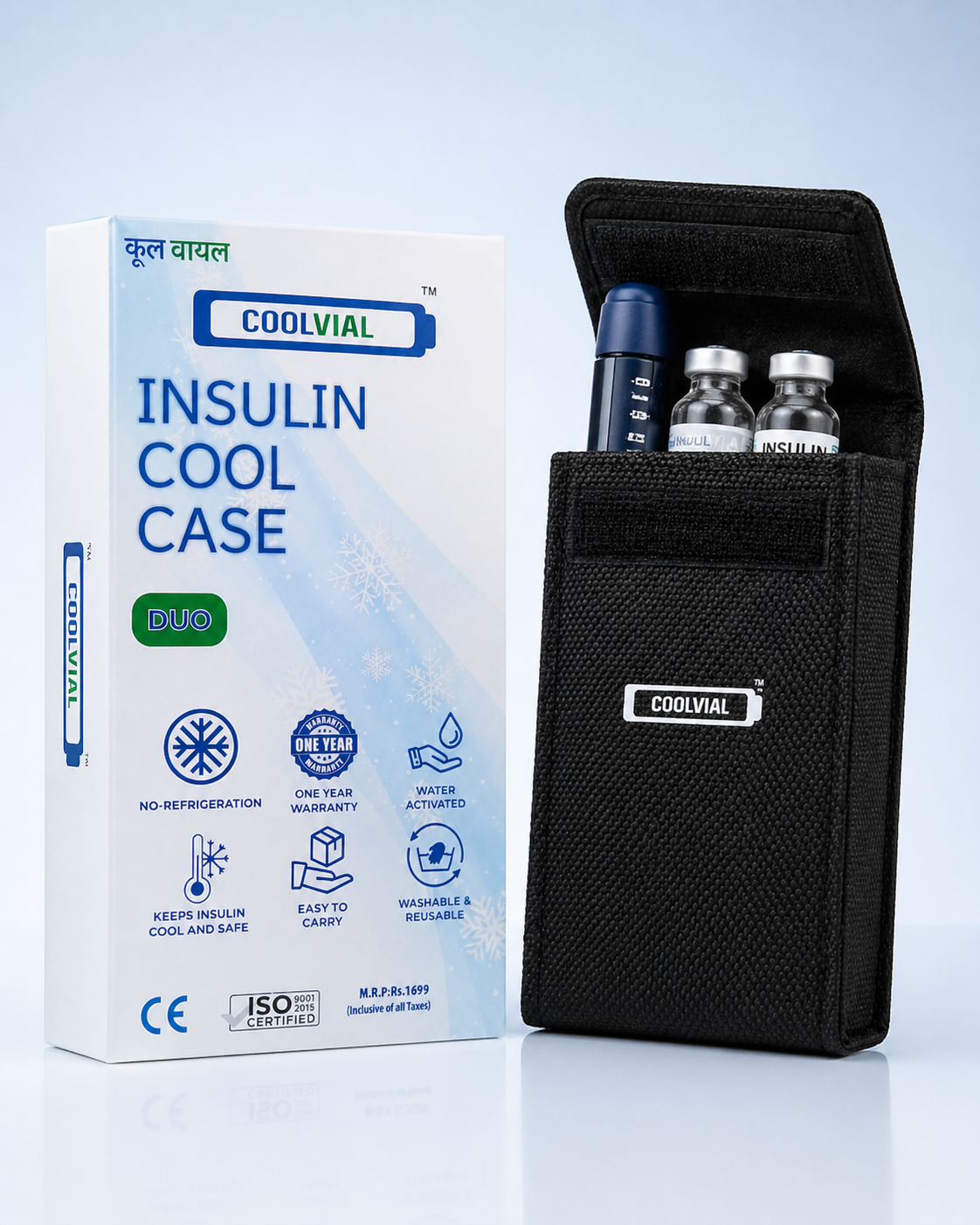
5 Essential Power Cut Survival Strategies for Diabetics in Chennai — What To Do When the Grid Goes Down
Insulin at 2-8°C for 48+ hours. Trusted by 10,000+ Indian diabetics.
Chennai’s residents are increasingly investing in personal and community-level power backup solutions, driven by the city’s power patterns. Understanding these options can inform your long-term power cut survival guide strategy.
- Generator Culture: Diesel generators are common in commercial establishments, larger apartment complexes, and some independent houses. They provide robust backup but come with noise, fuel costs, and maintenance.
- Inverter Culture: Battery-backed inverters are ubiquitous in Chennai homes. They typically power essential loads like lights, fans, and sometimes a television. While most household inverters cannot run a refrigerator for long durations, some higher-capacity models can.
- Apartment vs. Independent House Realities: Apartment dwellers often rely on society-wide generators, while independent house owners have more control over their personal inverter capacity.
- Solar Inverter Setups: A growing trend, especially in Chennai’s suburbs and newer residential developments. These systems combine solar panels with inverters and batteries, offering a sustainable and often more reliable long-term solution. They can significantly reduce reliance on the grid, even powering refrigerators during the day.
Table: Pros and Cons of Common Power Backup Options in Chennai
| Backup Option | Pros | Cons | Typical Use Case |
|---|---|---|---|
| Diesel Generator | High power output, can run most appliances | Noisy, fuel costs, air pollution, maintenance | Large apartments, commercial, some independent homes |
| Battery Inverter | Quiet, relatively affordable, runs essential loads | Limited capacity (often not for fridge), battery replacement costs | Most homes, apartments without central backup |
| Solar Inverter | Renewable, reduces electricity bills, eco-friendly | Higher initial investment, weather-dependent (less at night/monsoon) | Growing in suburbs, environmentally conscious homes |
Discuss with your housing society or consider personal investment in a robust inverter or solar solution if frequent, long power cuts are a concern in your area.
9. Proactive Steps for Every Chennai Diabetic
Beyond immediate responses, long-term preparedness is key to a stress-free power cut survival guide.
- Regular Kit Checks: Inspect your emergency kit every six months. Recharge power banks, check expiry dates of any backup insulin (if stored), and ensure your COOLVIAL Duo is in good condition.
- Educate Household Members: Ensure everyone in your home knows where the insulin is stored, how to use the cooling case, and what to do during a power cut.
- Doctor Consultation: Discuss your power cut plan with your endocrinologist or diabetologist. They can offer personalized advice, especially regarding backup insulin supplies and how to adjust dosing if insulin potency is ever in doubt.
- Stay Informed: Follow TANGEDCO’s official channels for weather warnings and planned maintenance announcements. Local news can also provide updates during major grid disruptions.
- Community Engagement: Connect with other diabetics in your community. Sharing experiences and resources can be invaluable.
For a broader perspective on managing your condition in Chennai, explore our Complete Diabetes Care Guide for Chennai Residents — 2026 Edition.
Frequently Asked Questions (FAQ)
Q: How long can insulin stay outside the fridge during a power cut? A: Unopened insulin should ideally be kept refrigerated (2-8°C). Once removed, or if opened, it can typically be stored at room temperature (up to 25-30°C) for 28-42 days depending on the specific brand. In Chennai’s heat, using an evaporative cooling case like COOLVIAL Duo is crucial to maintain a safe temperature range during power cuts.
Q: Can I use regular ice packs directly with insulin? A: No, direct contact with regular ice packs can freeze insulin, rendering it ineffective. Always wrap insulin in a cloth or paper towel, or use a barrier, to prevent direct contact with frozen packs, or opt for a specialized cooling case.
Q: What is the ideal temperature for insulin storage? A: Unopened insulin should be stored between 2-8°C in a refrigerator. Opened insulin or insulin in use can be stored at room temperature, typically up to 25-30°C, for its active period (e.g., 28 days), but lower temperatures are always better in hot climates like Chennai.
Q: Where can I buy a COOLVIAL Duo in Chennai? A: The COOLVIAL Duo can be ordered directly from coolvial.com. You can also contact us via WhatsApp at wa.me/918766952300 for assistance with your purchase.
Q: How often should I check my emergency insulin kit? A: It is recommended to check your emergency insulin kit every six months. This includes verifying the charge of your power bank, checking the expiry dates of any backup insulin, and ensuring your COOLVIAL Duo is ready for activation.
Q: What if my insulin accidentally freezes during a power cut? A: If your insulin has frozen, even partially, it should be discarded immediately. Freezing damages the protein structure of insulin, making it ineffective and potentially harmful. Do not use it, even if it thaws.
Q: Does the COOLVIAL Duo need to be refrigerated before use? A: No, the COOLVIAL Duo does not require refrigeration. It is activated by simply immersing the inner pouch in cold water for 5-10 minutes, making it ideal for use during power cuts when refrigeration is unavailable.
Conclusion
Navigating power cuts as a diabetic in Chennai requires foresight, a reliable emergency kit, and knowledge of local resources. From preparing for the seasonal monsoon outages to understanding the nuances of load shedding in peak summer, every step you take towards preparedness strengthens your ability to manage your diabetes effectively. Investing in solutions like the COOLVIAL Duo, which provides 12-16 hours of cooling without electricity, is a smart decision for ensuring your insulin remains potent and safe, even when the grid goes down. Remember that your health is paramount, and being prepared means peace of mind, allowing you to focus on your well-being rather than worrying about insulin storage.
Take control of your insulin safety today. Order your COOLVIAL Duo at Rs 1,099 with code COOLHEAL at coolvial.com or via WhatsApp wa.me/918766952300.
Methodology Note
How We Researched This — This article is based on a thorough review of RSSDI (Research Society for the Study of Diabetes in India) guidelines for insulin storage, data from the ICMR-INDIAB study on diabetes prevalence, local Chennai hospital directories (Apollo Hospitals, MIOT International, Madras Medical Mission), and information on pharmacy networks (Apollo Pharmacy, MedPlus). We also considered typical power infrastructure and climate conditions specific to Chennai to provide a relevant and actionable power cut survival guide.
Medical Disclaimer
This article is for general information. Always consult your endocrinologist or diabetologist before changing insulin storage or dosing practices.