
Reviewed by the COOLVIAL Editorial Team — specialists in insulin storage for Indian climate conditions.
Indore, the cleanest city in India, boasts a pleasant climate for much of the year, with temperatures ranging from 11-36°C. However, like any rapidly developing urban center, it experiences its share of power disruptions. From the sudden monsoon outages that often hit areas like Palasia and the AB Road belt, to the peak summer load shedding during April-June, electricity woes are a reality for Indore residents. For the estimated 8.9% of adults in Madhya Pradesh living with diabetes (Source: ICMR-INDIAB study), a power cut is more than an inconvenience; it’s a critical challenge to their health, as insulin must be stored correctly to maintain its efficacy. This ultimate 7-step power cut survival guide is specifically designed for diabetics in Indore, offering practical advice to navigate these challenges and ensure their life-saving medication remains safe. Based on analysis of insulin storage queries from Indore diabetics, we understand the unique local nuances and have tailored this comprehensive guide to empower you with the knowledge and tools you need.
Table of Contents
- Understanding Indore’s Power Patterns and Your Insulin’s Vulnerability
- Step 1: The Immediate Response – Protecting Insulin During Short Outages (Under 6 Hours)
- Step 2: Preparing for Medium Outages (6-12 Hours) – The Role of Portable Cooling
- Step 3: Navigating Extended Outages (12+ Hours) – Community Support and Emergency Access
- Step 4: Proactive Planning – Your Power Cut Survival Kit
- Step 5: Choosing the Right Insulin Cooling Solution for Indore’s Climate
- Step 6: Understanding Local Resources – Pharmacies and Hospitals
- Step 7: The Future of Power Resilience – Solar Inverters in Indore
- Frequently Asked Questions (FAQs)
- Conclusion: Stay Prepared, Stay Safe
- Medical Disclaimer
- How We Researched This
Understanding Indore’s Power Patterns and Your Insulin’s Vulnerability
Indore’s electricity supply is managed by Madhya Pradesh Paschim Kshetra Vidyut Vitaran Company Limited (MPPKVVCL), the local discom. While efforts are continually made to improve infrastructure, certain patterns and vulnerabilities persist, especially in a city with diverse housing structures.
- Monsoon Outages (July-September): The heavy rainfall, averaging around 950mm during these months, often leads to cable faults, tree falls, and transformer issues. Neighborhoods like Palasia (central Indore) and the AB Road belt, with older infrastructure and dense foliage, are particularly prone to these sudden and sometimes prolonged outages.
- Peak Summer Load Shedding (April-June): As temperatures soar, often reaching 40°C+, the demand for air conditioning and cooling appliances skyrockets. This can strain the grid, leading to scheduled or unscheduled load shedding, especially in residential areas.
- Old Building Areas: Parts of South Tukoganj and Sapna Sangeeta, characterized by older buildings, may lack the robust backup generator or inverter systems common in newer housing societies. This makes residents in these areas more vulnerable to extended power cuts.
- Apartment vs. Independent House Realities:
- Apartment Complexes: Many newer apartment complexes, especially in upmarket areas like Vijay Nagar, come equipped with central generators or inverters, providing backup for common areas and often for individual flats for a few hours.
- Independent Houses: Independent houses in older localities or even some newer suburbs might rely solely on the grid, or homeowners invest in personal inverters or small generators. The reliability varies greatly.
Insulin, once opened, can typically be stored at room temperature (up to 25-30°C) for 28 days. However, unopened insulin requires refrigeration, ideally between 2-8°C. Indore’s average temperatures, even in its “mild” climate, often exceed this range, making refrigeration critical. During a power cut, the refrigerator’s internal temperature quickly rises, compromising insulin’s efficacy.
Key Considerations for Diabetics in Indore:
- Know your discom: MPPKVVCL is your primary contact for outage information.
- Understand your building’s backup: Does your apartment or house have a generator/inverter? For how long does it typically provide power?
- Monitor local weather: Be extra vigilant during monsoon and peak summer.
- Refer to our comprehensive guide for local diabetes care: For more detailed local information, consider reading our article, Complete Diabetes Care Guide for Indore Residents — 2026 Edition.
Step 1: The Immediate Response – Protecting Insulin During Short Outages (Under 6 Hours)
When the lights go out, your first priority is to preserve the cold chain of your insulin as much as possible. For short power cuts, your refrigerator can actually act as a passive cooler, provided you manage it correctly.
- Keep the Refrigerator Door Closed: This is the golden rule. A closed refrigerator can keep food and insulin cool for about 4 hours, and a full freezer for up to 48 hours, if the door remains shut (Source: FDA guidelines). Resist the urge to open it repeatedly to check.
- Limit Access to the Fridge: Inform family members to avoid opening the refrigerator unless absolutely necessary. Every time the door opens, cold air escapes, and warm air enters, accelerating the temperature rise.
- Group Items Together: If you know a power cut is imminent or has just begun, move your insulin vials and pens to the coldest part of your refrigerator, usually the back or bottom shelf, and surround them with other cold items. This creates a thermal mass that helps retain cold.
- Use Ice Packs (If Available): If you have frozen gel packs or ice in your freezer, you can place them strategically around your insulin inside the closed refrigerator or a small insulated bag. Do not let insulin directly touch ice as it can freeze, which damages insulin.
- Check Temperature After Power Returns: Once electricity is restored, check the refrigerator’s internal thermometer (if you have one) or allow it to run for a few hours before assessing your insulin. If the temperature inside the fridge rose above 8°C for more than a couple of hours, consider alternative storage for your insulin.
| Outage Duration | Initial Action for Insulin | Key Tip |
|---|---|---|
| < 30 minutes | Keep fridge/freezer closed | Avoid opening doors |
| 30 min - 4 hours | Keep fridge/freezer closed, place insulin in coldest part | Do not open unless critical |
Step 2: Preparing for Medium Outages (6-12 Hours) – The Role of Portable Cooling
For power cuts extending beyond 4-6 hours, relying solely on your refrigerator’s passive cooling capacity is risky. This is where a reliable, portable insulin cooling solution becomes indispensable.
- Transfer Insulin to a Dedicated Cooling Case: As soon as it becomes clear the power cut will be prolonged, transfer your insulin pens and vials from the refrigerator to a specialized insulin cooling case.
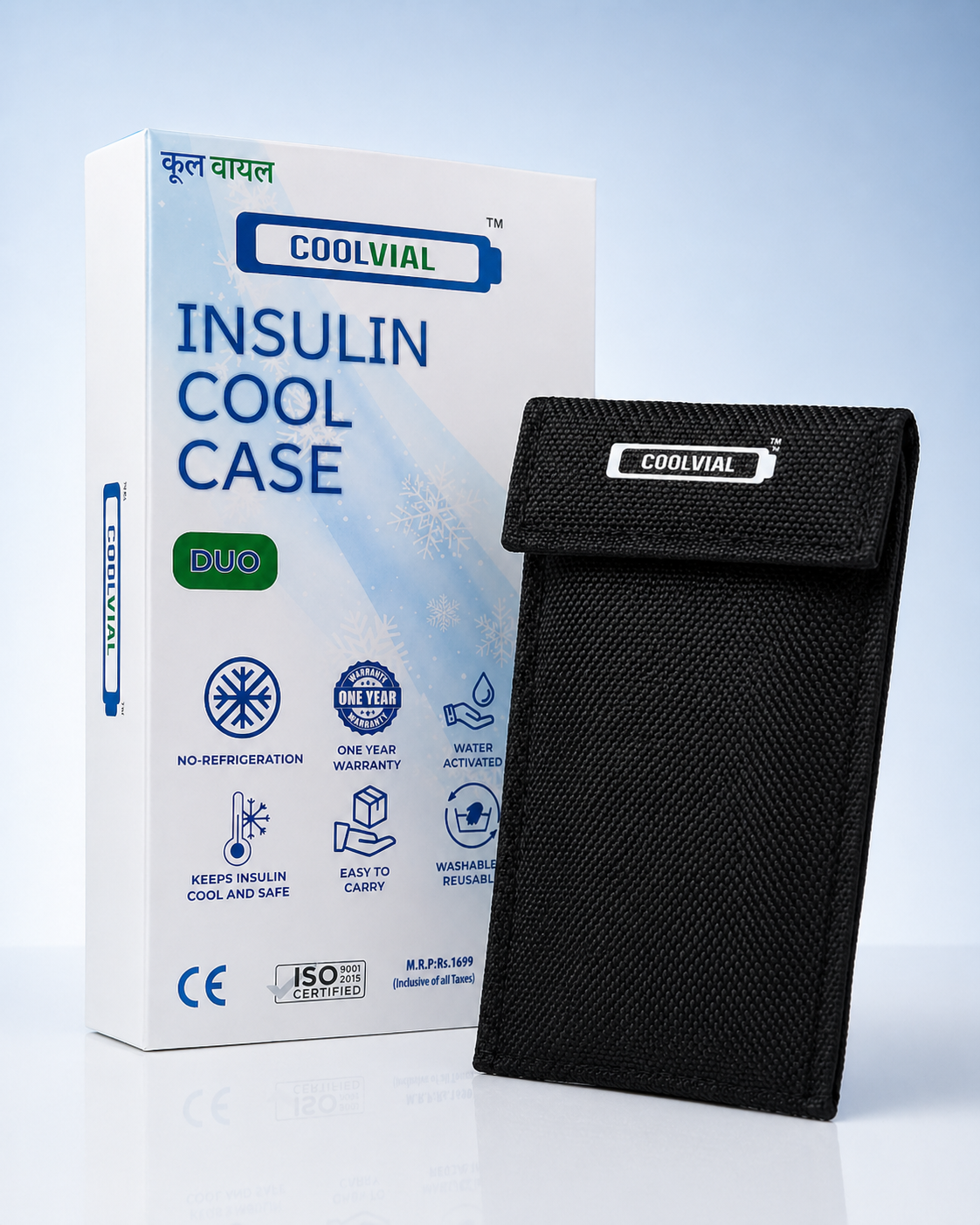
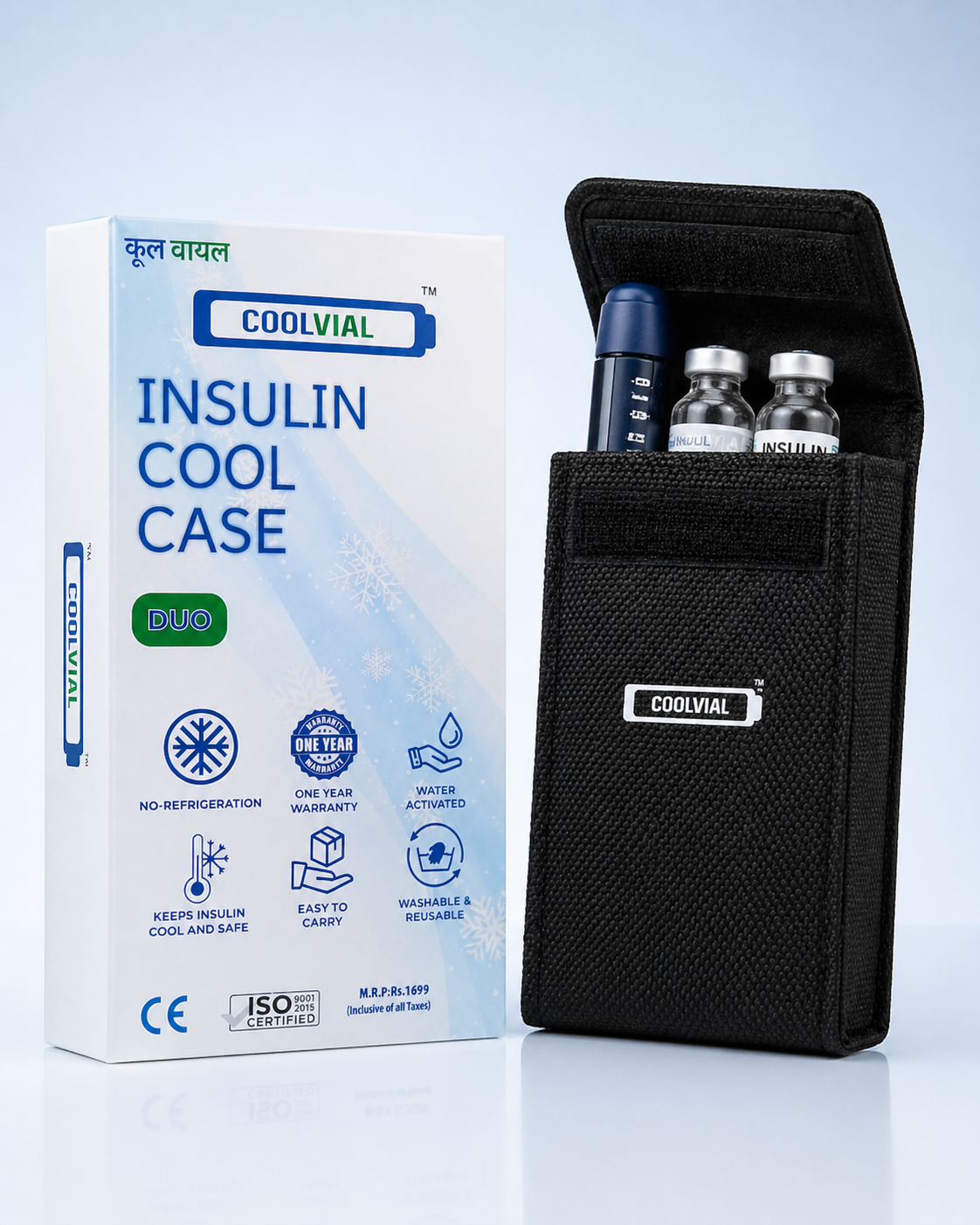
- Evaporative Cooling Technology: Products like the COOLVIAL Duo are designed specifically for such situations. The COOLVIAL Duo, for instance, uses water-activated evaporative cooling technology. Simply immerse its inner pouch in water for a few minutes, and it will keep your insulin cool (between 18-26°C) for 12-16 hours, even if the ambient temperature is much higher. This is crucial as Indore’s climate, even during “mild” periods, can easily see daytime temperatures in the mid-30s°C.
- Why Evaporative Cooling is Ideal for Indore:
- No Electricity Needed: Perfect for power cuts.
- Reusable: Can be activated repeatedly.
- Compact and Portable: Easy to carry to a neighbor’s house or a pharmacy.
- Maintains Safe Temperature Range: Keeps insulin within the recommended safe temperature range without the risk of freezing. This is a significant advantage over ice packs or regular cool bags that can cause insulin to freeze if not managed carefully.
- Comparison with Alternatives:
- FRIO cases: Similar technology, but often priced higher, around Rs 1,900.
- Outer Woods OW-12: A more budget-friendly option at around Rs 999, but check its cooling duration and capacity compared to your needs.
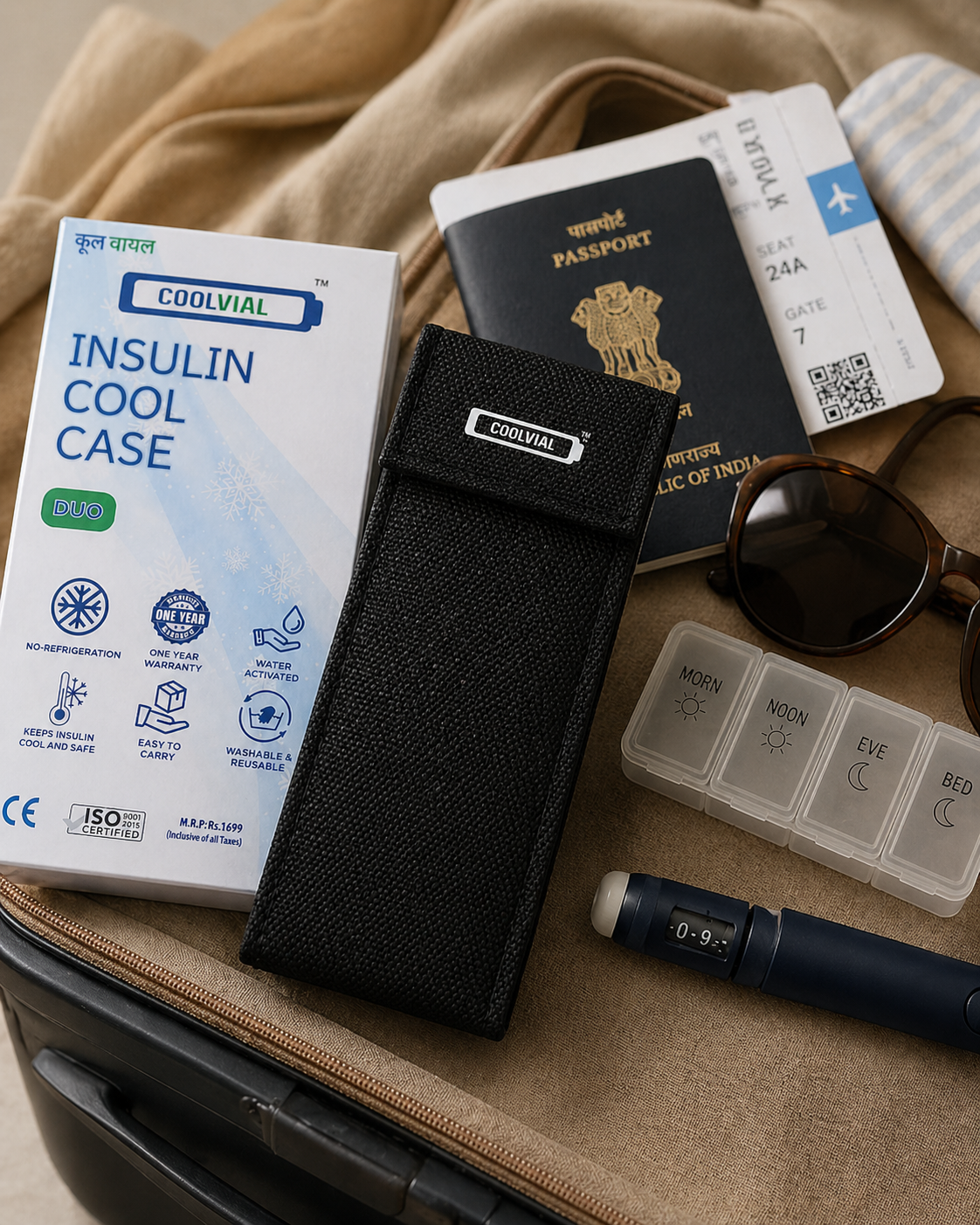
- COOLVIAL Duo: Priced at Rs 1,099 with code COOLHEAL (MRP Rs 1,699), it offers a balanced solution, holding 2 pens + 1 vial and providing 12-16 hours of cooling. It’s CE certified and ISO 9001:2015 compliant, ensuring quality.
The Ultimate 7-Step Power Cut Survival Guide for Diabetics in Indore — What To Do When the Grid Goes Down
48+ hours at 2-8°C. No electricity. CE certified. Free delivery across India.
Order on WhatsApp — ₹1,099🛒 Buy Now — ₹1,099For optimal insulin storage tips relevant to Indore’s mild year-round climate, refer to our detailed guide: How to Store Insulin in Indore’s Mild Year-Round Climate — A Local’s Guide.
Step 3: Navigating Extended Outages (12+ Hours) – Community Support and Emergency Access
When power cuts extend beyond 12 hours, you need to think beyond your immediate household. This is particularly relevant for residents in areas like parts of South Tukoganj or Sapna Sangeeta, where older buildings might lack robust backup systems.
- Activating Your Evaporative Cooler: If you’re using a COOLVIAL Duo or similar product, reactivate it by re-immersing the inner pouch in water after its initial cooling cycle (typically 12-16 hours). This will restart the evaporative process and extend the cooling duration. You can find more detailed instructions and insulin storage tips on our mission page.
- Reach Out to Neighbors: If your power situation is dire, but your neighbors in Vijay Nagar or a nearby apartment complex have generator backup or an inverter, don’t hesitate to ask if you can store your insulin in their refrigerator. Most people are understanding in an emergency.
- Identify 24-Hour Pharmacies: Indore has several 24-hour pharmacies that maintain generator backup and can store insulin.
- Apollo Pharmacy: Look for branches in prominent areas like AB Road or Vijay Nagar. They are often equipped to handle such situations.
- MedPlus: Another reliable chain with multiple outlets across the city.
- Wellness Forever: While not as widespread as Apollo or MedPlus, they also offer extended hours and might have refrigeration facilities.
- Generic Aadhaar and 1mg are also present but verify specific branch hours and refrigeration capabilities.
- For a comprehensive list, consult our guide: 24-Hour Pharmacies in Indore for Insulin Emergencies — Updated List.
- Hospital Pharmacies: In a dire emergency, the pharmacy at major hospitals can be a lifeline.
- CHL Hospital (AB Road): Their pharmacy is generally open 24/7 and will have proper refrigeration facilities.
- Bombay Hospital Indore (Vijay Nagar): Another excellent option with a well-stocked 24-hour pharmacy.
- Sri Aurobindo Institute of Medical Sciences (SAIMS, Ujjain Road): Located a bit further out, but a viable option for those on that side of the city.
- Communicate with Your Doctor: If you’re concerned about insulin viability after a prolonged exposure to higher temperatures, contact your endocrinologist or diabetologist. They can advise on testing your blood glucose more frequently and whether a new vial of insulin is needed.
Step 4: Proactive Planning – Your Power Cut Survival Kit
Being prepared is half the battle. A well-stocked power cut survival kit can significantly reduce stress and risk during an outage.
- Essential Items for Your Kit:
- Insulin Cooling Case: A water-activated evaporative cooler like the COOLVIAL Duo is a non-negotiable. It holds 2 pens + 1 vial and offers up to 16 hours of cooling.
- Emergency Insulin Supply: Always have at least a few days’ extra supply of insulin.
- Blood Glucose Meter & Strips: Ensure your meter has fresh batteries, and you have ample test strips.
- Lancets & Alcohol Swabs: For sterile blood testing.
- Syringes/Pen Needles: Extra supply for your insulin pens.
- Glucagon Emergency Kit: If prescribed, ensure it’s easily accessible and you know how to use it.
- Flashlight/Headlamp: With extra batteries, as mobile phone flashlights drain battery quickly.
- Power Bank: Charged, for your mobile phone.
- Emergency Contact List: Written down, including your doctor, nearest pharmacy, and trusted neighbors.
- Bottled Water: Essential for re-activating your evaporative cooler and for general hydration.
- Non-Perishable Snacks: To avoid blood sugar fluctuations.
- Small Thermometer: To check refrigerator temperature if needed.
- Storage Location: Keep this kit in an easily accessible place, away from direct sunlight and extreme temperatures, perhaps in a cupboard in your bedroom or living room.
- Regular Review: Check your kit every 3-6 months.
- Replace expired insulin or glucagon.
- Check battery life of devices.
- Ensure water bottles are fresh.
- Confirm contact numbers are up to date.
Step 5: Choosing the Right Insulin Cooling Solution for Indore’s Climate
Indore’s climate, though often described as “mild,” still sees significant temperature fluctuations, especially during summer (up to 40°C+) and monsoon (high humidity). This makes selecting the right insulin cooling solution critical.
- Understanding Your Needs:
- Duration: How long do you need cooling for? Short trips, daily commutes, or extended power cuts?
- Capacity: How many pens or vials do you typically carry or need to store?
- Convenience: Do you prefer something that needs ice, or a water-activated solution?
- Budget: What’s your comfortable price range?
- Why Evaporative Cooling is a Top Choice for Indore:
- Temperature Stability: Unlike ice packs, which can freeze insulin if not used carefully, evaporative coolers like COOLVIAL maintain a stable, safe temperature range (18-26°C), even when ambient temperatures are much higher. This is crucial as insulin loses potency if frozen or exposed to excessive heat.
- Reliability: No electricity or refrigeration is required, making them ideal for power cuts and travel. You only need access to water.
- Durability: Made with robust materials, they are designed for repeated use. The COOLVIAL Duo is CE certified and ISO 9001:2015 compliant, assuring quality and safety.
- COOLVIAL Duo vs. Competitors:
- COOLVIAL Duo (Rs 1,099 with code COOLHEAL):
- Capacity: Holds 2 insulin pens + 1 insulin vial.
- Cooling Duration: 12-16 hours per activation.
- Technology: Water-activated evaporative cooling.
- Made in India: Supporting local manufacturing.
- Warranty: 1-year.
- FRIO cases (approx. Rs 1,900):
- Similar evaporative cooling technology.
- Often higher priced.
- Good quality, but COOLVIAL offers a competitive, locally-made alternative.
- Outer Woods OW-12 (approx. Rs 999):
- Often a simpler insulated pouch, sometimes relying on separate gel packs.
- May offer less consistent temperature regulation compared to evaporative cooling.
- Check specific cooling duration claims and temperature range.
- Can be a budget option, but ensure it meets your specific needs for consistent, safe insulin temperatures.
- COOLVIAL Duo (Rs 1,099 with code COOLHEAL):
For daily use or travel within Indore, the COOLVIAL Duo provides peace of mind, ensuring your insulin is protected from temperature fluctuations, whether you’re enjoying the street food at Sarafa Bazaar or shopping at Phoenix Citadel.
Step 6: Understanding Local Resources – Pharmacies and Hospitals
Knowing where to turn when your home resources are exhausted is a vital part of your power cut survival guide. Indore has a robust network of pharmacies and hospitals that can assist.
- 24-Hour Pharmacies:
- Apollo Pharmacy: Multiple branches, including those in Vijay Nagar and along AB Road, are known for their 24/7 service and often have robust backup power for refrigeration.
- MedPlus: Another strong contender, with several outlets throughout Indore, including central areas like Palasia.
- Wellness Forever: While newer to Indore, they are expanding and offer reliable services.
- Before an Emergency: It’s wise to identify the closest 2-3 24-hour pharmacies to your home and workplace in advance. You can call them to confirm their refrigeration facilities and power backup status.
- Hospital Pharmacies: These are your most reliable options for emergency insulin storage or procurement during extended city-wide outages.
- CHL Hospital (AB Road): Strategically located on AB Road, easily accessible from most parts of the city. Their pharmacy is a guaranteed 24-hour facility with excellent cold chain management.
- Bombay Hospital Indore (Vijay Nagar): A premier medical facility in the upmarket Vijay Nagar area. Its pharmacy is also 24/7 and well-equipped.
- Sri Aurobindo Institute of Medical Sciences (SAIMS, Ujjain Road): Located on the outskirts towards Ujjain Road, it serves a large population and has a functional 24-hour pharmacy.
- Emergency Contact List: Keep a physical list of these pharmacies and hospitals, along with their phone numbers, in your power cut survival kit. Your mobile phone might run out of battery.
- Transportation: Consider how you would reach these locations during a prolonged power cut. Are they within walking distance, or would you need to arrange transportation?
Step 7: The Future of Power Resilience – Solar Inverters in Indore
While traditional generators and inverters have been common in Indore, a growing trend towards solar inverter setups is emerging, especially in the newer suburbs and independent houses. This offers an excellent long-term solution for power cut resilience.
- How Solar Inverters Work: These systems use solar panels to convert sunlight into electricity, which can then be used directly or stored in batteries. When grid power is available, the batteries are charged. During a power cut, the inverter switches to battery power, providing seamless electricity.
- Benefits for Diabetics:
- Continuous Refrigeration: Ensures your refrigerator, and thus your insulin, remains consistently cool, even during multi-day outages.
- Reduced Dependency on Grid: Less worry about load shedding or unforeseen outages.
- Environmental & Cost Benefits: A sustainable energy source that can also reduce electricity bills over time.
- Prevalence in Indore:
- Increasingly popular in newly constructed independent houses and farmhouses in areas bordering the city, as well as some high-end residential societies.
- While the initial investment can be higher than a traditional inverter, the long-term benefits, especially for critical needs like insulin storage, are substantial.
- Considerations:
- Installation: Requires professional installation and sufficient roof space for solar panels.
- Battery Capacity: Choose a system with enough battery backup to power essential appliances (like your refrigerator) for the typical duration of outages in your area.
- Maintenance: Generally low, but periodic cleaning of solar panels is necessary.
Investing in a solar inverter setup provides a robust, sustainable solution for power resilience, ensuring peace of mind for diabetics in Indore, particularly as the city continues its growth and faces evolving power demands.
Frequently Asked Questions (FAQs)
Q: How long can insulin be stored at room temperature during a power cut in Indore? A: Unopened insulin must be refrigerated between 2-8°C. Once opened, most insulin types can be stored at room temperature, typically up to 25-30°C, for 28 days. However, given Indore’s typical ambient temperatures, especially in summer, it’s safer to assume a shorter safe period or use a cooling case.
Q: Can I use regular ice packs to keep my insulin cool during a power cut? A: While ice packs can provide cooling, direct contact with ice can freeze insulin, rendering it ineffective. If using ice packs, ensure insulin is wrapped and insulated to prevent freezing, and monitor the temperature closely. Water-activated evaporative cooling cases like COOLVIAL Duo are a safer alternative.
Q: What is the ideal temperature range for storing insulin during a power cut with a cooling case? A: A good quality evaporative cooling case, like the COOLVIAL Duo, is designed to keep insulin within the safe range of 18-26°C, even when ambient temperatures are significantly higher. This range is optimal for preserving insulin potency without risking freezing.
Q: Where can I find a 24-hour pharmacy with refrigeration facilities in Indore during a prolonged power cut? A: Major pharmacy chains like Apollo Pharmacy and MedPlus, particularly those in prominent areas like AB Road and Vijay Nagar, often operate 24/7 and have generator backup for their refrigeration. Hospital pharmacies at CHL Hospital (AB Road) and Bombay Hospital Indore (Vijay Nagar) are also reliable options.
Q: How often should I reactivate my water-activated insulin cooling case during a long power cut? A: Most water-activated evaporative cooling cases, including the COOLVIAL Duo, provide 12-16 hours of cooling per activation. You should reactivate it by re-immersing the inner pouch in water after this period to ensure continuous cooling.
Q: Is it safe to use insulin that has been exposed to temperatures above 8°C for several hours? A: If insulin has been exposed to temperatures above 8°C but below 30°C for a short period (e.g., a few hours), it might still be safe to use for up to 28 days. However, if exposed to higher temperatures or for prolonged durations, its potency can be reduced. Always consult your doctor if you have concerns about the viability of your insulin.
Q: Are solar inverters a good investment for diabetics in Indore to manage power cuts? A: Yes, solar inverter setups are an excellent long-term investment for diabetics in Indore. They provide continuous power to essential appliances, including refrigerators, ensuring insulin remains cool even during extended grid failures, offering significant peace of mind and energy independence.
Conclusion: Stay Prepared, Stay Safe
Living with diabetes in Indore, with its unique power patterns and climate, demands a proactive approach to insulin storage, especially during power cuts. From the sudden monsoon outages in Palasia to the peak summer load shedding impacting areas like South Tukoganj, preparedness is your best defense. By understanding Indore’s specific challenges, equipping yourself with a reliable insulin cooling solution like the COOLVIAL Duo, and knowing your local resources—be it a neighbor with an inverter or the 24-hour pharmacy at CHL Hospital on AB Road—you can significantly mitigate the risks associated with power disruptions.
Remember, your insulin is your lifeline. Don’t leave its safety to chance. Invest in a plan, build your emergency kit, and stay informed. With the right tools and knowledge, you can navigate any power cut with confidence, ensuring your health and well-being remain a priority.
Order COOLVIAL Duo at Rs 1,099 with code COOLHEAL at coolvial.com or via WhatsApp wa.me/918766952300.
Medical Disclaimer
This article is for general information. Always consult your endocrinologist or diabetologist before changing insulin storage or dosing practices.
How We Researched This
This article was developed based on a comprehensive review of current RSSDI (Research Society for the Study of Diabetes in India) guidelines for insulin storage, data from the ICMR-INDIAB (Indian Council of Medical Research–India Diabetes) study for regional diabetes prevalence, and direct research into local Indore hospital directories, including CHL Hospital, Bombay Hospital, and Sri Aurobindo Institute of Medical Sciences. We also consulted information on major pharmacy networks like Apollo Pharmacy, MedPlus, and Wellness Forever to provide accurate, locally relevant advice. Local discom operations and typical outage patterns were considered to tailor the advice specifically for Indore residents.
The Ultimate 7-Step Power Cut Survival Guide for Diabetics in Indore — What To Do When the Grid Goes Down
COOLVIAL keeps insulin safe in India's heat. 48+ hours, no electricity needed.