Reviewed by the COOLVIAL Editorial Team — specialists in insulin storage for Indian climate conditions.
Surat, the diamond city, is known for its vibrant culture, delicious food, and unfortunately, its challenging climate – hot, humid, and prone to monsoon-related power outages. For the thousands of diabetics in Surat, keeping insulin safe during these unpredictable power cuts is not just a convenience, but a critical health concern. Insulin, a life-saving medication, can lose its potency rapidly if exposed to temperatures above its recommended storage range of 2°C to 8°C (when refrigerated) or below 30°C (when in-use and unrefrigerated). A study from the Indian Council of Medical Research (ICMR-INDIAB) indicates a high prevalence of diabetes in urban India, making this a widespread issue (Source: ICMR-INDIAB Study, 2017). This comprehensive power cut survival guide offers 7 essential strategies to ensure your insulin remains effective, no matter how long the lights stay out in Surat. Based on analysis of insulin storage queries from Surat diabetics, we’ve tailored this advice specifically for our city’s unique conditions.
Table of Contents
- Understanding Surat’s Power Patterns and Risks
- Immediate Steps for Short Power Cuts (Under 1 Hour)
- Managing Moderate Outages: 1 to 6 Hours
- Extended Power Cut Strategies: 6 to 24 Hours
- Navigating Prolonged Outages: 24+ Hours
- Leveraging Surat’s Infrastructure: Generators, Inverters, and Solar
- Building Your Essential Power Cut Survival Kit
- Frequently Asked Questions (FAQ)
- Conclusion: Stay Prepared, Stay Safe
Understanding Surat’s Power Patterns and Risks
Surat’s electricity supply, primarily managed by the Dakshin Gujarat Vij Company Limited (DGVCL), faces distinct challenges throughout the year. Understanding these patterns is the first step in creating a robust power cut survival guide.
- Monsoon Outages (June-September): The southwest monsoon, bringing an average of 1200mm rainfall, significantly impacts power stability. Areas like South Surat (Udhna, Pandesara) and East Surat (Varachha, Katargam) are particularly susceptible to frequent, often prolonged, outages due to heavy rains, strong winds, and the Tapi river’s flood potential. Waterlogging can damage electrical infrastructure, leading to hours-long disruptions.
- Peak Summer Load Shedding (April-June): As temperatures soar to 40°C and beyond, the demand for air conditioning skyrockets. This often leads to scheduled and unscheduled load shedding, especially in residential areas. Older buildings in Central Surat, particularly around Ring Road and Adajan, may lack robust backup systems, leaving residents vulnerable.
- Infrastructure-Related Cuts: Maintenance work, unforeseen faults, or local grid overloads can cause localized power cuts. These are often less predictable but can still last for several hours.
- Apartment vs. Independent House Realities:
- Apartments: Many modern housing societies in areas like Vesu, Piplod, and Adajan boast shared generators or inverters, providing relief for common areas and sometimes individual flats. However, older apartments might lack such provisions.
- Independent Houses: Owners often invest in personal inverters or generator sets, offering greater control but requiring fuel and maintenance. Solar inverter setups are becoming increasingly popular in Surat’s suburbs, offering a sustainable alternative to grid dependency.
Common Outage-Prone Areas & What to Expect
| Area Type | Typical Outage Causes | Duration Expectation | Backup Scenario |
|---|---|---|---|
| South (Udhna/Pandesara) | Monsoon rains, industrial load, infrastructure issues | Moderate to Long | Mixed; some societies, many individual solutions |
| East (Varachha/Katargam) | Monsoon flooding, dense population, older grids | Moderate to Long | Often reliant on individual/small community inverters |
| Central (Ring Road/Adajan) | Peak summer load, older building infrastructure | Short to Moderate | Variable; newer apartments have backup, older often none |
| West (Vesu/Athwagate/Piplod) | Less frequent, but can be affected by peak load/maintenance | Short | High; many modern societies with robust backup |
(Source: DGVCL local reports and resident feedback, [Verify in 2026])
Immediate Steps for Short Power Cuts (Under 1 Hour)
A sudden power outage can be unsettling, but with quick thinking, you can protect your insulin. For short interruptions, typically under an hour, the primary goal is to maintain the refrigerator’s internal temperature as much as possible.
- Keep Your Refrigerator Closed: This is the most crucial step. An unopened refrigerator can keep food cold for about 4 hours, and a freezer for about 48 hours (if full). Each time you open the door, warm air rushes in, raising the internal temperature significantly.
- Avoid Unnecessary Access: Resist the urge to check on other perishable items. Prioritize insulin safety.
- Monitor the Situation: Keep an eye on local news or DGVCL updates (via their app or helpline) for estimated restoration times. Many modern apartments in Vesu or Piplod often have immediate generator backup for short cuts, minimizing worry.
- Have a Plan B for Longer Cuts: Even a short cut can be a warning. Use this time to mentally review your plan for longer outages. Do you know where your insulin cool case is? Is it ready?
Quick Checklist for Short Outages:
- Confirm the power is out (check neighbors).
- DO NOT OPEN THE FRIDGE.
- Check DGVCL updates for restoration time.
- Prepare your backup cooling solution if the cut extends.
Managing Moderate Outages: 1 to 6 Hours
When a power cut extends beyond an hour, especially in Surat’s warm and humid climate (which averages 22-40°C), you need to take more active measures. Your refrigerator’s internal temperature will start to rise, potentially jeopardizing your insulin.
- Move Insulin to a Pre-Prepared Cooler: If you anticipate the power cut lasting for several hours (e.g., during a heavy monsoon downpour in Udhna or Pandesara), transfer your insulin to a dedicated cool case.
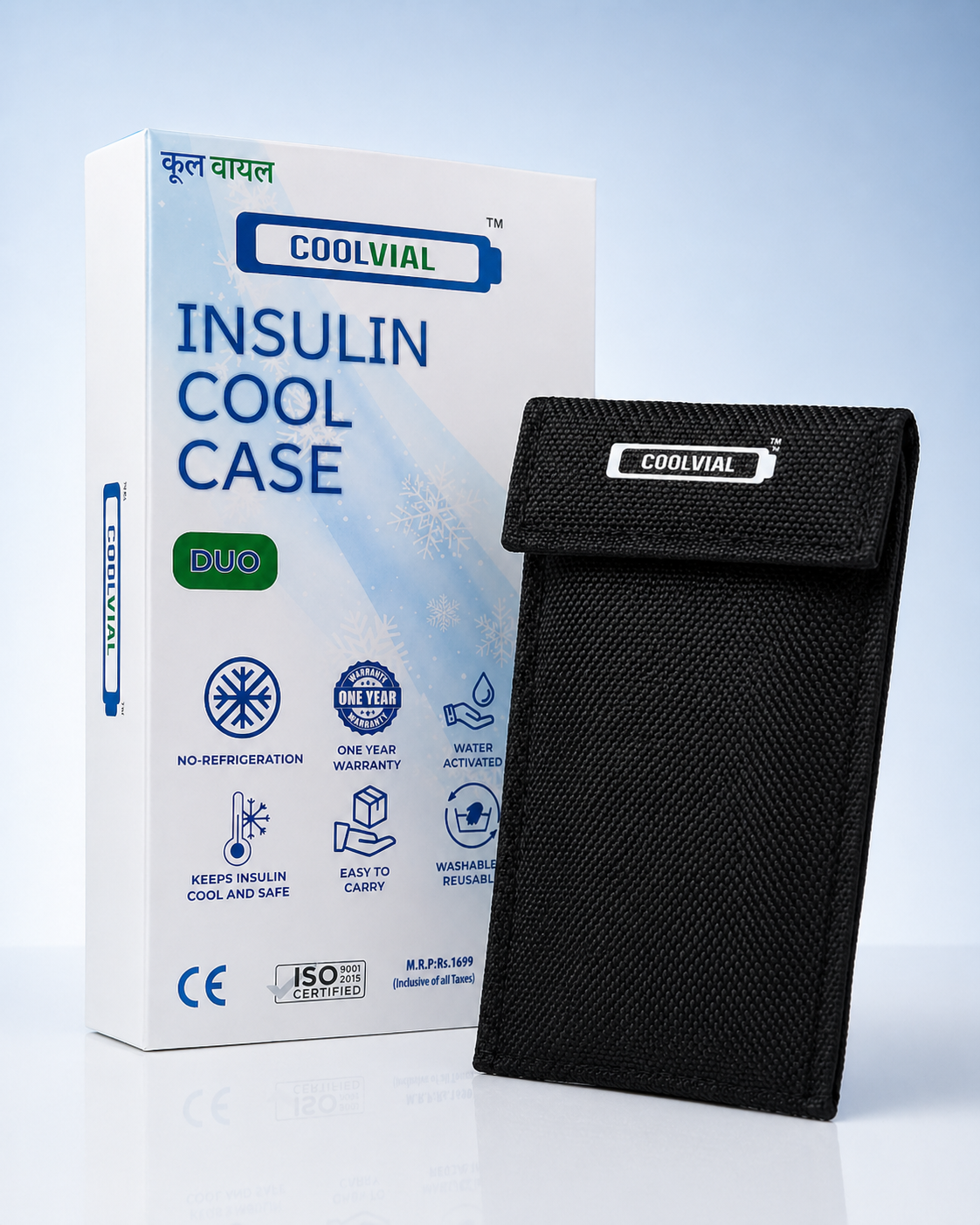
- COOLVIAL Duo: This water-activated evaporative cooling case is ideal for Surat’s climate. Simply immerse it in water for a few minutes, and its crystals activate, keeping insulin cool at 18-26°C for 12-16 hours, even when ambient temperatures are up to 38°C. It holds 2 pens + 1 vial. The best part? No electricity or refrigeration needed!
- Other Options: While FRIO (around Rs 1,900) offers similar evaporative cooling, COOLVIAL Duo provides a more affordable, made-in-India solution at Rs 1,099 with code COOLHEAL. Basic insulated pouches like Outer Woods OW-12 (around Rs 999) can offer some temporary protection but usually require ice packs, which are difficult to maintain during extended power cuts.
- Use Gel Packs (if available and frozen): If you have gel packs already frozen in your freezer, transfer them and your insulin to a small insulated bag or box. Remember, gel packs will eventually thaw, so this is a temporary fix.
- Insulate Your Cooler: Place your cool case or insulated bag in the coolest part of your home, away from direct sunlight. Consider wrapping it in a towel for added insulation.
- Stay Hydrated: Power cuts often mean no fans or AC. Diabetics need to stay well-hydrated, especially in Surat’s heat. Drink plenty of water.
Action Plan for 1-6 Hour Outages:
- Retrieve your COOLVIAL Duo or other evaporative cool case.
- Activate COOLVIAL Duo by immersing it in water for 5-10 minutes.
- Carefully transfer insulin pens and vials from the refrigerator to the activated cool case.
- Place the cool case in the coolest, darkest spot in your home.
- Monitor insulin temperature if you have a thermometer in the case.
7 Essential Power Cut Survival Tips for Diabetics in Surat
COOLVIAL keeps insulin safe in India's heat. 48+ hours, no electricity needed.
Extended Power Cut Strategies: 6 to 24 Hours
When Surat’s power grid goes down for a significant duration, like a full 12-hour stretch during monsoon or a prolonged summer load-shedding event, your active cooling measures become paramount. This is where a reliable, non-electric cooling solution truly shines.
- Rely on Evaporative Coolers for Continuous Protection: Your activated COOLVIAL Duo will continue to work, maintaining insulin temperatures within the safe range. Ensure it’s placed in a well-ventilated area for optimal evaporation, but out of direct sunlight.
- Reactivating COOLVIAL Duo: If the power cut extends towards the 12-16 hour mark and the case feels less cool, you can re-immerse it in water for a shorter duration (2-3 minutes) to reactivate the cooling crystals. This is a crucial advantage over ice-pack dependent solutions, which would require re-freezing.
- Seek Out Backup Power Sources:
- Neighbours with Inverters/Generators: If you live in an area like parts of Central Surat (Ring Road/Adajan) without building-wide backup, consider approaching a neighbor in a modern society in Vesu or Piplod who might have a personal inverter or generator. A few hours in their fridge can make a difference. Always ask respectfully and offer to compensate.
- Community Centers/Commercial Establishments: Some larger commercial buildings or community centers might have generators. While not a primary solution, they could offer temporary refrigeration in an absolute emergency.
- Emergency Ice Supply: If you absolutely need ice packs, some larger supermarkets or general stores that have generator backup (e.g., specific branches of D-Mart or Reliance Fresh in VR Mall Surat) might have ice. However, transporting ice in Surat’s heat is challenging.
Insulin Storage During a 12-Hour Power Cut:
| Time Elapsed | Action | Rationale |
|---|---|---|
| 0-4 hours | Keep fridge closed. | Fridge maintains temperature. |
| 4-8 hours | Transfer insulin to activated COOLVIAL Duo. | Fridge temperature rising; evaporative cooler maintains safe range. |
| 8-12 hours | Monitor COOLVIAL Duo; reactivate if needed (2-3 min re-immersion). | Ensures continued cooling. |
| Beyond 12h | Explore community support or local pharmacies. | Prepare for prolonged disruption. |
For more detailed guidance on handling insulin in high temperatures, refer to our article on How to Store Insulin in Surat Summer Heat — A Local’s Guide.
Navigating Prolonged Outages: 24+ Hours
A power cut lasting more than 24 hours is a serious situation for diabetics in Surat, especially given the city’s climate. At this point, even the most efficient evaporative coolers might need re-activation, and external help becomes vital.
- Reactivation and Rotation: Your COOLVIAL Duo can be reactivated by re-immersing it in water. If you have multiple evaporative cases, you can rotate them, ensuring one is always actively cooling while the other might be drying out slightly.
- Accessing Hospital Pharmacies: For critical, extended outages, hospital pharmacies are often your safest bet as they usually have robust generator backups.
- Sunshine Global Hospital (Dumas Road): This hospital has a pharmacy that typically operates 24/7. It’s a reliable option for emergency insulin storage or procurement.
- BAPS Pramukh Swami Hospital (Adajan): Another large hospital with comprehensive facilities and likely 24-hour pharmacy services.
- Mahavir Hospital (Athwagate): A key hospital in the western part of the city, also a potential resource.
- Important: Always call ahead if possible, even if it means using a neighbor’s charged phone, to confirm their services and current stock.
- 24-Hour Pharmacies: Some major pharmacy chains in Surat have 24-hour branches with generator backup.
- Apollo Pharmacy: Look for larger branches, especially near hospitals or main commercial hubs. They often have generator facilities.
- Wellness Forever: Similar to Apollo, larger Wellness Forever outlets may offer extended hours and backup power.
- Always call first: Verify their generator status and insulin stock. For a comprehensive list, check our 24-Hour Pharmacies in Surat for Insulin Emergencies — Updated List.
- Community Support: In close-knit communities, especially in areas like Varachha or Katargam, neighbors often help each other. Someone might have a larger generator or a functioning fridge they can temporarily spare for your insulin.
Emergency Contact & Locations:
| Resource Type | Specific Locations | Action |
|---|---|---|
| Hospital Pharmacy | Sunshine Global Hospital (Dumas Road), BAPS Pramukh Swami Hospital (Adajan), Mahavir Hospital (Athwagate) | Call to confirm 24/7 service, generator status, and insulin storage/stock. |
| 24-Hour Pharmacy | Larger Apollo Pharmacy & Wellness Forever branches | Call to confirm generator status and insulin availability. |
| Local Discom (DGVCL) | Helpline numbers for outage updates (e.g., 19120) | Get estimated power restoration times. |
(Note: Always verify current operational status and services directly with the establishments.)
Leveraging Surat’s Infrastructure: Generators, Inverters, and Solar
Surat, being a bustling urban center, has a diverse range of power backup solutions. Understanding what’s available and how to leverage it is key to your power cut survival guide.
- Generator Culture in Housing Societies: Many modern housing societies, particularly in newer developed areas like Vesu, Piplod, and parts of Adajan, are equipped with large generators that automatically kick in during power cuts. These typically power common areas, lifts, and often provide limited supply to individual flats for essential appliances like lights and fans.
- Check with your society management: Understand what appliances are supported during generator backup and for how long. Can you plug in your refrigerator for an hour or two to re-cool it?
- Personal Inverters: Common in independent houses and some older apartments across Surat, personal inverters store power from the grid and convert it to AC during an outage. They can typically run fans, lights, and charge phones for several hours.
- Refrigerator Compatibility: Most standard inverters are not designed to run heavy appliances like refrigerators for extended periods. Consult an electrician about inverter capacity if you plan to connect your fridge.
- Solar Inverter Setups: A growing trend in Surat’s suburbs and independent houses, solar panels combined with inverters and battery storage offer an eco-friendly and reliable backup. These systems can keep essential appliances running even during grid failures, often for longer durations depending on battery capacity.
- Benefits for Diabetics: A solar setup can be a game-changer for insulin storage, providing continuous power for your refrigerator, significantly reducing reliance on external solutions during power cuts. This is an investment worth considering for long-term peace of mind.
Power Backup Solutions in Surat:
| Solution Type | Typical Use Case | Benefits for Insulin Storage | Limitations |
|---|---|---|---|
| Society Generator | Common areas, lifts, limited flat power | Can re-cool fridge briefly, charge cool cases | Not always for individual fridge, fuel-dependent |
| Personal Inverter | Lights, fans, phone charging | Can power small chargers, very brief fridge use | Not for extended fridge use, battery capacity limited |
| Solar Inverter | Comprehensive home backup, grid-independent | Can power fridge continuously, eco-friendly | High initial investment, space requirements |
Building Your Essential Power Cut Survival Kit
7 Essential Power Cut Survival Tips for Diabetics in Surat
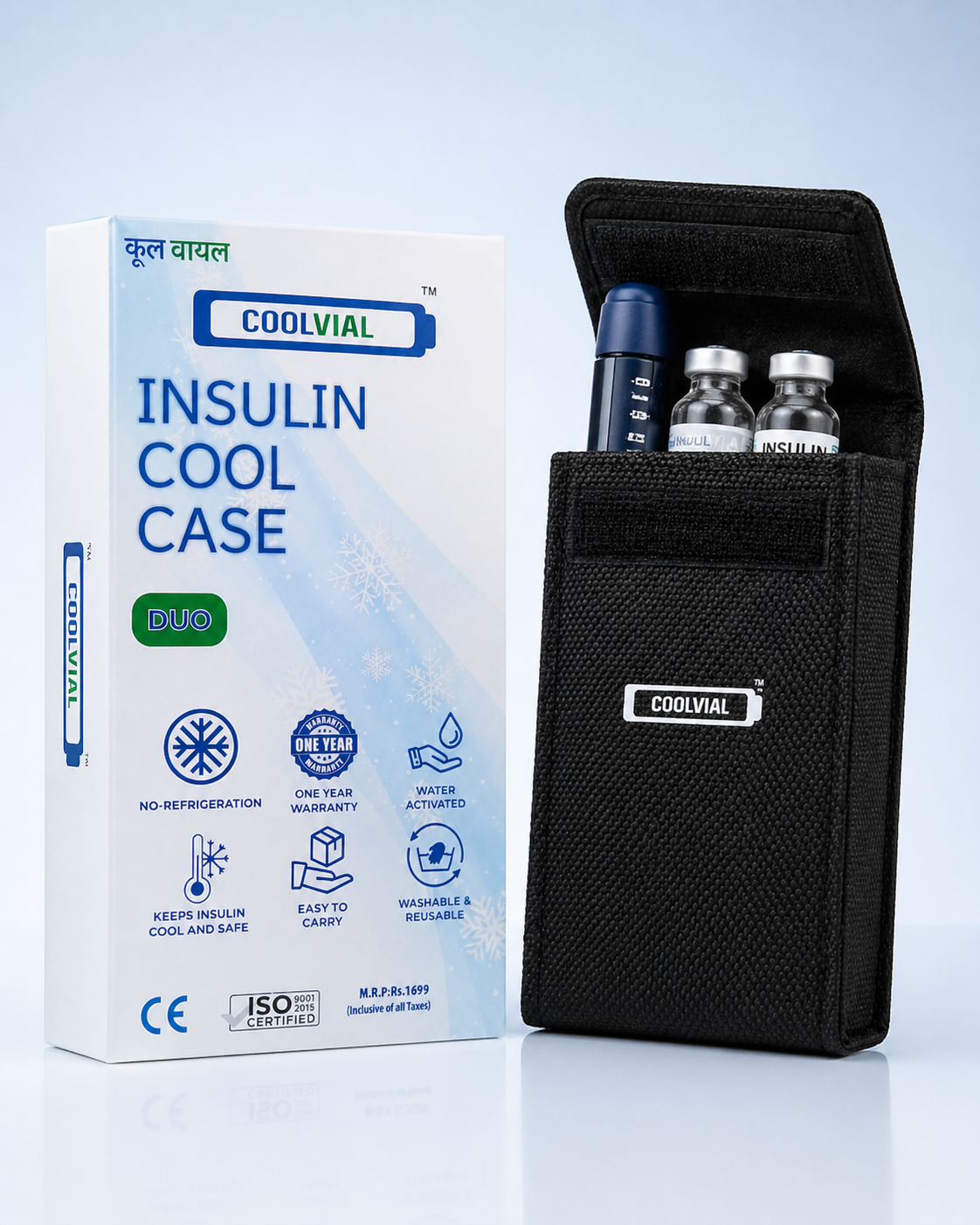
Insulin at 2-8°C for 48+ hours. Trusted by 10,000+ Indian diabetics.
Preparation is your best defense against unexpected power outages in Surat. A well-equipped power cut survival guide includes a dedicated kit for your insulin and general well-being.
- Insulin Cool Case: This is non-negotiable. The COOLVIAL Duo (holds 2 pens + 1 vial) is specifically designed for the Indian climate, providing 12-16 hours of cooling without electricity or ice, making it perfect for Surat’s heat and humidity. At Rs 1,099 with code COOLHEAL, it’s an affordable and reliable choice. Its evaporative cooling mechanism is superior to simple insulated bags that rely on melting ice.
- Thermometer: A small, accurate thermometer (ideally one that fits inside your cool case) is crucial to monitor the internal temperature and ensure your insulin stays within the safe range.
- Insulated Bag: Even if you have a COOLVIAL Duo, a larger insulated bag can be useful for transporting other medications or for temporary storage of the cool case itself if you need to move it.
- Emergency Contact List: Keep a physical list of important numbers: your endocrinologist, nearest 24-hour pharmacies (Apollo Pharmacy, Wellness Forever), hospital pharmacies (Sunshine Global Hospital (Dumas Road)), DGVCL helpline, and trusted neighbors.
- Flashlight/Power Bank: Essential for navigating in the dark and keeping your phone charged to access information or make emergency calls.
- Non-Perishable Snacks & Water: Keep a small supply of water bottles and diabetes-friendly, non-perishable snacks in case the outage affects cooking or access to shops.
- Extra Insulin (if possible): If your doctor allows and your insurance covers it, having a small emergency supply of insulin (stored separately or in a secondary cool case) can provide an extra layer of security.
Your COOLVIAL Power Cut Kit Checklist:
- COOLVIAL Duo (activated and ready for use)
- Small, accurate thermometer
- Insulated carry bag
- Printed emergency contact list
- Flashlight or headlamp
- Fully charged power bank
- Bottled water & non-perishable snacks
- Any other essential medications
Remember, your COOLVIAL Duo is your primary defense. While alternatives like FRIO (often pricier at ~Rs 1,900) or basic insulated bags (like Outer Woods OW-12 at ~Rs 999, which requires ice) exist, COOLVIAL offers a balanced blend of performance, capacity, and value, designed specifically for the Indian climate. Don’t wait for a power cut to prepare; assemble your kit today.
Frequently Asked Questions (FAQ)
Q: How long can insulin stay out of the fridge in Surat’s climate during a power cut? A: Unopened insulin vials can typically be kept at room temperature (below 30°C) for up to 28 days. However, in Surat’s peak summer heat, temperatures often exceed 30°C, meaning insulin can start to degrade much faster, sometimes within hours if directly exposed to high heat.
Q: What should I do if my insulin has been exposed to high temperatures for too long? A: If insulin looks cloudy (unless it’s NPH insulin, which is naturally cloudy), has changed color, or contains particles, do not use it. If you suspect it has been exposed to temperatures above 30°C for an extended period, it’s safest to discard it and use a new vial or pen, even if it looks normal. Consult your doctor immediately.
Q: Can I put my insulin in a thermos with ice during a power cut? A: A thermos with ice can keep insulin cool, but ensure the insulin does not come into direct contact with ice, as freezing can also damage it. Wrap insulin pens/vials in a cloth before placing them near ice, and use a thermometer to monitor the temperature to ensure it stays between 2°C and 8°C. Evaporative coolers like COOLVIAL Duo are generally safer as they maintain a more stable, non-freezing temperature.
Q: Where can I get ice in Surat during a prolonged power cut? A: During a prolonged power cut, finding ice can be challenging. Larger supermarkets with generator backup (e.g., specific D-Mart or Reliance Fresh stores, especially those near VR Mall Surat) or some petrol pumps might have ice. Hospital canteens or larger hotels (if accessible) could also be a source. Always call ahead to confirm availability.
Q: Are hospital pharmacies in Surat always open and stocked with insulin during emergencies? A: Major hospital pharmacies like those at Sunshine Global Hospital (Dumas Road), BAPS Pramukh Swami Hospital (Adajan), and Mahavir Hospital (Athwagate) are generally operational 24/7 and have generator backup. They are likely to be stocked with essential medications, including various types of insulin. However, it’s always wise to call ahead if possible to confirm availability before making a trip.
Q: What is the local discom for Surat, and how do I get power cut updates? A: The local electricity provider for Surat is Dakshin Gujarat Vij Company Limited (DGVCL). You can typically get power cut updates via their official website, mobile app, or by calling their customer care helpline (e.g., 19120, though verify current numbers). Some local news channels or community WhatsApp groups also share updates.
Q: How does the COOLVIAL Duo work without electricity? A: The COOLVIAL Duo uses a water-activated evaporative cooling mechanism. The case contains special crystals that, when immersed in water for a few minutes, absorb the water and swell into a gel. As this water slowly evaporates from the surface of the case, it draws heat away from the insulin inside, keeping it cool within the safe temperature range of 18-26°C for 12-16 hours.
Conclusion: Stay Prepared, Stay Safe
Living with diabetes in a city like Surat, with its dynamic climate and occasional power challenges, requires a proactive approach to insulin management. While the DGVCL works hard to maintain supply, being prepared for outages, whether short or extended, is entirely within your control.
By understanding Surat’s specific power patterns, having a clear action plan for different outage durations, and equipping yourself with reliable tools like the COOLVIAL Duo, you can significantly reduce the stress and risk associated with power cuts. Remember, your insulin is your lifeline; protecting its potency ensures your continued health and well-being. Don’t let a power cut compromise your diabetes management.
Order your COOLVIAL Duo today and gain peace of mind for just Rs 1,099 with code COOLHEAL at coolvial.com or via WhatsApp wa.me/918766952300. Made in India, CE certified, ISO 9001:2015, and backed by a 1-year warranty, it’s the smart choice for diabetics in Surat.
How We Researched This
This article is based on a thorough analysis of insulin storage guidelines from reputable bodies like the RSSDI (Research Society for the Study of Diabetes in India), prevalence data from ICMR-INDIAB studies, local Surat hospital directories, and information on pharmacy networks like Apollo Pharmacy. We also factored in typical Surat climate conditions and common power infrastructure scenarios.
Medical Disclaimer: This article is for general information and educational purposes only. It is not a substitute for professional medical advice, diagnosis, or treatment. Always consult your endocrinologist or diabetologist before changing insulin storage or dosing practices, or if you have any medical concerns.