Reviewed by the COOLVIAL Editorial Team — specialists in insulin storage for Indian climate conditions.
The ancient city of Varanasi, with its spiritual aura and vibrant ghats like Dashashwamedh and Manikarnika, is a place where life flows with a unique rhythm. However, like many bustling Indian cities, it also experiences its share of power outages, from brief flickers to prolonged blackouts. For the estimated 7.7 crore (77 million) people living with diabetes in India (Source: WHO, 2023), and a significant number of them residing in Uttar Pradesh, a power cut can pose a serious challenge, especially when it comes to keeping life-saving insulin cool. This power cut survival guide is specifically tailored for diabetics in Varanasi, offering practical, local solutions to ensure your insulin remains effective, even when the grid goes down. Based on analysis of insulin storage queries from Varanasi diabetics, we’ve identified that managing insulin during power cuts, particularly in the city’s scorching summers when temperatures can soar to 44°C, is a top concern.
Table of Contents
- Understanding Varanasi’s Power Patterns: A Local Perspective
- The Golden Rule of Insulin Storage During Power Cuts
- Short-Term Outages: 30 Minutes to 6 Hours
- Scenario 1: The Brief 30-Minute Flicker
- Scenario 2: The 6-Hour Unplanned Blackout
- Medium to Long-Term Outages: 12 Hours and Beyond
- Scenario 3: The 12-Hour Monsoon Outage
- Scenario 4: The 24-Hour+ Extended Blackout
- Leveraging Local Resources: Pharmacies and Hospitals
- The Smart Solution: Investing in a Reliable Insulin Cooling Case
- Beyond the Grid: Varanasi’s Growing Solar Inverter Trend
- Frequently Asked Questions (FAQs)
- Conclusion: Staying Prepared, Staying Safe
1. Understanding Varanasi’s Power Patterns: A Local Perspective
Living with diabetes in Varanasi means understanding not just your blood sugar levels, but also the city’s unique electricity landscape. Power outages here aren’t a rarity; they’re a part of the local rhythm, influenced by seasonal changes and infrastructure demands.
Monsoon Outages: The Annual Challenge
During the monsoon season (July-September), when Varanasi receives approximately 1100mm of rainfall, areas like Sigra (central) and Cantonment (Cantt) are particularly prone to power disruptions. Heavy rains, strong winds, and occasional flooding of the Ganga can damage overhead lines and transformers, leading to outages that can last for several hours. Residents in these areas often experience sudden, unpredictable cuts.
Peak Summer Load Shedding: The Heat Factor
April to June brings scorching summers to Varanasi, with temperatures frequently ranging from 24°C to a brutal 44°C. The increased demand for air conditioning and cooling appliances puts immense strain on the electrical grid. This often results in planned (and sometimes unplanned) load shedding, where the local discom, Purvanchal Vidyut Vitran Nigam Limited (PVVNL), temporarily cuts power to manage demand. These cuts can be frustratingly frequent and often occur during the hottest parts of the day, directly impacting insulin storage.
Old-Building Areas and Infrastructure Gaps
In older neighborhoods, such as parts of Sarnath (north) or areas closer to the ghats, without modern electrical infrastructure, power cuts can be even more challenging. Many of these buildings lack robust backup power solutions, making residents more vulnerable. Pin codes like 221002 (Sigra) and 221005 (Lanka) often report varied experiences, with some pockets having better infrastructure than others. [Verify in 2026 for specific outage-prone pin codes].
Varanasi’s Generator and Inverter Culture
Varanasi’s housing landscape is diverse:
- Apartment Complexes: Modern apartment complexes, especially in areas like Sigra and Cantonment, typically come equipped with shared generators or central inverters that provide backup power for common areas and often for individual flats for essential loads (lights, fans). This offers a degree of protection during power cuts.
- Independent Houses: Many independent houses, particularly in newer developments or suburbs, have invested in personal inverter setups. These range from basic systems for lights and fans to more powerful solar inverter setups, which are gaining popularity, especially in the developing suburbs.
- Older Residential Areas: In contrast, older independent houses or residential areas, particularly in parts of Sarnath or closer to the ancient city’s core, might rely on less consistent backup, or none at all, making preparation for power cuts even more critical for diabetics.
Understanding these local nuances is the first step in creating an effective power cut survival guide for insulin management.
2. The Golden Rule of Insulin Storage During Power Cuts
Regardless of the duration of a power cut, the fundamental principle for insulin storage remains constant: maintain a stable temperature between 2°C and 8°C for unopened vials and pens, and below 25°C for opened/in-use insulin. Extreme temperatures, both hot and freezing, can damage insulin, rendering it ineffective.
Key Insulin Storage Guidelines:
- Unopened Insulin: Should be stored in a refrigerator at 2°C to 8°C. Do not freeze.
- Opened/In-Use Insulin: Can be stored at room temperature (below 25°C) for up to 28 days (check your specific insulin’s leaflet, as this can vary). Do not refrigerate once opened if it’s going to be used at room temperature.
- Freezing: Never allow insulin to freeze. If insulin freezes, discard it, even if it thaws.
- Direct Sunlight/Heat: Keep insulin away from direct sunlight, car dashboards, and hot windows. Varanasi’s intense summer heat can quickly degrade insulin.
This rule forms the bedrock of our power cut survival guide. For more detailed advice on handling insulin in high temperatures, you can refer to our article on How to Store Insulin in Varanasi Summer Heat — A Local’s Guide.
3. Short-Term Outages: 30 Minutes to 6 Hours
Most power cuts in Varanasi fall into this category. While annoying, they are generally manageable with a few smart strategies.
Scenario 1: The Brief 30-Minute Flicker
These short outages are common and usually don’t pose a significant threat to refrigerated insulin.
Your 7-Step Essential Power Cut Survival Guide for Diabetics in Varanasi
What to Do:
- Keep the Refrigerator Door Closed: This is the most crucial step. A closed refrigerator can maintain a safe temperature for up to 4 hours, and a full freezer for up to 48 hours, if the door remains shut (Source: CDC, Food Safety). Avoid opening the door to check on items or to grab water.
- Assess the Situation: Check if your apartment complex’s generator has kicked in, or if your home inverter is active. Many modern inverters can power a fridge for a short duration if it’s on a dedicated backup line.
- Stay Calm: For such a brief period, your insulin in the fridge is likely safe.
Scenario 2: The 6-Hour Unplanned Blackout
A 6-hour power cut, often experienced during monsoon storms in areas like Sigra or Cantonment, requires a more proactive approach.
What to Do:
- Move Insulin to a Pre-Cooled Cooler (If Available): If you anticipate or are experiencing a longer outage, transfer your insulin pens and vials to a small, pre-chilled cooler with ice packs (ensure insulin doesn’t directly touch ice to prevent freezing).
- Utilize Inverter/Generator Power: If your home or apartment has an inverter, ensure it’s powering your refrigerator circuit, even if intermittently. For generators, consider running them for short bursts to re-cool the fridge.
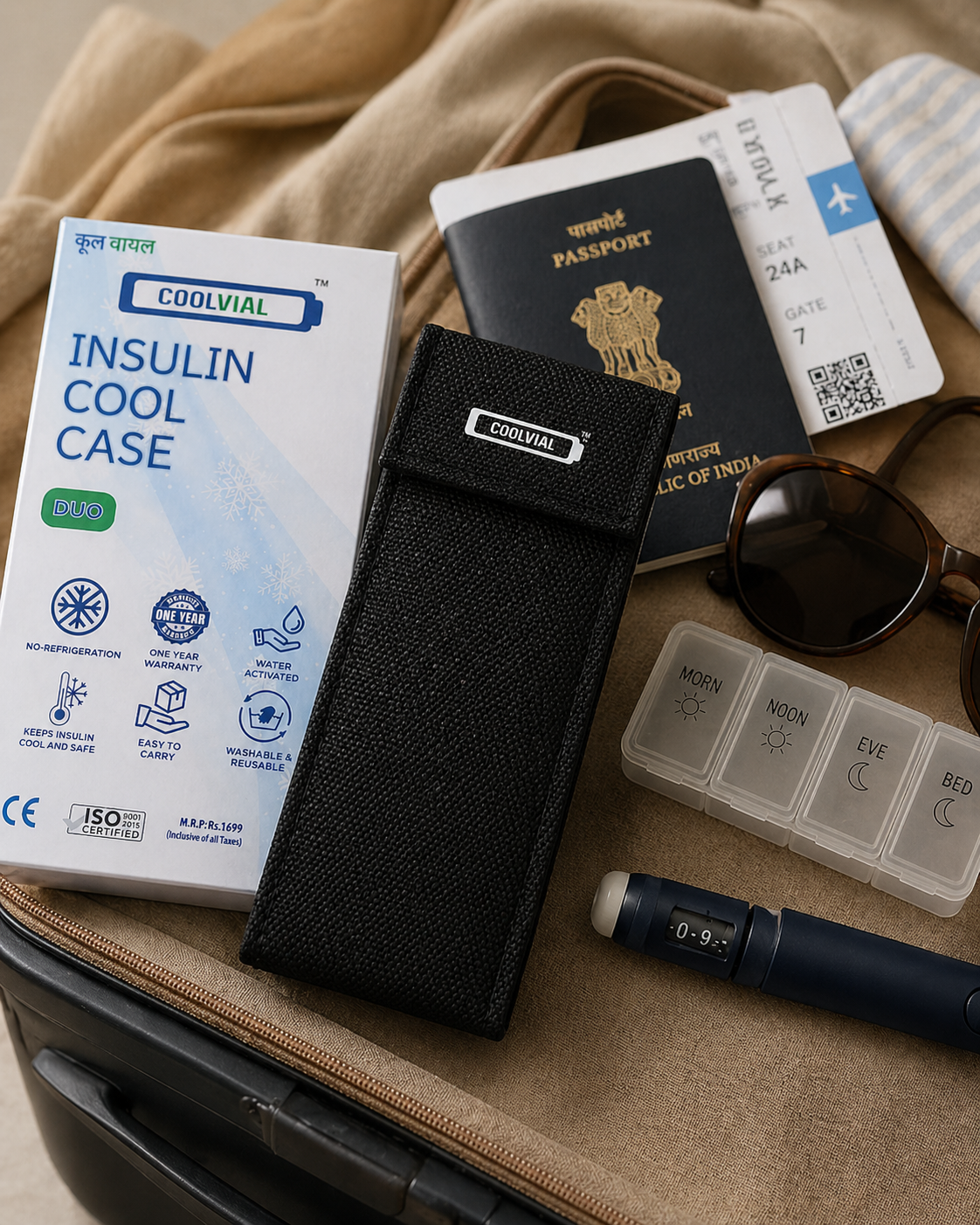
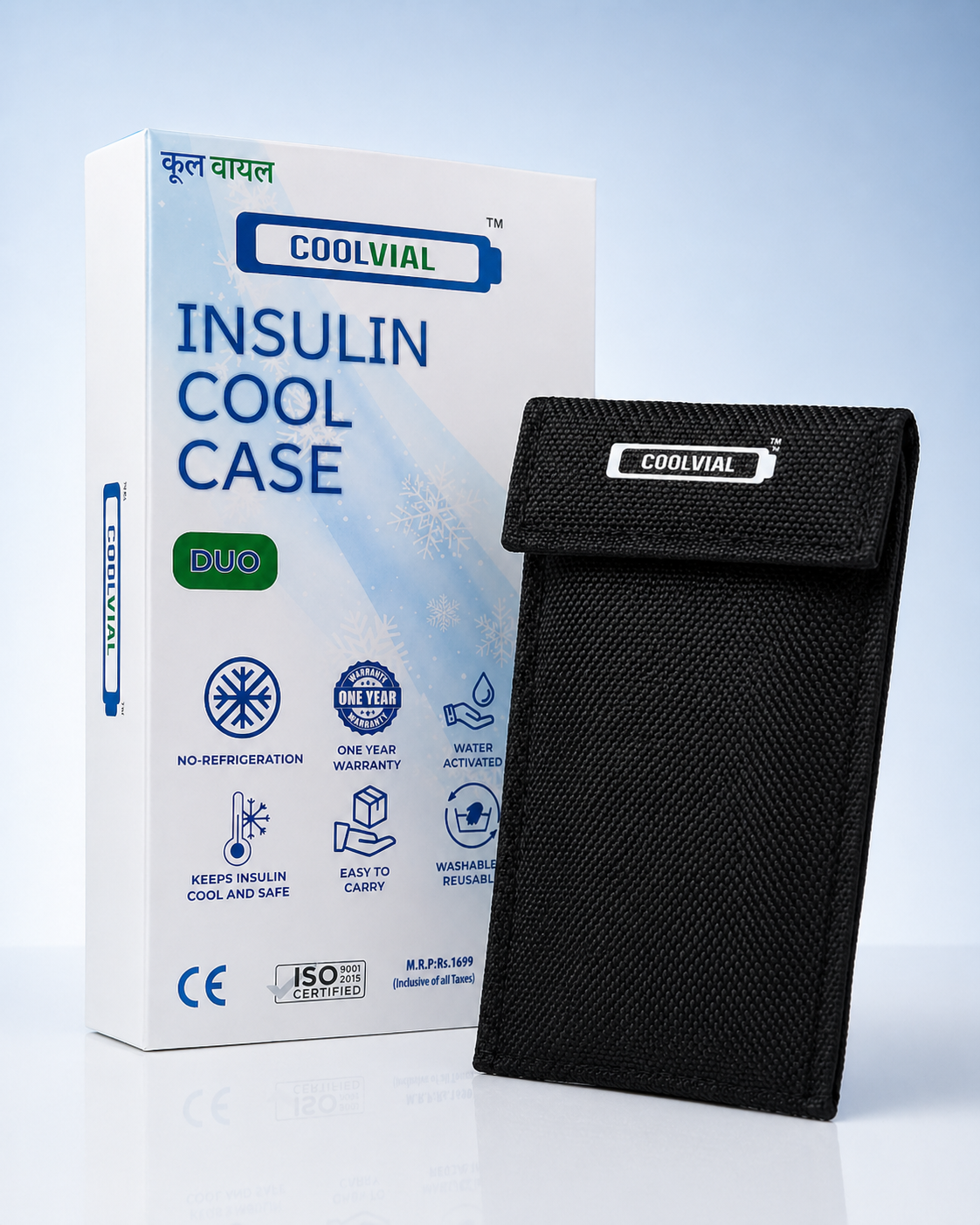
- Consider a COOLVIAL Duo: For this duration, an evaporative cooling case like the COOLVIAL Duo starts to become invaluable. It can keep insulin cool for 12-16 hours without electricity. If you already have one, activate it immediately.
- Monitor Room Temperature: Keep in-use insulin (which can be stored at room temperature) away from windows and direct heat sources. Use a room thermometer if available.
4. Medium to Long-Term Outages: 12 Hours and Beyond
These are the outages that truly test your preparedness. Varanasi, especially during extreme weather or grid failures, can experience prolonged power cuts that demand robust solutions.
Scenario 3: The 12-Hour Monsoon Outage
Imagine a heavy monsoon downpour, common in July and August, leading to a 12-hour power cut. Your refrigerator’s internal temperature will likely rise above the safe 8°C mark within 4-6 hours.
What to Do:
- Activate Your Evaporative Cooling Case: This is where a product like the COOLVIAL insulin cool case truly shines. The COOLVIAL Duo, for example, uses water-activated evaporative cooling to maintain a safe temperature (typically 18-26°C below the ambient temperature, but never below 2°C) for 12-16 hours. Simply immerse the inner pouch in cold water for a few minutes, gently squeeze out excess water, and place your insulin pens/vials inside. This is a far more reliable solution than ice packs which melt and can lead to freezing.
- COOLVIAL Duo Advantage: Holds 2 pens + 1 vial. Priced at just Rs 1,099 with code COOLHEAL (MRP Rs 1,699). It’s CE certified, ISO 9001:2015 compliant, and comes with a 1-year warranty. Made in India, it’s designed for the Indian climate.
- Comparison: While other brands like FRIO are available (often around Rs 1,900 for similar capacity), COOLVIAL offers a cost-effective, made-in-India solution with comparable performance. Outer Woods OW-12 (around Rs 999) is another option, but ensure it meets your specific storage duration needs.
- Seek Generator/Inverter Power (if available): If your building’s backup power is intermittent, use it to periodically re-cool your refrigerator.
- Check Neighbours: If you live in an independent house without robust backup, check with neighbours in apartment complexes or those with powerful inverters if they can temporarily store your insulin in their refrigerator. This is a common practice in close-knit Varanasi communities.
Scenario 4: The 24-Hour+ Extended Blackout
These extended outages are rare but can happen due to grid failures or severe natural disasters. This scenario demands immediate action and reliance on external resources.
What to Do:
- Maintain Evaporative Cooling: Keep your COOLVIAL Duo or similar device activated. Re-wet the inner pouch every 12-16 hours as needed to ensure continuous cooling.
- Explore Local 24-Hour Pharmacies: Varanasi has a network of pharmacies, some operating 24/7.
- Apollo Pharmacy: Check for the nearest Apollo Pharmacy. Many branches, like the one in Sigra or near BHU, often have backup power and can store insulin in their cold chain units for emergencies.
- MedPlus: Similarly, MedPlus stores often have reliable cold storage facilities.
- For a comprehensive list, refer to our guide on 24-Hour Pharmacies in Varanasi for Insulin Emergencies — Updated List.
- Contact Hospital Pharmacies: Hospitals like BHU Sir Sunderlal Hospital (IMS BHU), Apex Hospital (Sigra), and Heritage Hospital (Lanka) have well-maintained hospital pharmacies with robust cold storage facilities and usually uninterrupted power supply. In an emergency, they are a critical resource.
- Community Support: Don’t hesitate to reach out to friends, family, or trusted neighbours who might have a generator or a more reliable inverter setup. The spirit of community in Varanasi is strong, and people are often willing to help.
- Plan for Replacement: If all else fails and you suspect your insulin has been compromised (e.g., it looks cloudy, discolored, or has been exposed to extreme temperatures), prepare to obtain new insulin. This is why knowing your local pharmacies and hospitals is vital.
5. Leveraging Local Resources: Pharmacies and Hospitals
Knowing where to turn in an emergency is a cornerstone of any effective power cut survival guide. Varanasi’s healthcare infrastructure, while sometimes challenged, offers crucial support.
Key Emergency Points in Varanasi:
- BHU Sir Sunderlal Hospital (IMS BHU): Located in Lanka, this is a major medical institution with a well-equipped pharmacy and reliable power backup. It’s a primary point of contact for any medical emergency, including insulin storage.
- Apex Hospital (Sigra): A prominent hospital in the central Sigra area, also likely to have robust cold chain facilities for medications.
- Heritage Hospital (Lanka): Another significant hospital, especially for residents in the Lanka and BHU campus areas.
- Apollo Pharmacy: With multiple branches across Varanasi, including Sigra, Cantonment, and near BHU, these are often your first port of call for accessible, well-stocked pharmacies with cold storage. [Verify in 2026 for specific 24-hour branches].
- MedPlus: Another chain with a strong presence, offering similar services.
- Generic Aadhaar and Hindustan Pharmacy: While potentially smaller, these pharmacies are also part of the city’s network and may offer assistance or guidance.
Always keep a list of these essential contacts and their approximate locations handy. In a long-term power outage, a short auto-rickshaw ride to a hospital pharmacy might be the difference between safe insulin and compromised medication. For a complete overview of diabetes management in the city, check out our Complete Diabetes Care Guide for Varanasi Residents — 2026 Edition.
6. The Smart Solution: Investing in a Reliable Insulin Cooling Case
While local resources are vital, personal preparedness is paramount. This is where an insulin cooling case becomes an indispensable part of your power cut survival guide.
Why an Insulin Cooling Case is Essential for Varanasi Diabetics:
- Independence from Electricity: Unlike refrigerators or ice packs, evaporative cooling cases like COOLVIAL Duo work purely with water, making them ideal for areas with unreliable power.
- Temperature Stability: They maintain insulin within the safe temperature range (typically 18-26°C below ambient, but never below 2°C), even when ambient temperatures in Varanasi soar to 40°C+. This prevents both overheating and accidental freezing.
- Portability: Perfect for travel within and outside Varanasi, daily commutes, or simply moving around your home during an outage.
- Cost-Effective: A one-time investment that safeguards your expensive insulin for years.
Introducing the COOLVIAL Duo: Your Varanasi Power Cut Companion
Your 7-Step Essential Power Cut Survival Guide for Diabetics in Varanasi
48+ hours at 2-8°C. No electricity. CE certified. Free delivery across India.
Order on WhatsApp — ₹1,099🛒 Buy Now — ₹1,099The COOLVIAL Duo is specifically designed with the Indian climate in mind, making it an excellent choice for Varanasi residents.
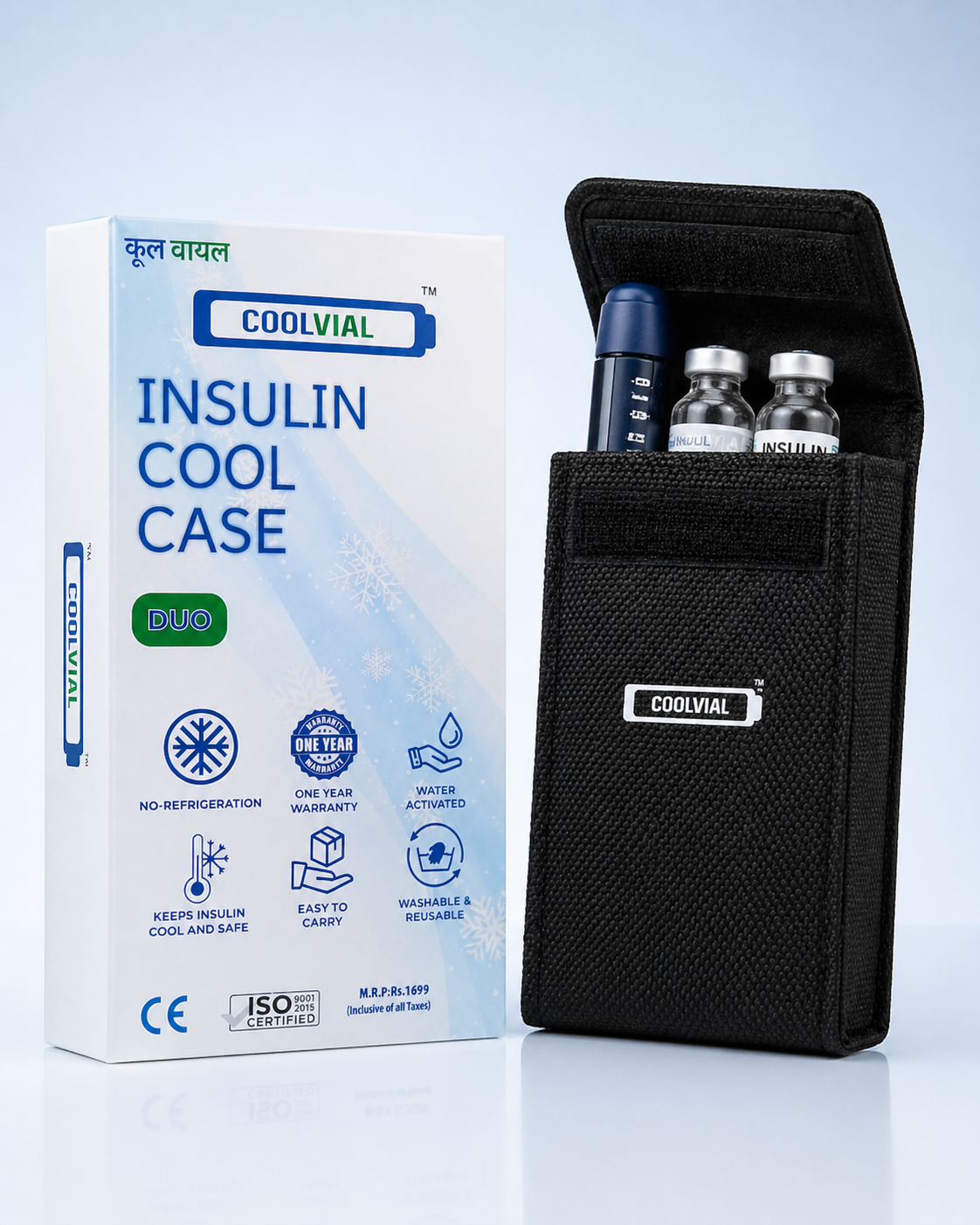
- Capacity: Holds 2 insulin pens and 1 vial, covering most users’ needs.
- Cooling Duration: Keeps insulin cool for 12-16 hours per activation cycle. Re-wetting is simple and quick.
- Ease of Use: Just immerse the inner pouch in water for 5-10 minutes. No refrigeration, batteries, or ice packs needed.
- Quality & Safety: CE certified, ISO 9001:2015, and comes with a 1-year warranty. Made in India, ensuring local quality standards.
- Affordability: At just Rs 1,099 with code COOLHEAL (MRP Rs 1,699), it’s an accessible solution.
Comparing COOLVIAL Duo with Other Options:
- FRIO: A popular international brand, FRIO offers similar evaporative cooling technology. However, a comparable FRIO case for 2 pens often costs around Rs 1,900, making COOLVIAL Duo a more budget-friendly option without compromising on quality or performance for the Indian market.
- Outer Woods OW-12: Another Indian brand, the OW-12 is often priced slightly lower (around Rs 999). While it also uses evaporative cooling, it’s important to compare the exact capacity and cooling duration to ensure it meets your specific requirements. COOLVIAL Duo’s capacity for 2 pens + 1 vial offers good versatility.
In a city like Varanasi, where power cuts are a reality, having a reliable, electricity-independent cooling solution like the COOLVIAL Duo is not a luxury, but a necessity for optimal insulin storage tips and peace of mind.
7. Beyond the Grid: Varanasi’s Growing Solar Inverter Trend
While power cuts remain a concern, Varanasi is also embracing renewable energy solutions, particularly in its expanding suburbs and newer housing developments. The adoption of solar inverter setups is becoming increasingly popular.
Benefits of Solar Inverters for Diabetics:
- Continuous Power: A well-designed solar inverter system can provide uninterrupted power, even during daytime power cuts, reducing reliance on the grid.
- Reduced Electricity Bills: Long-term savings on electricity costs.
- Environmental Impact: A greener solution, aligning with global sustainability goals.
- Enhanced Preparedness: For diabetics, this means a significantly lower risk of insulin spoilage due to power outages, especially for refrigerators.
While a full solar setup is a significant investment, its growing popularity in Varanasi, particularly in areas like the outskirts of Sarnath or new residential zones, highlights a long-term shift towards greater energy independence. For diabetics in independent houses, exploring this option could be a permanent solution to power cut woes.
8. Frequently Asked Questions (FAQs)
Q: How long can insulin stay safe in a refrigerator during a power cut? A: A closed refrigerator can maintain a safe temperature for about 4 hours, and a full freezer for up to 48 hours, provided the doors remain shut.
Q: Can I use ice packs to keep my insulin cool during a power cut? A: You can use ice packs in a cooler, but ensure insulin pens/vials do not directly touch the ice to prevent freezing, which can damage insulin. Wrap them in a cloth.
Q: What is the ideal temperature range for storing unopened insulin? A: Unopened insulin should be stored in a refrigerator at a temperature between 2°C and 8°C.
Q: How do evaporative cooling cases like COOLVIAL Duo work? A: They use water-activated crystals that absorb water and expand, creating a cooling effect through evaporation, keeping insulin at a stable, safe temperature without electricity.
Q: Where can I find emergency insulin storage in Varanasi during a prolonged power cut? A: In Varanasi, 24-hour pharmacies like Apollo Pharmacy or MedPlus, and hospital pharmacies at BHU Sir Sunderlal Hospital (IMS BHU), Apex Hospital, or Heritage Hospital are reliable options for emergency cold storage.
Q: How often do I need to reactivate my COOLVIAL Duo during a long power cut? A: The COOLVIAL Duo keeps insulin cool for 12-16 hours per activation. You should re-wet the inner pouch every 12-16 hours, or sooner if the ambient temperature is extremely high.
Q: What should I do if my insulin has frozen or been exposed to extreme heat? A: If insulin freezes or has been exposed to temperatures above 25-30°C for an extended period, it may be compromised. Discard it and obtain new insulin. Do not use insulin that looks cloudy, discolored, or has particles.
9. Conclusion: Staying Prepared, Staying Safe
Living with diabetes in Varanasi, a city rich in history and culture, comes with its own set of challenges, particularly when it comes to managing insulin during unpredictable power cuts. From the monsoon outages in Sigra and Cantonment to the summer load shedding across the city, preparedness is key. By understanding Varanasi’s unique power patterns, having a clear action plan for various outage durations, and leveraging local resources like BHU Sir Sunderlal Hospital or Apollo Pharmacy, you can significantly reduce the stress and risk associated with power disruptions.
Investing in a reliable, electricity-independent solution like the COOLVIAL Duo is a proactive step that offers peace of mind and ensures your life-saving medication remains safe and effective, no matter how long the lights stay off. It’s a small investment for continuous health and well-being. Equip yourself with the right tools and knowledge, and navigate Varanasi’s power landscape with confidence.
Order COOLVIAL Duo at Rs 1,099 with code COOLHEAL at coolvial.com or via WhatsApp wa.me/918766952300
How We Researched This
This article is based on a comprehensive review of RSSDI guidelines for diabetes management in India, ICMR-INDIAB study data on diabetes prevalence, local Varanasi hospital and pharmacy directories (including Apollo Pharmacy network), and general best practices for insulin storage during power outages. Local insights into Varanasi’s climate and infrastructure patterns were gathered through anecdotal evidence and regional news reports.
Medical Disclaimer
This article is for general information. Always consult your endocrinologist or diabetologist before changing insulin storage or dosing practices.