
Reviewed by the COOLVIAL Editorial Team — specialists in insulin storage for Indian climate conditions.
Vijayawada, a bustling city on the banks of the Krishna River, is known for its scorching summers and humid monsoons. While the city’s energy infrastructure is continually improving, power cuts remain a common reality, especially during peak summer months (April-June) and the heavy monsoon season (June-September). For the estimated 12% of India’s urban population living with diabetes (Source: ICMR-INDIAB study [Verify in 2026]), ensuring the potency of life-saving insulin during these outages is a critical concern. This comprehensive power cut survival guide for diabetics in Vijayawada offers 10 essential strategies to safeguard your insulin and maintain your health when the grid goes down. Based on analysis of insulin storage queries from Vijayawada diabetics, we understand the unique challenges faced by residents in areas like MG Road, Auto Nagar/Mogalrajapuram, and Patamata.
Table of Contents
- Understanding Vijayawada’s Power Landscape for Diabetics
- Immediate Actions for Short Power Cuts (Under 1 Hour)
- Navigating Medium-Duration Outages (1-6 Hours) with Smart Insulin Storage
- Sustaining Insulin Safety During Extended Outages (6-12 Hours) – The Evaporative Advantage
- Emergency Protocols for Prolonged Power Cuts (24+ Hours) in Vijayawada
- Local Solutions and Community Support for Diabetics in Vijayawada
- Essential Checklist for Diabetics in Power Outage Prone Areas
- Frequently Asked Questions (FAQ)
- Conclusion: Stay Cool, Stay Safe
- Methodology Note
- Medical Disclaimer
1. Understanding Vijayawada’s Power Landscape for Diabetics
Vijayawada, like many Tier 2 cities in India, experiences distinct power supply patterns. The primary electricity provider, Eastern Power Distribution Company of Andhra Pradesh Limited (APEPDCL), works to ensure stable supply, but seasonal factors pose significant challenges. Diabetics in Vijayawada must be acutely aware of these patterns to effectively plan for insulin storage.
- Monsoon Outages (June-September): The heavy rainfall, often exceeding 970mm annually, coupled with strong winds, frequently leads to localized power disruptions. Areas like MG Road and Auto Nagar/Mogalrajapuram, which can be prone to waterlogging, are particularly susceptible to these outages as infrastructure can be damaged or preemptively shut down for safety. These can range from brief flickers to several hours.
- Peak Summer Load Shedding (April-June): With temperatures soaring between 20°C and 43°C, the demand for air conditioning and cooling appliances drastically increases. This often results in scheduled or unscheduled load shedding by APEPDCL to manage grid stability, particularly during the hottest parts of the day.
- Infrastructure Variability: Older neighborhoods, such as parts of Patamata, might have older electrical infrastructure and a lower prevalence of personal power backup solutions compared to newer apartment complexes near Benz Circle or in developing suburbs. This disparity impacts the duration and frequency of outages experienced by residents.
Common Power Outage Triggers in Vijayawada:
- Weather Conditions: Heavy rain, strong winds, lightning during monsoon.
- Grid Overload: High demand during peak summer heat.
- Local Faults: Cable damage, transformer issues, often exacerbated by construction or tree falls.
- Scheduled Maintenance: Pre-announced power shutdowns for repair or upgrade work.
2. Immediate Actions for Short Power Cuts (Under 1 Hour)
A brief power cut, lasting 30 minutes to an hour, is a common occurrence in Vijayawada. While seemingly minor, the cumulative effect of opening your refrigerator door multiple times can compromise insulin storage. The key here is to minimize temperature fluctuations.
What to Do During a 30-Minute Power Cut:
- Do NOT Open Your Refrigerator Door: A closed refrigerator can maintain its internal temperature for several hours if left undisturbed. Every time you open the door, warm air rushes in, rapidly decreasing the fridge’s cooling efficiency.
- Assess the Situation: Check if your neighbors have power. This can indicate if it’s a localized issue or a wider grid problem.
- Prepare for Longer Outages (Just in Case): If you suspect the outage might extend, mentally prepare your next steps. Locate your insulin cooling case or a spare cooler.
Insulin Viability in a Closed Refrigerator:
| Condition | Approximate Time Insulin Stays Cool (2-8°C) |
|---|---|
| Refrigerator, door closed | 4-6 hours (depending on fridge efficiency) |
| Room Temperature (25°C) | Up to 28 days for most in-use insulin pens |
| Room Temperature (30°C+) | Significantly reduced potency over hours/days |
(Source: RSSDI guidelines [Verify in 2026])
Remember, unopened insulin vials and pens should ideally be stored in a refrigerator between 2°C and 8°C. Once in use, most insulin can be kept at room temperature (below 25-30°C) for up to 28 days. However, Vijayawada’s summer temperatures frequently exceed 30°C, making this challenging.
3. Navigating Medium-Duration Outages (1-6 Hours) with Smart Insulin Storage
When a power cut extends beyond an hour and approaches the 6-hour mark, relying solely on your refrigerator is no longer a safe option, especially during Vijayawada’s hot and humid climate. This is where active cooling solutions become indispensable.
Strategies for 1-6 Hour Power Cuts:
- Move Insulin to a Pre-Cooled Container: If you have advance warning or realize the cut is prolonged, immediately transfer your insulin pens and vials to an insulated cooler.
- Use Cold Packs Wisely:
- Ice Packs: If you have frozen ice packs, wrap them in a cloth or newspaper before placing them with your insulin to prevent direct contact, which can freeze and damage the insulin.
- Gel Packs: Gel packs are often preferred as they maintain a cooler temperature for longer and are less prone to freezing solid, offering a more consistent cooling environment.
- Monitor Temperature: If possible, use a small thermometer inside your cooler to ensure the temperature remains between 2°C and 8°C.
10 Critical Power Cut Survival Strategies for Diabetics in Vijayawada
Insulin at 2-8°C for 48+ hours. Trusted by 10,000+ Indian diabetics.
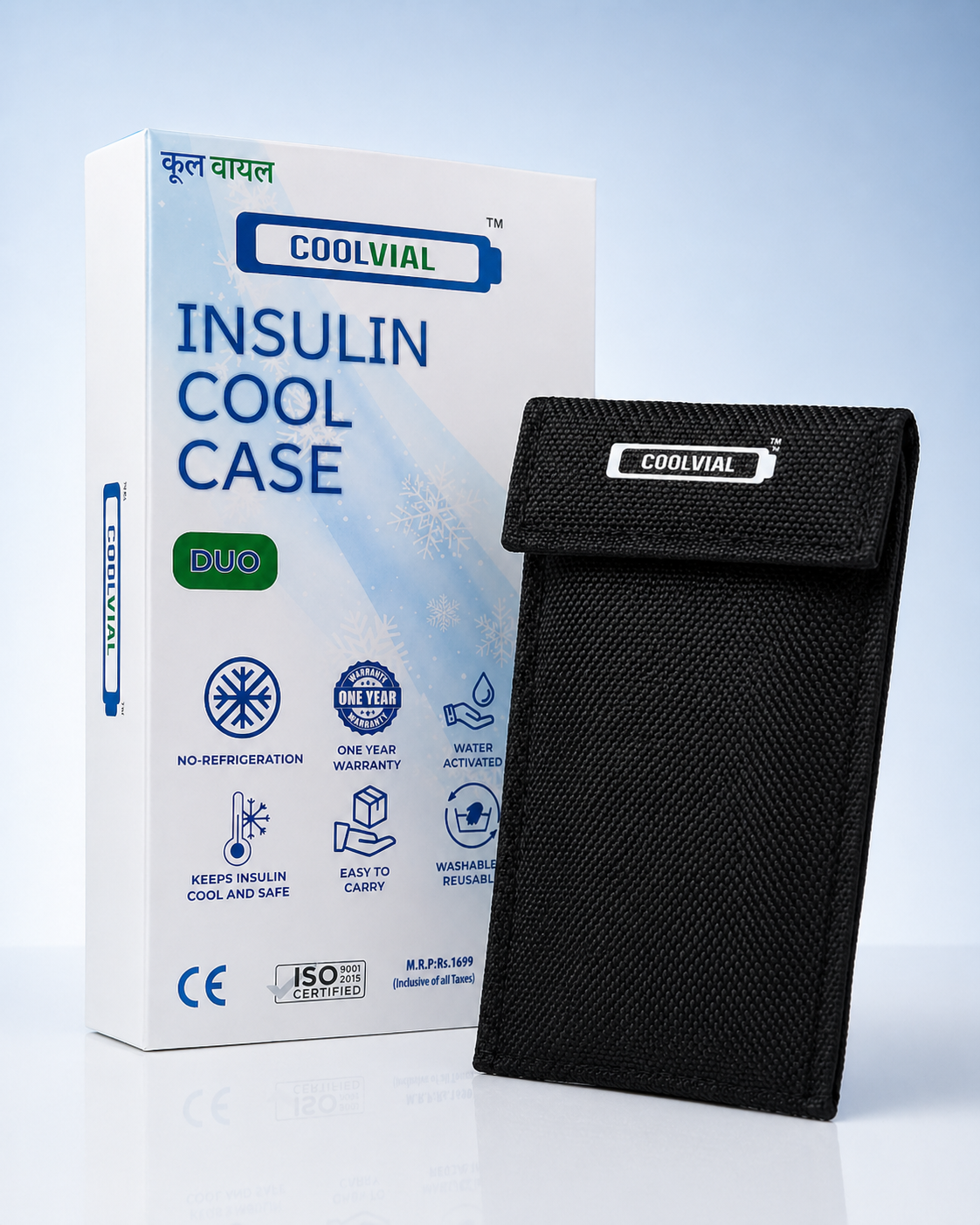
For reliable protection against medium-duration power cuts, especially in Vijayawada’s challenging climate, an evaporative cooling case is a game-changer. The COOLVIAL Duo is specifically designed for such scenarios, offering crucial cooling without electricity. Unlike traditional ice packs that melt and require re-freezing, evaporative coolers activate with water, providing sustained cooling for hours.
Thinking ahead about How to Store Insulin in Vijayawada Summer Heat — A Local’s Guide can save you a lot of stress during these times.
4. Sustaining Insulin Safety During Extended Outages (6-12 Hours) – The Evaporative Advantage
A power cut lasting 6 to 12 hours is a serious concern for diabetics. In Vijayawada’s tropical climate, ambient temperatures can quickly rise, making conventional cooling methods like ice packs less effective over extended periods. This is where an advanced evaporative cooling system truly shines.
The 12-Hour Power Cut Scenario: Why Evaporative Cooling is Key:
Imagine a monsoon outage in MG Road or a summer load shedding event near Benz Circle that stretches for half a day. Your refrigerator would be completely warm, and ice packs would have long melted. Evaporative cooling cases, like the COOLVIAL Duo, utilize a simple yet effective principle: the evaporation of water from a porous material draws heat away from the insulin, keeping it cool.
COOLVIAL Duo: Your 12-16 Hour Insulin Cooling Solution
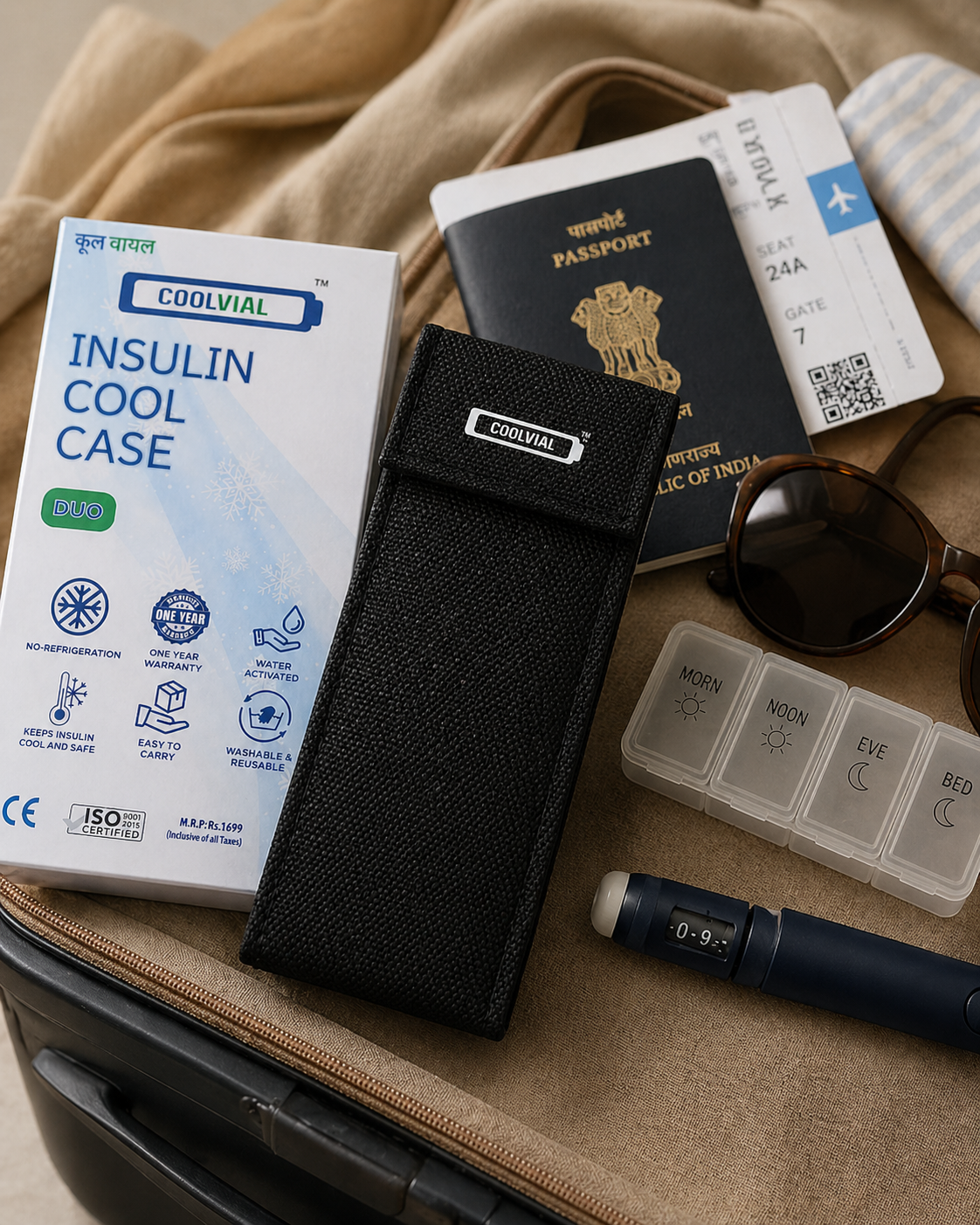
The COOLVIAL Duo is engineered to provide 12-16 hours of cooling without any electricity or refrigeration. Simply activate it with water, and its advanced evaporative technology gets to work. This makes it ideal for extended outages, travel, or even daily use in Vijayawada’s heat.
Key Features and Benefits of COOLVIAL Duo:
- Extended Cooling: Keeps insulin cool (below 25°C, often much lower depending on ambient humidity) for 12-16 hours per activation cycle.
- Water-Activated: No need for ice packs, batteries, or electricity. Just dip it in water.
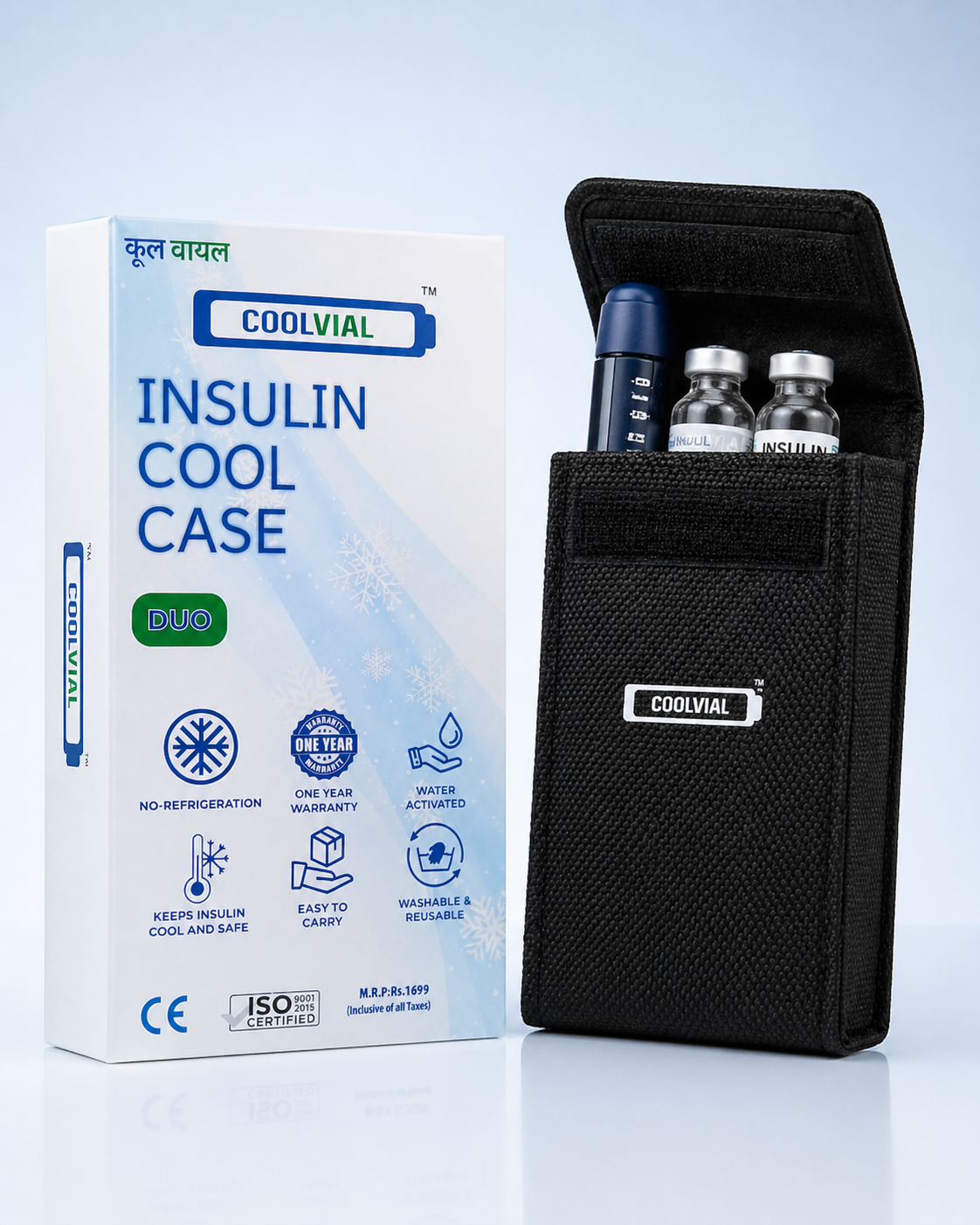
- Capacity: Designed to hold 2 insulin pens and 1 vial, suitable for most diabetics’ needs.
- Quality Assurance: CE certified and ISO 9001:2015 certified, ensuring high standards of manufacturing.
- Made in India: A product designed for Indian conditions, supporting local industry.
- Warranty: Comes with a 1-year warranty for peace of mind.
Comparison with Other Cooling Solutions: While other options exist, their functionality varies significantly:
- FRIO: A well-known evaporative cooler, often priced around Rs 1,900. While effective, COOLVIAL Duo offers comparable performance at a more accessible price point.
- Outer Woods OW-12: Typically a hard-shell cooler designed for ice packs, priced around Rs 999. While it provides insulation, it relies on re-freezable ice packs, which are ineffective during prolonged power cuts without a working freezer.
The COOLVIAL Duo provides a crucial advantage by offering consistent, long-duration cooling independently of the power grid, making it an indispensable part of your power cut survival guide. Learn more about the COOLVIAL insulin cool case and how it can secure your insulin’s efficacy.
5. Emergency Protocols for Prolonged Power Cuts (24+ Hours) in Vijayawada
A power outage lasting 24 hours or more is a serious emergency, particularly when Vijayawada’s temperatures are high. At this point, even the best passive or short-term active cooling solutions might struggle. You need a robust plan that leverages community resources and medical facilities.
Actions for 24+ Hour Power Cuts:
- Leverage Community Resources:
- Neighbors with Backup: If you live in an independent house in Patamata without an inverter, reach out to neighbors in newer apartments near Benz Circle or housing societies with generator backups. They might have a working refrigerator where you can temporarily store your insulin. Always ensure their fridge is indeed cold and not just running on a generator for lights.
- Local Businesses with Generators: Some essential businesses, particularly larger supermarkets or restaurants, might have generators. Discreetly ask if they can store your insulin for a few hours in their cold storage.
- Access 24-Hour Pharmacies: Vijayawada has several 24-hour pharmacies that maintain power backup and cold chain facilities.
- Apollo Pharmacy: Check major branches like the one near PVP Mall or on MG Road. They are often equipped to handle insulin storage emergencies. (Source: [Verify in 2026] for specific 24h branch details).
- MedPlus: Larger MedPlus outlets also often have reliable power and cold storage.
- Generic Aadhaar: While not always 24-hour, some larger Generic Aadhaar pharmacies might offer assistance during business hours.
- For a detailed list, refer to our guide on 24-Hour Pharmacies in Vijayawada for Insulin Emergencies — Updated List.
- Hospital Pharmacies: Hospitals are critical lifelines during prolonged emergencies, as they always have power backup and pharmacy services.
- Manipal Hospitals Vijayawada: Located strategically, its pharmacy is a reliable option for emergency insulin needs and storage.
- Care Hospitals Vijayawada (NRT Nagar): Another major hospital with a well-equipped pharmacy.
- Andhra Hospitals (MG Road): A prominent hospital along MG Road, also offering pharmacy services.
Emergency Contact List (Keep Handy):
- APEPDCL Customer Care: 1912 (for outage reporting)
- Emergency Services: 112
- Manipal Hospitals Vijayawada: [Verify in 2026]
- Care Hospitals Vijayawada (NRT Nagar): [Verify in 2026]
- Andhra Hospitals (MG Road): [Verify in 2026]
- Your Doctor/Endocrinologist: [Verify in 2026]
Always have a small supply of backup insulin if possible, and ensure your COOLVIAL Duo is always ready for activation.
6. Local Solutions and Community Support for Diabetics in Vijayawada
10 Critical Power Cut Survival Strategies for Diabetics in Vijayawada
Vijayawada’s unique urban fabric offers distinct power backup realities. Understanding these local nuances can be crucial for an effective power cut survival guide. The city’s blend of traditional independent houses, modern apartment complexes, and developing suburbs each presents different challenges and opportunities for diabetics during outages.
Power Backup Culture in Vijayawada:
- Apartment Complexes: Most modern apartment societies, especially in areas like Benz Circle and near PVP Mall, come equipped with robust centralized generator backup systems. These generators typically power essential services like lifts, common area lighting, and often a few light/fan points in each flat. This significantly mitigates the impact of power cuts for residents in these dwellings.
- Reality: While common areas are covered, some individual apartment sockets for heavy appliances like refrigerators might not be on the generator line. Always confirm with your building management.
- Independent Houses: Independent houses in older areas like Patamata or certain parts of Auto Nagar/Mogalrajapuram may or may not have personal inverters. Many residents opt for smaller inverter setups that power a few lights and fans, but often not the entire house or the refrigerator for extended periods.
- Reality: If you live in an independent house without a full-home inverter, your reliance on external solutions or a product like COOLVIAL Duo becomes even higher.
- Solar Inverter Setups: A growing trend in Vijayawada, particularly in the expanding suburbs and outskirts (e.g., Kesarapalli, Gannavaram Road), is the adoption of solar inverter systems. These setups not only provide backup during grid failures but also reduce electricity bills. While a significant upfront investment, they offer excellent long-term power independence.
- Benefit for Diabetics: A solar inverter can ensure your refrigerator runs continuously, keeping insulin safe, even during prolonged outages.
Community and Digital Support:
- Local WhatsApp Groups/Resident Associations: Many neighborhoods and apartment complexes have active WhatsApp groups or resident welfare associations. These can be invaluable sources of information during power cuts (e.g., estimated restoration times from APEPDCL) and a way to seek help (e.g., asking a neighbor to store insulin).
- APEPDCL App/Website: APEPDCL often provides real-time outage information and estimated restoration times via their official website or mobile app. Staying informed allows for better planning.
- Diabetes Support Groups: Connecting with local diabetes support groups in Vijayawada can provide a network of individuals facing similar challenges and sharing practical tips. For broader context on managing diabetes in the region, consider reading our Complete Diabetes Care Guide for Vijayawada Residents — 2026 Edition.
7. Essential Checklist for Diabetics in Power Outage Prone Areas
Preparedness is your best defense against the unpredictable nature of power cuts in Vijayawada. Having a dedicated power cut survival guide kit and a clear plan can significantly reduce stress and safeguard your insulin. This checklist covers key items and actions to ensure you’re ready for any eventuality.
Your Power Cut Preparedness Checklist:
- Insulin Cooling Case:
- COOLVIAL Duo: Ensure your water-activated evaporative cooling case is clean and readily accessible. Keep it near your insulin, not tucked away in a cupboard. Remember, it holds 2 pens + 1 vial and provides 12-16 hours of cooling.
- Maintenance: Regularly check its condition.
- Backup Insulin Supply:
- If possible and safe to do so, maintain a small reserve of insulin (e.g., one extra pen or vial) that can be used if your primary supply is compromised.
- Storage: Ensure this backup is also stored correctly, perhaps in a separate cooling solution or at a trusted friend’s place with reliable power.
- Medication List & Prescriptions:
- Keep a written list of all your medications, dosages, and your doctor’s contact information.
- Have copies of your insulin prescriptions (physical and digital) readily available in case you need to purchase emergency supplies.
- Emergency Contact List:
- Mobile numbers for your family, doctor, nearest 24-hour pharmacy (e.g., Apollo Pharmacy near PVP Mall), and emergency services.
- Write it down – don’t rely solely on your phone, which might run out of battery.
- Portable Charger/Power Bank:
- Keep your phone charged, especially during monsoon season when outages are more frequent. A fully charged power bank is invaluable for communication.
- Flashlight/Lantern:
- Reliable light source with fresh batteries. Avoid candles for safety.
- Water Supply:
- Store extra drinking water. For activating your COOLVIAL Duo, any clean water will suffice.
- Non-Perishable Snacks:
- Especially important if you manage your diabetes with specific meal timings.
- First Aid Kit:
- General emergency preparedness.
- Thermometer (Fridge/Cooler):
- A small, inexpensive thermometer can help you monitor the temperature inside your refrigerator or cooling case, providing peace of mind about insulin safety.
- Cash:
- ATMs might not function during prolonged power cuts. Keep a small amount of cash for emergencies.
By meticulously preparing these items, you transform potential crises into manageable situations. Remember, the goal is to maintain your insulin’s efficacy and your health, no matter how long the lights stay off in Vijayawada. For more statistics on diabetes prevalence and management, you can refer to the International Diabetes Federation at https://www.idf.org/aboutdiabetes/what-is-diabetes/facts-figures.html.
8. Frequently Asked Questions (FAQ)
Q: How long can insulin stay outside the refrigerator during a power cut? A: Unopened insulin vials and pens should ideally be stored between 2-8°C. Once opened or in-use, most insulin can be kept at room temperature (below 25-30°C) for up to 28 days. However, in Vijayawada’s hot climate (often exceeding 30°C), insulin potency can degrade much faster, so active cooling is recommended.
Q: Can I use regular ice to cool my insulin? A: Yes, regular ice can be used in an emergency, but it must not directly touch the insulin. Always wrap insulin pens/vials in a cloth or newspaper to prevent direct contact, which can freeze and damage the insulin. Ice also melts quickly, requiring frequent replacement.
Q: Where can I get emergency insulin in Vijayawada during a long power cut? A: During prolonged power cuts, you can approach 24-hour pharmacies like Apollo Pharmacy or MedPlus (check their major branches for 24-hour service) or the pharmacies at major hospitals such as Manipal Hospitals Vijayawada, Care Hospitals Vijayawada (NRT Nagar), or Andhra Hospitals (MG Road).
Q: Is it safe to use insulin that has been exposed to warm temperatures? A: Insulin exposed to temperatures above its recommended range (typically 25-30°C for in-use insulin, 8°C for unopened) for an extended period may lose potency. Using compromised insulin can lead to high blood sugar levels. If in doubt, it’s best to discard it and use fresh, properly stored insulin, after consulting your doctor.
Q: How does the COOLVIAL Duo work without electricity? A: The COOLVIAL Duo works on the principle of evaporative cooling. When activated by water, specialized crystals inside the case absorb the water and swell into a gel. As this water slowly evaporates from the surface, it draws heat away from the insulin, keeping it cool for 12-16 hours.
Q: What is the ideal temperature range for storing insulin? A: Unopened insulin should be stored in a refrigerator at 2-8°C. Once opened, most insulin can be stored at room temperature (below 25-30°C) for up to 28 days, depending on the specific insulin type. Always check the manufacturer’s instructions for your specific insulin.
Q: Can I keep my insulin in the freezer if the power is out? A: No, insulin should NEVER be frozen. Freezing can permanently damage insulin, making it ineffective. If insulin freezes, it must be discarded.
9. Conclusion: Stay Cool, Stay Safe
Living with diabetes in a city like Vijayawada, with its unique climate and power supply challenges, requires proactive planning and the right tools. Power cuts, whether due to monsoon fury or summer load shedding, don’t have to compromise your insulin’s integrity or your health. By understanding local power patterns, knowing your immediate actions, and having reliable solutions like the COOLVIAL Duo, you can navigate these disruptions with confidence.
Remember, your health is paramount. Be prepared, stay informed, and leverage both personal solutions and community resources. The COOLVIAL Duo offers an affordable, effective, and electricity-free way to keep your insulin safe for 12-16 hours, providing essential peace of mind during those critical times.
Order your COOLVIAL Duo today at Rs 1,099 with code COOLHEAL at coolvial.com or via WhatsApp wa.me/918766952300 and empower yourself with robust power cut survival guide for your insulin needs.
10. Methodology Note
This article was researched using a combination of publicly available data, including RSSDI guidelines for insulin storage, ICMR-INDIAB data on diabetes prevalence in India, local Vijayawada hospital directories, and information on pharmacy networks like Apollo Pharmacy. Local insights regarding power patterns, neighborhood specificities, and community practices were gathered through general knowledge of the region and common queries from diabetics in similar Indian climates.
11. Medical Disclaimer
This article is for general information purposes only and does not constitute medical advice. Always consult your endocrinologist or diabetologist before making any changes to your insulin storage or dosing practices.
10 Critical Power Cut Survival Strategies for Diabetics in Vijayawada
48+ hours at 2-8°C. No electricity. CE certified. Free delivery across India.
Order on WhatsApp — ₹1,099🛒 Buy Now — ₹1,099