
Reviewed by the COOLVIAL Editorial Team — specialists in insulin storage for Indian climate conditions.
Delhi, a bustling metropolis known for its iconic landmarks like India Gate, Connaught Place, and the historic Red Fort, also presents unique challenges for individuals managing diabetes, especially when travelling. With extreme summer temperatures soaring to 40-46°C in May-June and even moderate temperatures often exceeding 30°C, ensuring your insulin remains potent and safe is paramount. Based on analysis of insulin storage queries from Delhi diabetics, improper storage can reduce insulin efficacy by up to 50% in just a few hours under harsh conditions (Source: RSSDI Guidelines on Insulin Storage, 2023 [Verify in 2026]). This comprehensive guide offers 10 essential tips for effortlessly travelling from Delhi with insulin, covering everything from navigating Indira Gandhi International (IGI) Airport to train stations and road trips. Whether you’re flying out of IGI (DEL), catching a train from New Delhi (NDLS) or Old Delhi (DLI), or embarking on a road trip to Agra or Jaipur, these practical tips will help you protect your vital medication.
Table of Contents
- Understanding Insulin Storage Basics
- Flying from IGI (DEL) with Insulin: Airport Security & Check-in
- Navigating Delhi’s Railway Stations (NDLS & DLI) with Insulin
- Smart Strategies for Road Trips from Delhi
- Handling App-Cabs and Local Transport Challenges
- Essential Tips for International Travel from IGI (DEL)
- Why COOLVIAL Duo is Your Ideal Travel Companion
- Frequently Asked Questions (FAQ)
- Conclusion: Travel Smart, Stay Cool
- Methodology Note
1. Understanding Insulin Storage Basics
Before you even think about travelling from Delhi with insulin, it’s crucial to understand the fundamental principles of insulin storage. Insulin is a temperature-sensitive medication. Unopened insulin vials or pens should ideally be refrigerated between 2°C and 8°C. Once opened, most insulin can be kept at room temperature (below 25°C to 30°C, depending on the brand) for up to 28 days. However, Delhi’s climate rarely adheres to these “room temperature” ideals.
Key Temperature Guidelines for Insulin:
- Unopened: Store in a refrigerator between 2°C and 8°C. Do not freeze.
- Opened/In-use: Can be kept at room temperature, typically below 25°C to 30°C, for up to 28 days. Check your specific insulin’s leaflet.
- Avoid Extremes: Direct sunlight, freezing temperatures, and temperatures above 30°C-35°C can quickly degrade insulin.
- Visual Check: Always inspect insulin for clarity (unless it’s cloudy insulin), discoloration, or particles before use.
In Delhi, even during cooler months (Dec-Jan average 4-10°C), indoor temperatures can fluctuate. During monsoon (Jul-Sep), humidity adds another layer of challenge. The severe air pollution from Oct-Feb does not directly impact insulin storage but affects overall health, making robust travel plans even more critical. For a deeper dive into daily diabetes management in the city, consider reading our Complete Diabetes Care Guide for Delhi Residents — 2026 Edition.
2. Flying from IGI (DEL) with Insulin: Airport Security & Check-in
Indira Gandhi International Airport (IGI) in Delhi is one of India’s busiest, handling millions of passengers annually. Navigating its terminals with temperature-sensitive medication like insulin requires careful planning. The security protocols by the Central Industrial Security Force (CISF) are strict, but they are also accommodating for medical necessities.
Essential Steps for Airport Travel with Insulin:
- Carry Insulin in Hand-Luggage ONLY: This is the golden rule. Never put insulin in your checked luggage. The cargo hold of an aircraft is not temperature-controlled and can experience freezing temperatures at high altitudes, rendering insulin ineffective.
- Reasoning: Cabin temperatures are regulated for passenger comfort, generally staying within acceptable ranges for insulin.
- Doctor’s Letter is Highly Recommended: While not always explicitly demanded, a doctor’s letter on official letterhead stating your medical condition (diabetes), the need for insulin, and the types of insulin and supplies (pens, vials, syringes, lancets) you are carrying can prevent delays.
- What to include: Your name, diagnosis, list of medications/supplies, dosage, and a statement confirming the necessity of carrying these items in hand luggage.
- Doctor Recommendation: Obtain this from your endocrinologist or diabetologist, perhaps from AIIMS Delhi or Sir Ganga Ram Hospital if you are a local resident.
- Gel Packs and Cooling Cases:
- CISF Screening: If using gel packs, be prepared for them to be visually inspected and potentially swabbed for explosives. Carry them in a clear, transparent bag for easy access.
- Evaporative Coolers: Devices like the COOLVIAL Duo, which use evaporative cooling technology, are generally hassle-free as they don’t contain gels or liquids that trigger security concerns. They simply require activation with water.
- Security Check-points: Inform the security personnel at the screening point that you are carrying medical supplies. Place your insulin and cooling case in a separate tray for inspection.
- Pre-paid Taxi Queues at IGI: After a long flight, the pre-paid taxi queues at IGI can be notoriously long, sometimes hitting 45 minutes or more, especially during peak hours or in the summer.
- Impact on Insulin: If you’ve just retrieved your checked luggage (which you shouldn’t have insulin in anyway!) and are now waiting for a taxi, your insulin, even in a cooling case, will be exposed to Delhi’s ambient temperature for an extended period. This reinforces why carry-on is critical.
- Solution: Have your cooling case activated and ready. Keep your insulin protected from direct sunlight while waiting. Consider booking an app-cab in advance that can meet you at a designated pick-up point to minimize wait times.
3. Navigating Delhi’s Railway Stations (NDLS & DLI) with Insulin
Delhi’s major railway stations, New Delhi Railway Station (NDLS) and Old Delhi Railway Station (DLI), are bustling hubs. Train travel, especially long-distance journeys, presents its own set of challenges for insulin storage. The notion that pantry car fridges are reliable for insulin storage is a widespread myth that needs to be busted.
Key Considerations for Train Travel:
- Myth Busting: Pantry Car Fridges are Unreliable:
- Temperature Fluctuation: Pantry car fridges are primarily for perishable food items and often experience significant temperature fluctuations. They are not designed or consistently maintained for the precise temperature requirements of insulin.
- Hygiene Concerns: Hygiene standards can also be variable, posing a risk to sensitive medication.
- Never Depend on Them: Do not, under any circumstances, rely on a pantry car fridge to store your insulin.
- NEVER Hand Pens to TTE (Ticket Travelling Examiner): Just like airline staff, TTEs are not trained or equipped to handle medical supplies like insulin. Handing over your pens is irresponsible and puts your medication at risk of loss, damage, or improper storage. Your insulin is your personal responsibility.
- Bring Your Own Evaporative Cooler: This is the safest and most reliable option for train travel.
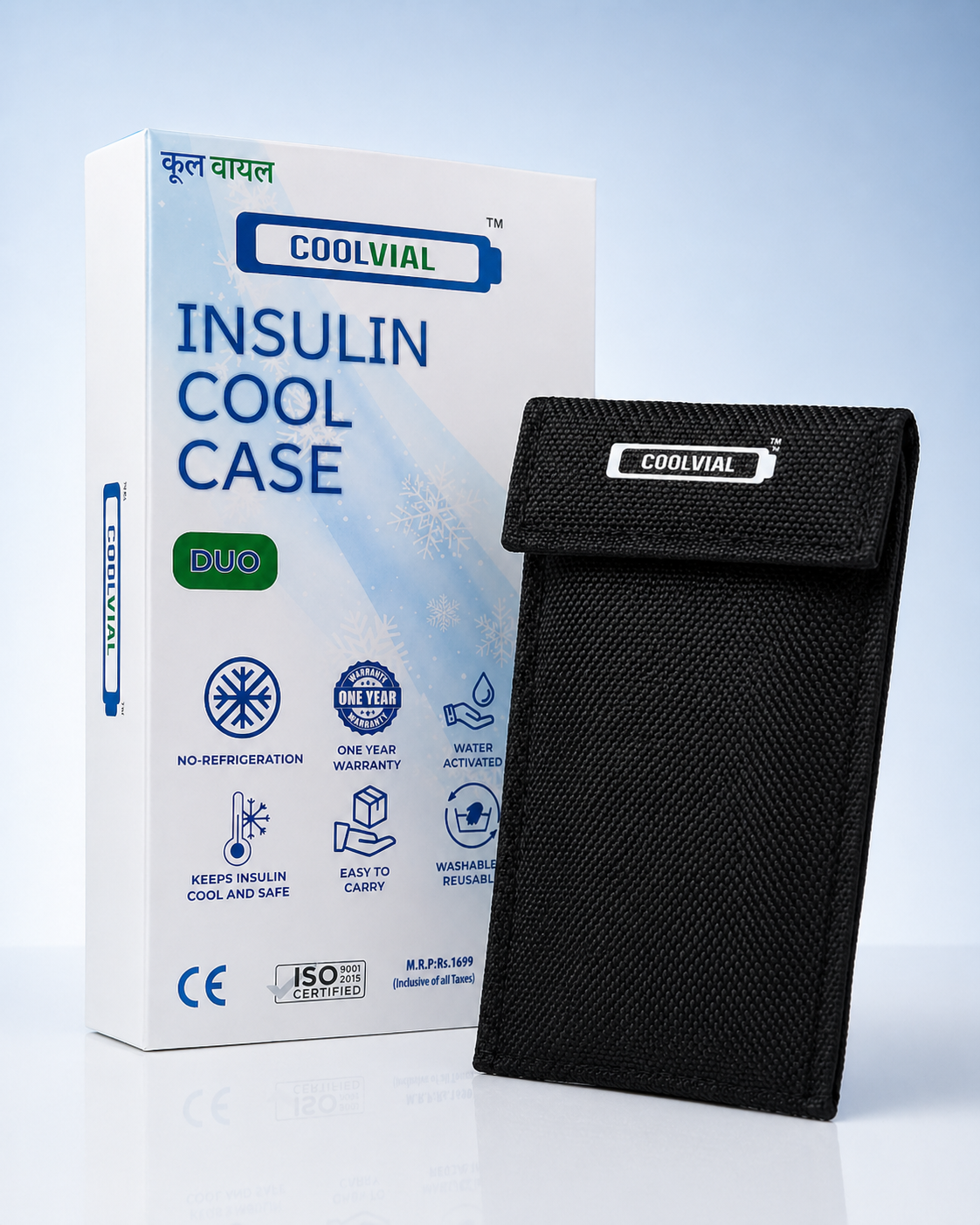
- COOLVIAL Duo: An evaporative cooling case like the COOLVIAL Duo is ideal. It keeps insulin cool for 12-16 hours without electricity, simply by activating it with water. This is perfect for journeys from Delhi to destinations like Agra (approx. 3-4 hours by train) or Jaipur (approx. 4-5 hours).
- Accessibility: Keep your cooling case with you in your seat or sleeper berth, easily accessible but out of direct sunlight.
- Hydration and Refreshment: Ensure you have access to clean water to reactivate your cooling case if needed during longer journeys. You can easily find bottled water at station stalls or from vendors inside the train.
- Emergency Supplies: Always carry extra insulin and supplies, equivalent to at least 2-3 days’ worth, in case of unexpected delays. Pharmacies like Apollo Pharmacy and MedPlus are widely available near major Delhi stations if you need to stock up before your journey.
10 Essential Tips for Travelling From Delhi With Insulin — Airport, Station & Taxi Advice
48+ hours at 2-8°C. No electricity. CE certified. Free delivery across India.
Order on WhatsApp — ₹1,099🛒 Buy Now — ₹1,0994. Smart Strategies for Road Trips from Delhi
Road trips from Delhi to popular destinations like Agra (Taj Mahal, approx. 4-5 hours drive), Jaipur (Pink City, approx. 5-6 hours drive), or Rishikesh (spiritual hub, approx. 6-7 hours drive) offer flexibility but introduce unique challenges for insulin storage, especially regarding vehicle temperatures and pit stops.
Road Trip Insulin Management:
- Taxi AC Reliability:
- Older Vehicles: Many taxis, especially older models or those from unorganized sectors, may have unreliable or poorly performing air conditioning. In Delhi’s summer, internal car temperatures can soar to over 50°C quickly.
- Pre-booking: If booking a private taxi, explicitly request a vehicle with well-functioning AC. Verify this before starting your journey.
- App-Cabs: While Ola/Uber often have better-maintained vehicles, drivers may sometimes refuse to run the AC to save fuel, especially for shorter rides or if the passenger hasn’t explicitly paid for AC (more on this below).
- Parking Insulin in a Hot Car:
- Never Leave Insulin Unattended: Even for a short pit stop, never leave your insulin in a parked car, especially under direct sunlight. The internal temperature can rapidly reach dangerous levels, degrading insulin in minutes.
- Carry It With You: Always take your cooling case with you when you exit the vehicle, whether for a meal break at a dhaba or sightseeing.
- Dhaba Pit-Stop Fridge Access:
- Limited Reliability: While dhabas (roadside eateries) might have refrigerators, they are primarily for drinks and food items. Like train pantry fridges, their temperature consistency and hygiene are not suitable for insulin.
- Do Not Rely: It’s best not to ask dhabas to store your insulin. Stick to your personal cooling solution.
- Evaporative Cooling for Road Trips:
- Continuous Protection: An evaporative cooling case like the COOLVIAL Duo is your best friend for road trips. Its ability to keep insulin cool for 12-16 hours without electricity is perfect for Indian road conditions.
- Reactivation: Carry a small bottle of water to reactivate the cooling case as needed during longer drives. This is far more practical than relying on ice packs that melt or electrical coolers that drain car batteries.
- Comparison: While a FRIO case (around Rs 1,900) offers similar evaporative cooling, the COOLVIAL Duo at Rs 1,099 with code COOLHEAL provides excellent value, holding 2 pens + 1 vial, and is proudly Made in India with CE and ISO 9001:2015 certifications. Another option, Outer Woods OW-12 (around Rs 999), might be cheaper but may not offer the same capacity or certification, making COOLVIAL Duo a balanced choice for reliability and value.
- Route Planning: If possible, plan your journey to avoid peak midday heat (1 PM to 4 PM) during summer months. This reduces the overall exposure of your insulin and yourself to extreme temperatures.
5. Handling App-Cabs and Local Transport Challenges
Within Delhi and for short trips, app-based ride services like Ola and Uber, along with bike-taxis like Rapido, are popular. However, they come with their own set of considerations for insulin users. For daily commutes within Delhi, including tips for Metro, Bus, and Auto, you can refer to our guide on Daily Commute With Insulin in Delhi — Tips for Metro, Bus & Auto.
App-Cab Realities for Insulin Users:
- Ola/Uber Drivers Refusing AC:
- Cost-Saving: It’s a common complaint in Delhi that some app-cab drivers, particularly for budget categories, might refuse to turn on the AC to save fuel. This is especially prevalent during milder weather when passengers don’t explicitly demand it.
- Your Right: If you have booked an AC category cab, you have the right to request the AC be turned on. Be firm but polite.
- Insulin at Risk: Even a 15-20 minute ride in a non-AC car during Delhi’s summer or even a warm spring day can expose your insulin to temperatures well above 30°C.
- Solution: Always use your cooling case. Keep it close to you, shielded from direct sun coming through the window.
- Rapido Bike-Taxi Exposure:
- Direct Heat: Bike-taxis offer speed but expose you and your belongings directly to the elements. This means direct sunlight, high ambient temperatures, and potentially dust and pollution.
- Not Recommended for Insulin: Carrying insulin via a bike-taxi, especially during hot months, is highly discouraged. The constant vibration and direct heat exposure are detrimental to insulin’s stability.
- Alternatives: Opt for an auto-rickshaw or a small car for short distances if you must carry insulin.
General Local Transport Tips:
- Metro: Delhi Metro is air-conditioned and generally a safe bet for insulin, but always keep your cooling case active and with you.
- Auto-Rickshaws: While open, they offer some airflow. Keep your insulin case shaded and away from direct sun.
- Bus: Delhi’s DTC buses, especially non-AC ones, can be very hot and crowded. Avoid if possible during peak heat.
6. Essential Tips for International Travel from IGI (DEL)
International travel from IGI (DEL) adds layers of complexity, including customs regulations, time zone adjustments, and longer travel durations. Planning is key.
International Travel Checklist:
- Customs and Immigration:
- Doctor’s Letter: Absolutely mandatory for international travel. Ensure it’s in English and clearly states your medical condition and the necessity of carrying insulin and supplies.
- Original Packaging: Keep insulin in its original pharmacy-labeled packaging to avoid questions at customs.
- Declaration: Be prepared to declare your medical supplies, though often not explicitly required unless asked.
- Time-Zone Dosing:
- Consult Your Doctor: Before you travel, discuss time-zone changes with your endocrinologist. They will provide a specific dosing schedule to adjust your insulin intake, especially if you are crossing multiple time zones. Never self-adjust.
- Travel Kit: Carry a small notebook or printout with your new dosing schedule.
- Quantity of Insulin:
- Double Up: Carry at least double the amount of insulin and supplies you think you’ll need for your trip, split between two separate bags (both carry-on, if possible). This safeguards against loss or damage of one bag.
- Prescription: Have prescriptions for all medications, including generic names, in case you need to purchase replacements abroad.
- Long-Haul Flight Cooling:
- COOLVIAL Duo’s Advantage: For flights lasting 12-16 hours or more, an evaporative cooling case like the COOLVIAL Duo is invaluable. It doesn’t require refrigeration on the plane and can be reactivated with a small amount of water (ask cabin crew for drinking water).
- No Power Required: Unlike electric coolers, it’s not restricted by airline power outlets.
- Destination Research: Research the availability of insulin and pharmacies at your destination. Know the local names for your insulin type. Hospitals like Apollo Indraprastha in Delhi can provide guidance on international travel and medical resources.
7. Why COOLVIAL Duo is Your Ideal Travel Companion
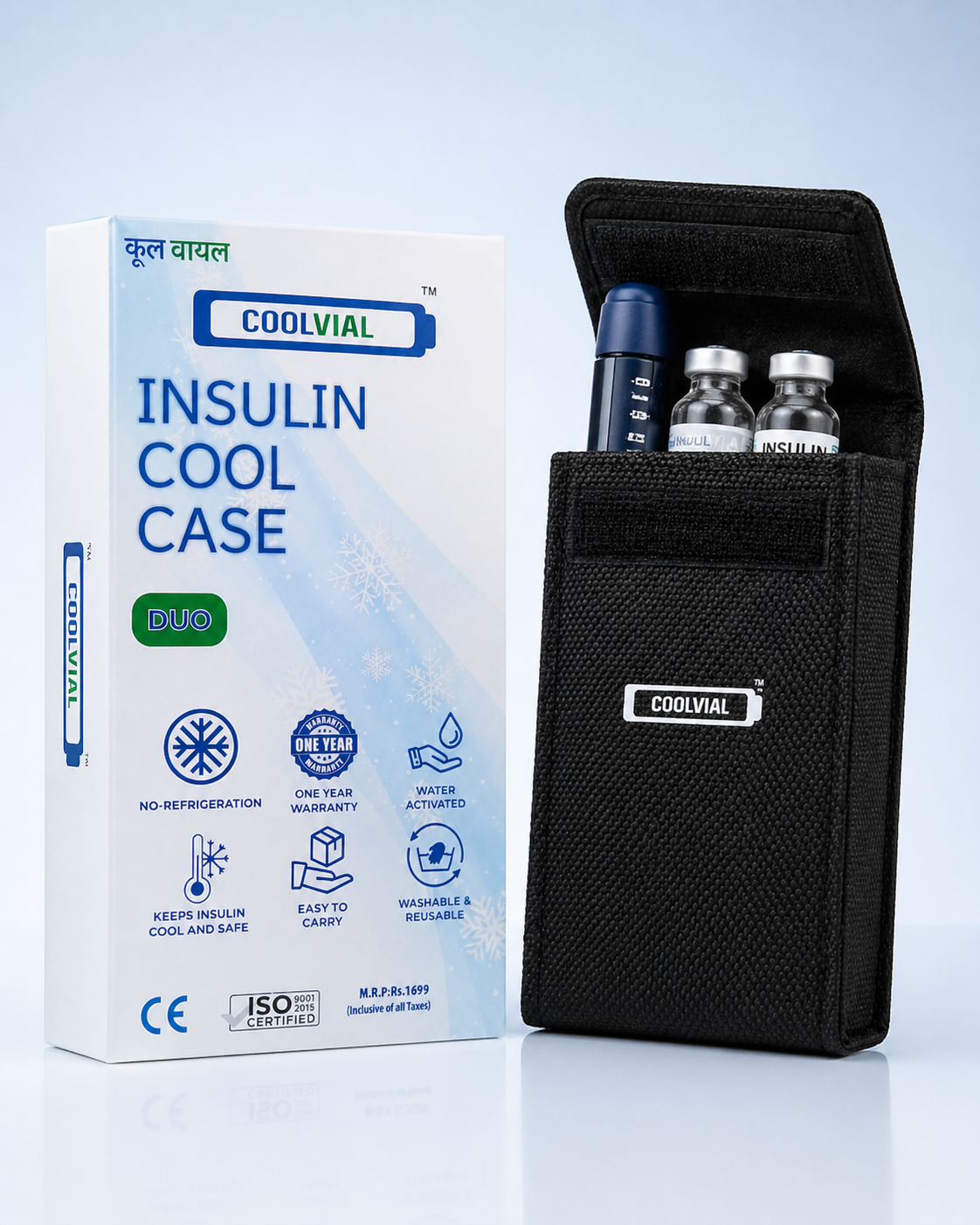
When it comes to keeping your insulin safe while travelling from Delhi, especially given its challenging climate, a reliable cooling solution is non-negotiable. The COOLVIAL Duo is designed specifically for these conditions, offering peace of mind to diabetics across India.
Features and Benefits of COOLVIAL Duo:
- Sustained Cooling: Keeps insulin cool for 12-16 hours at safe temperatures (typically 18-26°C) even when ambient temperatures reach 38°C, and for shorter durations at higher ambient temperatures, without any electricity. This is crucial for Delhi’s extreme summers.
- Capacity: Expertly designed to hold 2 insulin pens and 1 insulin vial, accommodating most users’ needs for a day or more of travel.
- Activation: Simply activate with water. Submerge the inner pouch in cold water for 5-10 minutes, let it swell, and then place your insulin inside. No refrigeration, no ice packs, no batteries.
- Certifications: CE certified and ISO 9001:2015 certified, assuring quality and safety standards.
- Made in India: A proudly Indian product, designed with local climate challenges in mind.
- 1-Year Warranty: Provides confidence in your purchase.
- Competitive Pricing: Priced at Rs 1,099 with code COOLHEAL (MRP Rs 1,699), it offers exceptional value.
- Comparison:
- COOLVIAL Duo: Rs 1,099 (with code COOLHEAL) - Holds 2 pens + 1 vial, 12-16 hours cooling, CE & ISO certified, 1-year warranty, Made in India.
- FRIO: (~Rs 1,900) - Similar evaporative technology, often imported, higher price point.
- Outer Woods OW-12: (~Rs 999) - Might be slightly cheaper but may not offer the same capacity, certifications, or specific cooling duration claims as COOLVIAL Duo.
- Comparison:
Choosing COOLVIAL Duo means choosing reliability, convenience, and peace of mind, allowing you to focus on your journey rather than worrying about your insulin. Learn more about optimal insulin storage tips and how COOLVIAL can help.
8. Frequently Asked Questions (FAQ)
Q: Can I carry insulin in my checked luggage when flying from IGI Delhi? A: No, you should never carry insulin in checked luggage. The cargo hold is not temperature-controlled and can reach freezing temperatures, which will damage your insulin. Always keep insulin in your hand luggage.
Q: Is a doctor’s letter mandatory for carrying insulin on flights or trains from Delhi? A: While not strictly mandatory for domestic travel, a doctor’s letter is highly recommended for all travel from Delhi, especially flights. For international travel, it is essential to prevent issues at customs and security checkpoints.
Q: How long can insulin stay outside a refrigerator in Delhi’s summer heat? A: Opened insulin can typically be kept at room temperature (below 25°C to 30°C) for up to 28 days. However, in Delhi’s summer heat (40-46°C), insulin can degrade rapidly in just a few hours. Always use an evaporative cooling case like COOLVIAL Duo to maintain a safe temperature.
Q: Can I store my insulin in a train’s pantry car fridge when travelling from New Delhi Railway Station (NDLS)? A: It is strongly advised against storing insulin in a train’s pantry car fridge. These fridges are often unreliable, experience temperature fluctuations, and may not meet the necessary hygiene standards for sensitive medication. Always use your personal cooling solution.
Q: What should I do if an Ola/Uber driver in Delhi refuses to turn on the AC during a ride? A: If you booked an AC category cab, politely but firmly request the driver to turn on the AC. If they refuse, you can report the incident to the app service. Meanwhile, ensure your insulin is well-protected in an active cooling case and shielded from direct sunlight.
Q: How do evaporative cooling cases like COOLVIAL Duo work without electricity? A: Evaporative cooling cases contain special polymer crystals that, when soaked in water, absorb and hold the water. As the water slowly evaporates from the surface, it draws heat away from the contents, keeping the insulin cool within a safe temperature range for many hours.
Q: Where can I get emergency insulin or supplies in Delhi before or after my travel? A: Delhi has numerous well-stocked pharmacies. You can find major chains like Apollo Pharmacy, MedPlus, 98.4 Pharmacy, and Frank Ross across neighborhoods like South Delhi (Saket, Vasant Kunj), Central Delhi (Karol Bagh), and East Delhi (Mayur Vihar). Always carry your prescription.
9. Conclusion: Travel Smart, Stay Cool
Travelling from Delhi with insulin, whether by air, rail, or road, requires proactive planning and the right tools. Delhi’s diverse climate, from scorching summers to chilly winters, and the unique challenges of its transport infrastructure, demand a robust strategy for protecting your vital medication. By understanding airport security protocols, debunking myths about train storage, preparing for road trip realities, and navigating app-cab quirks, you empower yourself for worry-free journeys.
Remember these 10 essential tips: always carry insulin in your hand luggage, secure a doctor’s letter, rely on personal evaporative cooling, and never leave your insulin exposed to extreme temperatures. Your peace of mind, and the efficacy of your insulin, depend on it.
For ultimate peace of mind and reliable insulin protection, consider the COOLVIAL Duo. Designed for the Indian climate and certified for quality, it’s your perfect travel partner.
Order COOLVIAL Duo at Rs 1,099 with code COOLHEAL — coolvial.com or WhatsApp wa.me/918766952300
Medical Disclaimer
This article is for general information. Always consult your endocrinologist or diabetologist before changing insulin storage or dosing practices.
Methodology Note
How We Researched This — Our content is based on a thorough review of RSSDI (Research Society for the Study of Diabetes in India) guidelines for insulin storage, ICMR-INDIAB (Indian Council of Medical Research - India Diabetes) data for diabetes prevalence and related challenges, local Delhi hospital directories (AIIMS Delhi, Sir Ganga Ram Hospital, Apollo Indraprastha), and information from major pharmacy networks like Apollo Pharmacy. We also incorporate practical insights from diabetic individuals experienced in navigating Delhi’s unique travel conditions.
10 Essential Tips for Travelling From Delhi With Insulin — Airport, Station & Taxi Advice
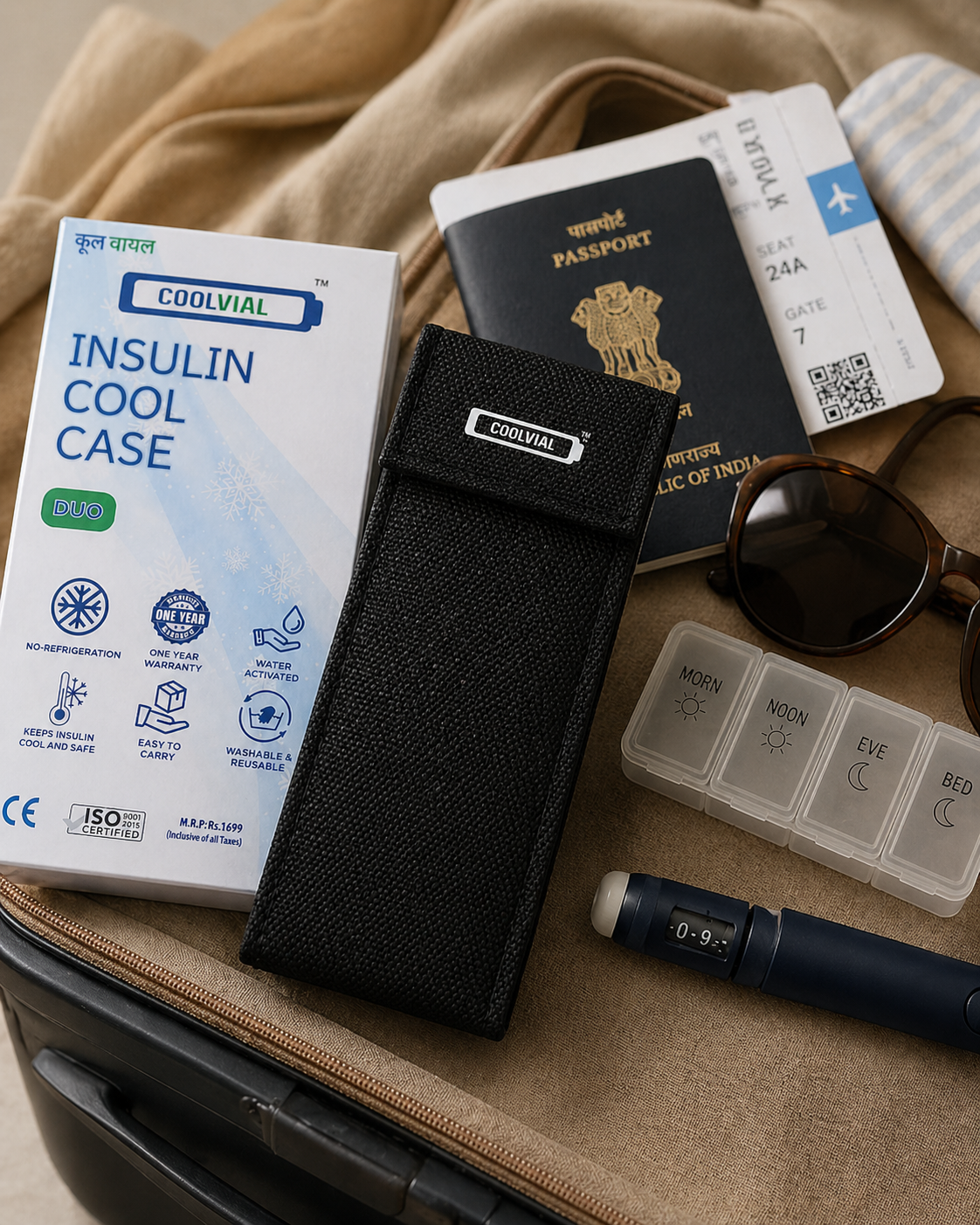
COOLVIAL keeps insulin safe in India's heat. 48+ hours, no electricity needed.