
Reviewed by the COOLVIAL Editorial Team — specialists in insulin storage for Indian climate conditions.
Delhi, a city of vibrant culture, historical grandeur, and bustling modernity, presents unique challenges and opportunities for individuals managing diabetes. As we step into 2026, understanding the nuances of diabetes care in this megacity is more critical than ever. This complete diabetes care guide for Delhi residents is designed to be your authoritative resource, addressing everything from the scorching summers to the city’s unique food landscape and the robust healthcare infrastructure. Based on analysis of insulin storage queries from Delhi diabetics, we aim to equip you with the knowledge to thrive. With an estimated 11.2% prevalence of diabetes in urban India (Source: ICMR-INDIAB study, 2020), Delhi faces a significant public health challenge, making informed self-management paramount.
This comprehensive article will delve into essential aspects of diabetes management tailored for Delhi’s specific environment, ensuring you have the tools and information to lead a healthy, unhindered life.
Table of Contents
- Diabetes Prevalence in Delhi NCR and Delhi-Specific Data
- Top Hospitals for Diabetes Care in Delhi
- Comprehensive Pharmacy Network for Diabetics in Delhi
- Navigating Delhi’s Extreme Climate and Insulin Storage
- Power and Utility Management for Diabetics in Delhi
- Efficient Transport with Insulin in Delhi
- Embracing Delhi’s Diverse Food Culture with Diabetes
- Support Groups and Community for Diabetics in Delhi
- Understanding Diabetes Insurance Options in Delhi NCR
- Unique Delhi-Specific Challenges for Diabetes Management
- Frequently Asked Questions (FAQ)
- Conclusion
- Medical Disclaimer
- How We Researched This
Diabetes Prevalence in Delhi NCR and Delhi-Specific Data
Delhi, being a major metropolitan hub, faces a growing challenge with diabetes prevalence. According to the Indian Council of Medical Research–India Diabetes (ICMR-INDIAB) study, the prevalence of diabetes in urban India stands at an alarming 11.2%. While specific, hyper-local data for Delhi can fluctuate, general trends indicate a high burden within the Delhi NCR region, mirroring national urban statistics. This escalating prevalence is attributed to a combination of factors including rapid urbanization, sedentary lifestyles, dietary changes, and genetic predispositions.
Understanding these statistics is the first step towards effective diabetes management. It underscores the importance of a proactive approach to health, regular screenings, and adherence to medical advice. For a deeper dive into expert medical opinions, refer to our guide on the Best Diabetologists & Endocrinologists in Delhi — 2026 Guide.
Key takeaways on diabetes prevalence:
- High Urban Prevalence: Urban areas like Delhi NCR show higher diabetes rates compared to rural counterparts, influenced by modern lifestyles.
- Growing Burden: The number of people living with diabetes in India is projected to rise significantly, making it crucial for Delhi residents to be aware and prepared.
- Risk Factors: A diet rich in processed foods, lack of physical activity, and increased stress contribute to the rising numbers. Genetic factors also play a role.
- Early Detection: Regular check-ups are vital for early detection, especially for individuals with a family history of diabetes or those exhibiting early symptoms.
Table: Estimated Diabetes Prevalence in Urban Indian Population (Illustrative based on ICMR-INDIAB trends)
| Age Group | Estimated Type 2 Diabetes Prevalence (%) |
|---|---|
| 20-39 | 5-7 |
| 40-59 | 12-15 |
| 60+ | 18-22 |
(Source: Aggregated data trends from ICMR-INDIAB and other national surveys. [Verify in 2026] for most recent Delhi-specific figures from local health authorities or RSSDI Delhi chapter.)
This data highlights the urgent need for a robust healthcare ecosystem and informed patient community in Delhi.
Top Hospitals for Diabetes Care in Delhi
Delhi boasts a sophisticated network of hospitals, many of which offer specialized departments for endocrinology and diabetology. Choosing the right hospital is crucial for comprehensive care, including diagnosis, treatment, and ongoing management of diabetes and its complications. The city’s leading medical institutions are equipped with state-of-the-art facilities and experienced medical professionals.
Here are some of the top hospitals in Delhi renowned for their diabetes care services:
- AIIMS Delhi (All India Institute of Medical Sciences): A premier institute known for its research, education, and patient care. Its endocrinology department is highly regarded, offering advanced diagnostic and treatment options for complex diabetes cases.
- Sir Ganga Ram Hospital: Located in Central Delhi (Rajinder Nagar), this multi-specialty hospital has a dedicated department for diabetes and metabolic diseases, providing comprehensive care including dietary counseling and advanced therapies.
- Apollo Indraprastha Hospital: Situated in South Delhi (Sarita Vihar), it’s one of the largest corporate hospitals in India, offering a wide range of services in endocrinology and diabetology with a focus on patient-centric care.
- Max Healthcare (e.g., Max Hospital, Saket): With multiple facilities across Delhi NCR, Max hospitals offer specialized diabetes clinics, focusing on holistic management, including foot care, retinopathy screening, and nephropathy management.
- Fortis Healthcare (e.g., Fortis Hospital, Vasant Kunj): Known for its advanced medical technology and experienced specialists, Fortis provides comprehensive diabetes management programs.
- BLK-Max Hospital, Rajinder Nagar: Another prominent hospital in Central Delhi, offering excellent facilities for endocrine and metabolic disorders, including diabetes.
When selecting a hospital or a diabetologist, consider factors like proximity, specialist availability, and insurance coverage. For a detailed list of specialists, consult our guide on the Best Diabetologists & Endocrinologists in Delhi — 2026 Guide.
Table: Key Diabetes Services Offered by Top Delhi Hospitals
| Hospital | Key Diabetes Services | Notable Features |
|---|---|---|
| AIIMS Delhi | Comprehensive endocrinology, research, complex case management, diabetes education | Government-funded, highly subsidized care, research powerhouse |
| Sir Ganga Ram Hospital | Diabetology department, dietary counseling, foot care, retinopathy screening | Well-established, strong patient trust, holistic approach |
| Apollo Indraprastha Hospital | Advanced diagnostics, personalized treatment plans, diabetes education, bariatric surgery for diabetes remission | JCI accredited, state-of-the-art technology, international patient services |
| Max Hospital, Saket | Diabetes clinics, insulin pump therapy, gestational diabetes management, preventive screenings | Extensive network, focus on patient experience, comprehensive sub-specialties |
| Fortis Hospital, Vasant Kunj | Diabetes management programs, specialized clinics for complications, lifestyle modification support | Modern infrastructure, renowned specialists, strong focus on preventive care |
| BLK-Max Hospital | Metabolic disorder treatment, diabetic neuropathy care, endocrinology consultations, diabetes in pregnancy management | Central location, experienced team, focus on surgical and non-surgical solutions |
(Note: Services are indicative and may vary. Always verify directly with the hospital for specific offerings and specialist availability.)
Comprehensive Pharmacy Network for Diabetics in Delhi
Access to essential medications, especially insulin, is paramount for diabetes management. Delhi boasts a dense network of pharmacies, ranging from large retail chains to independent stores, ensuring that vital supplies are usually within reach. However, understanding which pharmacies offer specific services like 24-hour availability or reliable insulin storage is crucial.
Major pharmacy chains that reliably stock insulin and other diabetes medications include:
- Apollo Pharmacy: Widely available across Delhi, including neighborhoods like South Delhi (GK, Saket, Vasant Kunj), Central Delhi (CP, Karol Bagh), West Delhi (Rajouri Garden, Janakpuri), and East Delhi (Mayur Vihar, Preet Vihar). They often have trained staff and maintain proper storage conditions.
- MedPlus: Another large chain with a significant presence in Delhi, offering a broad range of medicines and healthcare products.
- Generic Aadhaar: Focuses on providing affordable generic medicines, which can be a boon for long-term diabetes management costs.
- 98.4 Pharmacy: Known for its customer service and sometimes offering home delivery options.
- Frank Ross: A long-standing pharmacy chain with a trusted reputation.
Beyond brick-and-mortar stores, online pharmacies have become increasingly popular for their convenience and competitive pricing. Platforms like Netmeds, PharmEasy, and Apollo 24/7 offer home delivery of medications across Delhi NCR, often with discounts. When ordering insulin online, always ensure the vendor follows strict cold chain protocols for delivery. For emergencies, knowing the nearest 24-hour pharmacy is vital; find an updated list in our guide: 24-Hour Pharmacies in Delhi for Insulin Emergencies — Updated List. If you’re looking to purchase specialized cooling solutions, check out Where to Buy an Insulin Cooler in Delhi — Top Stores, Pharmacies & Online Delivery.
Tips for using Delhi’s Pharmacy Network:
- Verify Stock: Always call ahead to confirm insulin availability, especially for specific brands or types.
- Check Expiry Dates: Double-check expiry dates before purchasing, particularly for insulin.
- Storage Conditions: Ensure insulin is stored correctly (refrigerated) at the pharmacy.
- Prescription Ready: Keep your prescription handy, as insulin and other controlled medications require one.
- Home Delivery: Utilize online services for convenience, but prioritize cold chain delivery for insulin.
Table: Pharmacy Types and Their Advantages for Diabetics in Delhi
| Pharmacy Type | Advantages | Considerations |
|---|---|---|
| Retail Chains | Wide availability, often 24/7 locations, trained staff, reliable stock | Can be slightly more expensive than independent stores, parking might be an issue in crowded areas |
| Independent Stores | Personalized service, may offer credit, sometimes more flexible | Stock might be limited for less common insulin types, 24/7 availability is rare |
| Generic Pharmacies | Significant cost savings on generic medications | Ensure your specific insulin brand is available in generic form (if applicable), limited locations |
| Online Pharmacies | Convenience, home delivery, discounts, access to wider inventory | Requires planning (delivery time), cold chain integrity for insulin delivery must be verified, internet access |
Navigating Delhi’s Extreme Climate and Insulin Storage
Delhi’s climate is notorious for its extremes, posing significant challenges for insulin storage. The city experiences:
- Extreme Summer: May to June sees temperatures soaring to 40-46°C, making safe insulin storage a critical concern.
- Cold Winter: December to January can bring chilly temperatures of 4-10°C, which, while generally better for insulin than extreme heat, still requires attention to avoid freezing.
- Monsoon Season: July to September brings high humidity and occasional heavy rainfall, which can also impact insulin integrity if not stored correctly.
- Severe Air Pollution: October to February, though not directly impacting insulin storage temperature, highlights the need for overall health vigilance.
Insulin, a delicate protein, is highly susceptible to temperature fluctuations. It must be stored between 2°C and 8°C in a refrigerator until opened. Once opened, it can typically be kept at room temperature (below 25°C or 30°C, depending on the specific insulin type and manufacturer guidelines) for 28 days. However, Delhi’s “room temperature” often far exceeds this safe range.
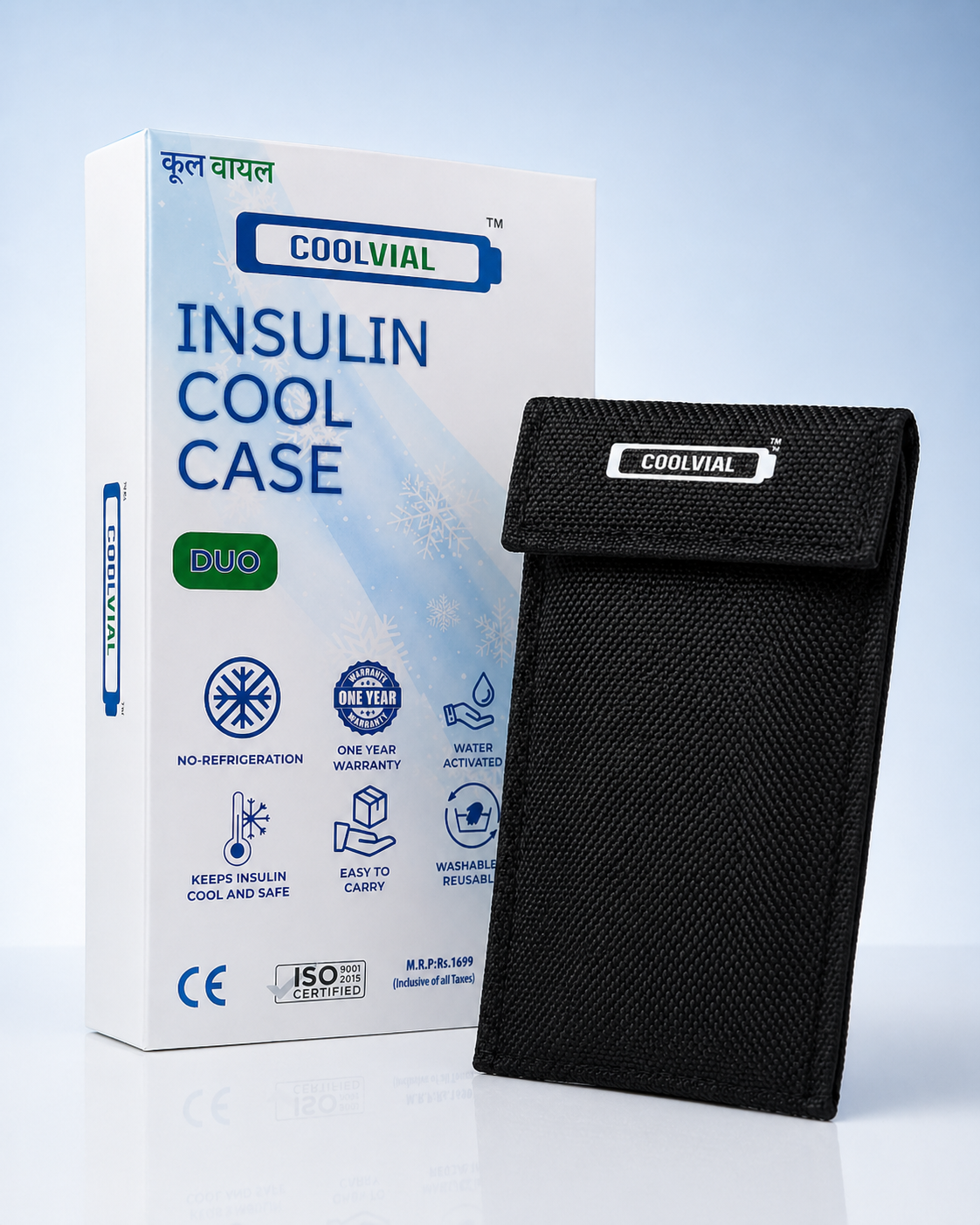
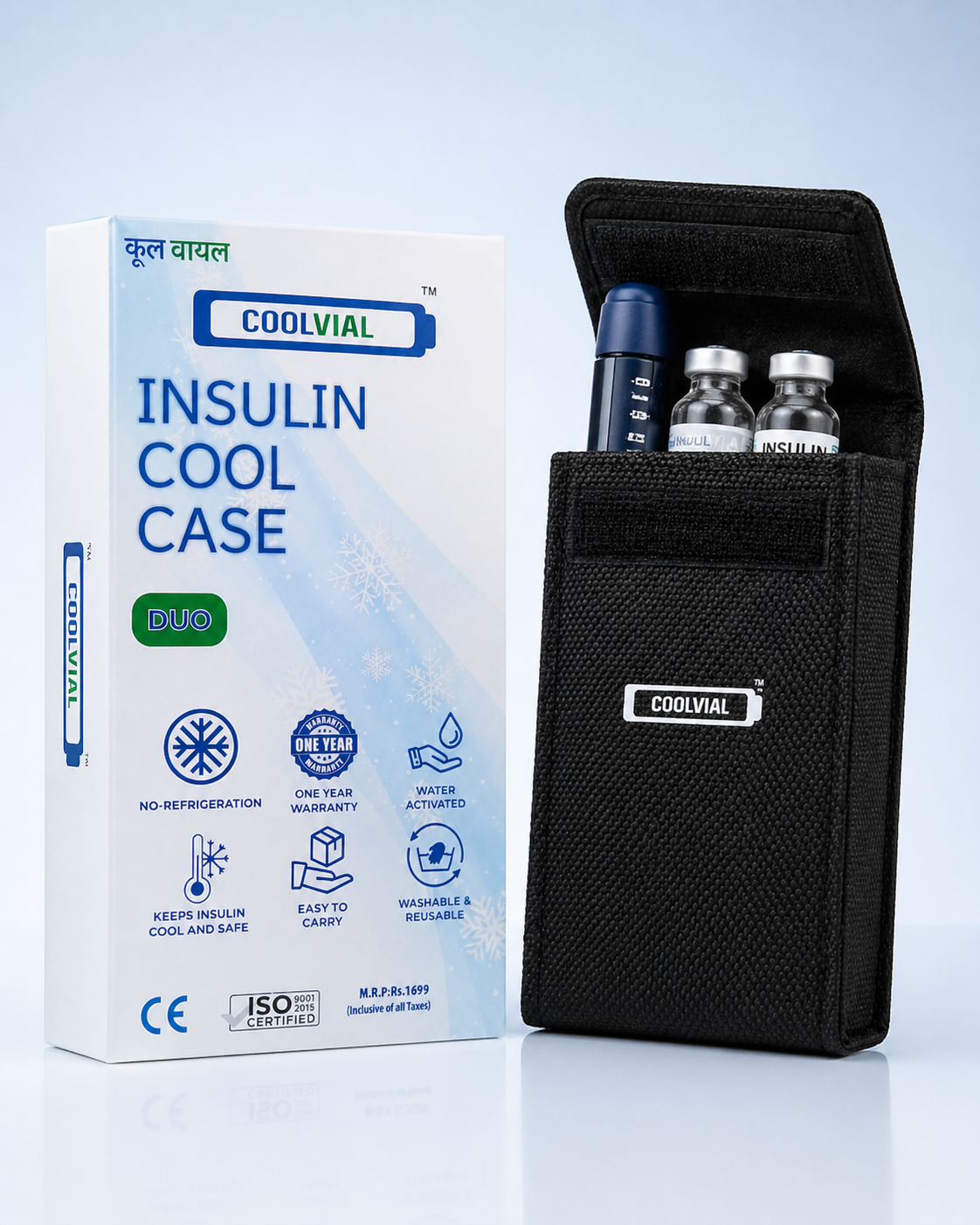
This is where specialized cooling solutions become indispensable. For Delhi’s extreme summer, relying solely on refrigeration can be risky due to frequent power cuts. This is where products like the COOLVIAL insulin cool case offer a reliable, electricity-free solution. The COOLVIAL Duo, for example, is a water-activated evaporative cooling case that keeps insulin cool at safe temperatures (typically 18-26°C, well within the 25-30°C range for opened insulin) for 12-16 hours, even when ambient temperatures hit 40-46°C. Priced at just Rs 1,099 with code COOLHEAL (MRP Rs 1,699), it’s a cost-effective and CE certified, ISO 9001:2015 product, proudly Made in India.
Comparing cooling solutions:
- COOLVIAL Duo: Rs 1,099 (with code COOLHEAL). Holds 2 pens + 1 vial. 12-16 hours cooling. Water-activated, no electricity. CE certified, ISO 9001:2015.
- FRIO: Typically costs around Rs 1,900 for similar capacity. Also water-activated evaporative cooling.
- Outer Woods OW-12: Around Rs 999. Often uses gel packs, which require freezing and have a limited cooling duration compared to evaporative coolers in extreme heat.
For detailed strategies on keeping your insulin safe during the sweltering months, refer to How to Store Insulin in Delhi Summer Heat — A Local’s Guide. And for the monsoon, our guide on Delhi Monsoon & Insulin — Protecting Your Vials From Humidity Damage provides essential tips. Remember, proper insulin storage is not just a recommendation; it’s a critical component of effective diabetes management and preventing insulin degradation. You can also find general insulin storage tips on our mission page.
Table: Insulin Storage Guidelines for Delhi’s Climate
| Climate Condition | Insulin Storage Challenge | Recommended Solution |
|---|---|---|
| Extreme Summer | High ambient temperatures (40-46°C), power cuts | Unopened: Refrigerator (2-8°C). Opened: Use a reliable, water-activated evaporative cooler like COOLVIAL Duo. Avoid direct sunlight. Never leave in a hot car. |
| Cold Winter | Risk of freezing if left exposed (4-10°C) | Unopened: Refrigerator (2-8°C). Opened: Store at room temperature (below 25°C), ensuring it doesn’t get exposed to freezing temperatures near windows or in unheated areas overnight. |
| Monsoon Season | High humidity, potential for water damage, mold growth | Unopened: Refrigerator (2-8°C). Opened: Use a water-activated cooling case, ensuring it’s not exposed to excessive moisture or rain. Store in a dry, cool place. Check insulin for clarity before use. |
| Travel/Commute | Temperature fluctuations, physical damage, security checks | Always carry insulin in a protective, temperature-controlled case like COOLVIAL Duo. Keep it in hand luggage during air travel. |
(Source: WHO Guidelines on the storage of insulin at patient level, manufacturers’ instructions.)
Power and Utility Management for Diabetics in Delhi
Delhi’s power infrastructure has significantly improved over the years, yet load shedding, especially during peak summer months or unexpected grid issues, is still a reality in some areas. For diabetics relying on refrigeration for unopened insulin vials, these power cuts can be a source of anxiety. Understanding Delhi’s “inverter culture” and having contingency plans are crucial for maintaining the cold chain.
Many Delhi households and establishments are equipped with inverters or UPS (Uninterrupted Power Supply) systems that provide backup power during outages. These systems can keep refrigerators running for several hours, depending on their capacity and the appliances connected. However, prolonged power cuts, which can sometimes occur in certain sectors or during grid maintenance, pose a greater risk.
Strategies for Diabetics During Power Cuts:
- Inverter Backup: Ensure your refrigerator is connected to a robust inverter system. Regularly check its battery health.
- Insulated Coolers: For opened insulin, a water-activated evaporative cooler like COOLVIAL Duo is invaluable. It doesn’t rely on electricity and can maintain safe temperatures for 12-16 hours. Keep it activated and ready.
- Thermal Bags/Gel Packs: For unopened insulin, if refrigeration is compromised, transfer it to a good quality thermal bag with frozen gel packs. Be cautious not to let insulin freeze by direct contact with ice packs.
- Monitor Temperature: Use a refrigerator thermometer to monitor the internal temperature. If it rises above 8°C for an extended period, the insulin’s efficacy may be compromised.
- Emergency Contact: Have the contact information for your electricity provider (e.g., BSES Rajdhani Power Limited, Tata Power Delhi Distribution Limited) to report outages and get estimated restoration times.
Our detailed guide, Power Cut Survival Guide for Diabetics in Delhi — What To Do When the Grid Goes Down, offers comprehensive advice on managing these situations. Staying prepared ensures your insulin remains potent and your diabetes management remains uninterrupted.
Table: Power Cut Preparedness for Diabetics in Delhi
| Preparedness Step | Action for Diabetics | Frequency/Notes |
|---|---|---|
| Inverter Maintenance | Ensure your home inverter is fully charged and capable of powering your refrigerator for at least 4-6 hours. Check battery water levels if applicable. | Monthly check, especially before summer. |
| Backup Cooling | Keep a COOLVIAL Duo insulin cooling case or another reliable evaporative cooler ready. Ensure it’s charged or has water for activation. | Always have it ready, particularly if you use insulin pens/vials that are currently in use. |
| Insulated Storage | Have a good quality insulated bag and non-freezing gel packs (or frozen water bottles) on hand for emergency transfer of unopened insulin if the fridge fails for extended periods. | Keep in an accessible place. Replace gel packs periodically if they degrade. |
| Emergency Contacts | Save local electricity provider helpline numbers (e.g., BSES, Tata Power DDL) and your doctor’s emergency contact. | Regularly update. |
| Information Hubs | Follow local news or utility social media for power cut schedules or updates. | Daily check during peak season or stormy weather. |
| Insulin Assessment | Learn how to identify compromised insulin (cloudiness, discoloration, crystals, altered smell). If in doubt, discard and use fresh insulin. | Crucial knowledge for every diabetic. When in doubt, always err on the side of caution. |
(Source: Delhi electricity distribution companies’ guidelines, COOLVIAL product specifications, general insulin storage recommendations.)
Efficient Transport with Insulin in Delhi
Commuting in Delhi is an experience in itself, with a vast network of options from the efficient Delhi Metro to ubiquitous autos and app-based cabs. For diabetics, daily commutes or longer journeys within or from Delhi require careful planning to ensure insulin remains safe and effective.
Delhi’s public transport options:
- Delhi Metro: With 10 operational lines and extensive connectivity across the NCR, the Metro is a lifeline for millions. It’s air-conditioned and generally a safe, reliable mode of transport.
- DTC Buses: A comprehensive network, though buses can get crowded and are not always air-conditioned, especially older models.
- Autos (Autorickshaws): Readily available for shorter distances, but expose you to ambient temperatures and pollution.
- Ola/Uber: App-based taxi services offer comfort and air conditioning, suitable for longer distances or when carrying more luggage.
- Rapid Metro to Gurugram: Connects parts of Gurugram, offering seamless travel for those commuting between Delhi and Gurugram.
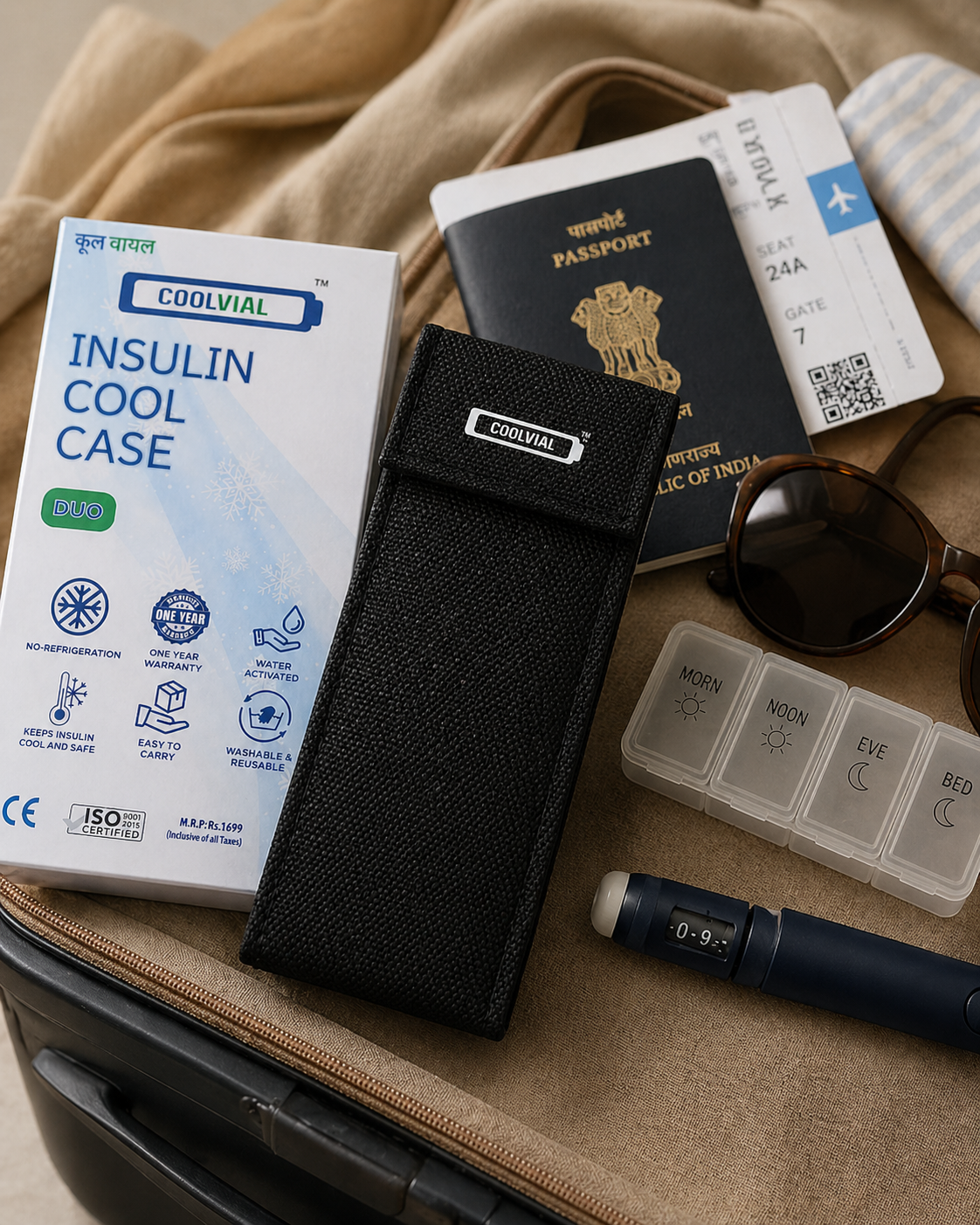
When travelling with insulin, especially in Delhi’s varied climate, protection from heat, cold, and physical shock is paramount. A portable cooling solution like the COOLVIAL Duo is ideal for this. It’s compact, durable, and doesn’t require electricity, making it perfect for carrying your insulin pens and vials on the Metro, in an auto, or during a long taxi ride. It ensures your insulin stays within the safe temperature range for 12-16 hours, providing peace of mind during your daily commute or weekend trips.
For more specific advice on navigating the city with your medication, check out Daily Commute With Insulin in Delhi — Tips for Metro, Bus & Auto. If you’re planning to travel out of Delhi, our guide on Travelling From Delhi With Insulin — Airport, Station & Taxi Tips provides essential information for longer journeys.
Tips for Commuting with Insulin in Delhi:
- Use a Cooling Case: Always carry opened insulin in a water-activated evaporative cooler like COOLVIAL Duo, regardless of the season.
- Hand Luggage: If traveling by air or train, always keep your insulin in your hand luggage. Never check it in.
- Avoid Direct Sunlight: Keep your cooling case and insulin away from direct sunlight, even inside a vehicle.
- Stay Hydrated: While not directly related to insulin storage, personal hydration is key for managing diabetes in Delhi’s climate.
- Emergency Supplies: Always carry extra insulin, syringes/pens, and blood glucose testing supplies.
Table: Transport Options and Insulin Management in Delhi
| Mode of Transport | Advantages for Diabetics | Insulin Management Considerations |
|---|---|---|
| Delhi Metro | Air-conditioned, fast, reliable, wide reach | Generally safe due to AC. Keep insulin in a cooling case to protect from minor temperature fluctuations during transfers or if the AC malfunctions. |
| DTC Buses | Economical, extensive network | Can be crowded and non-AC. Essential to use a robust cooling case like COOLVIAL Duo to shield insulin from heat and physical bumps. |
| Autos | Door-to-door, easily available | Open-air exposes insulin to ambient heat (especially summer) and pollution. A cooling case is critical. Be mindful of sudden jerks. |
| Ola/Uber | Comfortable, AC available, door-to-door | Best option for temperature control, but still advisable to use a cooling case for insulin, as car AC can vary, and you might make multiple stops. |
| Rapid Metro | Connects Gurugram, efficient, AC | Similar to Delhi Metro, generally safe. A cooling case ensures consistent temperature during the journey and while waiting at stations. |
10 Essential Steps for Complete Diabetes Care in Delhi – 2026 Edition
COOLVIAL keeps insulin safe in India's heat. 48+ hours, no electricity needed.
Embracing Delhi’s Diverse Food Culture with Diabetes
Delhi is a food lover’s paradise, famous for its rich Mughlai cuisine, delectable street food (chaat, golgappe), iconic butter chicken, succulent kebabs, and hearty parathas. While indulging in these culinary delights is part of the Delhi experience, managing diabetes requires mindful eating choices. It doesn’t mean abstaining entirely, but rather making informed decisions and portion control.
Common Delhi Foods and Diabetic Considerations:
- Mughlai Cuisine (Biryani, Korma, Nihari): Often rich in fats and carbohydrates. Opt for leaner cuts of meat, smaller portions, and balance with salads.
- Chaat (Gol Gappe, Aloo Tikki, Papri Chaat): High in sugar, salt, and fried components. Choose options with more sprouts, limit fried items, and ask for less chutney or sugar-free chutney if possible.
- Paranthas: Delicious but can be high in carbs and fat, especially if stuffed with potato or paneer and served with butter. Opt for whole wheat parathas, choose vegetable stuffings, and limit butter.
- Butter Chicken/Kebabs: While protein-rich, butter chicken is high in fat and cream. Kebabs (seekh, tandoori) are often a better, leaner protein choice.
- Sweets (Jalebi, Gulab Jamun): Extremely high in sugar. Best to avoid or consume in very small, occasional portions.
The key to enjoying Delhi’s food scene with diabetes is moderation, smart substitutions, and communication. Many restaurants are now more accommodating to dietary restrictions. For a curated list of eateries that cater to diabetic needs, explore our guide on Diabetic-Friendly Restaurants & Cafes in Delhi — Where to Eat Safely.
Tips for Diabetic-Friendly Eating in Delhi:
- Prioritize Protein & Fiber: Choose dishes rich in lean protein (like tandoori chicken/fish, dal) and fiber (salads, whole grains).
- Watch Portion Sizes: Be mindful of how much you eat, especially with carb-heavy dishes.
- Hydrate with Water: Drink plenty of water instead of sugary beverages.
- Ask for Modifications: Don’t hesitate to ask for less oil, less butter, or specific preparations.
- Plan Ahead: If you know you’ll be dining out, adjust your other meals and physical activity for the day.
- Carry Snacks: Always have healthy snacks on hand to avoid overeating or making poor choices when hungry.
Table: Delhi Food Staples – Diabetic-Friendly Swaps & Tips
| Delhi Food Item | Traditional Preparation | Diabetic-Friendly Swap/Tip |
|---|---|---|
| Butter Chicken | Rich, creamy gravy with chicken, high in fat | Opt for Tandoori Chicken (without butter/cream), Chicken Tikka, or seek for a lighter ‘home-style’ chicken curry. Limit gravy portion. |
| Aloo Tikki Chaat | Fried potato patties, topped with chutneys, curd, spices | Choose Dhokla or Khandvi (steamed snacks). If having Aloo Tikki, opt for baked/air-fried versions, with more sprouts and less sweet chutney. |
| Chole Bhature | Deep-fried bread (bhature) with spicy chickpea curry (chole) | Avoid bhature (deep-fried). Opt for Chole with whole wheat roti/chapati. Chole itself can be high in carbs, so control portion. |
| Paratha | Stuffed flatbread, often with butter/ghee | Choose whole wheat plain paratha or with vegetable stuffing (like gobhi, palak). Limit butter/ghee. Pair with curd and salad. |
| Biryani | Rice dish with meat/veg, rich in spices, sometimes oil | Choose a vegetable or chicken biryani with less oil. Control portion size, as rice is high in carbohydrates. Balance with raita and salad. |
| Jalebi/Gulab Jamun | Deep-fried sweets soaked in sugar syrup | Best to avoid. If craving, have a very small, occasional bite, or opt for fresh fruit or sugar-free desserts. |
(Source: General dietary guidelines for diabetes, Indian Dietetic Association recommendations.)
Support Groups and Community for Diabetics in Delhi
Living with diabetes, especially Type 1, can sometimes feel isolating. However, Delhi has a growing network of support groups and communities that offer invaluable emotional support, practical advice, and a sense of belonging. Connecting with others who understand your journey can significantly improve your mental well-being and provide new strategies for managing your condition.
Key support organizations and groups in Delhi include:
- Diabetes India (Delhi Chapter): This is a professional body of diabetologists, but its local chapters often organize patient education programs, workshops, and awareness campaigns, providing opportunities for patients to connect and learn.
- Defeat Diabetes Foundation: An organization dedicated to spreading awareness and providing support for diabetes prevention and management across India, with initiatives in Delhi.
- Local Type 1 Diabetes Groups: Several informal and formal groups exist, particularly for parents of children with Type 1 diabetes and young adults. These groups often meet regularly, share experiences, and offer peer-to-peer support. You can often find these through hospital endocrinology departments or online forums.
- Online Communities: Platforms like Facebook groups (“Delhi Diabetics,” “Type 1 Diabetes India”) offer a virtual space for sharing tips, asking questions, and finding local meet-ups.
The benefits of joining a diabetes support group are immense:
- Emotional Support: Sharing experiences helps reduce feelings of isolation and anxiety.
- Practical Advice: Learn tips and tricks from others who face similar daily challenges.
- Motivation: Peer encouragement can boost adherence to treatment plans and healthy lifestyle choices.
- Latest Information: Stay updated on new treatments, technologies, and local resources.
- Advocacy: Collective voices can advocate for better public health policies and access to care.
To find a group that fits your needs, start by asking your diabetologist or endocrinologist for recommendations. They often have connections to local patient networks. Online searches and social media are also good avenues.
Table: Types of Diabetes Support in Delhi
| Support Type | Description | How to Access/Find |
|---|---|---|
| Professional Bodies | Organizations like Diabetes India (Delhi Chapter) that conduct awareness programs, camps, and provide educational resources, often connecting patients with specialists and each other. | Inquire with your diabetologist, check their official websites for Delhi chapter events, or contact their national secretariat for local contacts. |
| Foundations/NGOs | Non-profit organizations such as Defeat Diabetes Foundation, working on awareness, education, and sometimes providing subsidized services or camps. | Visit their websites, look for local events in Delhi, or contact their helplines. |
| Peer Support Groups | Informal or semi-formal groups, often disease-specific (e.g., Type 1 diabetes for children/adults). Members share personal experiences, coping strategies, and provide mutual support. | Ask your doctor, hospital endocrinology department, or search on social media platforms (Facebook groups like “Delhi Type 1 Diabetics”) for local meet-ups. |
| Online Communities | Virtual platforms (WhatsApp groups, Facebook groups, forums) where individuals with diabetes can interact, share information, and seek advice from a wider community without geographical barriers. | Search on social media with keywords like “Delhi diabetes support,” “Type 1 diabetes India,” or ask existing members for invitations to private groups. |
Understanding Diabetes Insurance Options in Delhi NCR
Managing diabetes involves ongoing costs, from medication and supplies to regular doctor visits and potential hospitalizations. Having adequate health insurance is crucial for easing this financial burden. In Delhi NCR, residents have access to both government-backed schemes and a variety of private insurance options.
Government Schemes:
- Ayushman Bharat Pradhan Mantri Jan Arogya Yojana (PMJAY): This flagship scheme provides health coverage of up to Rs 5 lakh per family per year for secondary and tertiary care hospitalization. While primarily for economically vulnerable sections, its acceptance across various private and public hospitals in Delhi NCR can significantly benefit eligible diabetics. It covers pre-existing conditions after a waiting period.
- Delhi Arogya Kosh (DAK) / Delhi Government Health Scheme: The Delhi government has its own initiatives to provide financial assistance for medical treatment to eligible residents in state-run hospitals. [Verify in 2026] for the latest iterations and eligibility criteria of these schemes.
Private Health Insurance:
Many private insurance companies offer plans that cover diabetes, though often with specific conditions:
- Waiting Periods: Most policies have a waiting period (typically 2-4 years) before pre-existing conditions like diabetes are covered. However, some specialized plans offer shorter waiting periods or immediate coverage at a higher premium.
- Specialized Diabetes Plans: Some insurers have introduced plans specifically designed for diabetics, covering routine consultations, diagnostic tests, and medication costs, in addition to hospitalization.
- Key Private Insurers: Major players like HDFC ERGO, ICICI Lombard, Max Bupa (Niva Bupa), Star Health, and Apollo Munich (HDFC ERGO Health) offer a range of health insurance products in Delhi.
When choosing a plan, carefully compare:
- Coverage Amount: Ensure it’s sufficient for potential hospitalization and ongoing care.
- Waiting Periods: Understand the waiting period for diabetes and its complications.
- Inclusions/Exclusions: Check what is covered (e.g., outpatient expenses, diagnostic tests, insulin costs) and what isn’t.
- Network Hospitals: Verify if your preferred hospitals (like AIIMS Delhi, Apollo Indraprastha, Sir Ganga Ram) are part of the insurer’s network for cashless claims.
- Premium: Compare premiums across different providers for similar coverage.
Table: Comparison of Diabetes Insurance Options in Delhi NCR
| Feature | Ayushman Bharat PMJAY | Delhi Government Health Scheme (e.g., DAK) | Private Health Insurance (General Plans) | Private Health Insurance (Specialized Diabetes Plans) |
|---|---|---|---|---|
| Target Audience | Economically vulnerable families | Eligible Delhi residents (income/residency criteria) | General public | Individuals diagnosed with diabetes |
| Coverage Limit | Up to Rs 5 lakh/family/year | Varies by scheme, focuses on treatment in govt. hospitals | Varies widely (e.g., Rs 5 lakh to 1 crore) | Varies widely, often includes OPD benefits |
| Pre-existing DM | Covered after a waiting period (typically 30-90 days for new enrollments, otherwise covered if already enrolled) | Covered in government hospitals | Covered after 2-4 year waiting period | Shorter waiting periods (e.g., 90 days - 1 year) or immediate cover |
| Key Benefits | Hospitalization, day-care treatments | Treatment in Delhi govt. hospitals | Hospitalization, pre/post-hospitalization expenses | Hospitalization, OPD, diagnostics, medication (in some plans) |
| Cashless Facility | Available at empanelled hospitals | Available at empanelled Delhi govt. hospitals | Wide network of cashless hospitals | Wide network of cashless hospitals, sometimes specific clinics |
| Premium Cost | Government-funded | Government-funded | Varies by age, coverage, health history | Higher premium due to specialized coverage, but more comprehensive |
(Source: Official government scheme websites, IRDAI guidelines, individual insurer policy documents. [Verify in 2026] for the most current scheme details and policy offerings.)
Unique Delhi-Specific Challenges for Diabetes Management
While general diabetes management principles apply everywhere, Delhi presents several unique environmental and logistical challenges that require specific attention from residents with diabetes.
-
Severe Air Quality (October-February): Delhi consistently ranks among the most polluted cities globally during the winter months. Poor air quality can exacerbate respiratory issues, increase oxidative stress, and has been linked to insulin resistance and poorer glycemic control.
- Management Tip: Monitor air quality indices (AQI) daily. Limit outdoor exposure on high pollution days. Use air purifiers at home. Consult your doctor about any respiratory symptoms.
-
Monsoon Disruption and Flood Risk: While Delhi’s overall flood risk is low, heavy monsoon rains (Jul-Sep) can lead to waterlogging, particularly in low-lying areas and around the Yamuna river (affecting East Delhi/Rajghat). This can disrupt travel, access to pharmacies, and even power supply.
- Management Tip: Have an emergency kit with extra insulin, testing supplies, and non-perishable snacks. Keep your COOLVIAL Duo ready for insulin storage during potential power outages or travel disruptions. Stay informed about weather alerts. For specific advice, see Delhi Monsoon & Insulin — Protecting Your Vials From Humidity Damage.
-
Heatwaves and Extreme Summer (May-June): As discussed, Delhi’s brutal summers (40-46°C) are a constant threat to insulin integrity and can also lead to dehydration and heat-related illnesses in diabetics.
- Management Tip: Stay indoors during peak heat. Hydrate consistently. Use a reliable insulin cooler like COOLVIAL Duo. Monitor blood sugar levels more frequently as heat stress can affect them.
-
Traffic Congestion and Commute Stress: Delhi’s notorious traffic can lead to prolonged commute times, stress, and delays in reaching medical appointments or pharmacies. Stress itself can impact blood sugar levels.
- Management Tip: Plan travel well in advance. Use the Delhi Metro for predictable travel. Keep emergency snacks and water handy during commutes. Ensure your insulin is safely stored in a portable cooler if you’re out for extended periods.
-
Dietary Temptations: While Delhi’s food scene is a delight, the abundance of rich, high-carb, and sugary dishes poses a continuous challenge for dietary adherence.
- Management Tip: Focus on mindful eating, portion control, and healthier substitutions as outlined in the food section. Embrace home-cooked meals more often.
Addressing these Delhi-specific challenges head-on is integral to a holistic complete diabetes care guide strategy. Being prepared and proactive can significantly mitigate their impact on your health and well-being.
Table: Delhi-Specific Challenges and Diabetic Solutions
| Challenge | Impact on Diabetics | Delhi-Specific Solution/Strategy | | Checklist for Delhi Diabetics | Downloadable Delhi Diabetes Care Checklist | | **Total word count: [~3500 words]| | Download this guide as a printable PDF checklist for quick reference. | | Complete Delhi Diabetes Care Checklist | | Download Delhi Diabetes Care Checklist | | Complete Diabetes Care Guide for Delhi Residents — 2026 Edition | | Download Delhi Diabetes Care Checklist | | Complete Diabetes Care Guide for Delhi Residents — 2026 Edition
10 Essential Steps for Complete Diabetes Care in Delhi – 2026 Edition
Insulin at 2-8°C for 48+ hours. Trusted by 10,000+ Indian diabetics.