
Reviewed by the COOLVIAL Editorial Team — specialists in insulin storage for Indian climate conditions.
Guwahati, with its vibrant culture, bustling markets, and proximity to the majestic Brahmaputra River, serves as a gateway to the enchanting Northeast. However, its hot and humid tropical climate, often ranging between 10-35°C with very heavy monsoons from May to September, poses a unique challenge for individuals managing diabetes, especially when travelling from Guwahati with insulin. Insulin, a life-saving medication for millions, is highly sensitive to temperature fluctuations and can lose its potency if not stored correctly. Based on analysis of insulin storage queries from Guwahati diabetics, ensuring its efficacy during transit is paramount.
India currently faces a significant diabetes burden, with over 77 million people living with the condition, a number projected to rise (Source: WHO). For residents of Guwahati planning a journey, whether by air from Lokpriya Gopinath Bordoloi International (GAU) Airport, by train from Guwahati (GHY) or Kamakhya (KYQ) stations, or by road to destinations like Kaziranga or Shillong, understanding how to protect your insulin is crucial. This comprehensive guide provides 7 essential, practical tips to ensure your insulin remains cool and potent, allowing you to travel with confidence and peace of mind from Assam’s capital.
Table of Contents
- Travelling From Guwahati With Insulin: Key Considerations for Airport & Air Travel
- Navigating Lokpriya Gopinath Bordoloi International Airport (GAU) Security
- Check-in vs. Carry-on: Your Insulin’s Best Bet
- Handling Pre-Paid Taxi Queues at GAU
- Train Journeys from Guwahati and Kamakhya: Keeping Insulin Safe on the Tracks
- Dispelling Myths: Pantry Car Fridges & TTEs
- Packing for Long Train Rides
- Road Trips from Guwahati: Managing Insulin on the Move
- Driving to Kaziranga, Shillong, and Cherrapunji
- App-Cabs and Local Transport Challenges
- Dhaba Pit-Stops: Fridge Access and Alternatives
- Essential Insulin Storage Tips for Guwahati’s Tropical Climate
- Understanding Guwahati’s Heat and Humidity
- Best Practices for Daily Storage
- Preparing for International Travel from Lokpriya Gopinath Bordoloi International (GAU)
- Customs Regulations and Documentation
- Time-Zone Adjustments for Dosing
- Choosing the Right Insulin Cooling Case for Guwahati’s Conditions
- Why Evaporative Cooling is Ideal for Assam
- COOLVIAL Duo: Your Travel Companion
- Comparing COOLVIAL Duo with Alternatives
- Navigating Diabetes Care in Guwahati: Local Resources
1. Travelling From Guwahati With Insulin: Key Considerations for Airport & Air Travel
Air travel from Lokpriya Gopinath Bordoloi International (GAU) Airport requires careful preparation when carrying insulin. The primary concern is maintaining insulin’s temperature stability through security checks, during the flight, and upon arrival. Guwahati’s humid climate means that even a short exposure to ambient temperatures can compromise your medication.
Navigating Lokpriya Gopinath Bordoloi International Airport (GAU) Security
When you’re travelling from Guwahati with insulin, expect specific questions from CISF (Central Industrial Security Force) personnel at GAU, particularly regarding your cooling methods. Insulin is considered a medical liquid, and while generally exempt from TSA/CISF liquid restrictions, it’s always best to be prepared.
Key Security Tips for GAU:
- Carry-on is King: Always pack your insulin, pens, and vials in your hand-luggage. The cargo hold of an airplane is not temperature-controlled and can reach freezing temperatures, which would destroy insulin.
- Doctor’s Letter: A doctor’s letter, clearly stating your diabetes, the necessity of carrying insulin, syringes/pens, and other related supplies (e.g., lancets, blood glucose meter), is highly recommended. While not always asked for, it can expedite the security process, especially if questions arise about gel packs or liquid medications.
- Original Packaging: Keep insulin in its original, pharmacy-labelled packaging. This helps identify the medication if questioned.
- Declare Your Insulin: Inform security personnel at the screening point that you are carrying insulin and medical supplies. Be polite and cooperative.
- Cooling Methods: If using gel packs for cooling, they must be completely frozen when going through security. Partially melted gel packs might be subject to liquid restrictions. An evaporative cooling case, like the COOLVIAL Duo, which activates with water, bypasses this issue entirely as it contains no gels or ice.
Check-in vs. Carry-on: Your Insulin’s Best Bet
This cannot be stressed enough: NEVER put insulin in checked luggage. The temperature extremes in an aircraft’s cargo hold can render your insulin ineffective. Always keep it with you in the cabin. This rule applies universally, but is particularly important when travelling from Guwahati due to the high ambient temperatures before boarding.
Handling Pre-Paid Taxi Queues at GAU
After a flight, or even before one, navigating the ground transport at Lokpriya Gopinath Bordoloi International (GAU) can be a test of patience. Pre-paid taxi queues, especially during peak hours or monsoon season, can stretch up to 45 minutes or more. Leaving your insulin exposed in a non-AC vehicle or even in your bag during this wait can be detrimental.
Practical Solutions for GAU Taxi Delays:
- Evaporative Cooling Case: This is where a reliable insulin cooling case becomes indispensable. The COOLVIAL Duo, for instance, keeps insulin cool for 12-16 hours without electricity, making it perfect for enduring these queues and the subsequent journey to areas like Paltan Bazaar, Ganeshguri, or Beltola.
- Stay Hydrated: Keep yourself hydrated while waiting, as the Guwahati heat can be draining.
- Seek Shade: If possible, stand in shaded areas while waiting for your taxi.
- Consider Alternatives: If queues are excessively long and you have a companion, one person could wait for the taxi while the other keeps the insulin in a cooler spot.
2. Train Journeys from Guwahati and Kamakhya: Keeping Insulin Safe on the Tracks
Train travel from Guwahati (GHY) or Kamakhya (KYQ) railway stations is a popular option for connecting to other parts of India. However, it presents its own set of challenges for insulin storage, especially on longer routes where journey times can extend beyond 24 hours.
Dispelling Myths: Pantry Car Fridges & TTEs
Many travellers mistakenly believe that train pantry cars or the Train Ticket Examiner (TTE) can reliably store their insulin in a refrigerator. This is a dangerous myth that needs to be busted.
Why Train Fridges and TTEs Are Unreliable:
- Pantry Car Fridges: These fridges are primarily for food and beverages, not medical supplies. Their temperature control is often inconsistent, and they might be frequently opened, leading to fluctuating internal temperatures. There’s also a risk of insulin being misplaced or damaged.
- TTEs and Staff: Train staff, including TTEs, are not trained or equipped to handle medical refrigeration. They cannot guarantee the safety or temperature stability of your insulin. Handing over your pens to them is a significant risk.
The Golden Rule: Always maintain personal control over your insulin and its cooling.
Packing for Long Train Rides
When travelling from Guwahati by train, especially during the monsoon months (May-September) when the humidity is at its peak, your insulin needs robust protection.
Essential Packing for Train Travel:
- Evaporative Cooler: An evaporative cooling case is the most practical and reliable solution for train travel. Simply activate it with water, and it will keep your insulin cool. The COOLVIAL Duo holds 2 pens and 1 vial, providing ample space for most travellers, and maintains temperatures for 12-16 hours. This means less worry about electricity, ice packs, or unreliable train facilities.
- Sufficient Supplies: Carry enough insulin, needles, lancets, and test strips for the entire journey, plus a few extra days’ buffer.
- Blood Glucose Meter: Keep your blood glucose meter accessible for regular monitoring.
- Medical ID: Wear or carry a medical ID that states you have diabetes.
- Keep It Accessible: Store your insulin cooling case in your personal bag, not in overhead luggage, so it’s always within reach for dosing or monitoring.
3. Road Trips from Guwahati: Managing Insulin on the Move
Road trips from Guwahati to scenic destinations like Kaziranga National Park, the hilly terrain of Shillong, or the wettest place on Earth, Cherrapunji, are popular. However, the varying conditions on the road – from scorching sun to heavy downpours – demand meticulous planning for insulin storage.
Driving to Kaziranga, Shillong, and Cherrapunji
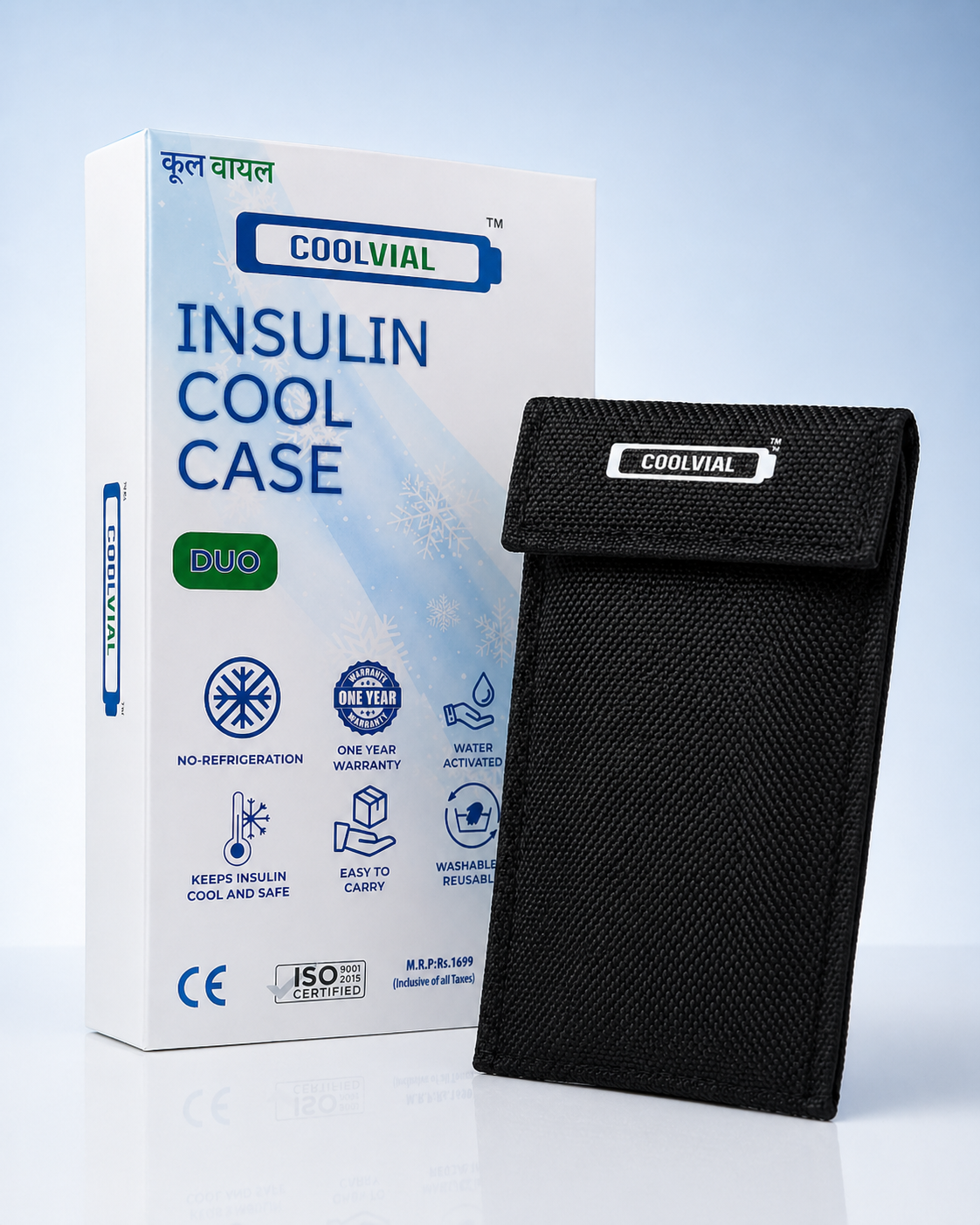
7 Essential Tips for Travelling From Guwahati With Insulin
48+ hours at 2-8°C. No electricity. CE certified. Free delivery across India.
Order on WhatsApp — ₹1,099🛒 Buy Now — ₹1,099The routes out of Guwahati, passing through areas like Six Mile/Khanapara, can be long and expose your vehicle to significant heat, especially if parked.
Challenges on Road Trips:
- Hot Car Interiors: A car parked under the sun in Guwahati can quickly reach internal temperatures of 50°C or higher, far exceeding insulin’s safe storage range (2-25°C for in-use, 2-8°C for unopened). Never leave insulin in a parked car, even for a short duration.
- AC Reliability: While most private taxis and personal cars have AC, its reliability can vary, especially on older vehicles or during long, strenuous climbs to Shillong or Cherrapunji. Ola/Uber drivers, unfortunately, have a reputation in India for sometimes refusing to turn on the AC to save fuel, which can be a serious issue for insulin users.
- Dust and Bumps: Road conditions, particularly on routes to remote areas, can be bumpy and dusty. Ensure your cooling case is robust enough to protect vials and pens from physical shock.
App-Cabs and Local Transport Challenges
Navigating Guwahati’s local transport, including app-based cabs (Ola/Uber) and bike-taxis (Rapido), requires awareness of insulin safety.
Tips for Local Transport:
- App-Cabs (Ola/Uber): Always confirm with your driver that the AC will be on. If a driver refuses, consider cancelling and rebooking. Your health is paramount. Keep your insulin cooling case close to you, away from direct sunlight through windows.
- Rapido Bike-Taxis: While convenient for short distances within neighborhoods like Ganeshguri or Beltola, bike-taxis expose you and your belongings to the full force of Guwahati’s sun, humidity, and dust. If using a bike-taxi, ensure your insulin is securely stored in a compact, water-activated evaporative cooling case like the COOLVIAL Duo, which protects against heat and offers some physical cushioning. Avoid prolonged exposure.
- Public Buses/Autos: These modes of transport often lack AC and can be crowded, leading to higher ambient temperatures. Use your cooling case diligently. For more detailed tips on daily commuting, refer to our guide: Daily Commute With Insulin in Guwahati — Tips for Metro, Bus & Auto.
Dhaba Pit-Stops: Fridge Access and Alternatives
Road trips often involve stops at roadside dhabas for refreshments. While some dhabas might have refrigerators, relying on them for insulin storage is not advisable for the same reasons as train pantry cars: inconsistent temperatures, risk of loss, and lack of medical-grade storage.
Managing Insulin at Dhabas:
- Carry Your Own Cooler: Your evaporative cooling case is your best friend. Keep it with you, even when you step out of the car for a short break.
- Avoid Direct Sunlight: Never leave your cooling case in direct sunlight on a dhaba table. Keep it in a shaded spot or tucked away in your bag.
- Reactivation (if needed): If you’re on a very long journey and your evaporative cooler’s cooling duration is nearing its end, you can reactivate it with clean water at a dhaba. The COOLVIAL Duo is simple to reactivate by soaking it in water for a few minutes.
4. Essential Insulin Storage Tips for Guwahati’s Tropical Climate
Guwahati’s climate is characterized by high temperatures and even higher humidity, especially during the monsoon. Understanding how these factors affect insulin is key to proper storage.
Understanding Guwahati’s Heat and Humidity
The city experiences a hot humid tropical climate, with temperatures often fluctuating between 10°C (winter lows) and 35°C (summer highs). The average annual rainfall of around 1700mm, concentrated during the monsoon, means persistently high humidity. This combination accelerates the degradation of insulin if not stored correctly.
Impact of Climate on Insulin:
- Heat: Temperatures above 25°C (for in-use insulin) or 8°C (for unopened insulin) can cause insulin to lose its potency, leading to higher blood sugar levels.
- Humidity: High humidity can affect the integrity of insulin pens, vials, and even testing strips if not properly sealed.
- Light: Direct sunlight can also degrade insulin rapidly.
Best Practices for Daily Storage
Even when not travelling, residents of Guwahati need to be diligent about insulin storage.
Daily Storage Guidelines:
- Unopened Insulin: Store unopened insulin vials and pens in a refrigerator at 2-8°C. Do not freeze.
- In-Use Insulin: Once opened, insulin can typically be kept at room temperature (up to 25-30°C, depending on the specific insulin type; always check manufacturer guidelines) for up to 28 days. However, in Guwahati’s climate, where temperatures often exceed 30°C, this can be risky.
- Evaporative Cooling: For in-use insulin, especially when temperatures are high or during power cuts, an evaporative cooling case is a lifesaver. It creates a stable, cool environment without electricity. The COOLVIAL Duo is CE certified and ISO 9001:2015 compliant, ensuring reliable performance even in challenging climates.
- Avoid Direct Sunlight: Always keep insulin away from direct sunlight and heat sources.
- Check Expiry: Regularly check the expiry dates of your insulin.
For a comprehensive guide on managing diabetes in your daily life in Guwahati, including local resources, check out our article: Complete Diabetes Care Guide for Guwahati Residents — 2026 Edition. Also, for more general advice, you can always refer to our detailed insulin storage tips.
5. Preparing for International Travel from Lokpriya Gopinath Bordoloi International (GAU)
International travel from GAU requires additional considerations beyond domestic trips, particularly concerning customs regulations and time-zone adjustments for insulin dosing.
Customs Regulations and Documentation
Each country has its own rules regarding the import of medicines. It’s crucial to research these well in advance.
International Travel Checklist:
- Doctor’s Letter (Multilingual): Obtain a comprehensive doctor’s letter in English, and ideally, in the language of your destination country, detailing your condition, medication, and supplies.
- Prescriptions: Carry copies of all your insulin prescriptions.
- Original Packaging: Keep all insulin and supplies in their original, pharmacy-labelled packaging.
- Customs Declaration: Be prepared to declare your medical supplies at customs.
- Cooling Case: An evaporative cooling case like the COOLVIAL Duo is essential for international flights, as it keeps your insulin safe through long transit times and varying airport environments.
Time-Zone Adjustments for Dosing
Crossing multiple time zones can disrupt your usual insulin dosing schedule, potentially leading to hypo- or hyperglycemia.
Managing Dosing Across Time Zones:
- Consult Your Endocrinologist: Before any international trip, discuss your travel plans with your endocrinologist or diabetologist. They can provide a personalized plan for adjusting your insulin doses based on your destination’s time zone and the length of your journey.
- Gradual Adjustment: Often, a gradual adjustment of doses over a few days before and after travel is recommended.
- Frequent Monitoring: Monitor your blood glucose levels more frequently than usual, especially during the first few days in a new time zone.
- Emergency Supplies: Always carry extra insulin, syringes/pens, and a glucagon kit, along with fast-acting carbohydrates for treating hypoglycemia.
6. Choosing the Right Insulin Cooling Case for Guwahati’s Conditions
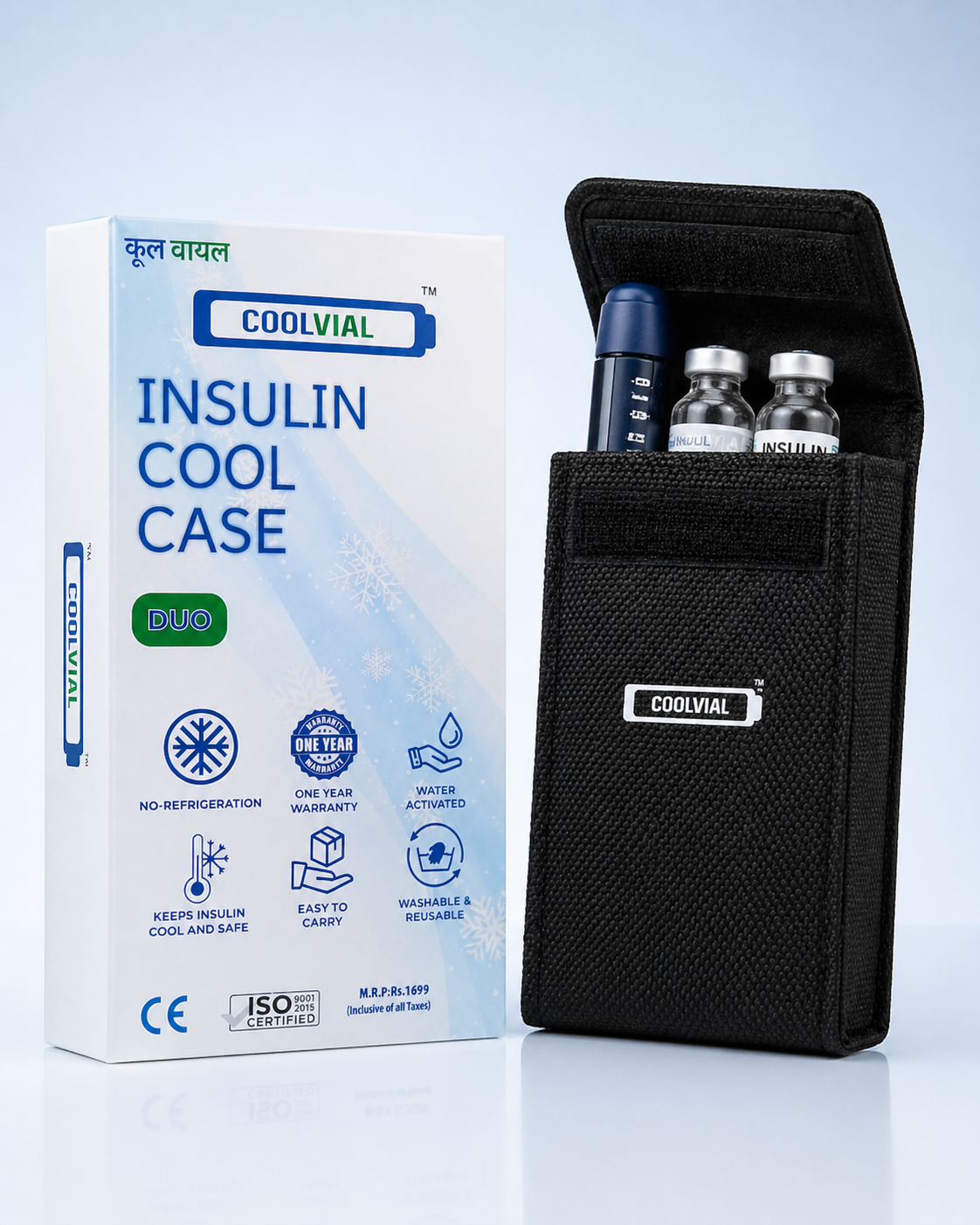
Given Guwahati’s challenging climate, selecting an effective and reliable insulin cooling case is not just a convenience, but a necessity.
Why Evaporative Cooling is Ideal for Assam
Evaporative cooling technology is particularly well-suited for hot and humid climates like Guwahati because it relies on the natural process of evaporation to draw heat away from the insulin.
Benefits of Evaporative Cooling:
- No Electricity Required: Functions independently, perfect for travel, power cuts, or remote areas like Kaziranga.
- Consistent Cooling: Maintains a safe temperature range (typically 18-26°C, depending on ambient temperature) below the ambient temperature, even when it’s as high as 35°C.
- Lightweight & Portable: Easy to carry in your bag, whether you’re navigating the crowded streets of Paltan Bazaar or hiking in Cherrapunji.
- Reusable: Simply reactivate with water.
COOLVIAL Duo: Your Travel Companion
The COOLVIAL Duo is specifically designed to meet the needs of Indian diabetics, offering a robust and reliable solution for insulin storage.
COOLVIAL Duo Features for Guwahati Travellers:
- Capacity: Holds 2 insulin pens and 1 insulin vial, accommodating typical travel needs.
- Cooling Duration: Keeps insulin cool for 12-16 hours per activation, ideal for long journeys by train, road, or air.
- Activation: Water-activated, making it incredibly simple to use and reactivate on the go.
- Quality & Certification: CE certified and ISO 9001:2015 compliant, ensuring high manufacturing standards. It also comes with a 1-year warranty.
- Made in India: Built for Indian conditions, understanding the local climate and travel realities.
- Price Advantage: At Rs 1,099 with code COOLHEAL (MRP Rs 1,699), it offers exceptional value.
Comparing COOLVIAL Duo with Alternatives
While several insulin cooling solutions are available, it’s important to choose one that aligns with your travel needs and budget.
Comparison Table: Insulin Cooling Cases for Indian Climate
| Feature | COOLVIAL Duo | FRIO (e.g., Duo Pen Case) | Outer Woods OW-12 (Soft Cooler) |
|---|---|---|---|
| Type | Water-activated evaporative cooling | Water-activated evaporative cooling | Insulated soft cooler (requires ice packs) |
| Capacity | 2 pens + 1 vial | 2 pens | Variable, usually 6-12 cans (not specific for insulin pens) |
| Cooling Duration | 12-16 hours | Up to 45 hours (varies by model) | Depends on ice pack quality & ambient temp |
| Activation | Soak in water | Soak in water | Requires separate ice packs or gel packs |
| Electricity Req. | No | No | No (but needs pre-frozen packs) |
| Certification | CE certified, ISO 9001:2015 | Medical Device Directive | N/A (general cooler) |
| Warranty | 1-year | 1-year | Varies |
| Price (approx.) | Rs 1,099 (with code COOLHEAL) | Rs 1,900+ | Rs 999+ |
| Pros for Guwahati | Ideal for hot/humid, Made in India, value, specific insulin capacity | Long cooling, established brand, good for high humidity | Cost-effective for general cooling, but not optimal for insulin without specific inserts |
| Cons | Shorter cooling than FRIO | Higher price point | Requires pre-frozen ice packs, less precise temperature control |
For robust, reliable, and affordable insulin cooling for your travels from Guwahati, the COOLVIAL Duo stands out as an excellent choice, engineered to perform in India’s unique climatic conditions.
7. Navigating Diabetes Care in Guwahati: Local Resources
Even when travelling, it’s reassuring to know where to find medical help or pharmacy supplies if needed. Guwahati offers several reputable healthcare facilities and pharmacy chains.
Local Hospitals and Pharmacies
For any medical emergencies or unexpected needs while in Guwahati, you can rely on these established healthcare providers:
Key Healthcare Facilities in Guwahati:
- Apollo Hospitals Guwahati (Lokhra): A leading private hospital offering comprehensive medical services, including endocrinology.
- Gauhati Medical College Hospital (GMCH): A large government hospital providing a wide range of specialties.
- Hayat Hospital (Lalmati): Another well-regarded private hospital in the city.
Major Pharmacy Chains:
- Apollo Pharmacy: Widely available across Guwahati, including in prominent neighborhoods.
- MedPlus: Another extensive pharmacy network.
- Frank Ross: A traditional and trusted pharmacy chain.
- Online Pharmacies: For planned purchases, consider services like 1mg and Generic Aadhaar, which deliver across the city. Always ensure you have sufficient supplies before embarking on your journey.
Knowing these local resources provides an added layer of security, whether you are a resident or just passing through Guwahati.
Conclusion
Travelling from Guwahati with insulin demands proactive planning and the right tools. From navigating the security checks at Lokpriya Gopinath Bordoloi International (GAU) Airport and enduring potential pre-paid taxi queues, to ensuring your insulin’s safety on long train journeys from Guwahati (GHY) or Kamakhya (KYQ) and protecting it during road trips to Kaziranga or Shillong, every step requires careful consideration. Guwahati’s hot and humid tropical climate, with its heavy monsoons, makes an effective cooling solution non-negotiable.
Remember to always carry your insulin in hand-luggage, never rely on unreliable pantry car fridges, and protect it from direct heat and sunlight in taxis or parked cars. An evaporative cooling case, specifically designed for such conditions, is your most reliable companion. The COOLVIAL Duo, with its CE certification, ISO 9001:2015 compliance, and 12-16 hours of cooling without electricity, offers a robust and affordable solution tailored for the Indian climate. Empower yourself with the knowledge and the right equipment to ensure your insulin remains potent and your travels from Guwahati are stress-free.
Order COOLVIAL Duo at Rs 1,099 with code COOLHEAL at coolvial.com or via WhatsApp wa.me/918766952300.
FAQ
Q: Can I put my insulin in checked luggage when flying from Guwahati? A: No, absolutely not. Insulin should never be placed in checked luggage as the cargo hold’s extreme temperatures can freeze or overheat it, rendering it ineffective. Always carry your insulin in your hand-luggage.
Q: Do I need a doctor’s letter to carry insulin through Lokpriya Gopinath Bordoloi International (GAU) Airport security? A: While not always mandatory, a doctor’s letter stating your diabetes and the necessity of carrying insulin and supplies is highly recommended. It can help clarify any questions from CISF personnel, especially regarding cooling gel packs.
Q: Are train pantry car refrigerators safe for storing insulin on journeys from Guwahati? A: No, train pantry car refrigerators are generally unreliable for insulin storage. Their temperatures are inconsistent, and there’s a risk of loss or damage. Always use a personal evaporative cooling case for your insulin.
Q: How long can insulin stay outside refrigeration in Guwahati’s heat? A: In-use insulin can typically be kept at room temperature (up to 25-30°C) for up to 28 days, but Guwahati’s temperatures often exceed this. An evaporative cooling case is essential to maintain a safe temperature range (18-26°C) for extended periods, protecting potency.
Q: What should I do if an app-cab driver refuses to turn on the AC in Guwahati? A: If an app-cab driver refuses to turn on the AC, politely insist. If they still refuse, consider cancelling the ride and booking another. Your insulin’s safety in Guwahati’s heat is paramount, and it’s best to prioritize a comfortable, cool environment.
Q: Can I take insulin on a Rapido bike-taxi in Guwahati? A: Yes, you can, but ensure your insulin is securely stored in a robust evaporative cooling case like the COOLVIAL Duo. Bike-taxis expose insulin to direct sun, heat, and bumps, so adequate protection is crucial for short distances.
Q: What is the ideal temperature range for storing insulin when travelling? A: Unopened insulin should be stored at 2-8°C. In-use insulin, when travelling, should ideally be kept below 25-30°C. An evaporative cooling case helps maintain this range by keeping the insulin up to 10-15°C below the ambient temperature, even in hot climates.
Medical Disclaimer
This article is for general information. Always consult your endocrinologist or diabetologist before changing insulin storage or dosing practices.
How We Researched This
This article is based on a thorough review of RSSDI (Research Society for the Study of Diabetes in India) guidelines, ICMR-INDIAB (Indian Council of Medical Research - India Diabetes) study data on diabetes prevalence, local Guwahati hospital directories (including Apollo Hospitals Guwahati, GMCH, Hayat Hospital), and the pharmacy network of Apollo Pharmacy, MedPlus, and Frank Ross for regional context.
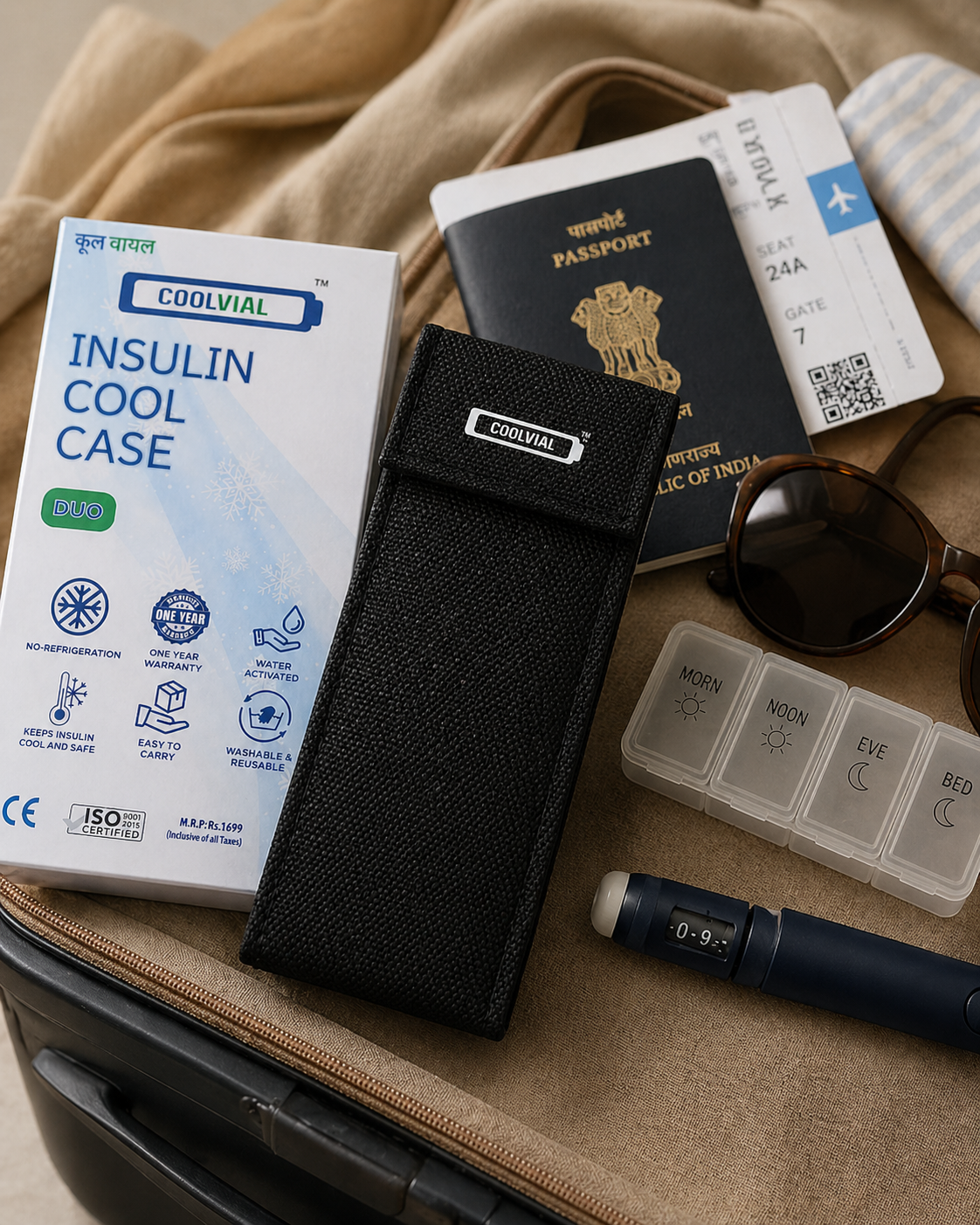
7 Essential Tips for Travelling From Guwahati With Insulin
COOLVIAL keeps insulin safe in India's heat. 48+ hours, no electricity needed.