Reviewed by the COOLVIAL Editorial Team — specialists in insulin storage for Indian climate conditions.
Patna, with its vibrant culture along the Ganga Riverfront and bustling areas like Boring Road, is a city constantly on the move. For the thousands of residents managing diabetes, the prospect of travelling from Patna with insulin often brings unique challenges, especially given Bihar’s hot and humid summers where temperatures can soar to 43°C. Maintaining insulin’s efficacy requires it to be stored between 2°C and 8°C before opening, and at room temperature (below 25-30°C) for up to 28 days once in use. Failing to do so can lead to a loss of potency, making blood sugar management unpredictable and dangerous.
Based on analysis of insulin storage queries from Patna diabetics, we understand the specific concerns that arise when planning a journey, whether it’s a short trip from Kankarbagh to the Jay Prakash Narayan Airport (PAT) or a longer road trip to Bodh Gaya. This comprehensive guide provides 8 essential, practical tips for safe insulin management, covering everything from airport security to train travel and navigating Patna’s taxi services, ensuring your vital medication remains effective throughout your travels.
Table of Contents
- Safeguarding Insulin at Jay Prakash Narayan Airport (PAT)
- Navigating Train Travel from Patna Junction (PNBE) & Rajendra Nagar (RJPB)
- Essential Tips for Road Trips from Patna to Bodh Gaya, Rajgir, and Nalanda
- Mastering App-Cab Travel in Patna with Insulin
- Preparing for International Travel from Jay Prakash Narayan Airport (PAT)
- The Importance of a Doctor’s Letter and Prescription
- Choosing the Right Insulin Cooling Case for Patna’s Climate
- General Insulin Storage Best Practices for Travel
1. Safeguarding Insulin at Jay Prakash Narayan Airport (PAT)
Travelling by air from Jay Prakash Narayan Airport (PAT) with insulin requires careful planning, especially when dealing with security checks and potential delays. The primary rule is simple: NEVER put insulin in checked luggage. The cargo hold of an aircraft is not temperature-controlled and can experience extreme fluctuations, freezing your insulin at high altitudes or exposing it to damaging heat on the tarmac.
Here are specific tips for a smooth airport experience at PAT:
- Always Carry Insulin in Hand Luggage: Your insulin pens, vials, and syringes must be with you in the cabin. This ensures they remain at a stable temperature and are accessible. Security personnel at Jay Prakash Narayan Airport are generally familiar with medical necessities, but being prepared can speed up the process.
- Doctor’s Letter is Recommended: While not always mandatory for domestic travel, a doctor’s letter detailing your diabetes diagnosis, insulin regimen, and the need to carry syringes and needles can prevent any misunderstandings with CISF (Central Industrial Security Force) officers. This is particularly useful at busy checkpoints.
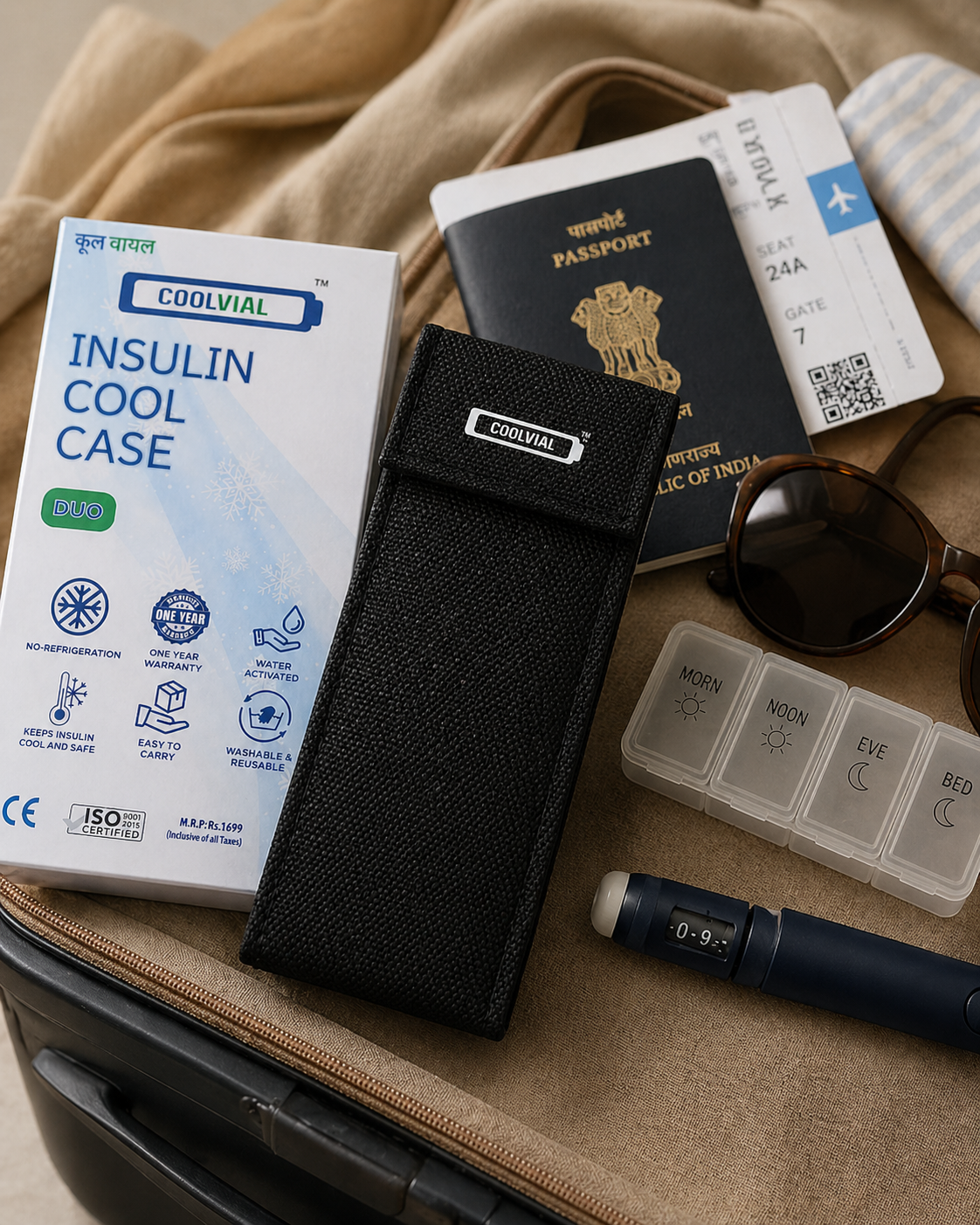
- Managing Gel Packs and Cooling Cases: If you’re using gel packs or ice packs to keep your insulin cool, be aware of liquid restrictions. While medical necessities are often exempt, you might be asked to present them separately for inspection. Using an evaporative cooling case like the COOLVIAL Duo, which activates with water and contains no gels, simplifies this process significantly. You can simply show it to the CISF staff.
- Pre-Paid Taxi Queues at PAT: Upon arrival back at PAT, remember that pre-paid taxi wait queues can sometimes hit 45 minutes, especially during peak hours or monsoon season. This further reinforces why insulin should never be in checked luggage, as retrieval delays combined with long taxi waits could expose your medication to harmful temperatures. Keep your cooling case active and with you.
- Security Screening Protocol:
- Declare your medical supplies to security personnel before your bags go through the X-ray machine.
- Place your insulin pens/vials, syringes, and cooling case in a separate tray for inspection.
- Be prepared to answer questions about the purpose of your medical items. A doctor’s note can be handed over if needed.
2. Navigating Train Travel from Patna Junction (PNBE) & Rajendra Nagar (RJPB)
Train journeys from major Patna stations like Patna Junction (PNBE) or Rajendra Nagar Terminal (RJPB) are a common mode of travel for many. While trains offer more space and less strict liquid restrictions than flights, managing insulin temperature still requires vigilance, especially during long journeys or when traversing different climate zones within India.
Here’s how to ensure your insulin stays safe:
- Myth-Busting Pantry Car Fridges: A common misconception is that pantry car staff will store your insulin in their refrigerators. This is highly unreliable and NOT recommended. Pantry car fridges are often overstuffed, frequently opened, and their temperature regulation can be inconsistent. More importantly, you lose direct control and access to your vital medication. Never risk your insulin’s integrity by entrusting it to an external, unmonitored fridge.
- NEVER Hand Pens to the TTE: Train Ticket Examiners (TTEs) are not responsible for storing medication. Offering your insulin to them is a sure way to lose track of it or expose it to improper storage conditions. Your insulin is your responsibility.
- Bring Your Own Evaporative Cooler: The most effective and reliable solution for train travel is to carry your own evaporative insulin cooling case. These cases, like the COOLVIAL Duo, use evaporation to keep insulin cool (typically 18-26°C, well within safe limits for in-use insulin) for 12-16 hours without electricity. They are compact, require only water to activate, and can be easily recharged at any station or on the train with a small amount of tap water.
- Choosing the Right Coach:
- AC Coaches: Prefer AC coaches (1A, 2A, 3A, AC Chair Car) as they offer a more stable ambient temperature, reducing the heat stress on your cooling case.
- Sleeper/General Coaches: If travelling in non-AC coaches, your evaporative cooler becomes even more critical due to the higher ambient temperatures, especially during Patna’s hot summers (which can see temperatures consistently above 35°C even inside coaches without AC). Keep your bag out of direct sunlight from windows.
- Hydration is Key: While not directly related to insulin storage, staying hydrated is crucial for diabetics, especially during train travel in India. Carry ample water.
3. Essential Tips for Road Trips from Patna to Bodh Gaya, Rajgir, and Nalanda
Patna is a gateway to significant historical and religious sites like Bodh Gaya, Rajgir, and Nalanda, making road trips a popular choice. However, road travel, particularly in a car or bus, presents its own set of challenges for insulin storage due to fluctuating temperatures and limited control over the environment.
Consider these factors for safe road trips:
- Taxi AC Reliability: When hiring a taxi for a road trip from Patna, whether from neighborhoods like Patliputra or Kankarbagh, the reliability of the AC can vary greatly. Many older vehicles may have underperforming AC, or drivers might switch it off to save fuel. Always confirm AC functionality before starting your journey, especially if you’re sensitive to heat.
- Parking Insulin in a Hot Car: This is a critical danger. Even on a moderately warm day (e.g., 28°C), the interior of a parked car can quickly reach scorching temperatures of 50°C to 60°C within minutes. Never leave your insulin in a parked car, even for a short pit stop. Always take your cooling case with you. This applies whether you’re visiting the Buddha Smriti Park or shopping at P&M Mall.
- Dhaba Pit-Stop Fridge Access: Similar to train pantry cars, relying on dhabas or roadside eateries to store your insulin in their fridges is risky. Their fridges are meant for food and beverages, often operate at inconsistent temperatures, and are frequently opened. It’s best to be self-sufficient with your cooling solution.
- Recommended Cooling Solutions for Road Trips:
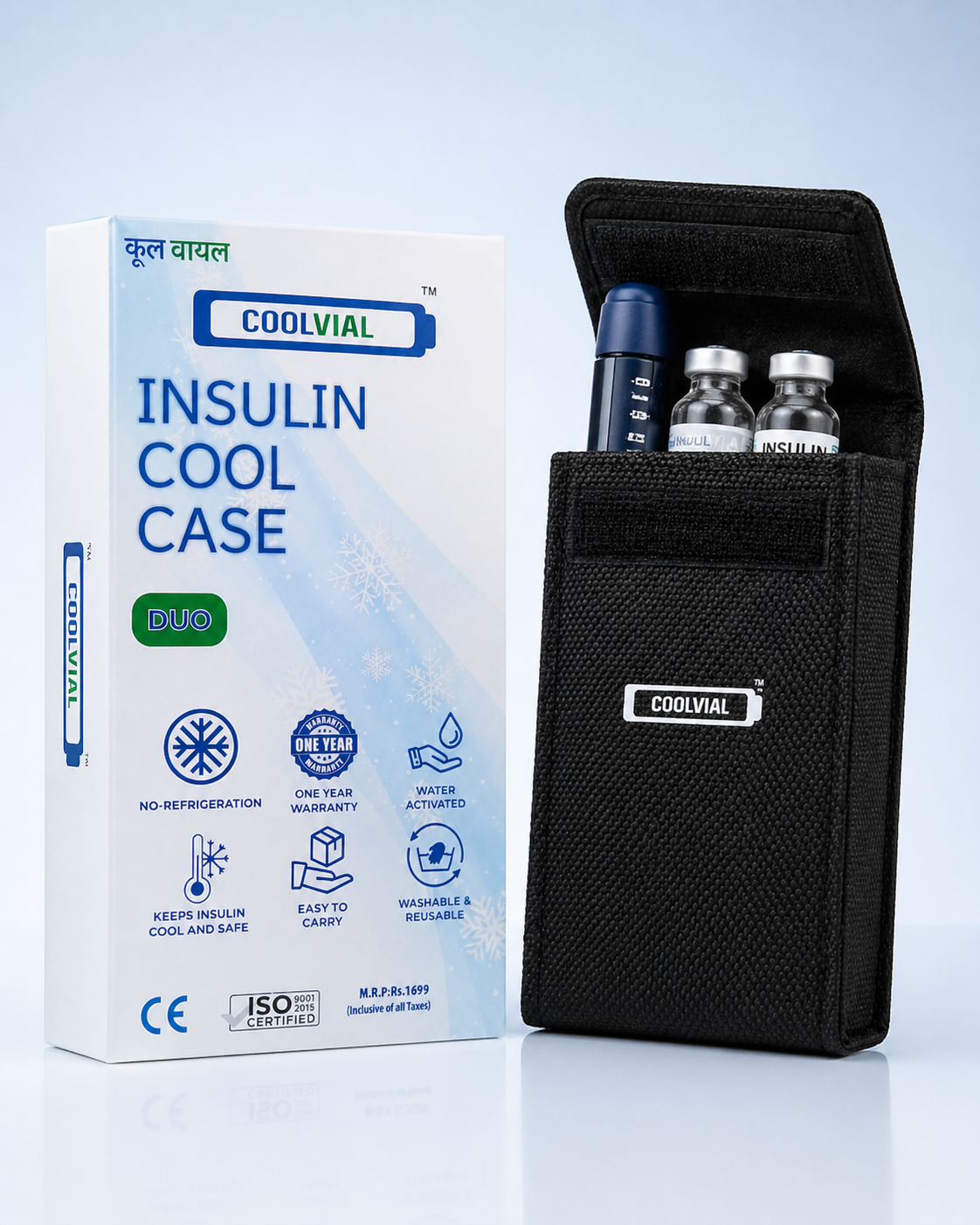
- Evaporative Cooling Cases: A COOLVIAL Duo is ideal as it provides 12-16 hours of cooling and can be reactivated with water at any washroom or roadside tap. It holds 2 pens and 1 vial, making it perfect for most travel needs.
- Vacuum-Insulated Flasks: For additional protection, you can place your cooling case inside a good quality vacuum-insulated flask to further shield it from external heat fluctuations, particularly if the car AC is weak.
- Avoid Direct Sunlight: Keep your cooling case and all insulin supplies out of direct sunlight, even inside the car. Place it under a seat or in a shaded part of the cabin.
- Emergency Supplies: Always carry extra insulin, syringes, and glucose monitoring supplies than you anticipate needing. Roadside pharmacies like Apollo Pharmacy or MedPlus are available in larger towns, but access might be limited in rural areas.
4. Mastering App-Cab Travel in Patna with Insulin
8 Essential Tips for Safe Travelling From Patna With Insulin
Navigating Patna’s city limits or even short distances to the airport using app-based cabs like Ola or Uber, or bike taxis like Rapido, requires specific strategies for insulin protection. Patna’s climate, especially the hot humid summers, can quickly degrade insulin. For daily commutes within the city, check out our Daily Commute With Insulin in Patna — Tips for Metro, Bus & Auto for more detailed advice.
Here are key considerations for app-cab use:
- Ola/Uber Drivers Refusing AC: It’s a common complaint in Indian cities, including Patna, that cab drivers sometimes refuse to turn on the AC to save fuel, despite it being part of the booking. This is problematic when you’re carrying temperature-sensitive medication.
- Proactive Approach: Politely but firmly request the driver to switch on the AC immediately upon starting the ride. Explain you have medical supplies that require a cool environment.
- Backup Plan: Always ensure your insulin is in a reliable cooling case, like the COOLVIAL Duo, which can maintain temperature independently for hours. This mitigates the risk if the AC is weak or non-existent.
- Report Issues: If a driver consistently refuses AC despite requests, consider reporting it to the app service after your ride.
- Rapido Bike-Taxi Exposure: While convenient for quick trips, Rapido bike-taxis expose you and your belongings directly to the elements – sun, heat, and rain. This is not suitable for carrying insulin unless it is exceptionally well-protected in a robust, insulated, and waterproof cooling case, and even then, only for very short distances in mild weather. The direct sun exposure and ambient heat can quickly compromise insulin.
- Short Rides, Big Risks: Even a 15-20 minute ride from Boring Road to Gandhi Maidan in a non-AC cab during a 40°C Patna afternoon can be enough to expose insulin to damaging temperatures if it’s not adequately protected. An evaporative cooler provides a crucial buffer against these rapid temperature changes.
- Consider Carpooling with Caution: If opting for carpooling services, be aware that you have even less control over the vehicle’s environment and other passengers’ preferences regarding AC. Prioritize your insulin’s safety over cost savings for such trips.
5. Preparing for International Travel from Jay Prakash Narayan Airport (PAT)
While Jay Prakash Narayan Airport (PAT) primarily serves domestic routes with limited international connectivity (often via connecting flights from major hubs), it’s crucial to understand international travel protocols for insulin. International travel adds layers of complexity, including customs regulations and time-zone adjustments.
Key considerations for international travel with insulin:
- Customs Declarations: Many countries require you to declare all medications, especially injectables, upon arrival. Always check the specific customs regulations of your destination country beforehand. A comprehensive doctor’s letter (in English) is indispensable here.
- Time-Zone Dosing: Crossing multiple time zones can disrupt your usual insulin dosing schedule.
- Consult Your Doctor: Before your trip, discuss your travel itinerary with your endocrinologist at AIIMS Patna or Medanta Patna. They can provide a personalized plan for adjusting your insulin doses, especially for long-acting insulin, to prevent hypo- or hyperglycemia.
- “Travel Day” Dosing: Your doctor might advise a modified “travel day” dose or recommend taking shorter-acting insulin more frequently.
- Keep Track: Carry a small notebook or use a diabetes management app to meticulously record your insulin doses, times, and blood sugar readings in both the departure and destination time zones.
- Cooling Solutions for Extended Travel: For international flights, an evaporative cooling case remains the best option. The COOLVIAL Duo keeps insulin cool for 12-16 hours, making it suitable for even long-haul flights. Remember that onboard aircraft temperatures are usually stable, but airport transit and ground time can be hot.
- Language Barriers: If travelling to a non-English speaking country, consider having a brief note from your doctor translated into the local language, explaining your condition and the necessity of your insulin and supplies.
- Security Scans Abroad: Be prepared for similar security checks as at PAT, but potentially with different nuances. A doctor’s note, clearly stating the medical necessity of your insulin and syringes, is your best ally.
6. The Importance of a Doctor’s Letter and Prescription
A doctor’s letter is your most valuable travel document when carrying insulin, especially when travelling from Patna to other cities or internationally. It serves as official proof of your medical condition and the necessity of your medication and supplies.
What to include in your doctor’s letter:
- Your Full Name and Date of Birth: To identify you clearly.
- Diagnosis: Confirmation of Type 1 or Type 2 diabetes.
- Medication Details:
- Name of insulin (e.g., Novolog, Lantus, Humalog).
- Dosage regimen (e.g., “X units of insulin Y times daily”).
- Method of administration (e.g., pen, syringe, pump).
- Necessity of Supplies: Clearly state the need to carry syringes, needles, lancets, blood glucose meter, and cooling case.
- Doctor’s Contact Information: Name, registration number, and contact details of your endocrinologist or diabetologist (e.g., from Paras HMRI Hospital).
- Date and Signature: A recent date and your doctor’s official signature and stamp.
- Multilingual (for international travel): If travelling internationally, ask your doctor to provide the letter in English, and consider having it translated into the language of your destination country.
This letter can be crucial at:
- Airport Security (CISF): To explain why you’re carrying syringes and liquids.
- Customs: For declaring medical supplies in foreign countries.
- Pharmacies: If you need to purchase emergency supplies, though remember that insulin brands and concentrations can vary internationally.
- In Case of Medical Emergency: Provides quick, vital information to medical personnel.
7. Choosing the Right Insulin Cooling Case for Patna’s Climate
Patna’s climate, characterized by hot, humid summers (22-43°C) and heavy monsoons (June-September), makes reliable insulin cooling cases indispensable. Traditional ice packs or gel packs can be bulky, messy, and have limited cooling duration, often requiring a freezer to re-activate, which is rarely available during travel.
This is where water-activated evaporative cooling cases excel. They offer a practical, electricity-free solution for maintaining insulin within its safe temperature range.
Let’s compare options suitable for Patna’s conditions:
| Feature | COOLVIAL Duo (Rs 1,099 with code COOLHEAL) | FRIO Cooling Wallet (~Rs 1,900) | Outer Woods OW-12 (~Rs 999) |
|---|---|---|---|
| Cooling Method | Evaporative (water-activated) | Evaporative (water-activated) | Gel-pack (freezer required) |
| Cooling Duration | 12-16 hours per activation | Up to 45 hours per activation | 6-8 hours |
| Insulin Capacity | 2 pens + 1 vial | 1-2 pens / 1-2 vials (varies) | 2 pens + 2 vials |
| Reactivation | Soak in water for 5-10 minutes | Soak in water for 5-10 minutes | Freeze gel pack |
| Electricity Needed? | No | No | Yes (for gel pack) |
| Certification | CE, ISO 9001:2015 | Medical Device Certified | – |
| Warranty | 1 Year | 1 Year | – |
| Made in India | Yes | No (UK brand) | Yes |
| Best For | Daily use, travel, hot climates | Extended travel, extreme heat | Short trips, if freezer access is guaranteed |
8 Essential Tips for Safe Travelling From Patna With Insulin
48+ hours at 2-8°C. No electricity. CE certified. Free delivery across India.
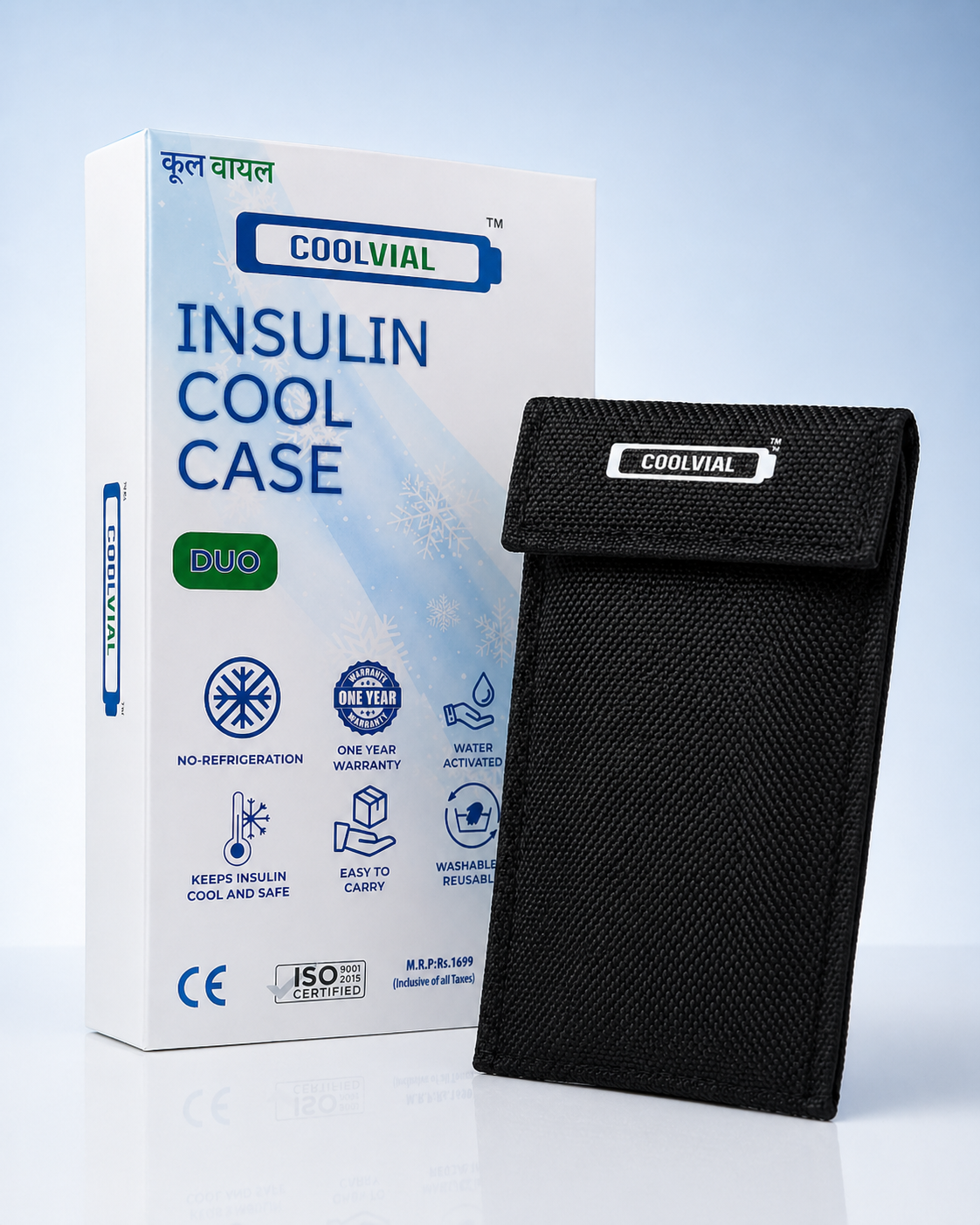
Order on WhatsApp — ₹1,099🛒 Buy Now — ₹1,099The COOLVIAL Duo is particularly well-suited for travelling from Patna. Its water-activated mechanism means you can reactivate it easily in any washroom or with a water bottle, making it perfect for long train journeys, road trips, or navigating Patna’s airports and stations. It holds sufficient insulin for most travel durations, and its “Made in India” tag ensures it’s designed with local climate realities in mind. For a reliable and affordable solution, the COOLVIAL Duo offers excellent value. Learn more about optimal insulin storage tips.
8. General Insulin Storage Best Practices for Travel
Beyond specific transport methods, a few overarching principles will ensure your insulin remains potent and safe throughout your travels. Whether you’re commuting from Danapur to Kankarbagh or embarking on a cross-country adventure, these practices are universally applicable.
- Check Insulin Expiry Dates: Before packing, always check the expiry dates on your insulin pens and vials. Replace any that are nearing their expiry.
- Understand Insulin Temperature Guidelines:
- Unopened Insulin: Store in a refrigerator between 2°C and 8°C.
- Opened Insulin (in-use): Can be stored at room temperature (below 25-30°C) for up to 28 days, depending on the specific brand. Always check the manufacturer’s leaflet.
- COOLVIAL Duo maintains temperatures typically between 18-26°C, which is ideal for in-use insulin, even when outside temperatures are much higher.
- Protect from Extreme Temperatures: Insulin degrades rapidly when exposed to freezing temperatures (below 0°C) or excessive heat (above 30°C). Freezing can cause the protein structure to break down, while heat can accelerate degradation.
- Avoid Direct Sunlight: Always keep insulin and your cooling case out of direct sunlight. UV rays can also damage insulin.
- Carry Extra Supplies: Always pack more insulin, syringes, needles, and test strips than you think you’ll need. Travel delays, lost luggage, or unexpected circumstances can quickly deplete your essentials. It’s prudent to carry at least 1.5 to 2 times your required medication.
- Emergency Glucose: Always carry fast-acting glucose (e.g., glucose tablets, juice box) to treat hypoglycemia, which can be more challenging to manage when travelling due to disrupted routines and meal times.
- Inform Travel Companions: Make sure at least one travel companion knows you have diabetes, where your insulin is stored, and how to administer it or help in an emergency.
- Medical ID: Wear a medical ID bracelet or necklace indicating you have diabetes. This is critical in an emergency.
For a comprehensive guide on managing diabetes in Patna, refer to our Complete Diabetes Care Guide for Patna Residents — 2026 Edition. According to the Indian Council of Medical Research (ICMR) INDIAB study, Bihar has a diabetes prevalence of 4.3%, highlighting the importance of proper diabetes management and travel preparedness for many residents (Source: ICMR Guidelines on Diabetes).
Frequently Asked Questions (FAQ)
Q: Can I take my insulin pens and vials through airport security at Jay Prakash Narayan Airport (PAT)? A: Yes, you can and should always carry your insulin pens and vials in your hand luggage when flying from Jay Prakash Narayan Airport (PAT). It is recommended to have a doctor’s letter to clarify the medical necessity of your medication and supplies to CISF personnel.
Q: Is it safe to store insulin in a train’s pantry car fridge when travelling from Patna Junction (PNBE)? A: No, it is not safe or recommended to store insulin in a train’s pantry car fridge when travelling from Patna Junction (PNBE) or Rajendra Nagar (RJPB), as temperatures can be inconsistent and you lose direct control over your vital medication.
Q: How long can COOLVIAL Duo keep insulin cool during a road trip from Patna to Bodh Gaya? A: The COOLVIAL Duo can keep insulin cool for 12-16 hours per activation using evaporative cooling, making it ideal for road trips from Patna to destinations like Bodh Gaya, Rajgir, or Nalanda without needing electricity.
Q: What should I do if my Ola/Uber driver in Patna refuses to turn on the AC while I’m carrying insulin? A: Politely but firmly request the driver to turn on the AC, explaining you have temperature-sensitive medical supplies. Always use a reliable cooling case like COOLVIAL Duo as a backup, and consider reporting persistent issues to the app service.
Q: Do I need a doctor’s letter for domestic travel with insulin from Patna? A: While not always strictly mandatory for domestic travel, carrying a doctor’s letter is highly recommended as it can prevent misunderstandings with airport security (CISF) and other travel authorities regarding your insulin and syringes.
Q: Can insulin be damaged by Patna’s high summer temperatures if left unprotected? A: Yes, insulin can be significantly damaged by Patna’s high summer temperatures, which can reach 43°C. Exposure to temperatures above 25-30°C can quickly degrade insulin’s potency, making proper cooling essential.
Q: What is the ideal temperature range for storing unopened insulin? A: Unopened insulin should always be stored in a refrigerator at temperatures between 2°C and 8°C to maintain its full potency until its expiry date.
Q: How can I manage insulin dosing when crossing time zones during international travel from Patna? A: Consult your endocrinologist at AIIMS Patna or Medanta Patna before international travel to get a personalized plan for adjusting your insulin doses, especially long-acting insulin, to account for time zone changes and prevent blood sugar fluctuations.
Conclusion
Travelling from Patna with insulin, whether by air, rail, or road, demands careful preparation and reliable storage solutions. Patna’s often challenging climate, with its intense summers and monsoons, necessitates proactive measures to protect your vital medication from temperature fluctuations. By understanding airport security protocols, debunking myths about train storage, preparing for app-cab realities, and always carrying a doctor’s letter, you can ensure your journeys are safe and stress-free.
The key takeaway is empowerment through preparation. With a reliable, electricity-free cooling solution like the COOLVIAL Duo, you gain the confidence to explore, knowing your insulin is protected for 12-16 hours without external power. Don’t let the thought of compromised insulin limit your travel plans. Prioritize your health and peace of mind on every journey.
Order your COOLVIAL Duo today at Rs 1,099 with code COOLHEAL (MRP Rs 1,699) and travel smart, travel safe. Visit coolvial.com or connect with us via WhatsApp at wa.me/918766952300.
Methodology Note
How We Researched This — This article is based on a thorough review of RSSDI (Research Society for the Study of Diabetes in India) guidelines for diabetes management, ICMR-INDIAB (Indian Council of Medical Research - India Diabetes) study data on diabetes prevalence, local Patna hospital directories (AIIMS Patna, Paras HMRI Hospital, Medanta Patna), and insights into local pharmacy networks (Apollo Pharmacy, MedPlus, 1mg, Generic Aadhaar, Trust Pharmacy) and transportation realities. We also cross-referenced general best practices for insulin storage and travel safety.
Medical Disclaimer
This article is for general information purposes only and is not a substitute for professional medical advice. Always consult your endocrinologist or diabetologist before making any changes to your insulin storage, dosing practices, or diabetes management plan.