
Reviewed by the COOLVIAL Editorial Team — specialists in insulin storage for Indian climate conditions.
Ranchi, with its pleasant plateau climate, offers a refreshing escape, but even its mild summers (10-37°C) and monsoon humidity (June-September, ~1400mm rainfall) can pose a challenge for insulin storage while travelling. For the over 77 million Indians living with diabetes (Source: IDF Diabetes Atlas 10th Edition), safe insulin storage during travel is not just a convenience, but a critical health imperative. This guide provides 7 essential tips for travelling from Ranchi with insulin, ensuring your vital medication remains potent whether you’re flying from Birsa Munda Airport, catching a train from Ranchi Junction, or embarking on a road trip to Netarhat.
Based on analysis of insulin storage queries from Ranchi diabetics, we understand the unique local challenges. From navigating Birsa Munda Airport’s security protocols to dealing with unreliable AC in local taxis, careful preparation is key. Keeping insulin between 2-8°C when unopened and below 25-30°C once opened is crucial. Let’s delve into how you can manage your insulin effectively on the go, starting right here in Ranchi.
Table of Contents
- Navigating Birsa Munda Airport (IXR) with Insulin
- Smart Insulin Travel on Ranchi Trains (RNC & HTE)
- Embarking on Ranchi Road Trips with Insulin
- Handling App-Cabs and Local Transport in Ranchi
- Choosing the Right Insulin Cooling Solution
- Essential Preparations Before You Leave Ranchi
- International Travel from Birsa Munda Airport (IXR)
1. Navigating Birsa Munda Airport (IXR) with Insulin
Birsa Munda Airport (IXR) in Ranchi, while a smaller airport, follows standard Indian aviation security protocols. The paramount rule for any diabetic flying is: always carry your insulin in your hand luggage. Never check it in. The cargo hold of an aircraft is not temperature-controlled and can experience extreme fluctuations, freezing your insulin at high altitudes or exposing it to damaging heat on the tarmac.
Here’s what you need to know about flying with insulin from IXR:
-
Security Screening (CISF):
- Declare Your Medication: When you reach the security checkpoint, proactively inform the CISF (Central Industrial Security Force) personnel that you are carrying insulin and other diabetes supplies.
- Doctor’s Letter: A doctor’s letter is highly recommended, though not always explicitly demanded for domestic travel. This letter should state that you have diabetes, list the insulin and supplies you are carrying (pens, vials, syringes, lancets, glucometer), and confirm these are for personal medical use. You can get this letter from your diabetologist at RIMS (Rajendra Institute of Medical Sciences) or Medica Hospitals on Booty Road.
- Gel Packs: If you are using gel packs (non-evaporative), be prepared for questions. CISF may ask you to present them for inspection. Ensure they are completely frozen at the time of screening, as partially thawed gel packs might be questioned more closely. For peace of mind, consider evaporative cooling cases that don’t rely on gel packs.
- Insulin Pens/Vials: Insulin pens and vials are generally exempt from the liquid restrictions for hand luggage, but it’s best to keep them in a clear, separate pouch for easy inspection.
-
Check-in and Boarding:
- No Checked Insulin: Reiterate, never put insulin in checked luggage. Even if you’re flying to a cooler destination, the baggage hold environment is unpredictable.
- Pre-Boarding: If you need extra time to settle in or arrange your medication, consider asking for pre-boarding, especially if you have a connecting flight or a tight schedule.
-
Post-Arrival Transport from IXR:
- Pre-paid Taxi Queues: A crucial local tip for Birsa Munda Airport: the pre-paid taxi queues can be surprisingly long, sometimes hitting 45 minutes or more, especially during peak hours or after flight arrivals. This means your insulin, if not in a proper cooling case, could be exposed to Ranchi’s ambient temperatures for an extended period while you wait.
- Solution: Ensure your insulin is safely stored in a reliable cooling case like the COOLVIAL Duo which can maintain optimal temperatures for 12-16 hours. This extra buffer time is essential for unexpected delays.
To further ensure smooth travel, consider reviewing our comprehensive guide on diabetes care in the city: Complete Diabetes Care Guide for Ranchi Residents — 2026 Edition.
2. Smart Insulin Travel on Ranchi Trains (RNC & HTE)
Train journeys from Ranchi Junction (RNC) or Hatia (HTE) are a popular mode of transport, connecting the city to various parts of India. While trains offer a more relaxed pace than flights, they present their own set of challenges for insulin storage, particularly regarding temperature control.
Let’s address some common misconceptions and provide practical advice:
-
Pantry Car Fridges: A Myth Busted:
- Many travellers assume that pantry cars on long-distance trains have reliable refrigeration facilities for passenger medication. This is a myth. Pantry car fridges are primarily for perishable food items and often experience power fluctuations or are not maintained at the consistent 2-8°C required for insulin. NEVER rely on a pantry car fridge for your insulin.
- They might also be overcrowded, unhygienic, or inaccessible when you need them most.
-
Train Ticket Examiner (TTE) & Insulin:
- Another common misconception is handing your insulin to the TTE for safekeeping. NEVER hand your insulin pens or vials to the TTE. Their primary role is ticket verification, not medication storage. They do not have the facilities or responsibility to properly store your temperature-sensitive medication. Keep your insulin with you at all times, ideally in a personal cooling solution.
-
Temperature Challenges on Trains:
- Even in AC coaches, the ambient temperature can fluctuate significantly, especially during daytime travel or if the AC unit malfunctions. Non-AC coaches, particularly during Ranchi’s summer or monsoon, can reach well above 30°C, rendering insulin ineffective quickly.
- The best solution for train travel is a personal, portable evaporative cooler. The COOLVIAL Duo, for instance, is ideal for this. It simply requires activation with water, keeping your insulin cool for 12-16 hours without electricity, which is perfect for journeys originating from Ranchi Junction to destinations like Kolkata or Delhi.
Here’s a checklist for train travel with insulin:
- Pack an Evaporative Cooling Case: Activate it before you leave home.
- Keep Insulin with You: In your carry-on bag, accessible but secure.
- Monitor Temperature (If Possible): If you have a travel thermometer, keep an eye on the ambient temperature in your coach.
- Stay Hydrated: Carry ample water, especially if your journey extends through warm regions.
- Identify Local Pharmacies: Before you reach your destination, identify a few well-known pharmacies such as Apollo Pharmacy or MedPlus near the station, just in case of an emergency or if you need other supplies.
3. Embarking on Ranchi Road Trips with Insulin
Ranchi is a gateway to beautiful road trips, whether it’s a serene drive to Netarhat (often called the ‘Queen of Chotanagpur’), a visit to the majestic Hundru Falls, or a pilgrimage to the Jagannath Temple. However, the open road brings unique challenges for insulin storage, especially with Ranchi’s sometimes unpredictable climate.
Consider these factors for your road adventures:
-
Taxi AC Reliability:
- Many local taxis and even some rented cars in Ranchi might have older or less efficient air conditioning systems. The AC could struggle to keep the cabin cool, especially during the hottest parts of the day or when stuck in traffic on Main Road or near Albert Ekka Chowk.
- On longer drives out of the city, like the roughly 150 km trip to Netarhat, a failing AC can quickly turn the car into an oven, compromising your insulin. Always assume the AC might not be fully reliable.
-
Parking Insulin in a Hot Car:
- Leaving your insulin in a parked car, even for a short duration, is extremely dangerous. The interior temperature of a car parked under the sun can rapidly climb to 50-60°C, far exceeding the safe storage limits for insulin. This applies whether you’re taking a quick break at a dhaba on the way to Hundru Falls or exploring the Rock Garden.
- Always take your insulin with you when you step out of the car, even for a few minutes.
-
Dhaba Pit-Stop Fridge Access:
- Similar to train pantry cars, dhaba fridges are not suitable for insulin storage. They are for beverages and food, often not maintained at pharmaceutical standards, and might be switched off overnight. Politely decline if offered and rely on your personal cooling solution.
-
Recommended Road Trip Strategy:
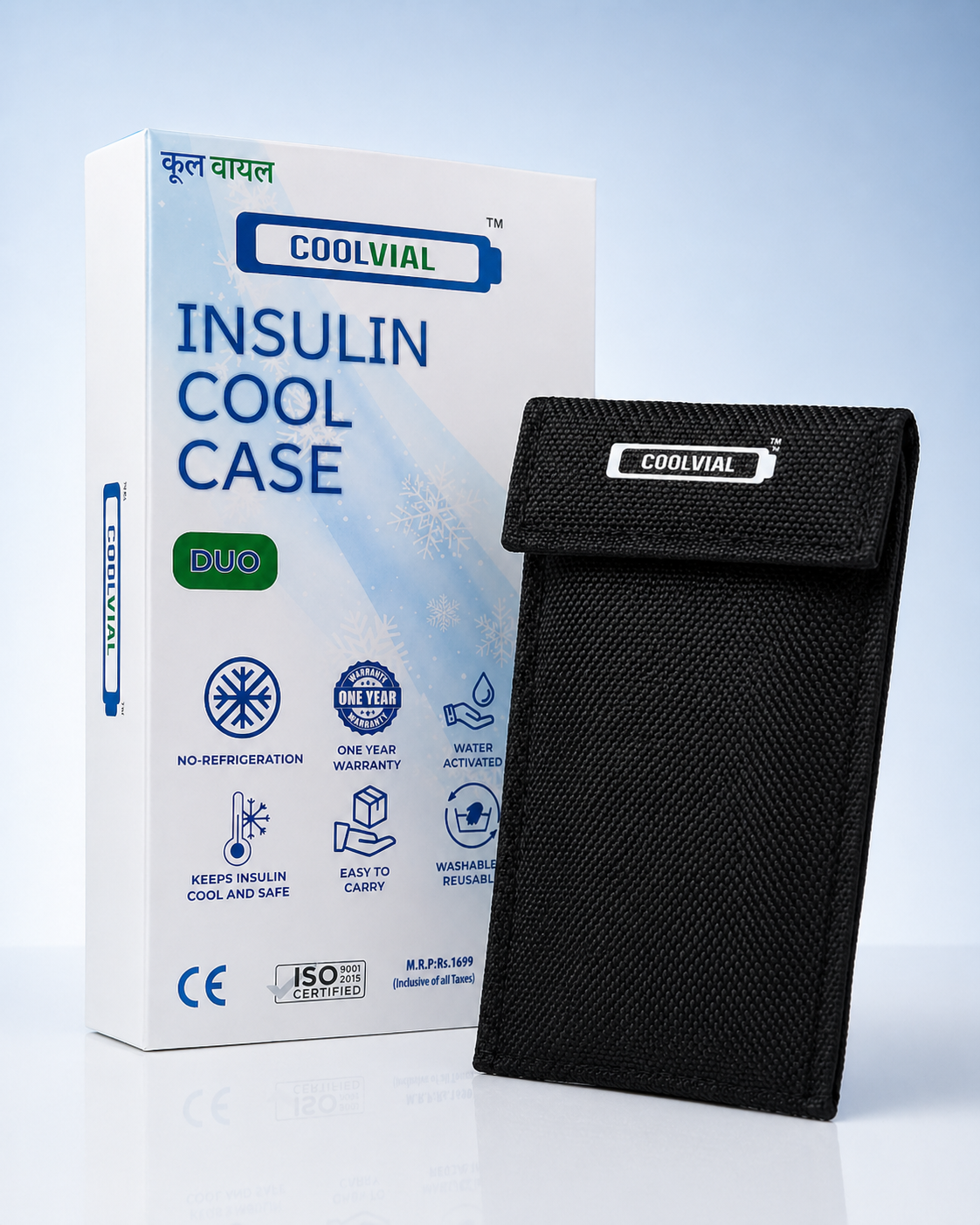
- Evaporative Cooling Cases: For road trips, an evaporative cooling case like the COOLVIAL Duo is indispensable. It doesn’t require electricity, just water, making it perfect for long drives where power outlets are scarce. It keeps insulin cool for up to 16 hours. Compared to traditional ice packs which can leak or freeze insulin, or expensive battery-operated coolers (which might fail if the car battery runs low), evaporative coolers offer reliable, passive cooling.
- Strategic Placement: Keep your cooling case out of direct sunlight, perhaps under a seat or in a shaded part of the car, even within the cooling case.
- Stay Prepared: Carry extra water for reactivating your COOLVIAL Duo if your trip extends beyond its cooling duration. Pharmacies like Generic Aadhaar or Frank Ross in Ranchi’s Lalpur area are good places to stock up on supplies before you leave.
Road trips from Ranchi offer incredible experiences. By taking these precautions, you can enjoy the journey without worrying about your insulin.
4. Handling App-Cabs and Local Transport in Ranchi
Navigating Ranchi’s local transport, including app-based cabs and bike taxis, requires specific considerations for insulin users. While convenient, these options can present temperature control challenges.
Here’s what Ranchi residents and visitors should know:
-
Ola/Uber Driver Refusals for AC:
- A common complaint in many Indian cities, including Ranchi, is that Ola or Uber drivers sometimes refuse to turn on the AC to save fuel, especially for shorter rides or if you’ve opted for a “mini” or “share” ride.
- This can be problematic when carrying insulin, as even a 15-20 minute ride from Doranda to Kanke Road in a non-AC car during a warm day can expose insulin to temperatures above 30°C.
- Tip: If you book an AC cab, politely but firmly request the driver to turn on the AC. If they refuse, consider cancelling and rebooking, or be prepared with your insulin in a reliable cooling case.
-
Rapido Bike-Taxi Exposure:
- Rapido bike taxis are a quick and cost-effective way to get around Ranchi, especially for dodging traffic. However, they offer no protection from the elements. Your insulin, even if in a small bag, will be directly exposed to the sun, heat, or rain.
- Recommendation: Avoid using bike taxis for insulin transport, especially during peak heat or monsoon. If absolutely necessary, ensure your insulin is secured in a compact, robust evaporative cooling case that can withstand direct exposure and maintain its temperature.
-
Auto-Rickshaws:
- Auto-rickshaws, a staple of Ranchi’s local transport, are open-air vehicles. While they provide ventilation, they offer no temperature control whatsoever. The ambient heat and humidity will directly affect your insulin.
- Solution: For daily commutes or short trips within Ranchi using autos or buses, always use an evaporative cooling case. Our blog post Daily Commute With Insulin in Ranchi — Tips for Metro, Bus & Auto offers more specific advice for local travel.
-
Best Practices for Local Transport:
- Always use a cooling solution: For any journey beyond a few minutes, even within city limits like from Main Road to Lalpur, an evaporative cooler is your best friend.
- Plan routes: During peak heat (March-May), try to travel during cooler parts of the day if possible.
- Keep it close: Never leave your insulin unattended in any vehicle.
5. Choosing the Right Insulin Cooling Solution
The core of safe insulin travel, especially when travelling from Ranchi with varying climates, lies in selecting an effective cooling solution. Evaporative cooling cases are often the best choice for Indian conditions due to their independence from electricity and their ability to maintain stable temperatures.
Let’s compare options:
-
COOLVIAL Duo (Our Product):
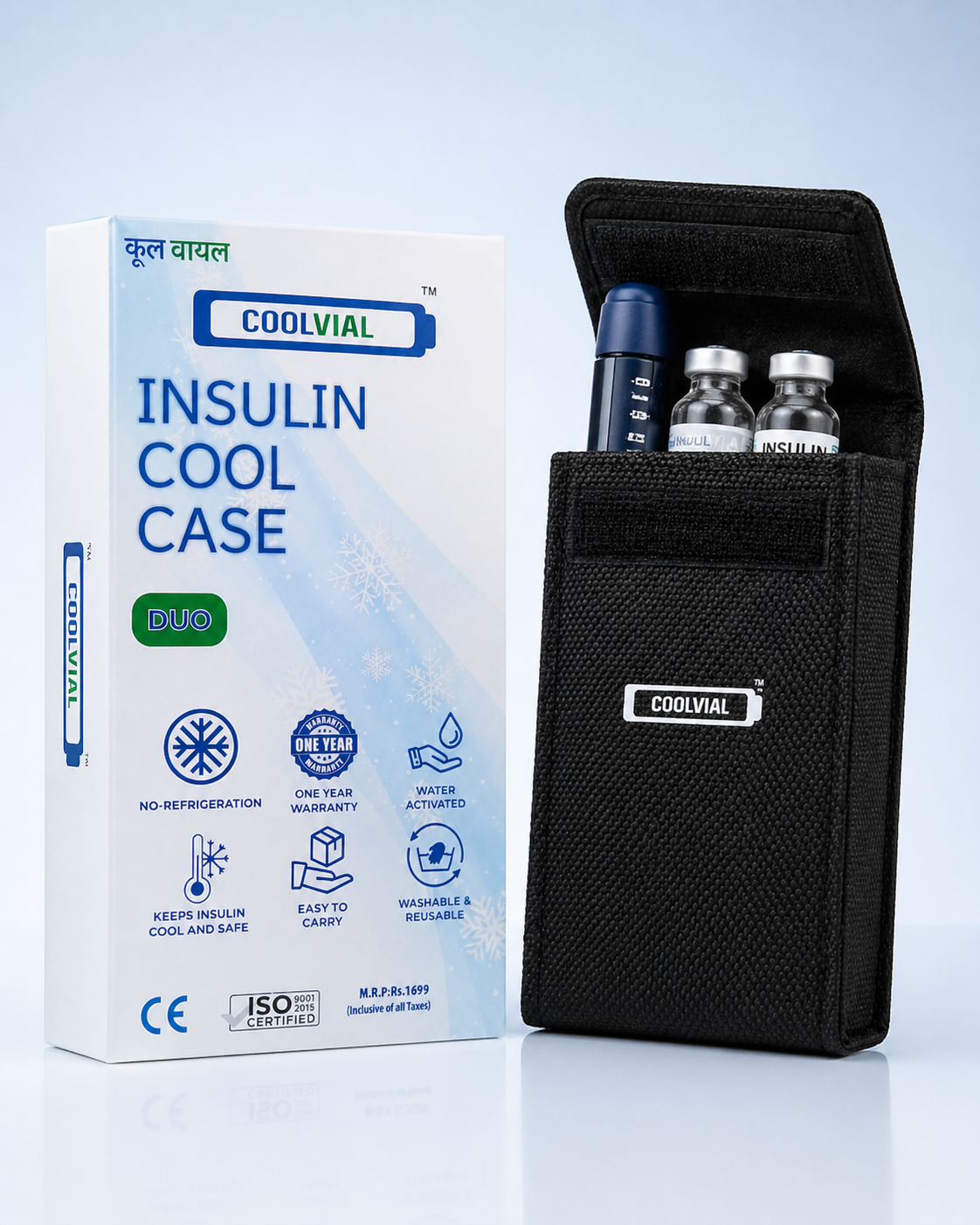
- Mechanism: Water-activated evaporative cooling. Submerge the inner pouch in cold water for a few minutes, and it provides cooling through evaporation.
- Capacity: Holds 2 insulin pens + 1 vial. Perfect for typical travel needs.
- Duration: Keeps insulin cool for 12-16 hours per activation.
- Advantages:
- No electricity, batteries, or ice packs needed.
- Lightweight and portable.
- Reusable for years.
- Maintains ideal temperature (2-8°C when ambient is cool, up to 25°C when ambient is hot).
- CE certified, ISO 9001:2015, 1-year warranty. Made in India.
- Price: Rs 1,099 with code COOLHEAL (MRP Rs 1,699).
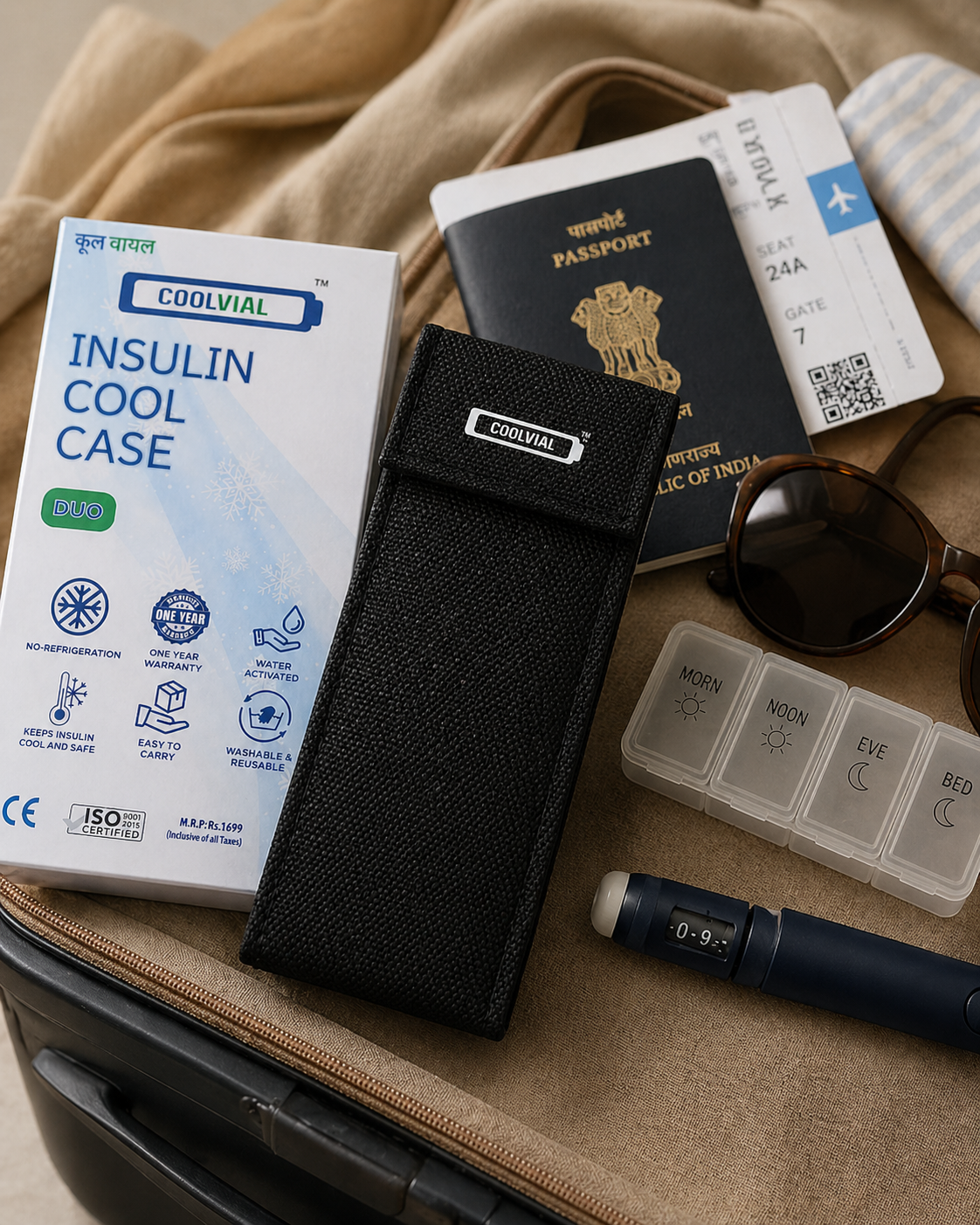
- Ideal for: Flights, long train journeys, road trips, and daily commutes in Ranchi. COOLVIAL insulin cool case offers dependable protection.
-
Competitor Comparison:
- FRIO Wallets: Also evaporative, similar mechanism. Generally priced higher (around Rs 1,900 for comparable capacity). Excellent product but often a more premium price point.
- Outer Woods OW-12: Offers passive cooling (insulated bags with gel packs). Priced lower (around Rs 999). While insulated bags can help, they are dependent on the gel pack’s frozen state, which thaws over time, and might not offer the same consistent temperature control as evaporative systems, especially in prolonged heat or humidity. They also risk freezing insulin if the gel pack is too cold.
-
Other Options (and why to be cautious):
- Ice Packs/Gel Packs (in regular insulated bags): Can freeze insulin if in direct contact, or thaw too quickly in Ranchi’s heat, becoming ineffective. Prone to leakage.
- Battery-Operated Mini Fridges: Expensive, heavy, reliant on power sources, and can be bulky for travel.
For reliable, hassle-free insulin storage, especially when travelling from Ranchi with its specific climate conditions, an evaporative cooler like the COOLVIAL Duo offers the best balance of performance, portability, and value. For more detailed information on insulin storage, visit our insulin storage tips page.
6. Essential Preparations Before You Leave Ranchi
Thorough preparation is your best defence against travel mishaps with insulin. Before you even step out of your home in neighbourhoods like Lalpur or Doranda, ensure you’ve covered these vital steps:
- Consult Your Doctor:
- Travel Plan Discussion: Discuss your travel plans with your diabetologist at RIMS, Medica Hospitals, or Brahmananda Narayana Multispeciality. They can advise on time-zone adjustments for dosing (if applicable), potential changes in diet, and provide a comprehensive doctor’s letter.
- Prescription Renewal: Ensure you have enough insulin and supplies for your entire trip, plus a buffer of at least 25-30% extra. Get new prescriptions if needed. Pharmacies like Apollo Pharmacy or MedPlus are readily available across Ranchi.
7 Essential Tips for Travelling From Ranchi With Insulin — Airport, Station & Taxi Advice
COOLVIAL keeps insulin safe in India's heat. 48+ hours, no electricity needed.
-
Pack Smartly:
- Hand Luggage Priority: As emphasized, all insulin, syringes, pens, lancets, and glucometers must go into your hand luggage.
- Cooling Case Activation: Activate your COOLVIAL Duo before you leave home. This means submerging the inner pouch in cold water for 5-10 minutes. Ensure it’s ready to go.
- Separate Pouch: Keep your diabetes supplies in a clear, easily accessible pouch within your hand luggage for quick security checks.
- Emergency Kit:
- Extra insulin (pens/vials).
- Extra syringes/pen needles.
- Extra lancets and test strips.
- A spare glucometer and batteries.
- Fast-acting glucose (glucose tablets, fruit juice, hard candies).
- Antiseptic wipes.
- Doctor’s letter and prescription copies (physical and digital).
- Emergency contact information.
-
Research Your Destination:
- Pharmacy Locations: Identify reliable pharmacies at your destination, similar to 1mg or Generic Aadhaar in Ranchi, in case you need to purchase supplies or find a doctor.
- Hospital Access: Know the nearest hospitals or clinics.
- Local Climate: Understand the temperature and humidity, which will influence how often you might need to reactivate your evaporative cooling case.
-
Inform Travel Companions:
- Make sure at least one travel companion knows you have diabetes, where your insulin is stored, and what to do in case of an emergency (e.g., severe hypo).
By taking these proactive steps while still in Ranchi, you significantly reduce the stress and risk associated with travelling from Ranchi with insulin.
7. International Travel from Birsa Munda Airport (IXR)
While Birsa Munda Airport (IXR) currently primarily handles domestic flights, it serves as a crucial starting point for international journeys, often involving a connecting flight from a larger hub like Delhi or Kolkata. When your travel plans take you beyond India’s borders, managing insulin requires an even more meticulous approach.
Here are key considerations for international travel originating from IXR:
-
Customs and Immigration:
- Doctor’s Letter (Mandatory): For international travel, a detailed doctor’s letter is absolutely mandatory. It should be in English (or translated into the destination country’s language), clearly stating your medical condition, the necessity of carrying insulin and supplies, and the specific names of your medications. This is crucial for customs clearance in foreign countries.
- Customs Declarations: Be prepared to declare your medical supplies upon arrival at your destination. Having your doctor’s letter ready will facilitate a smooth process.
- Quantity Limits: Some countries have limits on the quantity of medication you can bring in. Always check the specific regulations of your destination country well in advance.
-
Time-Zone Dosing Adjustments:
- Consult Your Doctor: This is perhaps the most critical aspect of international travel. Crossing multiple time zones requires careful adjustment of your insulin dosing schedule to avoid hypo- or hyperglycemia. Your diabetologist in Ranchi (e.g., at RIMS) will provide a personalized plan.
- Gradual Adjustments: Often, doctors recommend gradually adjusting your dose in the days leading up to your flight, or immediately upon arrival, depending on the direction and number of time zones crossed.
- Frequent Monitoring: Expect to monitor your blood glucose levels more frequently during the initial days of international travel.
-
Cooling Solutions for Extended Journeys:
- Longer Cooling Duration: International flights and layovers can mean very long travel times. Your COOLVIAL Duo, with its 12-16 hour cooling duration, is an excellent choice. For trips exceeding this, ensure you have access to water for reactivation during layovers or on the plane (ask cabin crew).
- Backup Plan: Always carry a backup cooling method or extra insulin if possible.
-
Language Barrier:
- Carry a few phrases in the local language of your destination, especially phrases related to diabetes, insulin, or needing medical help.
- Have the generic names of your insulin ready, as brand names can differ internationally.
International travel with diabetes is entirely feasible with careful planning. By taking the necessary precautions starting from Birsa Munda Airport, you can ensure a safe and enjoyable journey.
FAQ Section
Q: Can I put my insulin in the overhead bin on a flight from Ranchi? A: Yes, it is generally safe to place your insulin cooling case in the overhead bin. The cabin temperature is controlled, but avoid placing it in direct contact with the exterior wall of the aircraft, which can get colder.
Q: How often do I need to reactivate my COOLVIAL Duo on a long journey from Ranchi? A: The COOLVIAL Duo keeps insulin cool for 12-16 hours per activation. For longer journeys, reactivate it by re-soaking the inner pouch in cold water every 12-16 hours, or sooner if you are in a very hot and humid environment.
Q: What if I lose my insulin while travelling from Ranchi? A: Always carry extra insulin and a copy of your prescription. In case of loss, immediately contact your doctor in Ranchi and locate the nearest reputable pharmacy (like Apollo Pharmacy or MedPlus) or hospital at your destination.
Q: Is it safe to carry insulin through airport X-ray machines at Birsa Munda Airport? A: Yes, modern airport X-ray machines used for hand luggage screening are generally safe for insulin. The radiation levels are low and do not damage insulin’s efficacy.
Q: Can I carry pre-filled insulin pens in my hand luggage from Ranchi? A: Absolutely. Pre-filled insulin pens are considered essential medical devices and are allowed in hand luggage. Ensure they are stored safely in a cooling case and have a doctor’s letter, especially for international travel.
Q: What is the ideal temperature range for storing opened insulin vials/pens? A: Once opened, most insulin vials and pens can be stored at room temperature (below 25-30°C, check specific product leaflet) for up to 28 days. Unopened insulin should always be refrigerated (2-8°C).
Q: Where can I find a diabetologist in Ranchi for a travel consultation? A: You can consult diabetologists at major hospitals in Ranchi such as RIMS (Rajendra Institute of Medical Sciences), Medica Hospitals (Booty Road), or Brahmananda Narayana Multispeciality Hospital.
Conclusion
Travelling from Ranchi with insulin doesn’t have to be a source of anxiety. With thoughtful preparation, the right cooling solution like the COOLVIAL Duo, and an understanding of local transport nuances, you can ensure your vital medication remains safe and effective throughout your journey. From navigating Birsa Munda Airport’s security and taxi queues to debunking train travel myths and preparing for road trips to places like Hundru Falls, being proactive is your best defence. Always keep your insulin in hand luggage, carry a doctor’s letter, and invest in a reliable evaporative cooling case.
Embrace your travels, explore new places, and live life to the fullest, knowing that your health is protected.
Order COOLVIAL Duo at Rs 1,099 with code COOLHEAL at coolvial.com or via WhatsApp wa.me/918766952300.
Medical Disclaimer
This article is for general information. Always consult your endocrinologist or diabetologist before changing insulin storage or dosing practices.
Methodology Note
How We Researched This — This article is based on a thorough analysis of RSSDI guidelines, ICMR-INDIAB data on diabetes prevalence in India, local Ranchi hospital directories, and an understanding of pharmacy networks like Apollo Pharmacy. Local insights on transport challenges and climate conditions were integrated to provide region-specific advice.
7 Essential Tips for Travelling From Ranchi With Insulin — Airport, Station & Taxi Advice
Insulin at 2-8°C for 48+ hours. Trusted by 10,000+ Indian diabetics.