
Reviewed by the COOLVIAL Editorial Team — specialists in insulin storage for Indian climate conditions.
Gwalior, the heart of Madhya Pradesh, is known for its majestic fort, historical palaces, and vibrant culture. But for the thousands of Gwalior residents managing diabetes, the city’s unique climate and daily commute realities present a critical challenge: how to keep insulin safe and effective. Whether you’re a student heading to college in Thatipur, an office professional commuting from Morar to Lashkar, or a parent sending your child to school, ensuring proper insulin storage during your daily commute with insulin is non-negotiable. With summer temperatures often soaring past 40°C, and even non-AC city buses and autos experiencing internal temperatures of 38-42°C, protecting this life-saving medication is paramount. Based on analysis of insulin storage queries from Gwalior diabetics, we’ve compiled 7 practical tips to navigate Gwalior’s transport network – buses, autos, and e-rickshaws – without compromising your insulin’s efficacy.
Table of Contents
- Understanding Gwalior’s Climate and Its Impact on Insulin
- The Realities of Gwalior’s Public Transport & Insulin Safety
- Why Your Regular Bag Isn’t Enough: Insulin’s Survival Time
- The Morning Prep Ritual: Securing Your Insulin for the Day
- On-the-Go Storage: Smart Choices for Your Commute
- Workplace and School Insulin Storage in Gwalior
- Key Insulin Storage Don’ts in Gwalior
- Frequently Asked Questions About Insulin Storage in Gwalior
- Conclusion: Commute with Confidence
1. Understanding Gwalior’s Climate and Its Impact on Insulin
Gwalior experiences extreme weather conditions, which directly affect insulin stability. The city’s climate is primarily characterized by three distinct seasons:
- Hot Dry Summer (May-June): Temperatures frequently range from 22°C to a scorching 46°C. During peak afternoons, direct sunlight can push ambient temperatures even higher.
- Monsoon (July-September): Approximately 770mm of rainfall, bringing humidity but still warm temperatures.
- Cold Winter (December-February): Temperatures dip to 7-22°C, often accompanied by dense fog, especially in the early mornings.
Insulin is a delicate protein. Unopened, it must be stored in a refrigerator between 2-8°C. Once opened, most insulin vials and pens can be kept at room temperature (below 30°C) for up to 28-30 days, depending on the specific brand. Exposing insulin to temperatures above 30°C, even for short periods, can lead to degradation, reducing its potency and potentially causing unpredictable blood sugar levels. A study cited by the Indian Council of Medical Research (ICMR-INDIAB) indicates that temperature excursions are a significant factor in medication efficacy loss in tropical climates (Source: ICMR-INDIAB, [Verify in 2026]).
- Average Gwalior Temperatures by Season:
- Summer (May-June): Average Max 42°C, Average Min 28°C
- Monsoon (July-Sep): Average Max 32°C, Average Min 25°C
- Winter (Dec-Feb): Average Max 22°C, Average Min 10°C
This means during much of the year, particularly summer and parts of monsoon, Gwalior’s ambient temperatures are already at or above the safe limit for opened insulin.
2. The Realities of Gwalior’s Public Transport & Insulin Safety
Gwalior’s daily commute landscape relies heavily on city buses, auto-rickshaws, e-rickshaws, and share autos. Unlike larger metros, Gwalior does not currently have a metro rail system, meaning air-conditioned travel options are limited and often unreliable.
- City Buses: Non-AC city buses are the backbone of public transport, connecting areas like Morar, Lashkar, City Centre, and Thatipur. During summer, internal temperatures can easily reach 38-42°C, especially during peak hours when packed with commuters. A 60-90 minute commute from Morar to Lashkar in such conditions can severely compromise unprotected insulin.
- Auto-rickshaws and E-rickshaws: While offering direct routes, autos and e-rickshaws provide minimal temperature control. Direct sunlight can beat down on passengers and their belongings, heating up bags quickly. The shade offered by the auto’s canopy is often insufficient to protect insulin from ambient heat, let alone radiant heat from the sun.
- Share Autos: These are often even more crowded, meaning less airflow and higher internal temperatures due to body heat, compounded by Gwalior’s external heat.
- Ride-Sharing (Cabs): While AC cabs are available, there’s often a “AC denial culture” where drivers might hesitate to turn on the AC fully or for the entire duration to save fuel, especially for shorter rides. This can leave you in a hot vehicle despite paying for an AC service.
Considering these factors, relying on the ambient conditions of public transport for insulin storage is extremely risky.
3. Why Your Regular Bag Isn’t Enough: Insulin’s Survival Time
Many people mistakenly believe that keeping insulin inside a backpack, office bag, school bag, or laptop sleeve offers adequate protection from heat. This is a dangerous misconception, especially in a city like Gwalior.
- Heat Retention: Bags, particularly those made of synthetic materials or dark colours, absorb and retain heat. The internal temperature of a bag left in a hot bus or auto can quickly exceed the ambient temperature, creating a miniature oven for your insulin.
- Insulin’s Vulnerability: An insulin pen or vial, even if opened, is generally safe for up to 28-30 days at temperatures below 30°C. If exposed to 35-40°C, its potency can start to degrade within a few hours. At 40°C+, degradation can accelerate significantly, potentially rendering it ineffective within minutes to a couple of hours.
- Survival Scenarios in Gwalior’s Heat:
- Office Bag (Laptop Sleeve): If left in a non-AC office bag during a 60-minute commute from Morar to Lashkar with outside temperatures at 40°C, the insulin will likely be exposed to temperatures well above 35°C for a substantial portion of the journey. Its efficacy will be compromised.
- School Bag (Type 1 Children): For children with Type 1 diabetes commuting to institutions like Scindia School or DPS Gwalior, a standard school bag offers no protection. A pen left in a bag on a school bus seat could easily degrade within an hour.
- College Backpack: Students at Gajra Raja Medical College (GRMC) or BIMR Hospital, often carrying their bags for extended periods, face similar risks. A backpack sitting in the sun or inside a hot classroom without AC can turn insulin ineffective quickly.
This highlights the critical need for a dedicated insulin cooling solution for your daily commute with insulin.
Daily Commute With Insulin in Gwalior — 7 Practical Tips for Bus, Auto & E-Rickshaw
Insulin at 2-8°C for 48+ hours. Trusted by 10,000+ Indian diabetics.
4. The Morning Prep Ritual: Securing Your Insulin for the Day
A successful daily commute with insulin in Gwalior starts the night before and culminates in a meticulous morning routine.
- Refrigerate Overnight: Ensure your backup insulin and any pens/vials not currently in use are properly stored in the refrigerator (2-8°C).
- Activate Your Cooling Case:
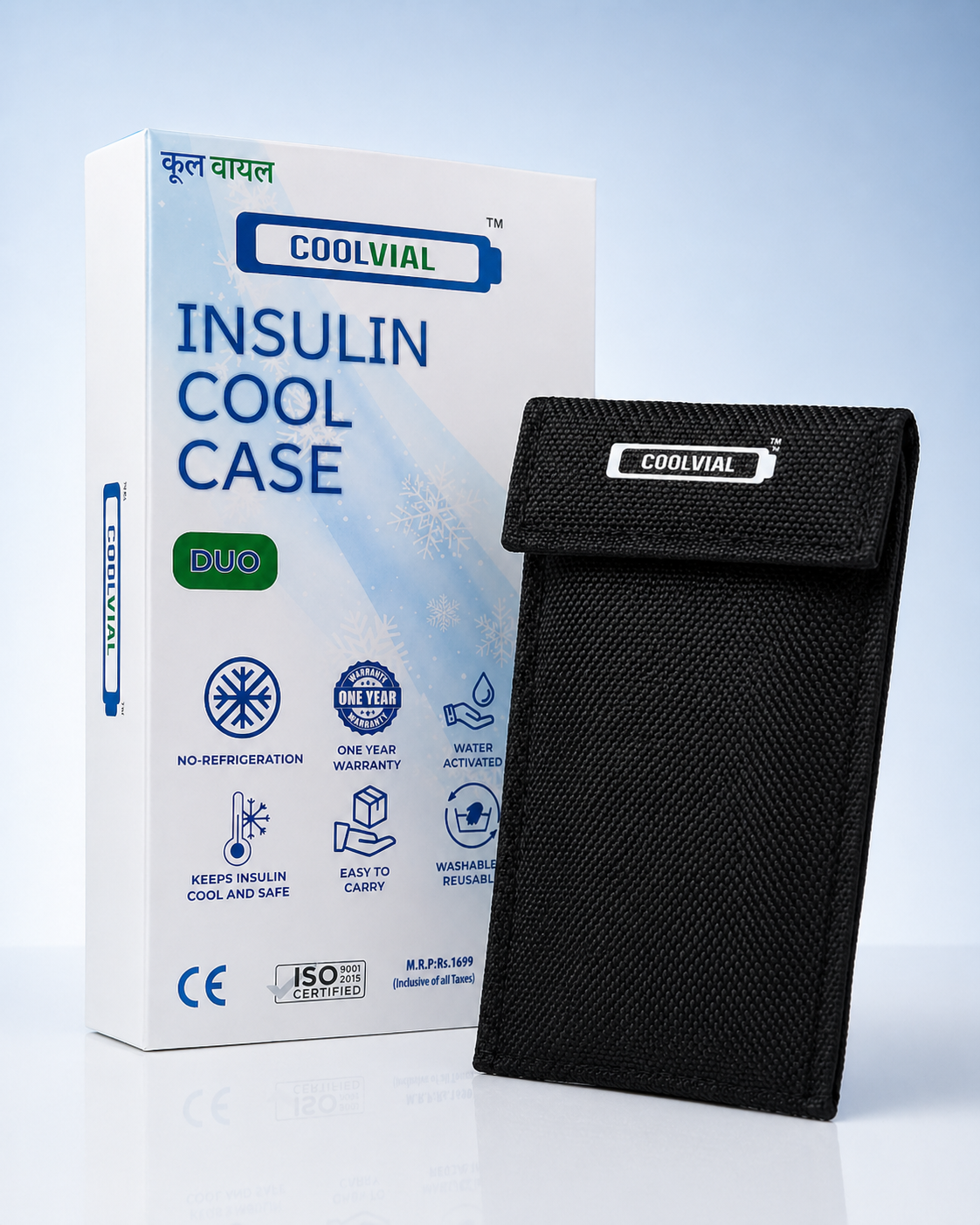
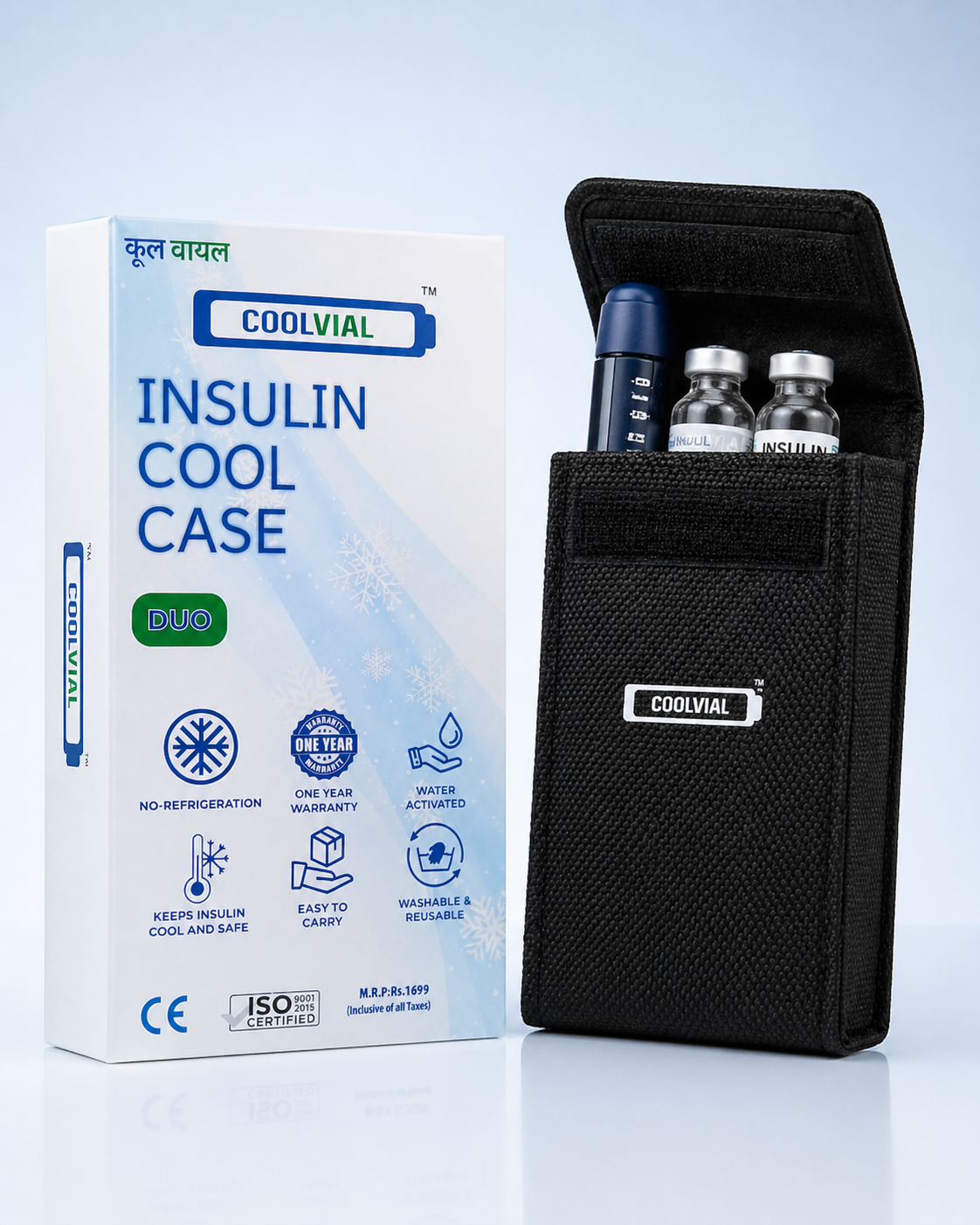
- If using an evaporative cooling case like the COOLVIAL Duo, activate it as per instructions. For COOLVIAL Duo, this involves simply immersing the inner pouch in cold water for 60-90 seconds. The unique crystal technology absorbs water, creating a cool, insulated environment through evaporation. This is significantly easier and more reliable than ice packs, which can leak or over-chill insulin.
- Compare this to products like Frio (~Rs 1,900) which use a similar gel crystal technology, or Outer Woods OW-12 (~Rs 999), which is a soft cooler that often requires ice packs. The COOLVIAL Duo offers an excellent balance of convenience, capacity (holds 2 pens + 1 vial), and performance (12-16 hours cooling) at a competitive price.
- Pack Smart:
- Place your active insulin pen(s) and vial into the activated cooling case.
- Ensure the case is securely closed.
- Place the cooling case into your main bag (office bag, school bag, backpack). This adds an extra layer of insulation and discretion.
- Check Your Supplies: Before leaving, double-check you have all necessary supplies: insulin pens/vials, needles, blood glucose meter, test strips, lancets, and a source of fast-acting glucose (e.g., glucose tablets or candies).
- Hydration: Always carry water, especially during Gwalior’s hot months. Staying hydrated helps manage blood sugar levels.
This simple morning ritual ensures your insulin is protected from the moment you step out the door, ready for your daily commute with insulin.
5. On-the-Go Storage: Smart Choices for Your Commute
Once your insulin is safely packed in a reliable cooling case like the COOLVIAL Duo, you still need to be mindful of where you place your bag during your commute.
5.1 Choosing Your Mode of Transport Wisely
- City Buses: Try to sit away from windows, especially on the sunny side of the bus. Place your bag on the floor between your feet rather than on a seat next to a hot window. The floor often remains slightly cooler.
- Auto-rickshaws & E-rickshaws:
- Prioritize Shade: Always try to sit on the shaded side of the auto. If you are the only passenger, you have more control over this.
- Bag Placement: Do not leave your bag in the direct sun on the seat or floor. Keep it in your lap or under the seat, tucked away from direct sunlight. The small canopy of an auto offers limited protection from the intense Gwalior sun.
- Share Autos: These are often crowded. Keep your cooling case close to your body, ideally on your lap, to benefit from your own body temperature regulating the immediate environment, and to keep it out of direct sun.
5.2 Avoiding High-Heat Zones
- Two-Wheeler Dickey: NEVER, under any circumstances, store insulin in a two-wheeler dickey or glove compartment. The internal temperature of a two-wheeler dickey can easily hit 60°C or more within minutes, even on a mildly warm day. This is a guaranteed way to destroy your insulin. If you commute by two-wheeler, a dedicated, securely fastened cooling case worn or carried externally (e.g., in a small pouch attached to your person) is the only safe option.
- Vehicle Glove Compartments/Dashboards: These areas also become extremely hot, acting like ovens. Avoid them completely.
- Direct Sunlight: Whether in a bus, auto, or even waiting at a bus stop, keep your bag and cooling case out of direct sunlight. Seek shade whenever possible.
For those considering travel beyond Gwalior, perhaps by train or air, our guide on Travelling From Gwalior With Insulin — Airport, Station & Taxi Tips offers further insights into managing insulin across different travel modes. Always remember to check official guidelines for medication transport; for instance, the Directorate General of Civil Aviation (DGCA) provides advisories on carrying medicines during air travel (Source: https://dgca.gov.in/pages/medical-requirements.html).
6. Workplace and School Insulin Storage in Gwalior
Your daily commute with insulin doesn’t end when you reach your destination. Proper storage at your office, school, or college is equally important.
6.1 Office Environments
Many offices in Gwalior, from corporate parks near Jai Vilas Palace to smaller establishments around Sas Bahu Temples, might have air conditioning. However, even AC can be unreliable, or your workspace might be far from the main cooling vents.
- Personal Cooler: If you have access to a small office refrigerator, that’s ideal. Otherwise, keep your insulin in your COOLVIAL Duo case. Its 12-16 hour cooling duration is usually sufficient for a typical workday.
- Desk Location: Avoid placing your cooling case directly on a sun-drenched windowsill or near heat-emitting electronics like a desktop computer or server.
- Lunch Breaks: If your lunch contains insulin-dependent items or requires a dose, ensure your insulin is readily accessible and still cool. Consider where you typically eat lunch; if it’s outdoors or in a non-AC area, the cooling case remains crucial.
6.2 School and College Tips for Gwalior’s Institutions
Children and young adults with diabetes attending schools like Scindia School, DPS Gwalior, or colleges like GRMC and BIMR Hospital need specific strategies.
Daily Commute With Insulin in Gwalior — 7 Practical Tips for Bus, Auto & E-Rickshaw
- Inform Staff: Ensure school nurses, teachers, or college administrators are aware of your or your child’s diabetes and insulin storage needs. Provide them with emergency contact information.
- Designated Spot: Request a designated, cool, and secure spot for insulin storage. This could be the school nurse’s office refrigerator or a specific drawer in a staff room where your COOLVIAL Duo can be kept.
- Accessibility: Ensure insulin is always accessible for scheduled doses or emergencies, even during sports activities or excursions within the city.
- Educate Peers (if comfortable): For older students, educating close friends about diabetes and insulin can create a supportive environment and extra vigilance.
Remember, understanding insulin storage tips is crucial for all age groups and environments.
7. Key Insulin Storage Don’ts in Gwalior
To ensure your insulin remains effective and your diabetes management stays on track, avoid these common mistakes during your daily commute with insulin in Gwalior:
- Don’t rely on your regular bag: As discussed, a simple backpack or handbag offers no protection against Gwalior’s heat.
- Don’t leave insulin in direct sunlight: Even a few minutes of direct sun exposure can rapidly degrade insulin. This applies to bus windows, auto seats, or when waiting at a stop.
- Don’t store in vehicle glove compartments or two-wheeler dickies: These are high-heat zones that can reach lethal temperatures for insulin (up to 60°C).
- Don’t use ice packs directly: Direct contact with ice can freeze insulin, rendering it ineffective. If using ice packs, ensure they are wrapped in cloth and do not touch the insulin directly. Evaporative cooling cases like COOLVIAL Duo avoid this risk.
- Don’t assume AC is always on/effective: Even in AC vehicles or buildings, the cooling might be inconsistent or insufficient to keep insulin below 30°C. Always use a dedicated cooling solution.
- Don’t store insulin near heat sources: This includes engine heat in vehicles, electronic devices, or direct vents from heaters (especially during Gwalior’s cold winters).
- Don’t forget your cooling case: Make it a non-negotiable part of your morning routine, just like taking your keys or wallet.
By understanding these critical “don’ts,” Gwalior residents can significantly reduce the risk of insulin degradation and maintain better control over their diabetes. For a broader understanding of managing your condition in the city, refer to our Complete Diabetes Care Guide for Gwalior Residents — 2026 Edition.
Frequently Asked Questions About Insulin Storage in Gwalior
Q: How long can insulin be outside the refrigerator in Gwalior’s summer? A: In Gwalior’s summer, opened insulin pens or vials should not be outside a dedicated cooling solution for more than 15-30 minutes if ambient temperatures exceed 30°C. Using a cooling case like COOLVIAL Duo is crucial to extend this safety period significantly.
Q: Can I store my insulin in my office drawer at Jai Vilas Palace corporate park? A: Storing insulin in an office drawer at Jai Vilas Palace corporate park is only safe if the drawer is in an air-conditioned environment consistently below 30°C. For reliable protection, especially if AC is intermittent or your drawer is near a window, always use an insulin cooling case.
Q: What is the safest way for a child with Type 1 diabetes to carry insulin to school in Gwalior? A: The safest way for a child with Type 1 diabetes to carry insulin to school in Gwalior is in a water-activated evaporative cooling case like COOLVIAL Duo, placed inside their school bag. This protects the insulin from heat during the commute and at school.
Q: Is it safe to carry insulin in an auto-rickshaw during Gwalior’s monsoon season? A: While monsoon brings some relief from extreme heat, Gwalior’s monsoon temperatures are still often above 30°C, and humidity can also affect insulin. It is advisable to use an insulin cooling case even during the monsoon when travelling in an auto-rickshaw to ensure proper temperature control.
Q: What happens if my insulin gets too hot? A: If your insulin gets too hot (above 30°C), it can lose its potency and become less effective, leading to higher blood sugar levels. You might need to take more insulin or experience unpredictable glucose fluctuations. Always discard insulin suspected of being exposed to excessive heat.
Q: How does COOLVIAL Duo compare to other cooling cases like Frio or Outer Woods OW-12? A: COOLVIAL Duo (Rs 1,099 with code COOLHEAL) offers 12-16 hours of cooling for 2 pens + 1 vial with simple water activation, is CE certified and ISO 9001:2015 compliant. Frio (~Rs 1,900) uses similar evaporative technology but is often more expensive. Outer Woods OW-12 (~Rs 999) is a soft cooler, usually requiring ice packs, which adds bulk and potential for condensation/freezing. COOLVIAL Duo provides a balance of value, convenience, and certified reliability for your daily commute with insulin.
Q: Where can I get insulin in an emergency in Gwalior? A: In an emergency, you can access insulin at major hospitals like Gajra Raja Medical College (GRMC) / Jayarogya Hospital, BIMR Hospital, or Apollo Spectra Gwalior. Pharmacies like Apollo Pharmacy, MedPlus, 1mg, Generic Aadhaar, and Sushrut Pharmacy also stock insulin, but always carry enough for your needs.
Conclusion: Commute with Confidence
Navigating Gwalior’s bustling streets, historical landmarks, and varied climate while managing diabetes requires foresight and the right tools. Your daily commute with insulin doesn’t have to be a source of stress or anxiety. By understanding the specific challenges posed by Gwalior’s heat and transport system, and by adopting a proactive approach to insulin storage, you can protect your vital medication and maintain optimal health.
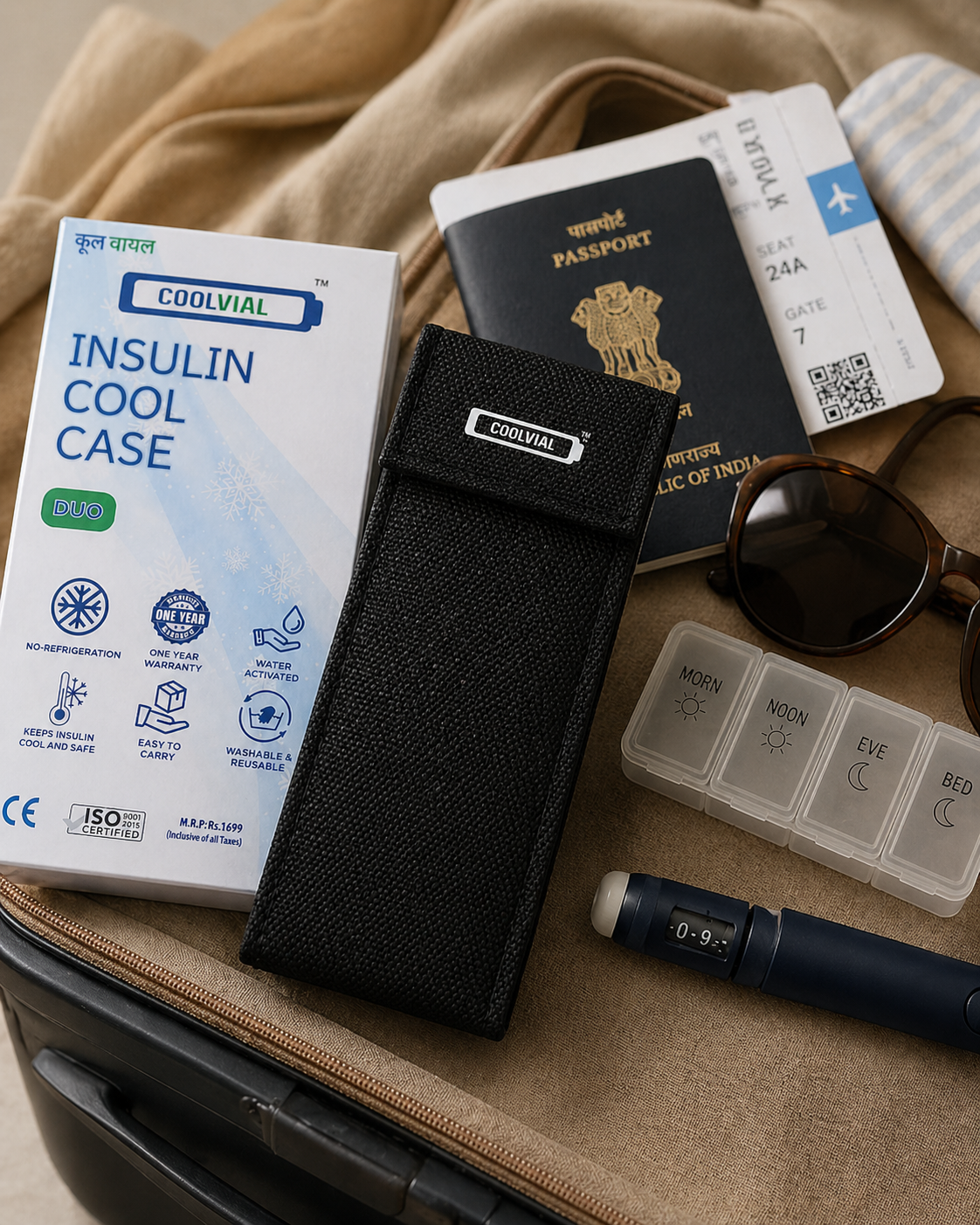
A reliable insulin cooling case is not a luxury; it’s an absolute necessity for anyone living with diabetes in Gwalior. The COOLVIAL Duo, with its water-activated evaporative technology, offers a practical, affordable, and highly effective solution to keep your insulin cool and potent for 12-16 hours, without needing electricity. It’s a small investment for immense peace of mind.
Empower yourself to live freely in Gwalior, from the busy markets of Lashkar to the quiet academic corridors of Thatipur, knowing your insulin is safe.
Order COOLVIAL Duo at Rs 1,099 with code COOLHEAL at coolvial.com or via WhatsApp wa.me/918766952300
How We Researched This
This article is based on a comprehensive review of RSSDI guidelines for diabetes management in India, ICMR-INDIAB data on diabetes prevalence and care, local Gwalior hospital directories (including Gajra Raja Medical College (GRMC) / Jayarogya Hospital, BIMR Hospital, Apollo Spectra Gwalior), and information from pharmacy networks such as Apollo Pharmacy. We also considered typical Gwalior climate patterns and daily commute scenarios to provide highly localized and practical advice.
Medical Disclaimer: This article is for general information. Always consult your endocrinologist or diabetologist before changing insulin storage or dosing practices.
Daily Commute With Insulin in Gwalior — 7 Practical Tips for Bus, Auto & E-Rickshaw
48+ hours at 2-8°C. No electricity. CE certified. Free delivery across India.
Order on WhatsApp — ₹1,099🛒 Buy Now — ₹1,099