Reviewed by the COOLVIAL Editorial Team — specialists in insulin storage for Indian climate conditions.
Gwalior, with its majestic Fort, grand Jai Vilas Palace, and the vibrant energy of areas like Lashkar and City Centre, is a city that beautifully blends history with modern life. For residents managing diabetes, the thought of travelling from Gwalior with insulin, especially across its diverse climate zones – from scorching 46°C summers to foggy 7°C winters – can be a source of anxiety. According to the ICMR-INDIAB study, diabetes prevalence in urban areas of Madhya Pradesh is a significant concern, underscoring the need for robust insulin management strategies, particularly during travel (Source: ICMR-INDIAB Study, 2021). This comprehensive guide, based on analysis of insulin storage queries from Gwalior diabetics, offers 7 essential tips to ensure your insulin remains safe and effective, whether you’re flying from Rajmata Vijaya Raje Scindia Airport, taking a train from Gwalior Junction, or embarking on a road trip to Agra, Orchha, or Datia. Knowing how to properly store your insulin is crucial for maintaining its efficacy and your health.
Table of Contents
- Navigating Rajmata Vijaya Raje Scindia Airport (GWL) with Insulin
- Smooth Train Journeys from Gwalior Junction (GWL) with Insulin
- Mastering Road Trips from Gwalior with Insulin
- The Reality of App-Cabs and Insulin in Gwalior
- Understanding Insulin Storage: Why It Matters, Especially in Gwalior
- Choosing the Right Insulin Cooling Case: COOLVIAL vs. Others
- International Travel from Gwalior with Insulin: Customs and Time Zones
- Frequently Asked Questions (FAQs)
- Conclusion
- Medical Disclaimer
- How We Researched This
Navigating Rajmata Vijaya Raje Scindia Airport (GWL) with Insulin
Flying out of Rajmata Vijaya Raje Scindia Airport (GWL) requires careful planning when carrying insulin. The key principle is: always keep insulin in your hand luggage. This protects it from extreme temperature fluctuations in the cargo hold, which can render insulin ineffective. Moreover, it ensures your essential medication is always accessible, especially during potential flight delays or lost luggage scenarios.
Here’s what you need to know for a hassle-free experience at GWL:
- Carry-on is King: Insulin pens, vials, syringes, and lancets should always be in your carry-on bag. The temperature-controlled cabin environment is much safer than the unpredictable cargo hold.
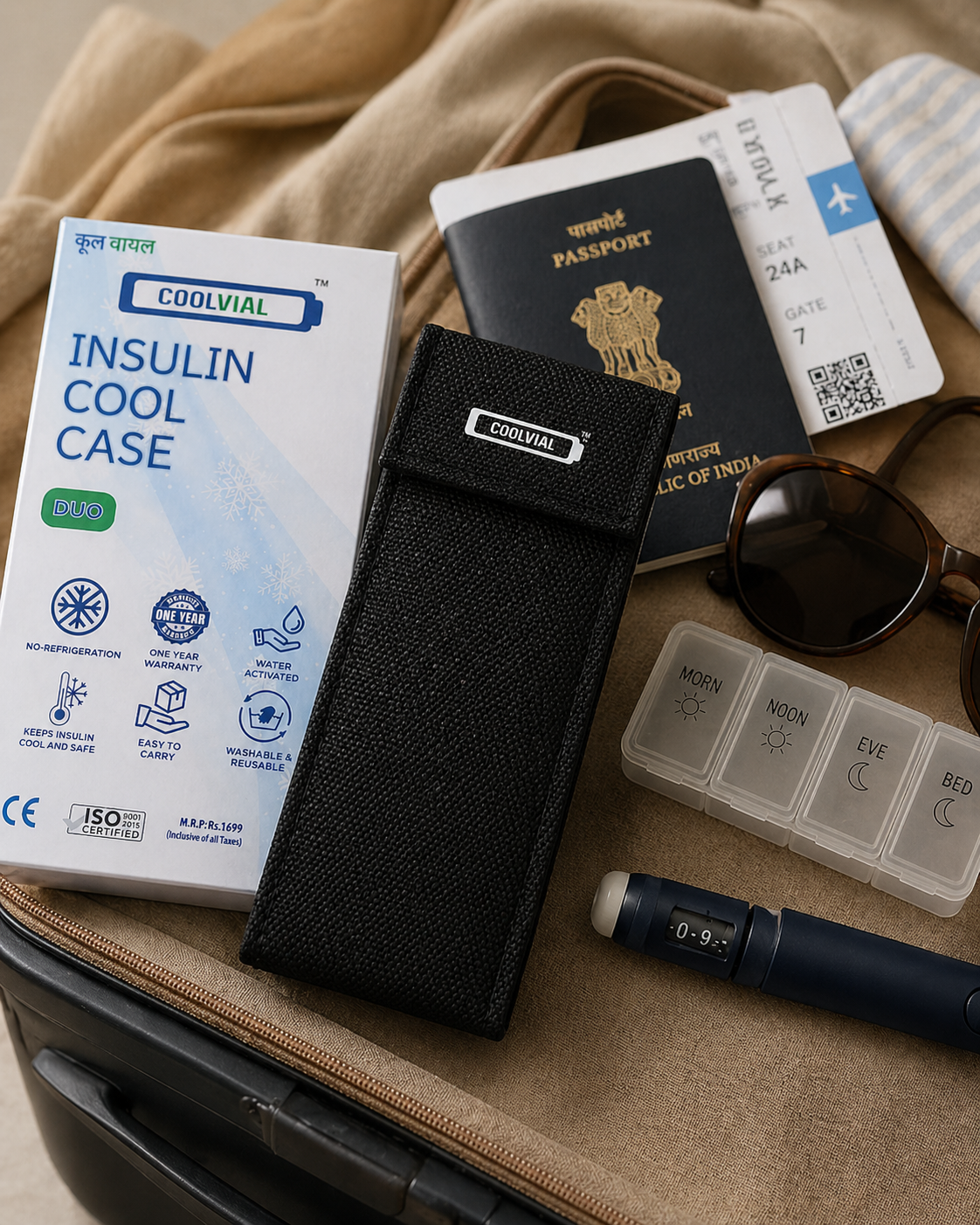
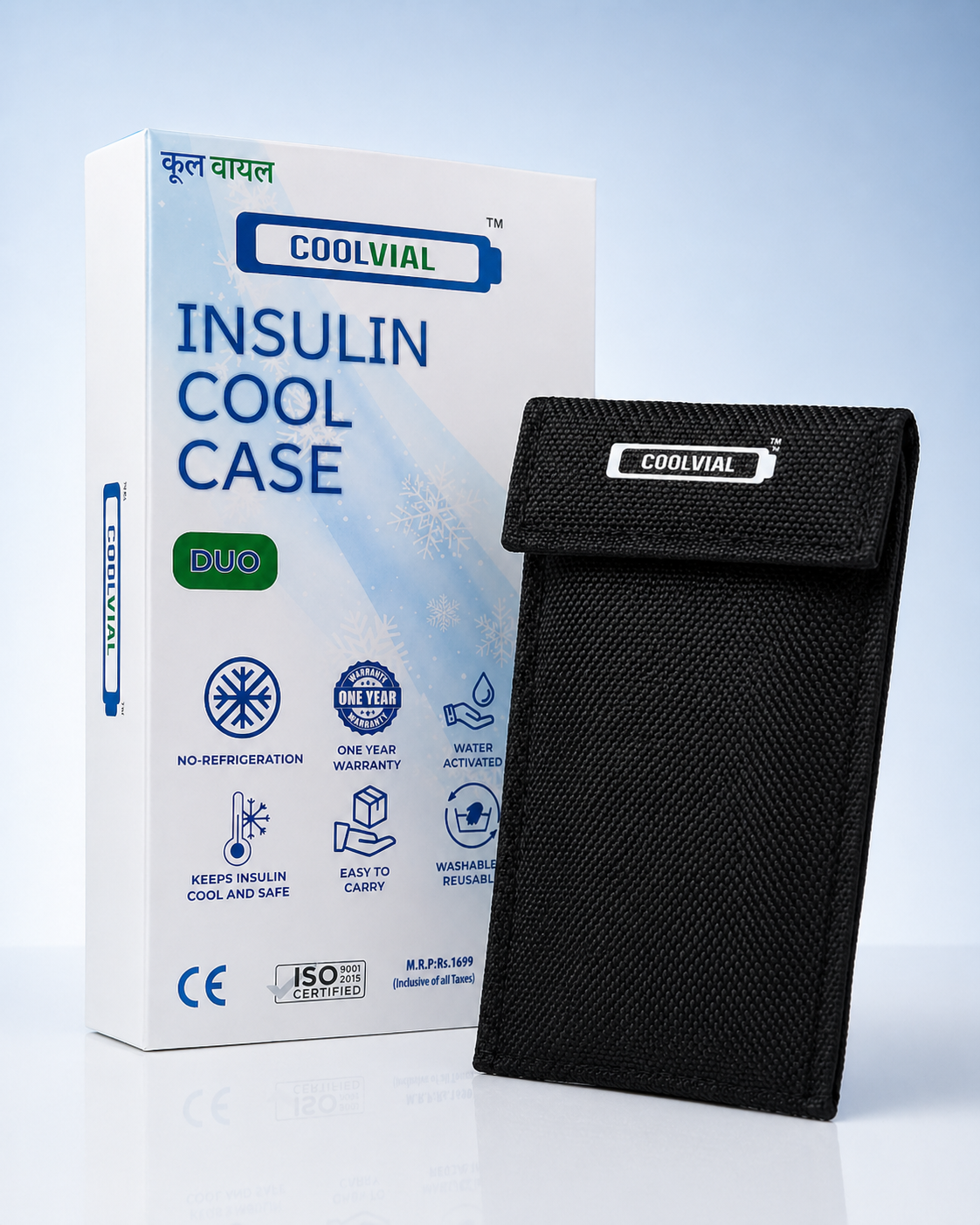
- Tip: When packing, place your insulin in a dedicated cool case like the COOLVIAL Duo. Its water-activated evaporative cooling technology keeps insulin within the safe temperature range (2-25°C) for 12-16 hours, even if Gwalior’s summer temperatures soar to 46°C.
- Doctor’s Letter is Recommended: While not always mandatory for domestic travel in India, a doctor’s letter is highly recommended. It should state:
- Your name and date of birth.
- Your diagnosis (Type 1 or Type 2 Diabetes).
- The names of your insulin, syringes, needles, and other diabetes supplies.
- A clear statement that these items are medically necessary.
- Your doctor’s contact information and signature.
- Where to get one: You can easily obtain this from your endocrinologist or diabetologist at Gajra Raja Medical College (GRMC) / Jayarogya Hospital, BIMR Hospital, or Apollo Spectra Gwalior.
- Security Screening (CISF):
- When passing through security at GWL, be prepared to declare your insulin and cooling case to the CISF personnel.
- If you’re using gel packs or ice packs with your insulin, these might be subject to additional screening. Some airports may require them to be frozen solid or within specific liquid limits. An evaporative cooler like COOLVIAL avoids this hassle entirely as it doesn’t contain gel packs or require refrigeration.
- Be polite and cooperative: Explain clearly that it’s life-saving medication. The doctor’s letter can be very helpful here.
- Pre-paid Taxi Queues at GWL: A specific challenge at Rajmata Vijaya Raje Scindia Airport is the potentially long wait for pre-paid taxis, which can sometimes extend to 45 minutes or more, especially during peak hours.
- Impact on insulin: If your insulin is in checked luggage (which it shouldn’t be!), it will be exposed to fluctuating temperatures on the tarmac and in the cargo hold, then potentially sitting in a hot taxi queue.
- Solution: Reinforce the carry-on rule. With your insulin safely in a COOLVIAL Duo in your hand luggage, the taxi wait becomes less of a concern for your medication’s integrity.
- Airport Pharmacies: In case of emergency or if you forget something, pharmacies like Apollo Pharmacy or MedPlus have outlets in or near major airports. However, always carry enough insulin for your entire trip plus a buffer.
Smooth Train Journeys from Gwalior Junction (GWL) with Insulin
Train travel from Gwalior Junction (GWL) is a popular and often scenic way to connect with other parts of India. However, it presents unique challenges for insulin storage, especially given the variable conditions on Indian Railways. Whether you’re heading south or towards the busy routes connecting to Delhi, proper planning is essential for travelling from Gwalior with insulin by rail.
Here are critical considerations for your train journey:
- Myth Busting: Pantry Car Fridges are Unreliable: Many travellers assume they can store their insulin in the pantry car’s refrigerator. This is a common and dangerous misconception.
- Why it’s risky: Pantry car fridges are primarily for food and beverage storage. Their temperature regulation is often inconsistent, and they may not maintain the precise 2-8°C required for insulin storage. Furthermore, hygiene standards can be a concern, and there’s a risk of your medication being misplaced or tampered with.
- Never rely on them: Treat this as an absolute rule. Your insulin’s efficacy depends on stable temperatures, not the fluctuating conditions of a train’s pantry.
- NEVER Hand Pens to TTE (Ticket Examiner): Just like the pantry car, entrusting your insulin to a TTE for “safe storage” is highly inadvisable. TTEs are not equipped or responsible for medical storage, and your insulin could easily be lost, damaged, or exposed to inappropriate temperatures.
- Bring Your Own Evaporative Cooler: This is the safest and most reliable method for train travel.
- How it helps: An evaporative cooling case like the COOLVIAL Duo is ideal for long train journeys. It’s compact, doesn’t require electricity or refrigeration, and can be easily reactivated with water at any station stop or even from the train’s washroom.
- Advantages: It protects your insulin from the heat of the compartment during Gwalior’s hot summers (which can exceed 35°C even indoors) and provides a stable environment against the chill of AC compartments in winter.
- Packing for Comfort and Access:
- Keep your insulin and supplies in a small, easily accessible bag within your main carry-on.
- Pack enough alcohol swabs, lancets, and test strips for the duration of your journey. You can find these at local pharmacies like Generic Aadhaar or Sushrut Pharmacy in Gwalior before you leave.
- Staying Hydrated: The dry air in trains, especially AC coaches, can increase dehydration. Always carry water and stay hydrated, as this can affect blood sugar levels.
Mastering Road Trips from Gwalior with Insulin
Gwalior serves as an excellent base for exploring historical and cultural gems like Agra (approximately 3 hours drive), Orchha (around 3 hours drive), and Datia (about 1.5 hours drive). However, road trips, particularly in Madhya Pradesh’s climate, demand meticulous planning for insulin storage. Travelling from Gwalior with insulin on the road means confronting direct sun, fluctuating car temperatures, and varied access to facilities.
Consider these vital tips for your road adventure:
7 Essential Tips for Travelling From Gwalior With Insulin — Airport, Station & Taxi Advice
- Taxi AC Reliability is a Gamble: When hiring a taxi for a road trip, even from reputable services in City Centre or DD Nagar, the reliability of the air conditioning can be inconsistent.
- Pre-check: If possible, try to verify the AC functionality before starting a long journey. A non-functional AC in Gwalior’s summer (22-46°C) can quickly turn your car into an oven, making it impossible to store insulin safely.
- Mitigation: Always have your insulin in an independent cooling solution.
- Parking Insulin in a Hot Car is a Strict No-Go: Never leave your insulin in a parked car, even for a short duration.
- Temperature spike: The internal temperature of a car parked under the sun can skyrocket to well over 50°C within minutes, far exceeding insulin’s safe storage limit of 25°C.
- Solution: Whenever you stop for sightseeing at Gwalior Fort or Jai Vilas Palace, or for a meal at a dhaba, take your insulin cool case with you. The COOLVIAL Duo is discreet and easy to carry.
- Dhawa Pit-Stop Fridge Access: While dhabas are excellent for authentic local food, assuming they will have a reliable refrigerator for your insulin is risky.
- Limited facilities: Many dhabas, especially on highways outside of Morar or Thatipur, have basic refrigeration primarily for beverages or raw ingredients, not for temperature-sensitive medication.
- Self-sufficiency: Rely on your evaporative cooling case. It doesn’t need external power and can be reactivated with water from any clean source, offering complete independence.
- Emergency Supplies: Pack a small emergency kit with glucose tablets, a quick-acting sugar source, and contact information for your doctor. Know the location of major hospitals along your route, such as those in Agra or Orchha.
- Planning Your Route & Breaks:
- Plan your stops to coincide with cooler parts of the day if possible.
- Carry ample drinking water to stay hydrated throughout the journey.
- Consider how to reactivate your cooling case. For instance, the COOLVIAL Duo simply needs to be soaked in water for 2 minutes every few days to maintain its cooling properties. You can easily do this at a washroom during a pit stop.
The Reality of App-Cabs and Insulin in Gwalior
App-based cab services like Ola and Uber, along with bike-taxis like Rapido, have become integral to daily commuting in Gwalior. While convenient, they present specific challenges for individuals managing diabetes and needing to keep insulin cool. Whether you’re navigating the busy streets of Lashkar or commuting between City Centre and DD Nagar, understanding these realities is key for travelling from Gwalior with insulin.
Here’s what Gwalior residents should be aware of:
- Ola/Uber Drivers Refusing AC: This is a common complaint, particularly during Gwalior’s sweltering summers when temperatures can hit 46°C. Drivers might refuse to turn on the AC to save fuel or due to mechanical issues.
- Impact: Even a 15-20 minute ride in a non-AC cab during peak summer can expose insulin to dangerously high temperatures, especially if it’s not in an insulated carrier.
- Mitigation: Always carry your insulin in a reliable cooling case. The COOLVIAL Duo provides a crucial buffer against these unavoidable temperature spikes.
- Rapido Bike-Taxi Exposure: Bike-taxis offer a quick and economical way to travel shorter distances in Gwalior. However, they provide no protection from the elements.
- Direct heat and sun: Insulin carried on a bike-taxi will be directly exposed to the sun’s harsh UV rays and ambient temperatures, which can be detrimental to its efficacy.
- Solution: If you must use a bike-taxi, ensure your insulin is secured within a high-quality, compact cooling solution that can withstand direct exposure. A COOLVIAL Duo, with its robust design, offers excellent protection.
- Short Commutes Still Count: Even a short 10-minute ride from your home in Morar to Apollo Pharmacy can expose insulin to damaging heat if not properly stored. Every minute counts when temperatures are extreme.
- Planning for Local Errands:
- When heading to a hospital like Gajra Raja Medical College (GRMC) / Jayarogya Hospital for an appointment or picking up supplies from MedPlus, always use your cooling case.
- For more general tips on daily commutes, you might find our article Daily Commute With Insulin in Gwalior — Tips for Metro, Bus & Auto helpful, even though Gwalior doesn’t have a metro yet, the principles for bus and auto apply.
Understanding Insulin Storage: Why It Matters, Especially in Gwalior
Insulin is a life-saving medication, but its efficacy is highly dependent on proper storage. The protein structure of insulin is fragile and susceptible to degradation when exposed to extreme temperatures, both hot and cold. In a city like Gwalior, with its pronounced climatic variations – hot dry summers, cold winters, and a humid monsoon – understanding and adhering to strict storage guidelines is paramount.
- The Science of Insulin Degradation:
- Heat: Exposure to temperatures above 25°C can cause insulin proteins to denature or break down. This reduces its potency, meaning it won’t lower blood sugar as effectively, leading to hyperglycemia. Gwalior’s summer temperatures, often hitting 46°C, can rapidly degrade insulin.
- Freezing: Freezing temperatures (below 2°C) can also damage insulin, causing it to lose its potency. The insulin may appear cloudy or develop crystals. Gwalior’s winter mornings, with temperatures dropping to 7°C (and colder in some areas), necessitate protection against the cold as well.
- Direct Sunlight: UV radiation from direct sunlight can accelerate insulin degradation, regardless of temperature.
- Recommended Storage Temperatures:
- Unopened Insulin: Typically stored in a refrigerator between 2°C and 8°C until its expiration date.
- Opened (In-use) Insulin: Can generally be kept at room temperature (below 25°C) for up to 28 days (check specific product instructions, as this can vary). However, in Gwalior’s summer, “room temperature” is often far above 25°C, making a cooling solution essential.
- Signs of Damaged Insulin:
- Change in clarity (e.g., cloudy insulin that should be clear).
- Presence of particles or clumps.
- Change in color.
- Reduced effectiveness (higher blood sugar readings despite correct dosing).
- The Gwalior Climate Challenge:
- Hot Dry Summer (May-June): Average temperatures 22-46°C. An evaporative cooler is indispensable for keeping insulin below 25°C.
- Cold Winter (Dec-Feb): Average temperatures 7-22°C (with fog). While seemingly mild, exposed insulin can still be affected if left in unheated spaces or during very cold nights.
- Monsoon (Jul-Sep): Average ~770mm rainfall. High humidity can also affect certain insulin delivery devices or testing strips, though direct temperature control remains the primary concern for insulin itself.
- Why an Evaporative Cooler is Ideal for India: Traditional ice packs are bulky, require refrigeration, and can accidentally freeze insulin. The water-activated evaporative cooling technology, like that in COOLVIAL, offers a lightweight, portable, and reliable solution perfectly suited for India’s diverse climate, maintaining a stable temperature range of 2-25°C. You can learn more about general insulin storage tips on our mission page.
Choosing the Right Insulin Cooling Case: COOLVIAL vs. Others
When it comes to protecting your vital insulin, especially while travelling from Gwalior with insulin, selecting the right cooling case is crucial. The Indian market offers several options, each with its pros and cons. Let’s compare the COOLVIAL Duo with some other popular choices to help you make an informed decision.
- COOLVIAL Duo:
- Technology: Water-activated evaporative cooling. It uses a non-toxic crystalline panel that absorbs water and creates a cooling effect through evaporation.
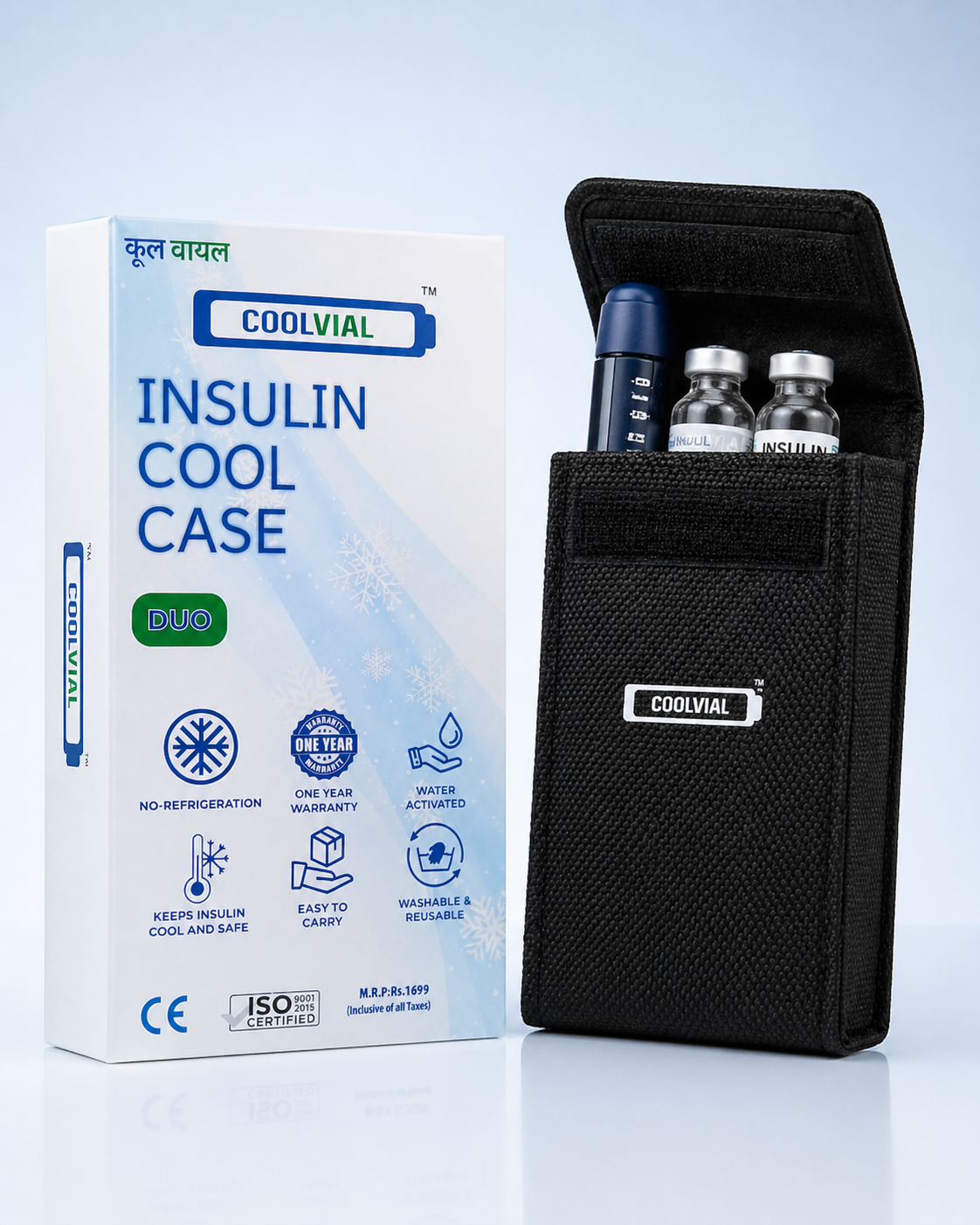
- Capacity: Holds 2 pens + 1 vial, or 3 pens, or 4 vials. This ample capacity is excellent for most travel needs.
- Cooling Duration: Keeps insulin cool for 12-16 hours without electricity. This is ideal for long travel segments or power outages.
- Temperature Range: Maintains 2-25°C, even in ambient temperatures up to 38°C. This is perfect for Gwalior’s hot summers.
- Price: Rs 1,099 with code COOLHEAL (MRP Rs 1,699). Offers excellent value for money.
- Certifications: CE certified, ISO 9001:2015.
- Warranty: 1-year.
- Made in India: Supports local manufacturing.
- Pros: No refrigeration needed, lightweight, reusable, durable, discreet, avoids airport gel-pack issues, reliable in high temperatures.
- Cons: Requires soaking in water every 1-2 days (a minor inconvenience compared to the benefits).
- FRIO Insulin Cooling Case:
- Technology: Similar water-activated evaporative cooling.
- Capacity: Varies by model, generally similar to COOLVIAL.
- Cooling Duration: Typically 45 hours, often longer than COOLVIAL.
- Temperature Range: Maintains 18-26°C, 10-15°C below ambient, up to 38°C.
- Price: Around Rs 1,900 for comparable capacity.
- Pros: Long cooling duration, established brand.
- Cons: Higher price point, temperature range might be slightly wider than COOLVIAL’s tighter 2-25°C.
- Outer Woods OW-12 Insulin Cooling Pouch:
- Technology: Uses gel packs or ice packs.
- Capacity: Holds 2 pens.
- Cooling Duration: Typically 6-8 hours, depending on ambient temperature and quality of gel packs.
- Price: Around Rs 999.
- Pros: Lower initial cost.
- Cons: Requires pre-freezing gel packs, shorter cooling duration, gel packs can accidentally freeze insulin, bulkier with frozen packs, airport security might question gel packs.
- Why COOLVIAL is a Smart Choice for Gwalior:
- Reliability in Heat: Gwalior’s extreme summer temperatures (up to 46°C) demand a cooling solution that doesn’t falter. COOLVIAL’s evaporative technology is highly effective in such conditions.
- Convenience: No need to search for a fridge at Gwalior Junction, a dhaba on the way to Agra, or worry about app-cab ACs. Just soak in water, and you’re good to go.
- Cost-Effectiveness: At Rs 1,099 with code COOLHEAL, it offers premium features and reliability at an accessible price point, making it a practical investment for any Gwalior resident with diabetes.
- Peace of Mind: Knowing your insulin is safe allows you to focus on enjoying your journey, whether it’s a pilgrimage to Datia or a visit to the Sas Bahu Temples.
- For a deeper dive into diabetes management, consider our Complete Diabetes Care Guide for Gwalior Residents — 2026 Edition.
Consider the COOLVIAL Duo for your next journey. It’s designed to keep your insulin safe and your mind at ease. You can easily order your COOLVIAL insulin cool case here.
International Travel from Gwalior with Insulin: Customs and Time Zones
7 Essential Tips for Travelling From Gwalior With Insulin — Airport, Station & Taxi Advice
48+ hours at 2-8°C. No electricity. CE certified. Free delivery across India.
Order on WhatsApp — ₹1,099🛒 Buy Now — ₹1,099While Rajmata Vijaya Raje Scindia Airport (GWL) primarily handles domestic flights, many Gwalior residents connect through major hubs like Delhi or Mumbai for international travel. When travelling from Gwalior with insulin internationally, the complexities increase, particularly concerning customs regulations, time zone adjustments, and extended travel durations.
Here’s how to prepare for global journeys:
- Customs and Security (International):
- Doctor’s Letter (Mandatory): For international travel, a comprehensive doctor’s letter translated into English (and potentially the language of your destination country) is usually mandatory. It should detail your condition, medication, and the necessity of carrying syringes and needles.
- Original Packaging: Keep insulin in its original pharmacy-labeled packaging to avoid issues with customs officials.
- Declare Your Medication: Always declare your medical supplies to customs and security. Be prepared for additional screening.
- Quantity Limits: Check the import regulations for medication in your destination country. Some countries have limits on the quantity of insulin you can bring.
- Time-Zone Dosing Adjustments:
- Consult Your Doctor: Before any international trip, discuss time zone changes with your endocrinologist at Gajra Raja Medical College (GRMC) / Jayarogya Hospital or BIMR Hospital. They can help you create a revised dosing schedule to prevent hypo- or hyperglycemia.
- General Principles:
- Eastward Travel (Shorter Day): You might need to reduce your insulin dose or inject earlier to avoid overlapping doses.
- Westward Travel (Longer Day): You might need an extra small dose of insulin or to delay injections to cover the extended period.
- Frequent Monitoring: Monitor your blood sugar levels more frequently during travel and immediately after arrival to detect any fluctuations.
- Long-Haul Flight Considerations:
- Cooling Case Duration: For flights exceeding 12-16 hours, ensure your cooling case can sustain the temperature or be easily reactivated. The COOLVIAL Duo is water-activated and can be refreshed in an airplane lavatory or during a layover.
- Snacks and Meals: Airplane meals can be unpredictable in terms of timing and carbohydrate content. Pack your own healthy snacks and be prepared to adjust insulin doses.
- Stay Active: On long flights, try to move around the cabin every hour or two to improve circulation and help manage blood sugar.
- Emergency Preparedness Abroad:
- Local Pharmacy Names: Research local pharmacies (e.g., equivalents of Apollo Pharmacy or MedPlus) and emergency medical services at your destination.
- Medical Alert ID: Wear a medical alert bracelet or necklace indicating you have diabetes.
- Travel Insurance: Ensure your travel insurance covers diabetes-related medical emergencies abroad.
- Reliable Cooling is Key: Regardless of your destination, a dependable insulin cooling case is your best friend. The COOLVIAL Duo provides the necessary temperature stability, giving you one less thing to worry about during complex international travel.
Frequently Asked Questions (FAQs)
Q: Can I put my insulin in checked luggage when flying from Gwalior? A: No, you should never put insulin in checked luggage when flying from Rajmata Vijaya Raje Scindia Airport or any other airport. Cargo holds experience extreme temperature fluctuations that can damage insulin, and there’s a risk of luggage being lost or delayed.
Q: Do I need a doctor’s letter to carry insulin on a domestic flight from GWL? A: While not always strictly mandatory for domestic flights in India, a doctor’s letter is highly recommended when travelling from Gwalior with insulin. It can significantly ease the security screening process with CISF personnel, especially if you have syringes or cooling gel packs.
Q: Is it safe to store insulin in a train’s pantry car fridge from Gwalior Junction? A: No, it is not safe to store insulin in a train’s pantry car fridge. These refrigerators are often unreliable in maintaining consistent, medically appropriate temperatures and pose risks of contamination or loss of your medication.
Q: How can I keep insulin cool during a road trip from Gwalior to Agra in summer? A: During a road trip from Gwalior to Agra, especially in summer temperatures up to 46°C, use a reliable evaporative cooling case like the COOLVIAL Duo. Never leave insulin in a parked car, and do not rely on dhaba fridges or taxi ACs, which can be inconsistent.
Q: What if my Ola/Uber driver in Gwalior refuses to turn on the AC? A: If your Ola/Uber driver in Gwalior refuses to turn on the AC, your insulin could be exposed to damaging heat. Always carry your insulin in a robust cooling case such as the COOLVIAL Duo to protect it from such temperature spikes, even on short rides across the city.
Q: How long does the COOLVIAL Duo keep insulin cool? A: The COOLVIAL Duo keeps insulin cool for 12-16 hours without electricity, maintaining a temperature range of 2-25°C. This duration is sufficient for most day-long travel segments, and it can be easily reactivated by soaking it in water for 2 minutes.
Q: Where can I get diabetes supplies in Gwalior if I run out? A: In Gwalior, you can get diabetes supplies from well-known pharmacies such as Apollo Pharmacy, MedPlus, 1mg, Generic Aadhaar, and Sushrut Pharmacy, located in various neighborhoods like Lashkar, City Centre/DD Nagar, Morar, and Thatipur. However, it’s always best to travel with extra supplies.
Conclusion
Travelling from Gwalior with insulin doesn’t have to be a source of stress or anxiety. By understanding the unique challenges presented by Gwalior’s climate and its specific travel infrastructure – from the security protocols at Rajmata Vijaya Raje Scindia Airport to the realities of train journeys from Gwalior Junction and road trips to nearby cities – you can ensure your insulin remains safe and effective. The key lies in proactive planning and investing in reliable storage solutions.
An evaporative cooling case like the COOLVIAL Duo is an invaluable companion for any Gwalior resident managing diabetes. Its ability to maintain insulin at a safe temperature for 12-16 hours without electricity, even when Gwalior’s summer mercury soars to 46°C, offers unparalleled peace of mind. Whether you’re navigating airport queues, enduring a long train ride, or making pit stops at dhabas, COOLVIAL ensures your life-saving medication is protected. Empower yourself with knowledge and the right tools, and embrace your travels with confidence.
Order COOLVIAL Duo at Rs 1,099 with code COOLHEAL at coolvial.com or via WhatsApp wa.me/918766952300.
Medical Disclaimer
This article is for general information. Always consult your endocrinologist or diabetologist before changing insulin storage or dosing practices.
How We Researched This
This article was developed based on a comprehensive review of RSSDI guidelines for diabetes management, ICMR-INDIAB data on diabetes prevalence in India, local Gwalior hospital directories (including Gajra Raja Medical College (GRMC) / Jayarogya Hospital, BIMR Hospital, Apollo Spectra Gwalior), and information from established pharmacy networks like Apollo Pharmacy. Climate data for Gwalior was sourced from meteorological records, and travel logistics were informed by common experiences and best practices for medication handling in transit.