Reviewed by the COOLVIAL Editorial Team — specialists in insulin storage for Indian climate conditions.
Kolkata, the City of Joy, with its iconic Howrah Bridge and the majestic Victoria Memorial, is known for its vibrant culture, bustling streets, and, often, its challenging climate. For the estimated 1.5 million people living with diabetes in West Bengal (Source: ICMR-INDIAB, 2023), managing insulin effectively during the daily commute is not just a convenience, but a critical health necessity. During the hot and humid summers, with temperatures frequently soaring between 38-42°C, and the intense monsoon season, ensuring your insulin remains potent on your journey to work, school, or college is paramount. This article provides 5 essential tips for a safe daily commute with insulin in Kolkata, detailing how to protect your vital medication across various modes of transport. Based on analysis of insulin storage queries from Kolkata diabetics, we understand the unique challenges faced when travelling on the Metro, buses, and autos.
Insulin, a life-saving hormone, is highly sensitive to temperature fluctuations. Exposure to temperatures above 25°C can quickly degrade its efficacy, rendering it less effective or even useless. Imagine a 60-90 minute commute from the East (Salt Lake/New Town) to Central (Park Street/Esplanade/BBD Bagh) Kolkata in a non-AC bus during peak summer; your insulin pen, casually tucked into a laptop sleeve or school bag, could be exposed to damaging heat for extended periods. This comprehensive guide aims to equip you with practical strategies and the right tools to safeguard your insulin, ensuring your peace of mind and health.
Table of Contents
- The Kolkata Commute & Insulin’s Enemy: Heat & Humidity
- Metro Journeys: AC Comfort vs. Reality for Daily Commute With Insulin
- Navigating Kolkata’s Buses & Autos: A Heat Challenge
- Crafting Your Daily Insulin Cooling Ritual
- Insulin Storage Beyond the Commute: Office, School & College
- Essential Insulin Safety Guidelines for Kolkata’s Climate
- Frequently Asked Questions (FAQ)
- Conclusion
The Kolkata Commute & Insulin’s Enemy: Heat & Humidity
Kolkata’s climate presents a significant challenge for insulin users. The city experiences long, hot, and humid summers, with daily average temperatures hovering around 26-40°C, often peaking at 38-42°C in May and June. The southwest monsoon from June to September brings heavy rainfall (around 1600mm annually) and oppressive humidity, while even the relatively cooler winters (12-22°C) can have unpredictable warm spells. This consistent warmth, coupled with high humidity, creates an environment where insulin can quickly lose its potency.
Insulin, whether in vials or pens, is typically stable at room temperature (below 25°C) for a limited period once opened. However, prolonged exposure to higher temperatures, especially those commonly found inside non-AC city buses and autorickshaws during peak summer, can lead to irreversible damage. A 60-90 minute commute from bustling neighborhoods like Salt Lake or New Town to the central business districts of Park Street, Esplanade, or BBD Bagh can easily push an insulin pen to its thermal limits if not properly protected.
Consider an insulin pen carried in an ordinary office bag, a child’s school bag, a college backpack, or a laptop sleeve. Without any cooling mechanism, the internal temperature of these bags can quickly match or even exceed the ambient temperature. In a bus or auto, direct sunlight can further escalate this, potentially reaching temperatures well above 45°C. At such temperatures, insulin can degrade significantly within just 30-60 minutes, losing its effectiveness and putting your health at risk.
Safe Temperature Ranges for Insulin:
- Unopened (refrigerated): 2°C to 8°C (ideal)
- Opened (in use): Up to 25°C for 28 days (check specific insulin brand guidelines)
- Never Exceed: 30°C for prolonged periods
- Avoid: Freezing (destroys insulin), direct sunlight, extreme heat (above 30°C)
Protecting your insulin during these daily journeys is paramount. A reliable cooling solution is not an accessory, but a necessity, especially when faced with Kolkata’s challenging weather conditions.
Metro Journeys: AC Comfort vs. Reality for Daily Commute With Insulin
The Kolkata Metro, India’s first underground railway, is often seen as a respite from the city’s heat. With its North-South and the newer East-West corridors, it transports lakhs of commuters daily. For many, the air-conditioned coaches offer a seemingly safe environment for their insulin. However, relying solely on the Metro’s AC for your insulin’s safety can be a gamble.
While Metro coaches are generally air-conditioned, the actual temperature inside can vary. During peak hours, with packed compartments, the efficiency of the AC can decrease. Furthermore, specific spots within the coach, such as near windows exposed to the sun before the train enters tunnels, or areas near the doors, can experience higher temperatures. What if there’s a technical snag, a power cut, or a delay, leaving you stranded on a platform or inside a stationary train for an extended period? These scenarios, though infrequent, pose a significant risk to unprotected insulin.
Moreover, the journey doesn’t just involve the train itself. Waiting on platforms, navigating crowded staircases, or walking to and from the Metro station can expose your insulin to the elements. A typical commute might involve a walk to the station, a wait on the platform, the Metro ride, and then another walk to your final destination, such as the corporate parks near Victoria Memorial or Howrah Bridge. Each leg of this journey can expose your insulin to fluctuating, often damaging, temperatures.
Metro Travel Tips for Insulin Users:
- Don’t rely solely on Metro AC: Always carry your insulin in a dedicated cooling case, even if the Metro is usually cool.
- Minimize exposure: Keep your cooling case inside your main bag to shield it from direct sunlight through windows or open doors.
- Be prepared for delays: Have a cooling solution that offers extended protection, just in case of unforeseen circumstances.
- Stay hydrated: While not directly for insulin, staying hydrated helps you cope with heat, indirectly reducing stress on your body and your need for insulin in extreme conditions.
For those undertaking a daily commute with insulin via the Metro, especially from areas like South City Mall or Jadavpur to Esplanade, a reliable cooling case provides an essential layer of protection against unexpected heat exposure.
5 Essential Tips for a Safe Daily Commute With Insulin in Kolkata — Metro, Bus & Auto
Navigating Kolkata’s Buses & Autos: A Heat Challenge
Beyond the Metro, Kolkata’s extensive network of CSTC buses and ubiquitous yellow Ambassador taxis and autorickshaws form the backbone of daily transportation. These modes, however, present a far greater challenge for insulin storage due to their often un-air-conditioned nature and direct exposure to ambient temperatures.
Non-AC city buses, especially during the summer and monsoon, can become veritable ovens. Internal temperatures can easily climb to 38-42°C, and even higher with direct sun exposure through windows. A 60-90 minute bus ride from Ballygunge to BBD Bagh, or from Shyambazar to Park Street, can subject insulin to continuous, damaging heat. Similarly, autorickshaws, while offering some airflow, can expose insulin to direct sunlight depending on seating and movement. The engine heat from autos also contributes to a warmer microclimate within the vehicle.
A common experience in Kolkata’s ride-sharing culture (e.g., app-based taxis) is the “AC denial” phenomenon, where drivers might switch off the AC or refuse to turn it on for shorter distances, citing fuel efficiency. This means even if you opt for a seemingly AC-enabled ride, you might still end up in a hot vehicle.
Perhaps the most dangerous place to store insulin during transit is in a two-wheeler’s dickey (under-seat storage). These compartments are poorly ventilated and can trap engine heat, causing temperatures to skyrocket to 60°C or even higher. It is absolutely crucial to NEVER store insulin in a two-wheeler dickey. Such extreme heat will denature insulin almost instantly, rendering it ineffective and potentially dangerous.
Bus & Auto Safety Checks for Insulin:
- Always use a cooling case: This is non-negotiable for bus and auto travel in Kolkata’s climate.
- Keep it shaded: Position your cooling case away from direct sunlight, perhaps closer to your body or deeper in your bag.
- Avoid two-wheeler dickey: Understand the severe risks and never use this for insulin storage.
- Be aware of microclimates: Even a brief stop in direct sun can rapidly increase temperatures inside a parked vehicle.
- Prioritize quick transit: If possible, opt for quicker routes or less congested times to minimize prolonged exposure.
For those who rely on these modes for their daily commute with insulin, a robust and reliable cooling solution is the only way to ensure the medication’s integrity.
Crafting Your Daily Insulin Cooling Ritual
Integrating insulin protection into your daily routine is simple with the right tools. A morning prep ritual can ensure your insulin is safe from the moment you step out the door until you return.
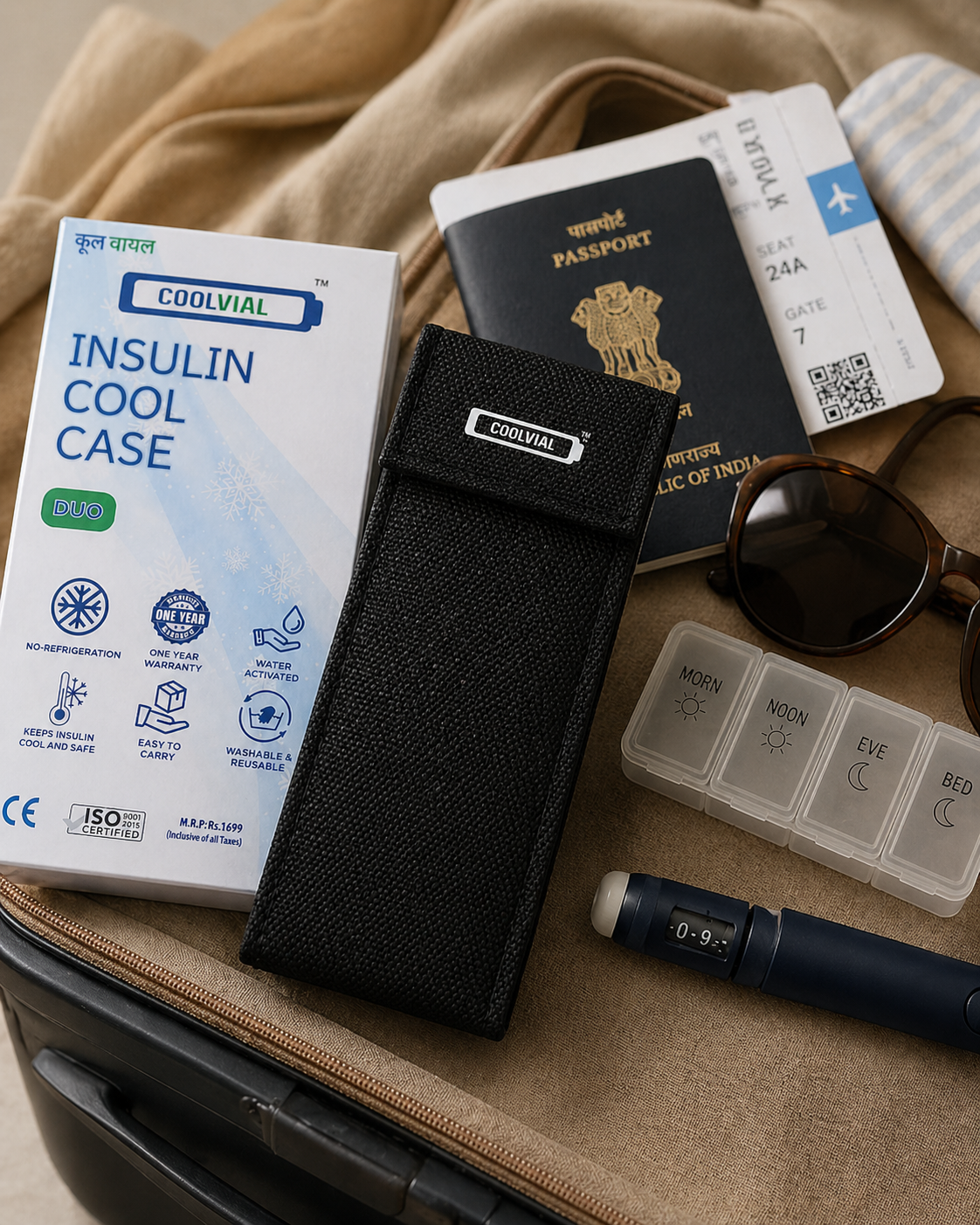
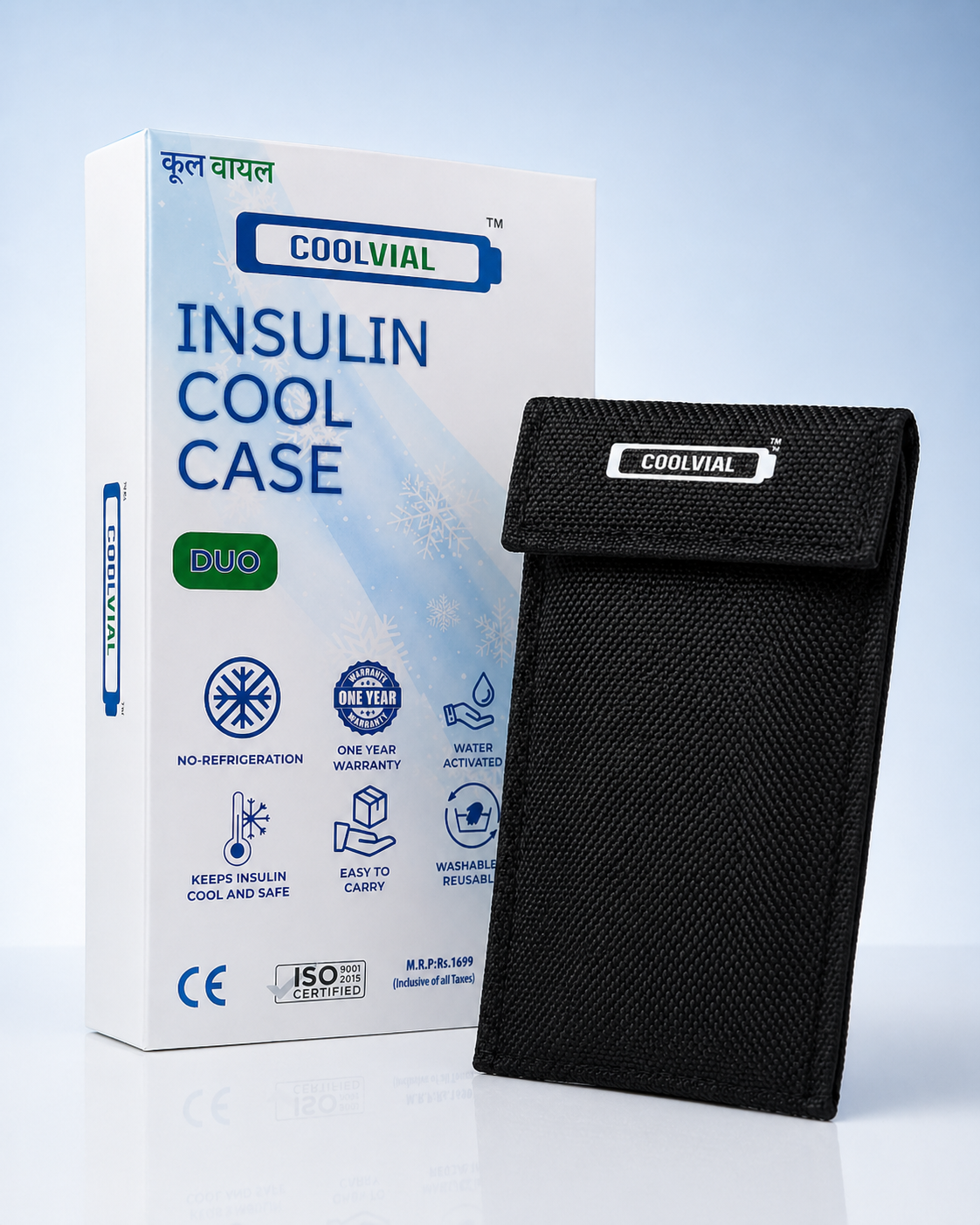
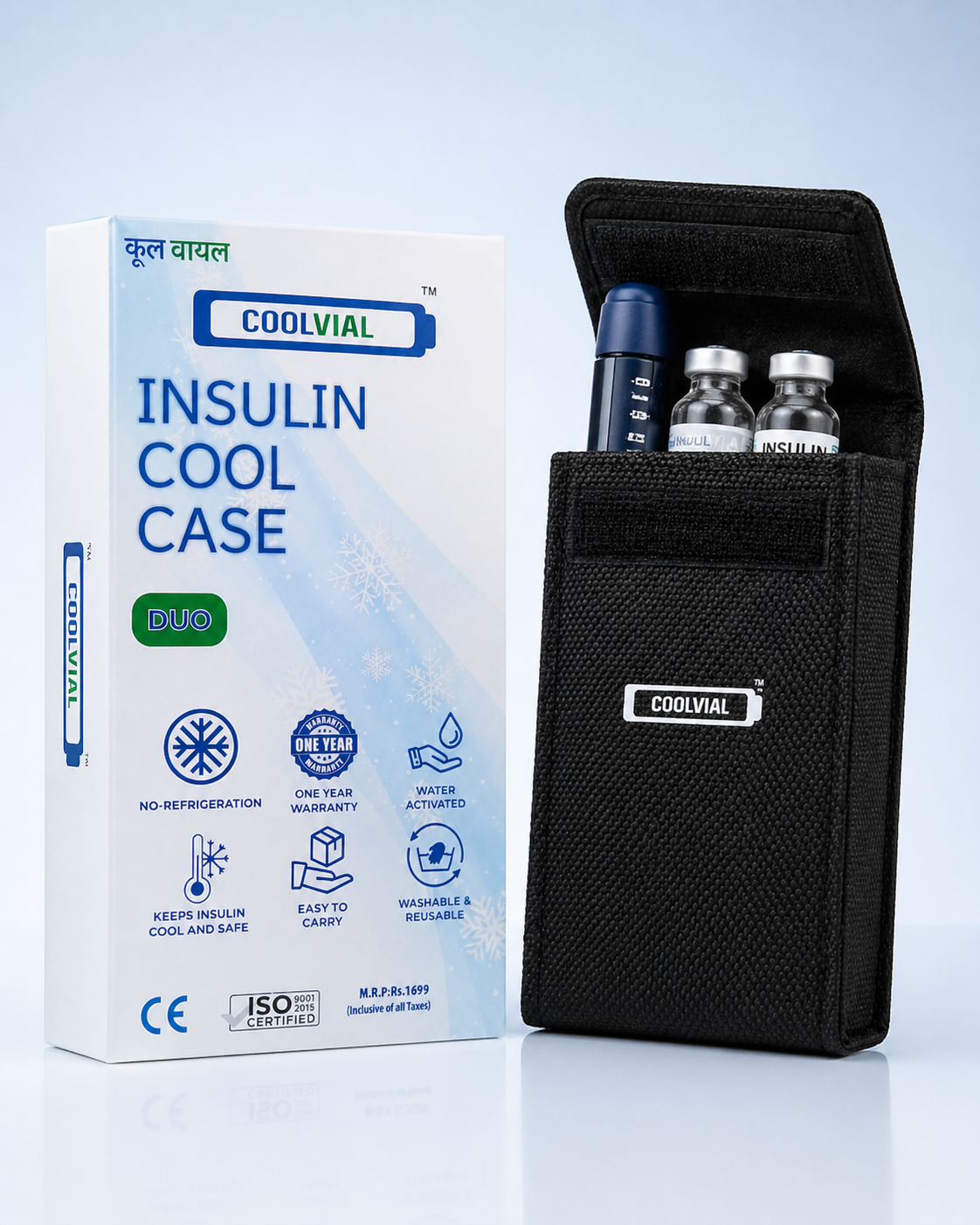
The first step is activating your evaporative cooling case. Products like the COOLVIAL Duo are designed for convenience and effectiveness in Indian climates. Simply immerse the inner pouch in cool water for a few minutes – typically 5-10 minutes, depending on the product. The special crystals inside absorb the water, forming a gel that keeps your insulin cool through evaporation, without the need for refrigeration or ice packs. After activation, gently pat it dry with a towel, and it’s ready to safely store your insulin.
For the daily commute with insulin, the COOLVIAL Duo is an ideal companion. It is specifically designed to hold 2 insulin pens and 1 insulin vial, providing 12-16 hours of cooling. This extended duration is crucial for long commutes and full workdays in Kolkata’s varying temperatures. Its CE certification and ISO 9001:2015 adherence ensure quality and reliability.
When considering cooling cases, it’s worth comparing options. While brands like FRIO are popular, they often come at a higher price point (around Rs 1,900). Other options like Outer Woods OW-12 might be slightly cheaper (around Rs 999) but may offer less capacity or a shorter cooling duration. The COOLVIAL Duo, priced at Rs 1,099 with code COOLHEAL, strikes an excellent balance of affordability, capacity, and performance, making it a superior choice for Kolkata’s daily commuters.
Your Morning Insulin Cooling Routine:
- Hydrate the Pouch: Immerse your COOLVIAL Duo’s inner pouch in cool tap water for 5-10 minutes.
- Pat Dry: Gently wipe the excess water from the pouch. It should be damp, not dripping.
- Load Insulin: Place your insulin pens and/or vials into the activated pouch.
- Pack Securely: Insert the pouch into the outer cover and then into your office bag, school bag, or college backpack. Position it centrally, away from direct sunlight or external heat sources.
- Re-activation (if needed): For extremely long days or travel, the COOLVIAL Duo can be re-activated by re-immersing it in water.
This simple ritual ensures your insulin is protected from the moment you leave your home in Jadavpur for a class at Presidency University, or from New Town for your office in Esplanade.
Insulin Storage Beyond the Commute: Office, School & College
The challenge of maintaining insulin temperature doesn’t end when your commute does. Once you reach your destination – whether it’s an office, school, or college – continued vigilance is necessary.
In Kolkata’s corporate parks, such as those near Victoria Memorial, Howrah Bridge, or in Salt Lake, many offices provide refrigerators. If available, this is the safest place for your insulin during the workday. However, ensure it’s clearly labelled to avoid accidental disposal and check that the fridge temperature is consistently between 2-8°C. If a fridge isn’t accessible, your COOLVIAL Duo can continue to protect your insulin at your desk for its full 12-16 hour duration. Avoid leaving your insulin case directly on a sun-exposed desk or near heat-emitting electronics.
5 Essential Tips for a Safe Daily Commute With Insulin in Kolkata — Metro, Bus & Auto
48+ hours at 2-8°C. No electricity. CE certified. Free delivery across India.
Order on WhatsApp — ₹1,099🛒 Buy Now — ₹1,099For students with Type 1 diabetes attending Kolkata’s major educational institutions like Presidency University, St. Xavier’s College, La Martiniere, or Loreto College, specific considerations apply:
- Communicate with School/College Staff: Inform teachers, school nurses, or college authorities about your diabetes and insulin storage needs.
- Designated Storage: Ask if there’s a designated, cool, and safe place (e.g., staff room refrigerator, medical room) where you can store your insulin.
- Educate Peers: Briefly educate close friends about your condition and how to help in an emergency, without revealing too much personal information.
- Carry a Snack: Always have a diabetic-friendly snack and glucose tablets on hand. (Source: RSSDI Guidelines, 2023).
Table: Insulin Storage Solutions by Location
| Location | Recommended Storage Solution | Notes |
|---|---|---|
| During Commute | COOLVIAL Duo evaporative cooling case | Essential for Metro, bus, auto; protects against heat up to 42°C+ |
| Office (with fridge) | Office refrigerator (2-8°C) | Ensure clear labelling; check temperature regularly |
| Office (no fridge) | COOLVIAL Duo at desk | Avoid direct sunlight, heat sources; re-activate if day extends beyond 12-16 hours |
| School/College | COOLVIAL Duo, or designated cool spot (e.g., nurse’s office) | Inform staff; ensure accessible during class breaks; carry backup supplies |
| At Home | Refrigerator (2-8°C) for unopened vials/pens | Opened pens/vials at room temp (<25°C) for up to 28 days (check brand specific guidelines) |
Remember, the goal is to keep your insulin within its safe temperature range throughout the day. For any questions about specific insulin storage tips, you can always refer to COOLVIAL’s dedicated insulin storage tips page.
Essential Insulin Safety Guidelines for Kolkata’s Climate
Beyond daily cooling strategies, a comprehensive approach to insulin safety in Kolkata’s unique climate involves broader awareness and preparedness. Understanding general insulin storage guidelines is crucial for all diabetics. Insulin should be stored in the refrigerator (2-8°C) until opened. Once opened, most insulin types can be kept at room temperature (below 25°C) for up to 28 days, but always check the specific manufacturer’s instructions for your brand.
Recognizing spoiled insulin is vital. Look for changes in appearance:
- Clumpiness or particles: Insulin should be clear and colorless (except for NPH insulin, which is cloudy).
- Cloudiness or discoloration: Any change from its normal appearance.
- Reduced effectiveness: If your blood sugar levels are unexpectedly high despite taking your usual dose, your insulin might be compromised.
In case of an emergency or if you suspect your insulin has spoiled, having access to healthcare facilities and pharmacies is critical. Kolkata is well-equipped with multispecialty hospitals like Apollo Multispecialty Hospitals (Salt Lake), AMRI Hospitals (Salt Lake/Dhakuria), and Fortis Hospital (Anandapur), which can provide immediate medical assistance. For refills or new supplies, a wide network of pharmacies including Frank Ross, Apollo Pharmacy, MedPlus, Saha Stores, and Dhanwantary are readily available across neighborhoods from Central Kolkata (Park Street/Esplanade) to the North (Shyambazar/Hatibagan).
For a deeper dive into managing diabetes in the city, consider reading our Complete Diabetes Care Guide for Kolkata Residents — 2026 Edition. If your commute extends beyond the city limits or involves air travel, our article on Travelling From Kolkata With Insulin — Airport, Station & Taxi Tips offers specific advice. And for those looking to enjoy Kolkata’s culinary delights safely, explore our guide to Diabetic-Friendly Restaurants & Cafes in Kolkata — Where to Eat Safely.
Staying informed about general medical guidelines for carrying medication, especially during travel, can also be beneficial. For example, while primarily for air travel, the Directorate General of Civil Aviation (DGCA) provides general medical requirements that can offer insight into carrying personal medical devices and medications (Source: https://dgca.gov.in/pages/medical-requirements.html). This knowledge contributes to overall preparedness for any situation where medical supplies are involved.
Frequently Asked Questions (FAQ)
Q: How long can insulin be kept out of the fridge in Kolkata’s heat? A: Insulin can typically be kept out of the refrigerator at room temperature (below 25°C) for up to 28 days once opened. However, in Kolkata’s peak summer heat (often 38-42°C), it should ideally be in a cooling case like the COOLVIAL Duo to prevent rapid degradation, as temperatures above 25°C reduce its potency quickly.
Q: Is it safe to carry insulin in a regular backpack or office bag during a Kolkata commute? A: No, it is generally not safe to carry insulin in a regular backpack or office bag in Kolkata without a cooling solution. Internal temperatures in these bags can easily exceed 25°C, especially in non-AC buses, autos, or during walks, leading to insulin degradation within a short period.
Q: Can I store my insulin in a two-wheeler dickey in Kolkata? A: Absolutely not. A two-wheeler’s dickey can reach extremely high temperatures, often exceeding 60°C due to trapped engine heat. Storing insulin here will denature it almost immediately, making it ineffective and potentially dangerous.
Q: How does the COOLVIAL Duo work to keep insulin cool? A: The COOLVIAL Duo uses an evaporative cooling method. Its inner pouch contains special crystals that absorb water, forming a gel. As water slowly evaporates from the gel, it draws heat away, keeping the contents cool for 12-16 hours without electricity or refrigeration.
Q: What should I do if my insulin looks cloudy or has particles? A: If your insulin, which should normally be clear and colorless (except NPH insulin), appears cloudy, discolored, or has particles, it may have spoiled. Do not use it, and consult your doctor or pharmacist for a fresh supply.
Q: Can children with Type 1 diabetes safely carry insulin to school in Kolkata? A: Yes, with proper precautions. Children with Type 1 diabetes can safely carry insulin to school in Kolkata using a reliable cooling case like the COOLVIAL Duo. It’s also important to inform school authorities and teachers about their condition and storage needs.
Q: How often do I need to reactivate my COOLVIAL Duo? A: The COOLVIAL Duo provides 12-16 hours of cooling per activation. For typical daily commutes or a full workday, one activation in the morning is usually sufficient. For longer periods or if the cooling effect diminishes, you can re-immerse the pouch in cool water to reactivate it.
Conclusion
Navigating Kolkata’s dynamic urban landscape while managing diabetes requires foresight and the right tools. The city’s unique blend of hot, humid summers and dense public transport networks makes the daily commute with insulin a challenge that demands a reliable cooling solution. From the bustling Metro platforms to the vibrant streets traversed by buses and autos, protecting your insulin from temperature extremes is not just a recommendation, but a fundamental aspect of effective diabetes management.
By adopting a simple morning cooling ritual and investing in a high-quality, evaporative cooling case like the COOLVIAL Duo, you can ensure your insulin remains potent and safe, no matter how long or challenging your journey. Remember, your health is your priority, and safeguarding your medication is a crucial step in maintaining your well-being amidst Kolkata’s daily rhythm.
Order your COOLVIAL Duo today at just Rs 1,099 with code COOLHEAL (MRP Rs 1,699) at coolvial.com or via WhatsApp wa.me/918766952300. Made in India, CE certified, ISO 9001:2015, and backed by a 1-year warranty, it’s the smart, practical choice for every Kolkata diabetic.
This article is for general information. Always consult your endocrinologist or diabetologist before changing insulin storage or dosing practices.
How We Researched This — This article is based on a comprehensive review of RSSDI guidelines for diabetes management, ICMR-INDIAB data on diabetes prevalence in India, local Kolkata hospital directories (including Apollo Multispecialty Hospitals (Salt Lake), AMRI Hospitals, Fortis Hospital), and an understanding of the Frank Ross pharmacy network. Local climate data from credible meteorological sources and firsthand experiences of daily commuters in Kolkata were also considered to provide practical, relevant advice.