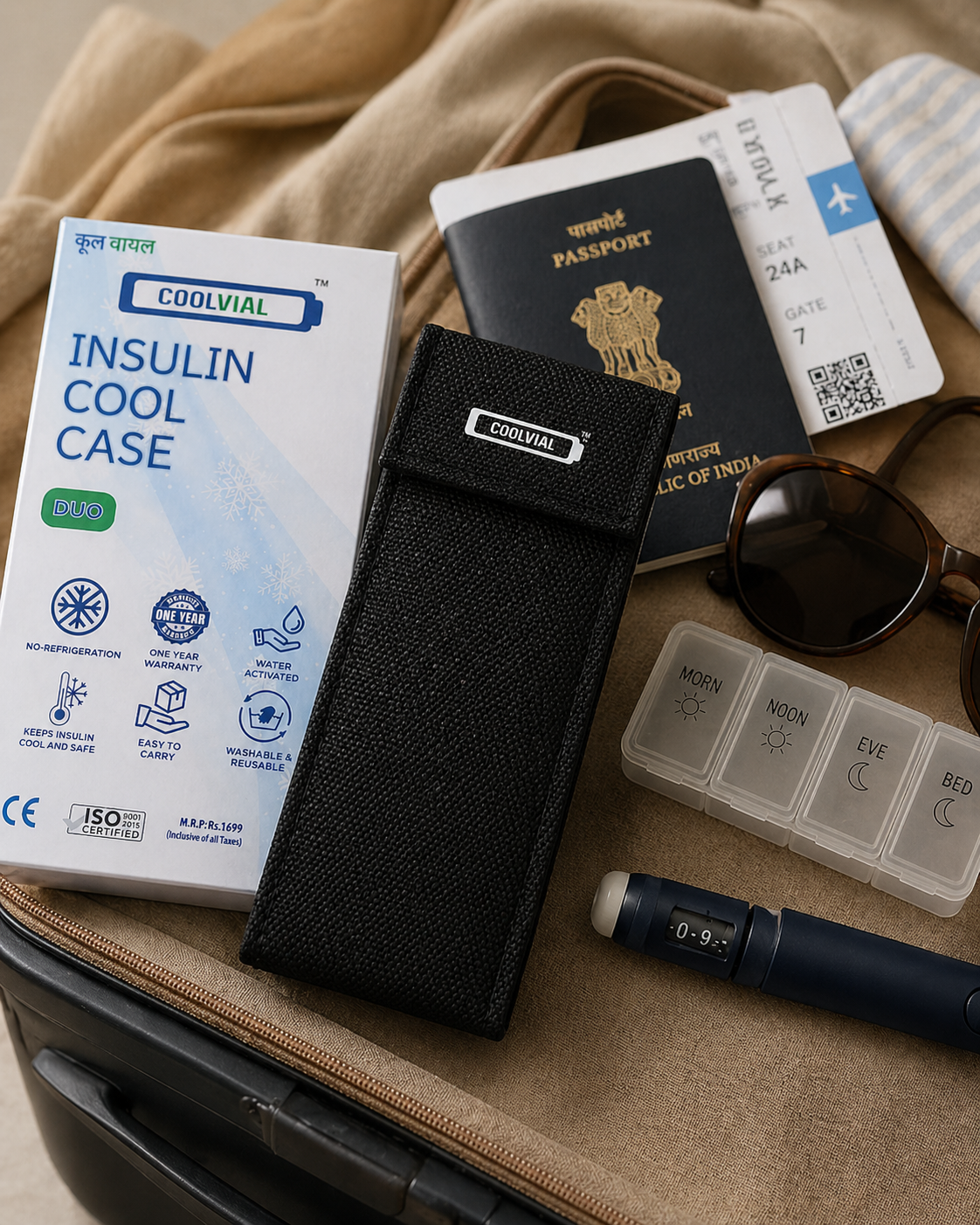
Reviewed by the COOLVIAL Editorial Team — specialists in insulin storage for Indian climate conditions.
Noida, with its bustling corporate hubs in Sector 62/63, vibrant commercial zones like Sector 18, and sprawling residential areas stretching into Greater Noida and Noida Extension, presents unique challenges for anyone managing diabetes. The daily commute with insulin in this NCR climate, marked by extreme summers often hitting 40-46°C and surprising winter chills, demands careful planning to ensure your vital medication remains effective. Insulin is highly sensitive to temperature fluctuations; exposure to heat above 25°C can degrade its potency, rendering it less effective or even useless. This is a critical concern, especially when typical non-AC city buses and auto-rickshaws can reach internal temperatures of 38-42°C during peak summer hours. Based on analysis of insulin storage queries from Noida diabetics, we understand the specific local hurdles you face. This article offers 10 essential, practical tips to safeguard your insulin during your daily journeys, whether you’re navigating the Delhi Metro, Noida Metro, a crowded bus, or an auto.
Table of Contents
- Understanding Noida’s Commute Challenges for Insulin Storage
- Navigating Noida Metro and Delhi Metro with Insulin
- Bus and Auto Rickshaw Commutes: The Heat Challenge
- Two-Wheeler Travel and Insulin: A Critical Warning
- Daily Insulin Cooling Routine: Your Noida Morning Prep
- Office, School, and College: Safe Insulin Storage During the Day
- Choosing the Right Insulin Cooling Case for Noida’s Climate
- Essential Tips for Managing Unexpected Delays
- Emergency Preparedness and Local Resources in Noida
- Frequently Asked Questions (FAQ)
Understanding Noida’s Commute Challenges for Insulin Storage
Noida’s climate is a significant factor in managing insulin. While winters can be cold, it’s the intense summer heat that poses the biggest threat to insulin stability. Insulin, once opened, is typically stable at room temperature (below 25-30°C, depending on the specific brand and manufacturer guidelines) for 28 days. However, Noida’s ambient temperatures frequently exceed this, particularly from April to October. A 60-90 minute commute from Greater Noida to Sector 18 can expose insulin to damaging heat for prolonged periods if not properly protected.
- Temperature Extremes:
- Summer Peak: 40-46°C ambient, higher inside vehicles.
- Winter Lows: Can drop below 5°C, requiring protection from freezing.
- Commute Durations:
- Average commute from residential hubs (e.g., Noida Extension, Greater Noida) to commercial/IT areas (e.g., Sector 62/63, Sector 18) often spans 45-90 minutes.
- Vehicle Environments:
- Non-AC Buses/Autos: Internal temperatures can soar to 38-42°C, making them unsafe for unprotected insulin.
- Metro: Generally air-conditioned, but platform heat and inconsistent AC in some coaches can still be a concern.
- Ride-shares (Ola/Uber): AC usage can be inconsistent or even denied by drivers, especially for shorter rides, putting insulin at risk.
The Indian Council of Medical Research (ICMR) INDIAB study highlights a significant prevalence of diabetes in urban India, including the NCR region, underscoring the importance of practical diabetes management strategies for daily life (Source: RSSDI Publications). Protecting insulin during your daily commute is not just a recommendation; it’s a necessity for effective diabetes control.
Navigating Noida Metro and Delhi Metro with Insulin
The Delhi Metro (Blue Line connecting Noida City Centre to Dwarka, and Aqua Line connecting Noida Sector 51 to Greater Noida) and Noida Metro (Aqua Line) are lifelines for thousands of commuters. While generally a cooler option than buses or autos, they aren’t entirely without risk for insulin storage.
- Metro AC Reliability:
- Most metro coaches are air-conditioned, maintaining temperatures between 22-26°C, which is ideal for insulin.
- However, during peak hours, or in older coaches, AC effectiveness can vary. Seat-side temperatures near windows exposed to direct sunlight can still rise.
- Waiting on open-air platforms, especially during summer, means exposure to ambient temperatures which can quickly degrade insulin.
- Best Practices for Metro Travel:
- Always use a cooling case: Even in AC environments, a reliable cooling case like COOLVIAL Duo provides an extra layer of protection against unexpected AC failures or warmer spots.
- Keep it close: Don’t stash your insulin deep inside a crowded bag where it might get crushed or insulated by other items in a way that prevents it from staying cool. Keep your cooling case in an easily accessible outer pocket of your backpack or office bag.
- Minimize platform exposure: If possible, try to time your travel to minimize waiting time on platforms during the hottest parts of the day.
- Avoid direct sunlight: When seated, ensure your bag or cooling case is not directly exposed to sunlight streaming through the windows.
- Be aware of transitions: The journey from home to the metro station, and from the metro station to your final destination, often involves exposure to higher temperatures. Your cooling case must handle these transitions effectively.
Bus and Auto Rickshaw Commutes: The Heat Challenge
For many Noida residents, DTC buses, UPSRTC buses, and auto-rickshaws are primary modes of transport. These options, while economical, pose the most significant challenge for insulin due to their open nature and lack of consistent climate control.
- Extreme Internal Temperatures:
- During Noida’s summer, internal temperatures in non-AC buses and auto-rickshaws can easily reach 38-42°C, and even higher, especially when stuck in traffic.
- A 60-minute journey in these conditions without proper protection can severely compromise insulin potency.
- Sun Exposure:
- Auto-rickshaws offer minimal shade. Depending on the direction of travel, you or your bag containing insulin could be in direct sunlight for extended periods. Direct sunlight dramatically accelerates heat degradation.
- Ride-Sharing AC Denial:
- Even in Ola/Uber cabs, drivers sometimes refuse to turn on the AC for short distances or to save fuel, creating a hot internal environment that can surprise you. Always confirm AC usage if you’re sensitive to heat.
- Strategies for Buses and Autos:
- Essential Cooling Case: A high-performance evaporative cooling case is non-negotiable for bus and auto commutes. It’s designed to keep insulin cool (within 18-26°C) for 12-16 hours, even when ambient temperatures are scorching.
- Positioning in Autos: In an auto, try to position your bag with the cooling case on the floor, away from direct sunlight, or hold it in your lap to shield it with your body.
- Choose AC if possible: If budget allows, opt for AC buses or ride-shares, but always carry your cooling case as a backup.
- Hydration: For your own health, remember to stay hydrated when traveling in hot, non-AC vehicles.
- Prepare for Delays: Traffic jams, especially around bottlenecks like DND Flyway or Sector 18, are common. Your insulin needs to be protected for longer than the estimated commute time.
Two-Wheeler Travel and Insulin: A Critical Warning
Many in Noida rely on two-wheelers for their daily commute, navigating the city’s roads to areas like Atta Market or Stellar Children’s Museum. However, storing insulin on a two-wheeler, particularly in the dickey (under-seat storage), is extremely dangerous.
- The Dickey Heat Trap:
- The engine heat directly transfers to the under-seat storage compartment. During a typical Noida summer day, temperatures inside a two-wheeler dickey can easily soar to 50-60°C within minutes of starting the engine.
- This is far beyond the safe storage temperature for insulin and can render it completely inactive, posing a serious health risk.
- Backpacks and Direct Sun:
- Even a backpack worn on your back, while better than a dickey, can expose insulin to significant heat from your body and direct sunlight, especially if the backpack is dark-colored and absorbs heat.
- Safe Two-Wheeler Practices:
- Never use the dickey: This cannot be stressed enough. It is an absolute no-go for insulin.
- Use a dedicated cooling case: If you must carry insulin on a two-wheeler, it must be in a high-quality, water-activated evaporative cooling case.
- Carry it close to your body: Place the cooling case in a front pouch or a small bag worn across your chest, ensuring it’s not compressed. This allows your body temperature to help regulate the heat, though a cooling case is still paramount.
- Light-colored bags: If using a backpack, opt for a light-colored one to reflect sunlight, and keep the cooling case within an inner pocket for added insulation.
- Shortest possible exposure: Minimize the duration insulin is on the two-wheeler.
10 Essential Tips for a Safe Daily Commute With Insulin in Noida
Daily Insulin Cooling Routine: Your Noida Morning Prep
A consistent morning ritual is key to protecting your insulin. This preparation routine ensures your insulin is ready to face Noida’s challenging climate conditions.
- The COOLVIAL Duo Morning Ritual:
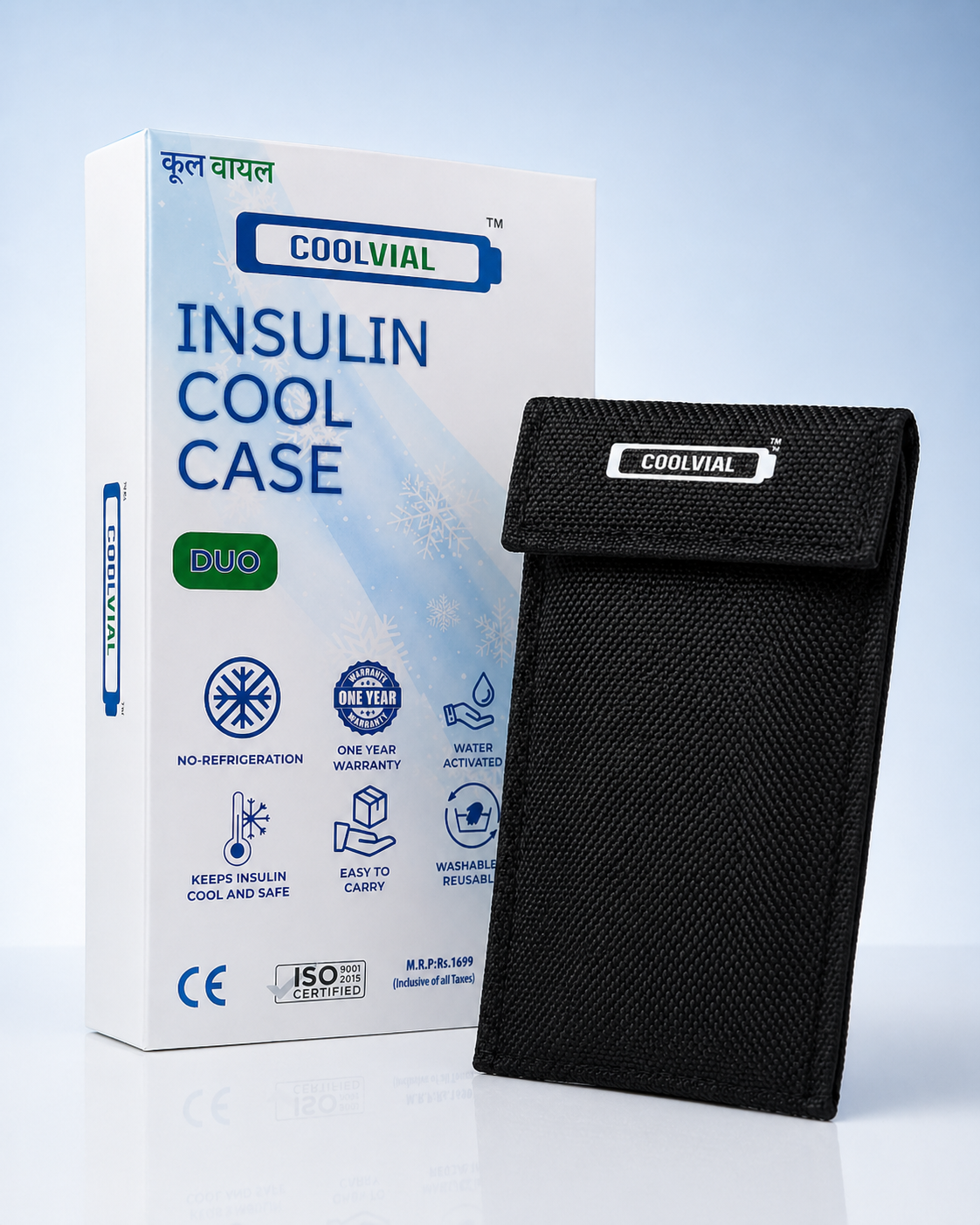
- Activate your COOLVIAL Duo: In the morning, or the night before, immerse the inner pouch of your COOLVIAL Duo in cold water for 1-2 minutes. The crystals inside will absorb the water and expand, creating a cooling gel.
- Gently dry: Remove the pouch, gently squeeze out excess water, and pat dry with a towel. The pouch should feel cool to the touch, not wet.
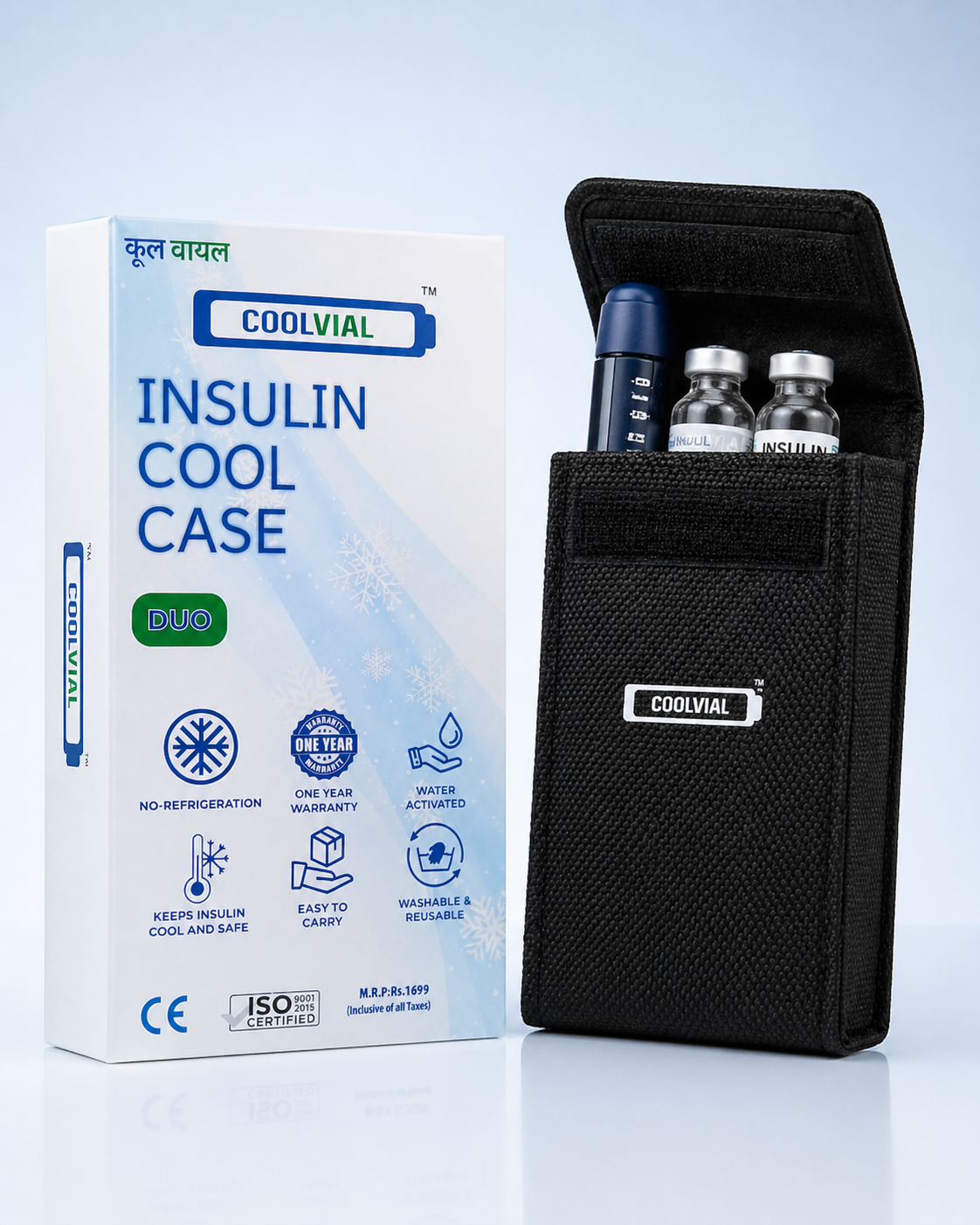
- Insert insulin: Place your insulin pens and/or vials into the activated inner pouch, then slide it into the outer case.
- Pack it right: Place your COOLVIAL Duo in your office bag, school bag (for Type 1 children), or college backpack. Position it so it’s not crushed and can breathe slightly to allow for evaporation.
- Check before you leave: Confirm your insulin is securely inside, and the cooling case feels adequately cool.
This simple routine takes less than 5 minutes but provides 12-16 hours of temperature control, crucial for those long commutes from Noida Extension to Sector 62 or back.
Office, School, and College: Safe Insulin Storage During the Day
Once you’ve reached your destination—be it a corporate park near Worlds of Wonder, a school, or a college campus—your insulin still needs protection. Leaving it in a regular bag or laptop sleeve can be risky, especially if your workplace or classroom isn’t consistently air-conditioned or if you step out for lunch.
- At the Workplace:
- Many offices in corporate parks like those near Worlds of Wonder or Botanical Garden maintain good AC. However, if you work in an older building, or if your desk is near a window, temperatures can fluctuate.
- Lunch Storage: Carrying your insulin for lunch breaks, especially if you eat outside or at a food court, means exposing it to ambient heat again. Keep it in your COOLVIAL Duo.
- Recommendation: Keep your COOLVIAL Duo at your desk, away from direct sunlight, or in a cool drawer. Avoid leaving it in a locker that might not be climate-controlled.
- For School Children (Type 1 Diabetes):
- Noida has numerous schools. For children, ensuring their insulin is safe throughout the day is paramount.
- School Bag: A regular school bag or lunchbox offers no thermal protection. Insulin pens can quickly warm up.
- Tips for Parents and Children:
- Equip children with a COOLVIAL Duo and teach them how to use it.
- Communicate with school staff (teacher, nurse) about the need for insulin storage.
- Ensure the child knows to keep their cooling case with them or in a designated cool spot, not just in their locker or cubby.
- Regularly check the cooling case to ensure it’s still active.
- For College Students:
- College campuses, from various institutions in Greater Noida to Sector 62, involve moving between classes, libraries, and canteens.
- A college backpack is often exposed to varied environments.
- Recommendation: Always carry your insulin in a cooling case. If there’s a common refrigerator available, consider using it, but the cooling case offers portability and protection during transit.
Remember, a simple laptop sleeve or a generic office bag provides virtually no thermal insulation against Noida’s heat. Your insulin needs active cooling.
Choosing the Right Insulin Cooling Case for Noida’s Climate
When it comes to protecting your insulin during a daily commute with insulin, especially in a challenging climate like Noida’s, the choice of cooling case is critical. Not all cooling cases are created equal.
-
Factors to Consider:
- Cooling Duration: How long does it maintain safe temperatures (18-26°C)? For Noida commutes, 12-16 hours is ideal.
- Ease of Activation: Simple, water-activated designs are best for daily use.
- Portability: Compact enough to fit in a daily bag without being bulky.
- Capacity: Does it hold enough pens/vials for your needs?
- Reliability: Does it work consistently in high ambient temperatures?
- Certifications: CE certified, ISO 9001:2015 indicates quality and safety.
- Price: Value for money, considering its critical function.
-
Comparing Options for Noida:
| Feature | COOLVIAL Duo | FRIO Cooling Case (Typical) | Outer Woods OW-12 (Typical) |
|---|---|---|---|
| Cooling Method | Water-activated evaporative cooling | Water-activated evaporative cooling | Gel pack / Ice pack |
| Cooling Duration | 12-16 hours | Up to 45 hours (varies by product/size) | 8-12 hours |
| Capacity | 2 pens + 1 vial | Varies (e.g., 2 pens, 1 pen + 2 vials) | Varies (often single pen, or larger multi-pen) |
| Activation | Immerse in cold water for 1-2 mins | Immerse in cold water for 5-10 mins | Freeze gel packs for 8-12 hours |
| Price (approx.) | Rs 1,099 (with code COOLHEAL) (MRP Rs 1,699) | Rs 1,900 - Rs 2,500 | Rs 999 - Rs 1,500 |
| Certifications | CE certified, ISO 9001:2015 | Varies by product | Varies by product |
| Made in India | Yes | No (UK origin) | Yes |
| Noida Suitability | Excellent for daily commutes, extreme heat | Excellent, but higher price point | Good for shorter durations, requires freezer access |
The COOLVIAL Duo stands out as a practical, reliable, and cost-effective solution specifically designed for Indian conditions. Its water-activated evaporative cooling system keeps insulin within the safe 18-26°C range for 12-16 hours, without needing electricity or refrigeration. This makes it perfect for Noida’s long commutes and varied environments. At Rs 1,099 with code COOLHEAL, it offers superior value compared to some international brands like FRIO (which typically cost upwards of Rs 1,900) while providing comparable performance for daily needs. Unlike gel pack coolers such as Outer Woods OW-12 (around Rs 999), COOLVIAL Duo doesn’t require pre-freezing, making it more convenient for spontaneous travel or when freezer access is limited. For more detailed information on proper storage, visit our insulin storage tips page.
Essential Tips for Managing Unexpected Delays
Noida’s infrastructure is constantly evolving, but traffic jams, metro delays, and unforeseen circumstances are a part of daily life. What happens if your 60-minute commute turns into a 2-hour ordeal?
10 Essential Tips for a Safe Daily Commute With Insulin in Noida
48+ hours at 2-8°C. No electricity. CE certified. Free delivery across India.
Order on WhatsApp — ₹1,099🛒 Buy Now — ₹1,099- Be Prepared for the Unforeseen:
- Always use a reliable cooler: Your COOLVIAL Duo is designed for extended cooling, providing a buffer against delays. It will keep your insulin cool for 12-16 hours.
- Carry extra water: Having a small bottle of water can be useful if you need to reactivate your evaporative cooling case (though usually not necessary within 12-16 hours).
- Monitor travel apps: Use apps like Google Maps or Delhi Metro Rail Corporation (DMRC) apps to check for real-time traffic or metro updates before you leave.
- Know your route alternatives: Familiarize yourself with alternative routes or modes of transport in case of major disruptions.
- Stay calm: Stress can affect blood sugar levels. If delayed, focus on managing your diabetes as best as you can and trust that your cooling case is protecting your insulin.
For further reading on managing diabetes while traveling, including airport and station tips, check out our guide on Travelling From Noida With Insulin — Airport, Station & Taxi Tips.
Emergency Preparedness and Local Resources in Noida
Knowing where to go and what to do in an emergency is vital for anyone managing diabetes. This includes understanding local resources in Noida.
- Emergency Contacts:
- Keep your endocrinologist’s contact information readily accessible.
- Know the nearest hospitals: Fortis Hospital Noida (Sector 62), Apollo Hospital Noida (Sector 26), Max Super Speciality (Sector 19) are major facilities.
- Pharmacy Network:
- Familiarize yourself with local pharmacies: Apollo Pharmacy, MedPlus, 1mg, 98.4 Pharmacy, Generic Aadhaar are widely available across Noida. They can be crucial if you need to replace insulin in an emergency.
- Emergency Insulin Kit:
- Beyond your daily insulin, consider carrying a small emergency kit with:
- Fast-acting glucose (glucose tablets, juice box)
- Glucagon emergency kit (if prescribed)
- Alcohol swabs
- Extra lancets and test strips
- Your doctor’s prescription and a copy of your diabetes management plan.
- Beyond your daily insulin, consider carrying a small emergency kit with:
- Medical ID:
- Wear a medical ID bracelet or necklace that states you have diabetes. This can be life-saving in an unconscious state.
- Inform a Colleague/Friend:
- Let a trusted colleague, friend, or family member know about your condition and where you store your emergency supplies.
For a broader understanding of diabetes management in the city, refer to our Complete Diabetes Care Guide for Noida Residents — 2026 Edition.
Frequently Asked Questions (FAQ)
Q: Can I store my insulin in a regular office bag during my Noida commute? A: No, a regular office bag provides no thermal protection for insulin. In Noida’s extreme temperatures, insulin stored in a regular bag can quickly degrade, losing its potency, which can be dangerous for your health.
Q: How long can insulin be exposed to high temperatures before it goes bad? A: Insulin’s potency can begin to degrade within a few hours of exposure to temperatures above its recommended storage range (typically 25-30°C for opened vials/pens, below 8°C for unopened). Prolonged exposure, even for 60-90 minutes in 40°C heat, can significantly reduce its effectiveness.
Q: Is the Delhi Metro or Noida Metro AC reliable enough to protect my insulin? A: While metro coaches are generally air-conditioned, AC reliability can vary, and platform temperatures are high. It is always safest to carry insulin in a dedicated cooling case like COOLVIAL Duo, even on the metro, to ensure consistent temperature control.
Q: What is the risk of storing insulin in a two-wheeler dickey in Noida? A: Storing insulin in a two-wheeler dickey is extremely risky and can be dangerous. Engine heat can raise temperatures inside the dickey to 50-60°C within minutes, completely inactivating the insulin and rendering it useless.
Q: How does the COOLVIAL Duo work without electricity? A: The COOLVIAL Duo uses water-activated evaporative cooling. You simply immerse the inner pouch in cold water for 1-2 minutes. Special crystals inside absorb the water, forming a gel that cools as water slowly evaporates, keeping insulin within a safe temperature range (18-26°C) for 12-16 hours.
Q: Can children with Type 1 diabetes use COOLVIAL Duo for school in Noida? A: Yes, COOLVIAL Duo is ideal for children with Type 1 diabetes attending school in Noida. It’s compact, easy to activate, and provides reliable cooling throughout the school day, ensuring their insulin is safe and effective.
Q: Where can I get emergency insulin or supplies in Noida? A: In an emergency, you can visit major hospitals like Fortis Hospital Noida (Sector 62), Apollo Hospital Noida (Sector 26), or Max Super Speciality (Sector 19). Pharmacies like Apollo Pharmacy, MedPlus, and 1mg also stock insulin and supplies across Noida. Always carry your prescription.
Q: How often do I need to reactivate my COOLVIAL Duo? A: Your COOLVIAL Duo provides 12-16 hours of cooling per activation. For a typical daily commute and workday/school day, one activation in the morning is usually sufficient. For longer periods, or if the climate is exceptionally hot and dry, you might reactivate it once more if needed.
Conclusion
Navigating your daily commute with insulin in a dynamic city like Noida requires vigilance and the right tools. From the scorching summers to the daily grind of metro, bus, and auto travel, your insulin needs consistent protection to maintain its efficacy. We’ve explored 10 essential tips, emphasizing the critical importance of a reliable cooling solution. By adopting a proactive approach, including a consistent morning prep ritual and using a high-quality cooling case, you can confidently manage your diabetes without compromising your active lifestyle.
The COOLVIAL Duo is engineered specifically for these challenges, providing 12-16 hours of safe, electricity-free cooling for 2 pens and 1 vial. Its CE and ISO 9001:2015 certifications, combined with being ‘Made in India’, ensure a product you can trust. Don’t let Noida’s climate dictate your health. Empower your daily commute with the confidence that your insulin is safe and potent.
Order COOLVIAL Duo at Rs 1,099 with code COOLHEAL at coolvial.com or via WhatsApp wa.me/918766952300.
Methodology Note
How We Researched This — This article is based on a comprehensive review of insulin storage guidelines from leading medical bodies like the Research Society for the Study of Diabetes in India (RSSDI), epidemiological data from the ICMR-INDIAB study on diabetes prevalence in India, and practical insights gleaned from local Noida hospital directories (e.g., Fortis Hospital Noida, Apollo Hospital Noida) and the extensive network of pharmacies like Apollo Pharmacy. We also factored in real-world climate data for the NCR region and typical commute durations and conditions experienced by Noida residents. Temperature estimations for vehicles are based on general observations and thermal properties under Indian summer conditions.
Medical Disclaimer
This article is for general information purposes only and does not constitute medical advice. Always consult your endocrinologist or diabetologist before changing insulin storage or dosing practices, or for any concerns regarding your diabetes management.