
Reviewed by the COOLVIAL Editorial Team — specialists in insulin storage for Indian climate conditions.
Noida, a bustling hub in the National Capital Region, is home to millions, many of whom manage chronic conditions like diabetes. If you’re a Noida resident living with diabetes, the thought of travelling from Noida with insulin can often bring a unique set of challenges, especially given the NCR’s extreme climate, where summer temperatures can soar to 40-46°C. Whether it’s a quick trip to Delhi, a longer train journey, or an international flight from IGI, ensuring your life-saving medication remains effective is paramount. Based on analysis of insulin storage queries from Noida diabetics, we understand these concerns deeply.
According to the ICMR-INDIAB study, diabetes prevalence in urban India, including areas like Noida, is significant, underscoring the need for robust self-management strategies (Source: ICMR Guidelines on Diabetes). Insulin, a protein, is highly sensitive to temperature fluctuations and can lose potency if exposed to heat or freezing temperatures. An insulin pen or vial stored above 25°C can degrade rapidly, impacting its efficacy and potentially leading to dangerous blood sugar spikes. This guide provides 7 essential tips for navigating local and long-distance travel, offering practical advice for airports, railway stations, and taxi rides originating from Noida.
Table of Contents
- Understanding Insulin Storage in Noida’s Climate
- Airport Travel from Noida: IGI Delhi (DEL) & Jewar Noida International (NIA)
- Navigating Train Journeys from Noida with Insulin
- Road Trips from Noida: Taxis, App-Cabs & Personal Vehicles
- Essential Packing List for Travelling From Noida With Insulin
- International Travel from Noida: Customs, Time Zones & Supplies
- Key Considerations for Emergency Preparedness
1. Understanding Insulin Storage in Noida’s Climate
Noida’s climate presents a significant challenge for insulin storage. The NCR experiences severe temperature swings, from scorching summers reaching well over 40°C to cold winters, often accompanied by severe pollution that can exacerbate health conditions. Insulin, once opened, should typically be stored at room temperature (below 25°C) for up to 28 days, but this “room temperature” is rarely achievable in Noida without active cooling, especially during peak summer months. Unopened insulin should be refrigerated between 2-8°C.
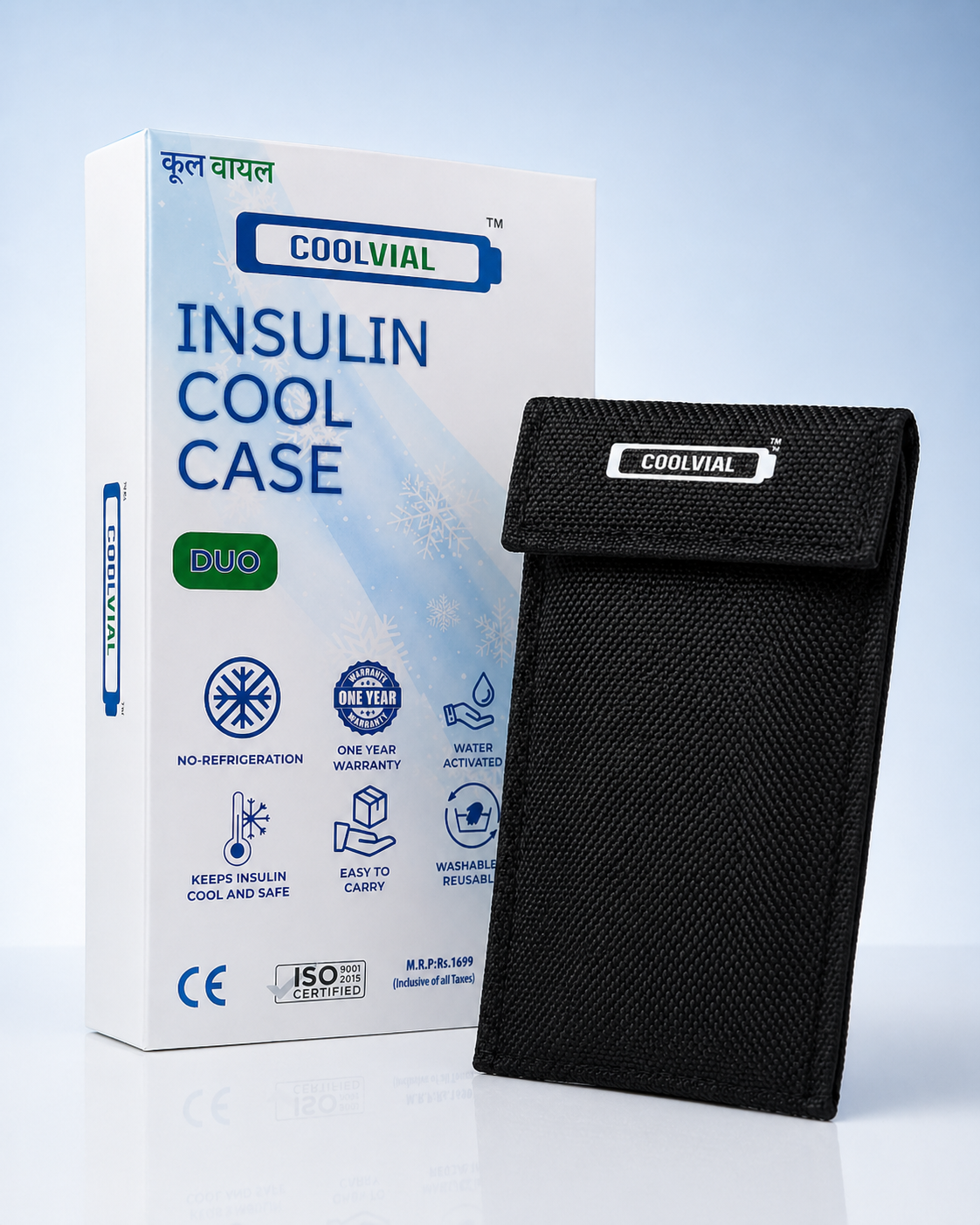
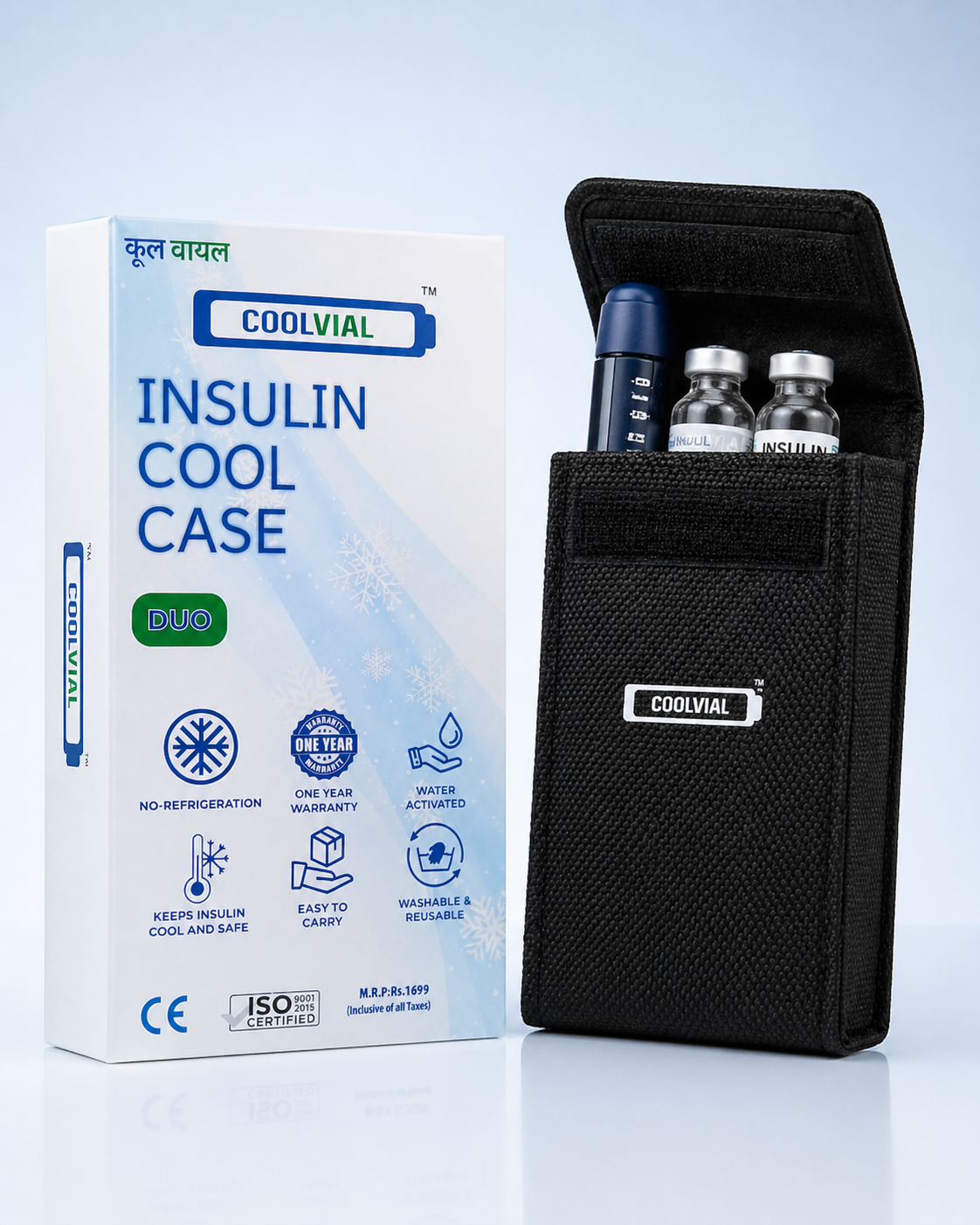
The primary risk when travelling from Noida with insulin is heat exposure. A few hours in a hot car, a sun-baked airport trolley, or even a warm train compartment can render your insulin ineffective. This is why passive cooling solutions are crucial. Evaporative cooling cases, like the COOLVIAL Duo, are designed specifically for such conditions, using water to keep insulin cool without electricity. They are a reliable alternative to bulky ice packs or unreliable hotel fridges.
Key Temperature Guidelines for Insulin:
- Unopened Insulin: Store in a refrigerator between 2°C and 8°C. Do NOT freeze.
- Opened Insulin (in-use): Store at room temperature (below 25°C) for up to 28 days.
- Travel Temperature: Aim to keep insulin between 15°C and 25°C during transit to maintain efficacy.
- Extreme Heat Warning: Insulin exposed to temperatures above 30°C for extended periods can lose potency significantly. Above 40°C, degradation is very rapid.
2. Airport Travel from Noida: IGI Delhi (DEL) & Jewar Noida International (NIA)
For Noida residents, both Indira Gandhi International Airport (IGI Delhi) and the upcoming Jewar Noida International Airport (NIA) will serve as crucial gateways. Proper preparation is key to a smooth airport experience when travelling from Noida with insulin.
a. Security and Check-in Rules for Insulin
Indian aviation regulations, guided by the Bureau of Civil Aviation Security (BCAS) and CISF, are generally accommodating for medical necessities.
- Carry-on Baggage is Non-Negotiable: Always carry your insulin pens, vials, syringes, and lancets in your hand luggage. Never put them in checked baggage, as cargo holds can experience extreme temperature fluctuations (freezing or very hot) that will destroy insulin.
- Doctor’s Letter: A doctor’s letter or prescription is highly recommended. This letter, from your endocrinologist or diabetologist at hospitals like Fortis Hospital Noida (Sector 62) or Apollo Hospital Noida (Sector 26), should state your medical condition, the need for insulin, and the types of supplies you are carrying (pens, vials, needles, cooling case).
- Gel-Pack Questions at CISF Screening: While water-activated cooling cases like COOLVIAL Duo don’t contain gel packs, if you opt for conventional gel packs, be prepared for additional screening. Liquid restrictions (100ml rule) may apply to gel packs if they are not completely frozen. Evaporative coolers bypass this issue as they only require water for activation, which can be done post-security. Inform the CISF officer about your medical supplies and cooling method.
- Original Packaging: Keep insulin in its original packaging with pharmacy labels visible. This helps identify the medication if questioned.
- Medical Devices: Insulin pumps and continuous glucose monitors (CGMs) are generally allowed through security. Inform the security personnel if you have an active pump or CGM.
b. Pre-Paid Taxi Queues and Airport Logistics
The journey from Noida to IGI Delhi, especially during peak hours, can be lengthy. Once you arrive, expect potential wait times.
- IGI Delhi (DEL) Taxi Queues: At IGI Delhi, pre-paid taxi queues, particularly for return trips or during busy periods, can easily hit 45 minutes or more. This prolonged exposure, especially if your insulin is in a regular bag, can be detrimental. Ensure your insulin is in a reliable cooling case from the moment you leave your home in Noida Extension or Sector 18.
- Jewar Noida International (NIA) (Upcoming): As NIA becomes operational, similar logistics will apply. While the airport is designed with modern amenities, initial operational phases or high traffic volumes could lead to wait times for taxis or ride-shares. Plan your departure from Greater Noida or Sector 62 accordingly, always prioritizing insulin protection.
COOLVIAL Duo, designed to keep insulin cool for 12-16 hours without electricity, is an ideal companion for airport travel. Its CE certification and ISO 9001:2015 standards ensure reliability, providing peace of mind during long transit times or unexpected delays.
3. Navigating Train Journeys from Noida with Insulin
Train travel, often a preferred mode for many Noida residents, comes with its own set of considerations for insulin users. Noida currently relies on nearby railway stations, with Boraki station in Greater Noida under construction to serve as a major hub. For now, many embark on journeys from Ghaziabad or Delhi railway stations, accessible from Noida via metro or road.
a. Myth-Busting: Pantry Car Fridges and TTE Reliability
It’s a common misconception that train pantry cars can reliably store your insulin.
7 Essential Tips for Travelling From Noida With Insulin: Airport, Station & Taxi Guide
48+ hours at 2-8°C. No electricity. CE certified. Free delivery across India.
Order on WhatsApp — ₹1,099🛒 Buy Now — ₹1,099- Pantry Car Fridges are Unreliable: Pantry car refrigerators are primarily for perishable food items and often lack the stable temperature control required for insulin. They may be overfilled, opened frequently, or subject to power fluctuations, making them unsuitable for medical storage. NEVER rely on a pantry car fridge for your insulin.
- NEVER Hand Pens to TTE: Train Ticket Examiners (TTEs) are not equipped or responsible for storing medical supplies. Handing your insulin pens to a TTE is risky and not advisable. You are solely responsible for your medication’s safety and proper storage.
b. Evaporative Coolers for Train Travel
For train journeys, especially those lasting more than a few hours, a personal cooling solution is indispensable.
- Bring Your Own Evaporative Cooler: An evaporative cooling case, like the COOLVIAL Duo, is perfect for train travel. It’s compact, requires only water for activation, and doesn’t need electricity, making it ideal for compartments where power outlets might be scarce or unreliable. Simply activate it before leaving your home in Noida, and it will maintain a safe temperature for your insulin throughout your journey.
- Station Access: Whether you’re catching a train from Noida Sector 62’s metro link to Anand Vihar Terminal or travelling to Boraki (under construction) in Greater Noida, ensure your insulin is secured in its cooler before you even step out. The walk to platforms, waiting rooms, and the journey itself expose your medication to ambient temperatures.
Preparation for Train Journeys:
- Pre-Cool Your Insulin: Before leaving Noida, ensure your insulin is properly refrigerated and then immediately transferred to your cooling case.
- Stay Hydrated: Carry ample water, not just for yourself, but also for reactivating your evaporative cooler if needed on longer journeys.
- Keep it Accessible: Store your insulin cooler in an easily accessible bag, not in overhead luggage, so you can monitor it and access your medication quickly.
4. Road Trips from Noida: Taxis, App-Cabs & Personal Vehicles
Road travel from Noida to nearby cities like Delhi, Ghaziabad, or Agra is common. However, the unique challenges of road conditions, vehicle reliability, and pit stops require careful planning for insulin users.
a. Taxi AC Reliability and Parking in a Hot Car
- Taxi AC Reliability: While many taxis and app-cabs in Noida offer AC, its reliability can vary. Ola/Uber drivers might sometimes refuse to turn on the AC to save fuel, especially for shorter distances or if you haven’t explicitly chosen an AC-enabled ride. This is a significant risk for insulin. Always confirm AC functionality when booking or entering a cab.
- Parking Insulin in a Hot Car: Never leave your insulin in a parked car, even for a few minutes. The interior temperature of a car parked under the sun in Noida can skyrocket to 60-70°C within minutes, instantly destroying insulin. Always take your COOLVIAL Duo with you, even for quick stops.
b. App-Cab Realities and Rapido Bike-Taxi Exposure
- App-Cab Choices: When booking through apps like Ola or Uber from Noida’s corporate hubs in Sector 62/63 or the bustling Sector 18, always opt for AC cabs. Be prepared to pay a slightly higher fare for this essential medical necessity.
- Rapido Bike-Taxi Exposure: Rapido bike-taxis are popular for quick, short commutes in Noida. However, they offer no protection from the elements. If you must use a bike-taxi, ensure your insulin is securely stored in a compact, water-activated evaporative cooler like COOLVIAL Duo, which can withstand exposure to sun and heat for extended periods. The COOLVIAL Duo’s robust design and 12-16 hour cooling capacity make it far superior to carrying insulin in a regular bag during such commutes.
c. Dhaba Pit-Stop Fridge Access
- Unreliable Dhaba Fridges: During road trips from Noida towards Agra on the Yamuna Expressway or to Ghaziabad, you’ll encounter numerous dhabas and eateries. While some have refrigerators, they are generally not suitable for insulin storage. Like train pantry cars, these fridges are often for commercial food items, lack consistent temperature monitoring, and are frequently opened. Do not rely on them.
- Self-Sufficient Cooling: Your best bet is a self-sufficient cooling solution. The COOLVIAL Duo is a water-activated evaporative cooler designed for such scenarios. It’s a “Made in India” product, built to tackle Indian climatic conditions. Compared to competitors like FRIO (~Rs 1,900) or Outer Woods OW-12 (~Rs 999), the COOLVIAL Duo offers comparable or superior performance at a competitive price of Rs 1,099 with code COOLHEAL, providing excellent value and peace of mind.
For comprehensive daily commute tips within Noida, refer to our article: Daily Commute With Insulin in Noida — Tips for Metro, Bus & Auto.
5. Essential Packing List for Travelling From Noida With Insulin
A well-prepared travel kit is your best defense against insulin-related travel woes. Here’s what every Noida resident with diabetes should pack when travelling from Noida with insulin:
- Medication:
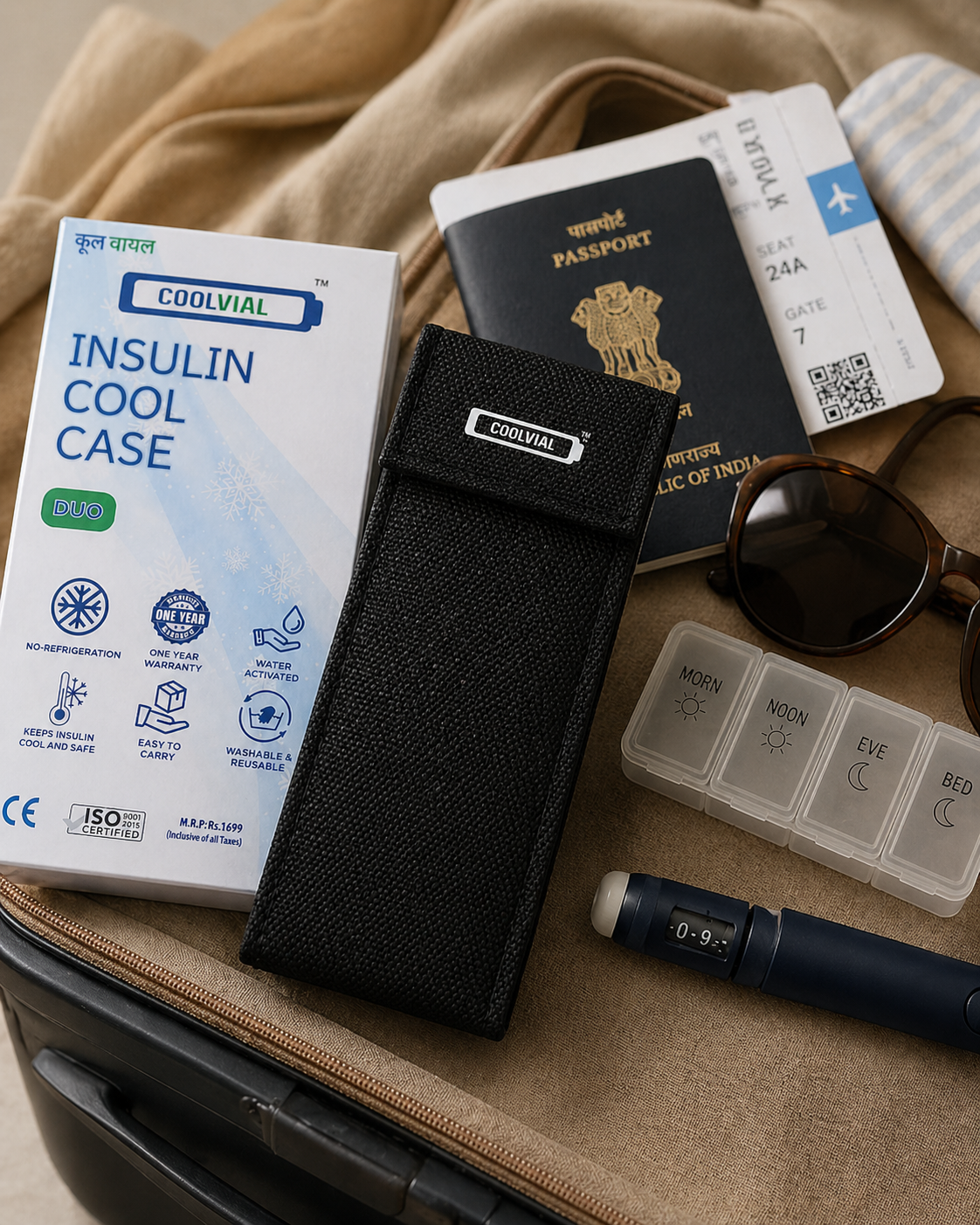
- COOLVIAL Duo Insulin Cooling Case: Holds 2 pens + 1 vial, keeps insulin cool 12-16 hours. Essential for maintaining temperature.
- Insulin: At least double the amount you expect to need for your trip, plus extra for potential delays.
- Syringes/Pen Needles: Sufficient quantity for the duration of your trip.
- Blood Glucose Meter & Strips: With extra batteries.
- Lancets & Lancing Device: Enough for frequent checks.
- Antiseptic Wipes/Alcohol Swabs: For injection sites.
- Emergency Supplies:
- Fast-acting Glucose: Glucose tablets, juice boxes, or hard candies for treating hypoglycemia.
- Glucagon Emergency Kit: If prescribed by your doctor.
- Documentation:
- Doctor’s Letter/Prescription: Clearly stating your condition, insulin type, and medical supplies. Include contact details for your doctor at Fortis Hospital Noida or Max Super Speciality (Sector 19).
- Medical ID Card/Bracelet: Indicating you have diabetes.
- Travel Insurance Details: Especially for international travel.
- Emergency Contact Information: For family and your medical team.
- Other Essentials:
- Sharps Container: A small, travel-sized container for used needles.
- Hand Sanitizer: For hygiene on the go.
- Snacks: Healthy, diabetes-friendly snacks for unexpected delays.
For more detailed guidance on managing your condition locally, explore our Complete Diabetes Care Guide for Noida Residents — 2026 Edition. Also, ensure you are familiar with general insulin storage tips for daily management.
6. International Travel from Noida: Customs, Time Zones & Supplies
International travel adds layers of complexity, but with careful planning, it can be managed effectively. Whether you’re flying from IGI Delhi or the upcoming NIA, these tips are crucial.
a. Customs and Airport Security
- Doctor’s Letter: Absolutely mandatory for international travel. It should be translated into English and, if possible, the language of your destination country. This letter is your primary defense against customs queries.
- Original Packaging: Keep all insulin, pens, and vials in their original, pharmacy-labeled boxes. This helps customs officials identify the medication.
- Carry-on Only: Reiterate: Insulin and all related supplies must go in your carry-on baggage. Checked luggage is too risky due to temperature and potential loss.
- Declare Medications: When passing through customs in a foreign country, it’s wise to declare your medical supplies, especially if you have a significant quantity.
- COOLVIAL Duo for Long Flights: For international flights, the COOLVIAL Duo’s 12-16 hour cooling capacity is invaluable. You can easily reactivate it with water available on the flight or at airport washrooms during layovers. This ensures your insulin stays within the safe temperature range for your entire journey.
b. Time-Zone Dosing Adjustments
Crossing multiple time zones requires careful planning for insulin dosing to avoid hypoglycemia or hyperglycemia.
- Consult Your Doctor: Before your trip, discuss your travel itinerary with your endocrinologist at hospitals like Fortis Hospital Noida or Max Super Speciality Hospital. They can provide a personalized dosing schedule for time zone changes.
- Gradual Adjustments: For trips involving significant time zone changes (e.g., more than 4-5 hours), your doctor might recommend gradual adjustments to your insulin schedule in the days leading up to your departure.
- Frequent Monitoring: Monitor your blood glucose levels more frequently than usual during and after your flight.
- Meal Times: Adjust your mealtime insulin based on local meal schedules, not your home time.
c. Local Pharmacy Access
- Research Ahead: Before you travel, identify pharmacies in your destination country that carry your specific type of insulin. While major pharmacies like Apollo Pharmacy or MedPlus are common in Noida, international availability can differ.
- Generic Names: Know the generic name of your insulin, as brand names can vary.
- Emergency Prescription: Ask your doctor for an emergency prescription that lists your insulin by its generic name and dosage, which might be helpful if you need to purchase insulin abroad.
7. Key Considerations for Emergency Preparedness
Even with the best planning, emergencies can happen. Being prepared is crucial for any Noida resident travelling from Noida with insulin.
- Contingency Insulin: Always carry more insulin than you think you’ll need. A good rule of thumb is 1.5 to 2 times your expected requirement. This accounts for lost or damaged insulin, travel delays, or increased needs due to stress or illness.
- Backup Supplies: Pack an extra blood glucose meter, additional batteries, and more lancets and test strips than you anticipate using.
- Emergency Contacts: Keep a list of emergency contacts, including your doctor, family members, and the local emergency services number of your destination, stored both digitally and physically.
- Medical Alert Information: Wear a medical alert bracelet or necklace that clearly states you have diabetes and are insulin-dependent.
- Travel Insurance: For any travel beyond your local Noida neighborhoods like Sector 18 or Greater Noida, comprehensive travel insurance that covers medical emergencies and medication replacement is highly recommended.
- Understanding Your Insulin: Know the onset, peak, and duration of all your insulin types. This knowledge is empowering, especially if you need to adjust doses in an emergency.
- Hydration and Nutrition: Carry sufficient water and non-perishable snacks. Dehydration and irregular meals can significantly impact blood sugar control.
Remember, managing diabetes is a continuous journey, and travel should not be a barrier to experiencing new places. With the right tools and preparation, you can travel safely and confidently.
Frequently Asked Questions (FAQ)
Q: Can I put my insulin in checked luggage when flying from IGI Delhi? A: No, you should never put insulin in checked luggage. Cargo holds can experience extreme temperatures that will degrade or freeze your insulin, rendering it ineffective. Always carry all insulin and related supplies in your hand luggage.
Q: Do I need a doctor’s letter for carrying insulin on a domestic flight from Noida? A: While not always strictly enforced for domestic flights, a doctor’s letter is highly recommended. It can expedite security checks and prevent misunderstandings with CISF officers, especially if you are carrying multiple pens or vials or a cooling case.
Q: How long can COOLVIAL Duo keep insulin cool during a road trip from Noida to Agra? A: The COOLVIAL Duo is designed to keep insulin cool for 12-16 hours without electricity. For a typical road trip from Noida to Agra, which is about 3-4 hours, it provides ample cooling, ensuring your insulin remains safe even with multiple stops or taxi AC issues.
Q: Are pantry car fridges on Indian trains safe for insulin storage? A: Pantry car fridges on Indian trains are not safe for insulin storage. They lack precise temperature control and are frequently accessed, leading to temperature fluctuations that can harm your insulin. Always use a personal evaporative cooling case.
Q: What is the ideal temperature range for storing opened insulin while travelling? A: Opened insulin, once in use, should ideally be stored at room temperature, which is generally considered below 25°C. During travel, aim to keep it between 15°C and 25°C to maintain its potency and efficacy.
Q: Can I use a regular insulated lunch bag with ice packs for my insulin? A: While better than nothing, regular insulated lunch bags with ice packs are less reliable than specialized evaporative coolers. Ice packs can directly freeze insulin if not positioned carefully, and their cooling duration is often limited, especially in Noida’s extreme heat.
Q: What should I do if my Ola/Uber driver from Noida refuses to turn on the AC? A: If your driver refuses to turn on the AC, politely remind them you booked an AC cab and it’s essential for your medical supplies. If they still refuse, it’s best to cancel and book another cab, prioritizing your insulin’s safety over convenience. Always secure your insulin in a reliable cooling case like COOLVIAL Duo regardless.
Q: Where can I buy insulin in Noida if I run out unexpectedly while travelling locally? A: Noida has numerous pharmacies like Apollo Pharmacy, MedPlus, 1mg, 98.4 Pharmacy, and Generic Aadhaar. In an emergency, you can visit any of these with a valid prescription from your doctor at hospitals such as Fortis Hospital Noida (Sector 62) or Apollo Hospital Noida (Sector 26).
Conclusion
Navigating travel as a person with diabetes from a dynamic city like Noida demands foresight and reliable solutions. From the bustling terminals of IGI Delhi and the upcoming Jewar Noida International Airport to the expanding railway networks and the unpredictable nature of road trips, protecting your insulin is paramount. The extreme temperatures of the NCR climate make passive, water-activated cooling solutions not just convenient, but essential.
By understanding airport security protocols, debunking myths about train travel, and preparing for the realities of road journeys, you empower yourself to travel confidently. Remember that thorough preparation, carrying extra supplies, and having a reliable insulin cooling case are your best allies. With the COOLVIAL Duo, you gain a trusted companion that keeps your insulin safe for 12-16 hours without electricity, allowing you to focus on your journey rather than worrying about your medication. It’s CE certified, ISO 9001:2015 compliant, and proudly Made in India, designed for the unique challenges of our country’s climate.
Travel should be an enriching experience, not a source of stress over your health. Equip yourself with the knowledge and tools, and embrace your next adventure from Noida with peace of mind.
Order COOLVIAL Duo at Rs 1,099 with code COOLHEAL at coolvial.com or via WhatsApp wa.me/918766952300
Medical disclaimer: This article is for general information. Always consult your endocrinologist or diabetologist before changing insulin storage or dosing practices.
How We Researched This — This article is based on a thorough review of RSSDI guidelines for diabetes management in India, ICMR-INDIAB data on diabetes prevalence, current aviation security guidelines (BCAS, CISF), local Noida hospital directories (Fortis Hospital Noida, Apollo Hospital Noida, Max Super Speciality), and pharmacy networks (Apollo Pharmacy, MedPlus) to provide accurate and locally relevant advice for residents of Noida.
7 Essential Tips for Travelling From Noida With Insulin: Airport, Station & Taxi Guide
COOLVIAL keeps insulin safe in India's heat. 48+ hours, no electricity needed.