
Reviewed by the COOLVIAL Editorial Team — specialists in insulin storage for Indian climate conditions.
Noida, a bustling city in Uttar Pradesh and part of the vibrant National Capital Region (NCR), offers a dynamic lifestyle but also presents unique challenges for its residents managing diabetes. With an estimated 11.4% prevalence of diabetes in urban India (Source: ICMR-INDIAB study 2023), understanding the local healthcare landscape and climate is crucial for effective management. This complete diabetes care guide for Noida residents in its 2026 edition aims to be your definitive resource, covering everything from top medical facilities and pharmacy networks to the realities of Noida’s extreme climate and the importance of proper insulin storage. Based on analysis of insulin storage queries from Noida diabetics, we understand the critical need for reliable, local-specific information.
This comprehensive article will help you navigate the nuances of living with diabetes in Noida, ensuring you have the knowledge and tools to maintain optimal health. From identifying the best diabetologists and endocrinologists to understanding how to protect your insulin during power cuts and extreme weather, we’ve got you covered.
Table of Contents
- Diabetes Prevalence in Uttar Pradesh and Noida-Specific Data
- Top Hospitals for Diabetes Care in Noida
- Pharmacy Network and Medication Access in Noida
- Noida’s Climate Reality and Insulin Storage Challenges
- Power Reliability and Utility Management for Diabetics in Noida
- Navigating Transport with Insulin in Noida
- Noida’s Diverse Food Culture and Diabetic-Friendly Options
- Diabetes Support Groups and Community Resources in Noida
- Understanding Health Insurance for Diabetes in Noida
- Addressing Noida-Specific Challenges for Diabetics
- Frequently Asked Questions (FAQ)
- Conclusion
Diabetes Prevalence in Uttar Pradesh and Noida-Specific Data
Diabetes is a growing public health concern across India, and Uttar Pradesh, with its vast population, is no exception. Recent studies highlight the escalating prevalence of both Type 1 and Type 2 diabetes, driven by lifestyle changes, urbanization, and genetic predispositions. According to the ICMR-INDIAB study, the prevalence of diabetes in Uttar Pradesh is significant, mirroring national trends of increasing numbers, especially in urban areas like Noida.
Noida, characterized by its rapid urban development, corporate hubs in Sector 62/63, and modern residential complexes, sees a demographic that is particularly susceptible to Type 2 diabetes due to sedentary lifestyles and dietary shifts. While precise Noida-specific prevalence data for 2026 is still emerging, projections suggest a continued upward trend. The challenges of managing diabetes are compounded by factors such as demanding work schedules, stress, and access to varied, often unhealthy, food options.
Understanding these statistics underscores the importance of a comprehensive approach to diabetes care, from prevention and early diagnosis to effective management and access to local resources.
Key Diabetes Statistics and Trends:
- Uttar Pradesh Prevalence: While specific statewide numbers for 2026 are awaited, the ICMR-INDIAB study (2023) indicated an average diabetes prevalence of 11.4% in urban areas across India, with UP being a major contributor to this national burden (Source: ICMR-INDIAB Study, 2023).
- Noida’s Urban Impact: The city’s rapid growth and high-stress corporate environment contribute to a higher incidence of lifestyle-related Type 2 diabetes.
- Growing Burden: Healthcare providers in Noida report a steady increase in new diabetes diagnoses, emphasizing the need for robust local healthcare infrastructure.
- Demographic Shift: The younger working population in areas like Sector 18 and Greater Noida is increasingly affected, highlighting a shift from traditional age groups.
This rising tide of diabetes necessitates a proactive approach from individuals and a responsive healthcare system, making a complete diabetes care guide an indispensable tool for Noida residents.
Top Hospitals for Diabetes Care in Noida
Noida boasts a robust healthcare infrastructure with several multi-speciality hospitals offering advanced diabetes care. These institutions provide comprehensive services, including endocrinology departments, diabetic foot clinics, dietetics, and patient education programs. Choosing the right hospital is a crucial step in your diabetes management journey.
For detailed information on specialists, refer to our dedicated guide: Best Diabetologists & Endocrinologists in Noida — 2026 Guide.
Leading Hospitals for Diabetes Care in Noida:
- Fortis Hospital Noida (Sector 62):
- Specialties: Known for its comprehensive endocrinology department, advanced diagnostics, and a dedicated team of diabetologists. They offer services for Type 1, Type 2, and gestational diabetes.
- Facilities: State-of-the-art diagnostic labs, diet counselling, diabetic foot care, and patient education programs.
- Accessibility: Located conveniently in Sector 62, easily accessible from corporate hubs and residential areas.
- Apollo Hospital Noida (Sector 26):
- Specialties: A well-established name in healthcare, Apollo offers integrated diabetes care with a focus on multidisciplinary treatment. Their endocrinology team works closely with cardiologists, nephrologists, and ophthalmologists.
- Facilities: Advanced diabetes clinics, insulin pump therapy, continuous glucose monitoring (CGM) services, and comprehensive screening.
- Accessibility: Centrally located in Sector 26, near Atta Market, making it accessible for residents across Noida.
- Max Super Speciality Hospital (Sector 19):
- Specialties: Max Healthcare provides a holistic approach to diabetes management, focusing on personalized treatment plans. They have strong departments for managing diabetes complications.
- Facilities: Diabetic retinopathy screening, neuropathy assessment, advanced wound care, and specialized dietitians.
- Accessibility: Situated in Sector 19, a well-connected area of Noida.
- Other Reputable Hospitals:
- Yatharth Hospital (Greater Noida West): Growing rapidly, offers good general medical care including diabetes management.
- Felix Hospital (Sector 137): Known for its emergency services and general medicine, with diabetologists on staff.
- Kailash Hospital (Sector 27): A long-standing institution offering reliable healthcare services for diabetes patients.
When selecting a hospital, consider factors like proximity, specialist availability, specific services (e.g., insulin pump support), and insurance acceptance.
Pharmacy Network and Medication Access in Noida
Access to medication, especially insulin, test strips, and other diabetes essentials, is paramount for effective management. Noida boasts a widespread network of pharmacies, ranging from large retail chains to independent stores and burgeoning online platforms. This ensures that residents have multiple options for purchasing their supplies.
For insulin emergencies, knowing where to find a 24-hour pharmacy is critical. Our detailed guide provides an updated list: 24-Hour Pharmacies in Noida for Insulin Emergencies — Updated List.
Key Pharmacy Options in Noida:
- Retail Pharmacy Chains:
- Apollo Pharmacy: Widely distributed across Noida, including prominent locations in Sector 18 and Sector 62. Known for a broad range of medicines and some offer 24/7 service.
- MedPlus: Another extensive chain offering competitive pricing and a good selection of diabetes medications and supplies.
- 98.4 Pharmacy: A newer chain focusing on premium services, often found in upscale neighborhoods.
- Generic Aadhaar: Offers generic medicines at significantly lower prices, which can be a boon for long-term diabetes management.
- Online Pharmacies:
- 1mg: A popular online platform offering home delivery of medicines, often with discounts. Ideal for regular refills.
- PharmEasy, Netmeds, Apollo 24/7: Other reliable online options providing convenience and accessibility.
- Benefits: Doorstep delivery, often with discounts, and ability to compare prices.
- Considerations: Delivery times can vary, so plan refills in advance, especially for insulin.
- Independent Local Pharmacies: Scattered throughout neighborhoods, these pharmacies often provide personalized service and can be lifesavers in local emergencies.
Tips for Medication Access:
- Advance Planning: Always keep a buffer stock of essential medications, especially insulin, to avoid last-minute crises.
- Prescription Management: Ensure your prescriptions are up-to-date. Many pharmacies require a valid prescription for insulin and certain other diabetes medications.
- Check Expiry Dates: Always verify the expiry dates of insulin vials, pens, and test strips upon purchase.
- Emergency Contacts: Keep a list of nearby 24-hour pharmacies and their contact numbers handy.
Ensuring consistent access to your medications is a cornerstone of a complete diabetes care guide for Noida residents.
Noida’s Climate Reality and Insulin Storage Challenges
Noida, like the rest of the National Capital Region (NCR), experiences a challenging climate that significantly impacts insulin storage. Understanding these climatic realities is crucial for anyone managing diabetes in the city. Insulin is a sensitive medication, requiring specific temperature ranges to maintain its efficacy.
Our detailed guide on managing insulin in the heat provides essential tips: How to Store Insulin in Noida Summer Heat — A Local’s Guide.
NCR Climate Overview:
- Extreme Summer (March to June): Temperatures frequently soar to 40-46°C, with heatwaves pushing them even higher. Direct sunlight can heat surfaces to extreme levels.
- Monsoon (July to September): High humidity (often 70-90%) combined with warm temperatures creates a muggy environment. While temperatures might drop slightly, the humidity poses its own challenges.
- Cold Winter (December to February): Temperatures can dip to 4-8°C, with occasional cold waves. While less of a concern for insulin degradation, freezing can also damage insulin.
- Severe Winter Pollution: Noida often faces severe air pollution (smog) in winter, which can exacerbate health issues for diabetics, particularly respiratory and cardiovascular complications.
Insulin Storage Guidelines:
- Unopened Insulin: Should be stored in a refrigerator between 2°C and 8°C.
- Opened/In-use Insulin: Can be kept at room temperature (below 25°C to 30°C) for up to 28 days (check specific product instructions), but never above 30°C.
- Avoid Freezing: Freezing can damage insulin, rendering it ineffective.
- Avoid Direct Sunlight: Exposure to direct sunlight or extreme heat sources must be strictly avoided.
Challenges and Solutions:
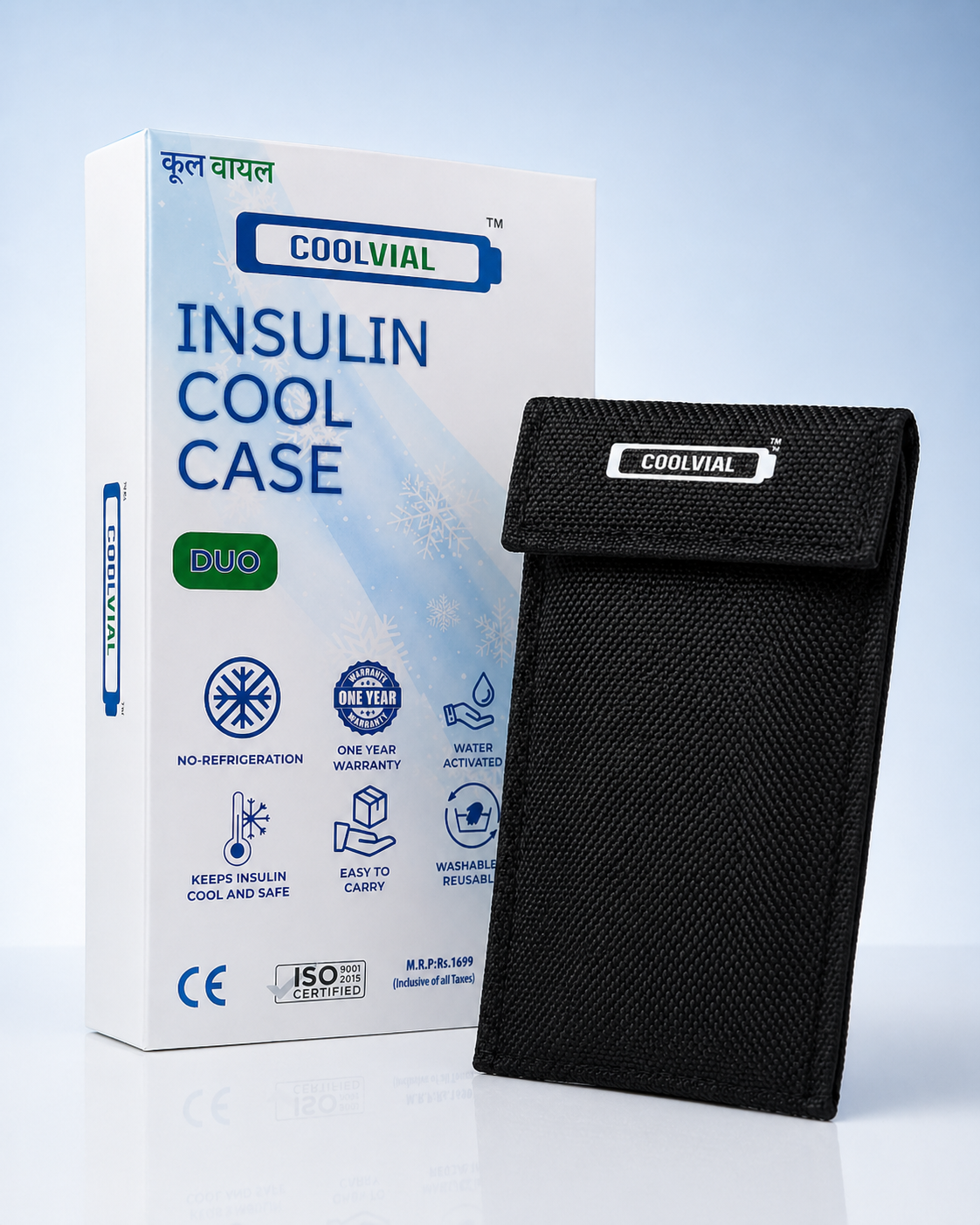
Noida’s extreme summer temperatures make it nearly impossible to keep insulin at “room temperature” without active cooling. Refrigerators are essential, but what happens during power cuts or when travelling?
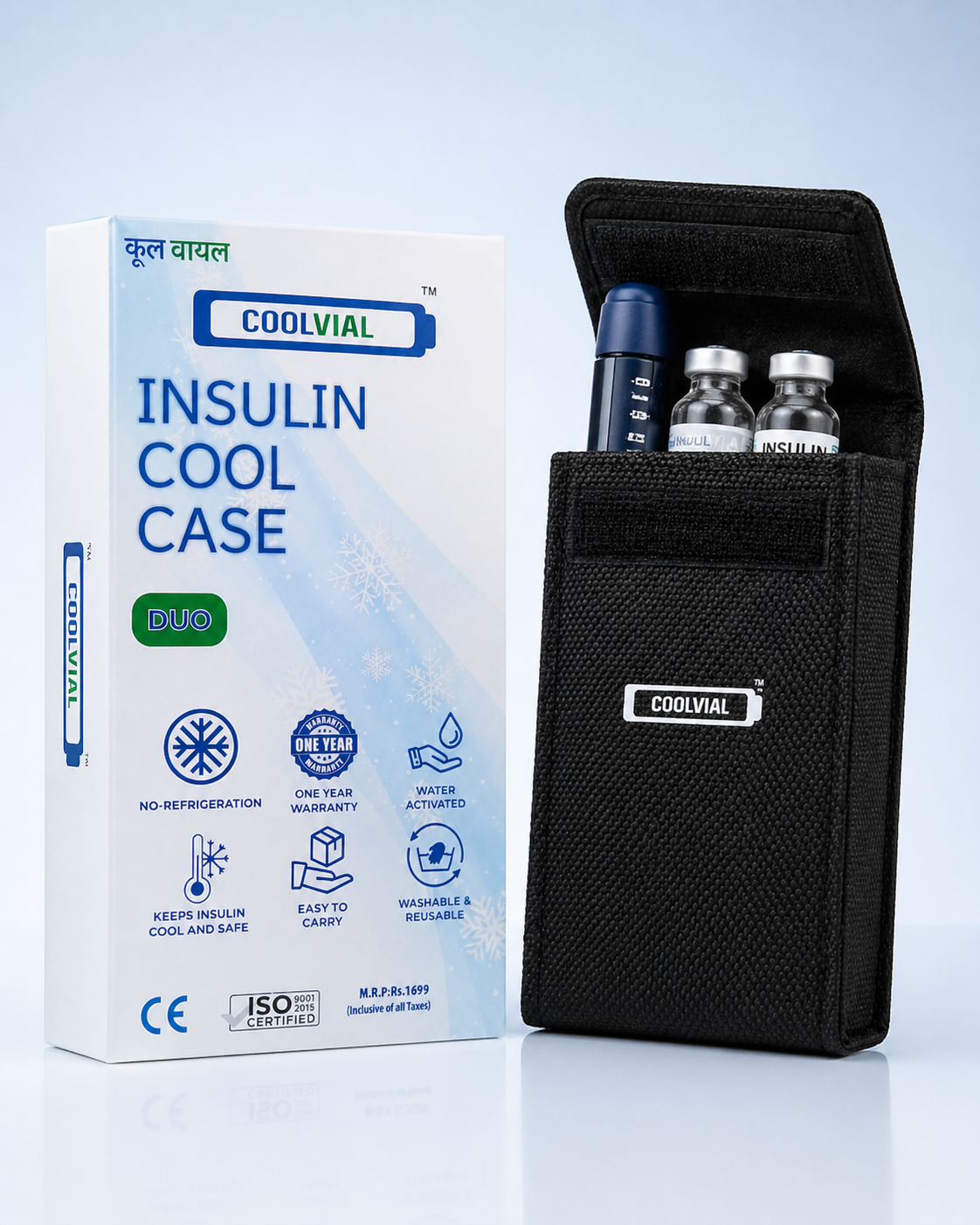
This is where solutions like the COOLVIAL Duo become indispensable. Unlike traditional cold packs or ice, water-activated evaporative cooling cases offer a consistent, electricity-free cooling solution. The COOLVIAL Duo, for instance, can keep insulin cool at 18-26°C for 12-16 hours, even in ambient temperatures of 40-46°C. This is vital for maintaining insulin potency during commutes, power outages, or outdoor activities. When comparing options, while FRIO cases (around Rs 1,900) offer similar technology, and Outer Woods OW-12 (around Rs 999) is a budget-friendly option, COOLVIAL Duo provides a robust and reliable solution specifically designed for the Indian climate at an attractive price point.
For more general insulin storage tips, visit our insulin storage tips page.
Why COOLVIAL Duo is a Smart Choice for Noida:
- No Electricity Needed: Perfect for managing power cuts or when you’re away from a refrigerator.
- Reliable Cooling: Maintains insulin at safe temperatures (18-26°C) even when outside temperatures hit 40-46°C.
- Portability: Compact and lightweight, making it easy to carry in your bag for daily commutes or longer journeys.
- Capacity: Holds 2 pens + 1 vial, suitable for most individuals’ daily needs.
- Durability: Designed for repeated use, offering a long-term solution.
Ensuring your insulin remains effective, regardless of Noida’s challenging climate, is a cornerstone of your complete diabetes care guide.
Power Reliability and Utility Management for Diabetics in Noida
Living in Noida, particularly during the peak summer months, often means contending with intermittent power supply, commonly known as load shedding. While significant improvements have been made in power infrastructure, unexpected outages can still occur. For individuals managing diabetes, especially those reliant on refrigerated insulin, understanding power patterns and having backup solutions is critical.
Our dedicated guide offers comprehensive advice for such situations: Power Cut Survival Guide for Diabetics in Noida — What To Do When the Grid Goes Down.
Noida’s Power Landscape:
- Load Shedding Patterns: While less frequent in prime residential and commercial sectors (like Sector 18, 62, 63) due to better infrastructure, peripheral areas and Noida Extension might experience more planned or unplanned power cuts, especially during summer evenings when demand peaks.
- Inverter Culture: Most modern homes and apartments in Noida are equipped with inverters or generators to provide backup power. However, these systems have limited capacity and run-time, primarily powering lights, fans, and sometimes one or two critical appliances.
- Discoms: Noida’s power supply is primarily managed by Noida Power Company Limited (NPCL) in Greater Noida and Paschimanchal Vidyut Vitran Nigam Limited (PVVNL) in other parts of Noida.
Impact on Diabetics:
- Insulin Refrigeration: The biggest concern is keeping insulin refrigerated (2-8°C). A prolonged power cut can compromise the efficacy of unopened insulin vials.
- Glucometers and Pumps: While glucometers are battery-operated, insulin pumps also require power for charging or battery replacement, though their internal batteries usually last for several days.
- Digital Health Records: Access to online health records or emergency contacts can be hampered if devices run out of charge.
Strategies for Managing Power Outages:
- Backup Power: Ensure your home inverter/UPS is regularly maintained and capable of powering your refrigerator for short durations if possible (check appliance power consumption).
- Insulated Coolers: For insulin, a reliable non-electric cooling solution is paramount. Products like the COOLVIAL Duo are designed precisely for this. By using water-activated evaporative technology, it keeps insulin cool for 12-16 hours without electricity. This is far more effective and reliable than relying solely on a small fridge battery or ice packs, which melt quickly in Noida’s heat.
- Emergency Kit: Keep an emergency kit ready with:
- Extra insulin (if available and safely stored).
- Fresh batteries for glucometer.
- A fully charged power bank for your phone.
- Important contact numbers written down.
- Know Your Power Schedule: Stay informed about any planned load shedding schedules in your area. [Verify in 2026] for current local discom apps or websites.
- Community Support: Connect with neighbors or local support groups who might have alternative power solutions.
Proactive utility management is an integral part of a complete diabetes care guide for Noida residents, ensuring that your insulin remains safe and effective regardless of grid stability.
Navigating Transport with Insulin in Noida
Noida’s extensive transportation network is a boon for commuters, but carrying insulin safely requires specific considerations, especially given the city’s climate fluctuations. Whether you’re using the Metro, buses, or ride-sharing services, protecting your insulin from extreme temperatures is crucial.
For detailed advice on daily commutes, see: Daily Commute With Insulin in Noida — Tips for Metro, Bus & Auto. If you’re planning longer journeys, our travel guide has you covered: Travelling From Noida With Insulin — Airport, Station & Taxi Tips.
Noida’s Transportation Options:
- Delhi Metro (Blue/Aqua Lines):
- Blue Line: Connects Noida City Centre/Electronic City to Dwarka Sector 21, passing through key Noida areas like Sector 18 and Sector 62.
- Aqua Line (Noida Metro): Connects Noida Sector 51 to Greater Noida’s Knowledge Park V, serving many residential and institutional areas.
- Benefits: Air-conditioned, reliable, and generally safe from extreme temperatures.
- Considerations: During peak hours, crowded coaches can lead to body heat, but the AC usually maintains a stable temperature.
- DTC/UPSRTC Buses:
- Benefits: Extensive network, cost-effective.
- Considerations: Many buses are non-AC, exposing insulin to high ambient temperatures, especially during summer.
- Auto-rickshaws:
- Benefits: Convenient for short distances, readily available.
- Considerations: Open-air, direct exposure to sun and heat/cold. Avoid placing insulin on hot seats or in direct sunlight.
- Ola/Uber (Cabs):
- Benefits: Air-conditioned (if selected), door-to-door service, comfortable.
- Considerations: Ensure the AC is functional, especially during summer. Avoid leaving insulin in a parked car, even briefly, as internal temperatures can skyrocket.
Tips for Carrying Insulin Safely:
- Use an Insulin Cooling Case: This is non-negotiable for Noida’s climate. A product like the COOLVIAL Duo is ideal. It uses water-activated cooling to keep insulin at a safe temperature (18-26°C) for 12-16 hours without electricity. This protects your insulin from the extreme heat inside non-AC buses, autos, or even from temperature fluctuations in AC cabs if the AC fails or is off. It’s a robust solution compared to ice packs which melt quickly or simple insulated bags that don’t actively cool.
- Carry-on, Not Checked: Always keep your insulin and cooling case with you, never in checked luggage, whether travelling by train or flight.
- Avoid Direct Sunlight: Regardless of the mode of transport, keep your insulin cooling case out of direct sunlight.
- Keep it Accessible: Ensure your insulin and glucometer are easily accessible for injections and blood sugar checks.
- Stay Hydrated: While not directly related to insulin storage, maintaining your own hydration is crucial, especially during hot commutes.
A proactive approach to transport, armed with the right tools like the COOLVIAL Duo, is a vital component of your complete diabetes care guide in Noida.
Noida’s Diverse Food Culture and Diabetic-Friendly Options
Noida’s culinary scene is as diverse as its population, offering everything from traditional North Indian and Mughlai dishes to international cuisines and trendy cafes catering to the IT crowd in Sector 62/63. While this variety is exciting, it also presents challenges for diabetics needing to manage their diet. However, with awareness, it’s entirely possible to enjoy Noida’s food culture responsibly.
For specific recommendations, check out: Diabetic-Friendly Restaurants & Cafes in Noida — Where to Eat Safely.
Noida’s Culinary Landscape:
- North Indian & Mughlai: Rich curries, butter-laden rotis, biryanis, and decadent sweets are staples. While delicious, these often contain high levels of refined carbohydrates, fats, and sugars.
- Mall Food Courts: DLF Mall of India and other malls host a plethora of fast-food chains, quick-service restaurants, and various cuisines. Options range from Indian thalis to Chinese, Italian, and American fast food.
- IT Crowd Cafes: Areas like Sector 62 and 63 are dotted with cafes offering healthier, modern, and often customizable menus, catering to a health-conscious workforce.
- Street Food: From chaat to momos, street food is ubiquitous but often high in oil, spices, and sugar, with uncertain hygiene.
Navigating Food Choices for Diabetics:
- Portion Control is Key: Even with healthy options, managing portion sizes is crucial.
- Focus on Whole Grains & Lean Proteins: Opt for whole wheat rotis, brown rice, lean meats (chicken, fish), and legumes.
- Prioritize Vegetables: Load up on salads and vegetable-based dishes. Request less oil in preparations.
- Be Mindful of Hidden Sugars: Many sauces, gravies, and even “healthy” sounding drinks can be loaded with sugar. Ask for no added sugar or sugar-free alternatives.
- Hydrate with Water: Avoid sugary sodas and fruit juices. Opt for water, unsweetened iced tea, or fresh lime soda without sugar.
- Read Menus Carefully: Look for grilled, baked, or steamed options instead of fried. Don’t hesitate to ask for modifications (e.g., less oil, no cream).
Diabetic-Friendly Dining Tips in Noida:
- Restaurants with Customizable Menus: Look for places that allow you to customize your order. Many cafes catering to the health-conscious IT crowd offer this flexibility.
- South Indian Options: Dosa, idli, and sambar can be relatively healthier choices if consumed in moderation and without excessive oil.
- Home Delivery & Meal Prep: Utilize healthy meal delivery services or prepare your own diabetic-friendly meals to have more control over ingredients.
- Atta Market: While famous for street food, explore fresh fruit vendors and smaller eateries that might offer simpler, healthier home-style meals.
Integrating mindful eating into your daily routine is a critical part of a complete diabetes care guide for Noida residents.
Diabetes Support Groups and Community Resources in Noida
Complete Diabetes Care Guide for Noida Residents — 2026 Edition
COOLVIAL keeps insulin safe in India's heat. 48+ hours, no electricity needed.
Managing diabetes can sometimes feel isolating, but connecting with others who share similar experiences can provide invaluable emotional support, practical advice, and motivation. Noida has a burgeoning community, and with it, a growing number of resources and support groups dedicated to diabetes awareness and management.
Key Support Organizations and Local Initiatives:
- Diabetes India Chapter: As a national body, Diabetes India often has local chapters or affiliated groups in major cities like Noida. These chapters organize awareness camps, patient education sessions, and support meetings. [Verify in 2026] for current Noida chapter activities.
- Defeat Diabetes Foundation: This foundation works towards preventing and managing diabetes through awareness programs, screening camps, and patient support initiatives. They might have local outreach programs or partner with Noida-based healthcare providers.
- Local Type 1 Diabetes Groups: For Type 1 diabetics, peer support is particularly vital. Many informal groups form through social media (WhatsApp, Facebook) or through pediatric endocrinology clinics. These groups often share tips on insulin management, pump usage, and coping strategies.
- Hospital-Based Support Programs: Many of the top hospitals in Noida (Fortis, Apollo, Max) run their own patient education and support programs, often including workshops with dietitians, educators, and peer groups. Inquire with their endocrinology departments.
- Online Communities: Beyond local groups, various national and international online forums and social media groups connect diabetics. These can offer a broad perspective and a sense of community.
Benefits of Joining a Support Group:
- Emotional Support: Sharing experiences helps reduce feelings of isolation and anxiety.
- Practical Advice: Learn tips and tricks for managing daily challenges from those who truly understand.
- Motivation & Accountability: Group settings can motivate you to stick to your treatment plan and healthy habits.
- Information Sharing: Stay updated on new treatments, technologies, and local resources.
- Advocacy: Collective voice can lead to better resources and policies.
How to Find a Support Group in Noida:
- Consult Your Doctor: Your diabetologist or endocrinologist is often the best resource for local support groups or patient education programs.
- Hospital Patient Services: Contact the patient services or endocrinology department of Fortis Hospital Noida, Apollo Hospital Noida, or Max Super Speciality Hospital for their programs.
- Online Search: Use platforms like Facebook or WhatsApp to search for “Noida diabetes support group” or “Type 1 diabetes Noida.”
- Pharmacy Information: Local pharmacies like Apollo Pharmacy or MedPlus might have information on local health camps or groups.
Being part of a supportive community significantly enhances the effectiveness of any complete diabetes care guide, offering a holistic approach to managing the condition.
Understanding Health Insurance for Diabetes in Noida
Navigating health insurance for diabetes in India can be complex, but it’s an essential component of long-term diabetes management. With rising healthcare costs, having adequate insurance coverage can significantly alleviate the financial burden of consultations, medications, diagnostics, and potential hospitalizations due to complications. Noida residents have access to both government schemes and a range of private insurance options.
Government Health Schemes:
- Ayushman Bharat Pradhan Mantri Jan Arogya Yojana (PMJAY): This flagship national health protection scheme provides health cover of up to Rs 5 lakh per family per year for secondary and tertiary care hospitalization. It is primarily for economically vulnerable sections of society.
- Acceptance in Noida: Many private hospitals in Noida, including some listed above, are empanelled under Ayushman Bharat. Always verify acceptance with the hospital directly.
- Uttar Pradesh State Schemes: The UP government may have its own health schemes or supplements to Ayushman Bharat. [Verify in 2026] for current state-specific programs for residents of Uttar Pradesh.
Private Health Insurance:
Several private insurers offer plans that cover diabetes. However, pre-existing condition clauses are common.
- Key Private Insurers:
- Bajaj Allianz General Insurance
- HDFC ERGO Health Insurance
- Star Health and Allied Insurance
- ICICI Lombard General Insurance
- Max Bupa Health Insurance (Niva Bupa)
- Considerations for Diabetics:
- Waiting Period: Most policies have a waiting period (often 2-4 years) for pre-existing conditions like diabetes. Some specialized plans might have shorter waiting periods or waive them for an additional premium.
- Coverage Scope: Check if the policy covers OPD expenses, diagnostics (blood tests, HbA1c), insulin, test strips, and doctor consultations, or if it’s limited to hospitalization.
- Sub-limits: Be aware of any sub-limits on specific treatments, room rents, or doctor fees.
- Network Hospitals: Ensure that your preferred hospitals in Noida (e.g., Fortis, Apollo, Max) are part of the insurer’s network for cashless claims.
- Premium: Premiums for diabetics can be higher due to the increased risk profile. Compare plans carefully.
- Wellness Programs: Some insurers offer wellness programs that incentivize healthy living and may offer discounts on premiums.
Tips for Choosing a Policy:
- Disclose Everything: Always disclose your diabetes status truthfully. Non-disclosure can lead to claim rejection.
- Read the Fine Print: Understand the terms and conditions thoroughly, especially regarding pre-existing conditions, waiting periods, and exclusions.
- Compare: Use online aggregators to compare different policies from various insurers.
- Consult an Advisor: Consider speaking with an experienced insurance advisor specializing in health plans for chronic conditions.
Securing appropriate health insurance is a proactive step that forms a vital part of a complete diabetes care guide for Noida residents, providing financial security and peace of mind.
Addressing Noida-Specific Challenges for Diabetics
While Noida offers many conveniences, its rapid development and environmental factors present unique challenges for individuals managing diabetes. Being aware of these specific issues allows for better preparedness and proactive management.
Noida-Specific Challenges:
- Air Quality (Severe Winter Pollution):
- Challenge: Noida consistently ranks among cities with poor air quality, especially during winter (October to February) due to vehicular emissions, industrial pollution, and stubble burning in neighboring states. The Air Quality Index (AQI) often reaches “severe” levels.
- Impact on Diabetics: Poor air quality can exacerbate respiratory issues, increase inflammation, and potentially impact insulin sensitivity. Studies suggest a link between air pollution and increased risk of Type 2 diabetes complications.
- Mitigation:
- Monitor AQI levels daily.
- Minimize outdoor exposure during peak pollution hours.
- Use N95 masks outdoors.
- Consider air purifiers for indoor spaces.
- Stay well-hydrated.
- Monsoon Disruptions and Flood Risk:
- Challenge: While Noida generally has good drainage, heavy monsoon rains can lead to localized waterlogging and disruptions. Areas like Sector 137 and parts of Greater Noida West have historically experienced waterlogging during very heavy monsoons.
- Impact on Diabetics: Waterlogging can hinder access to pharmacies or hospitals, and power cuts during monsoons are common. Humidity can also affect insulin pens and glucometers.
- Mitigation:
- Keep an emergency supply of insulin and medicines.
- Ensure your insulin cooling case (like COOLVIAL Duo) is ready.
- Protect electronic devices like glucometers from humidity.
- Internal link: Noida Monsoon & Insulin — Protecting Your Vials From Humidity Damage.
- Urban Lifestyle and Stress:
- Challenge: Noida’s corporate environment (Sector 62/63) often leads to long working hours, high-stress levels, and irregular eating patterns.
- Impact on Diabetics: Stress can elevate blood sugar levels, and irregular meals can make blood sugar management difficult.
- Mitigation:
- Prioritize stress-reducing activities (yoga, meditation, walks in Botanical Garden).
- Plan healthy meals and snacks in advance.
- Schedule regular breaks during work.
- Access to Green Spaces:
- Challenge: While Noida has parks, ensuring easy access to green spaces for regular physical activity can be a challenge for residents in dense commercial areas.
- Mitigation:
- Utilize local parks (e.g., Noida Authority Park, city parks in residential sectors).
- Explore the Botanical Garden for walks.
- Join gyms or fitness centers.
A comprehensive understanding and proactive approach to these local challenges are vital for a complete diabetes care guide tailored for Noida residents.
Downloadable Noida Diabetes Care Checklist
To help you stay organized and ensure you’re covering all bases, we’ve prepared a handy downloadable checklist. This checklist summarizes key actions and considerations for managing diabetes effectively in Noida, from medication storage to emergency preparedness.
Download your Noida Diabetes Care Checklist [PDF] here: [Link to downloadable PDF - Verify in 2026]
Remember, having the right tools is key. If you are looking for where to purchase insulin cooling solutions, check out our guide: Where to Buy an Insulin Cooler in Noida — Top Stores, Pharmacies & Online Delivery.
Frequently Asked Questions (FAQ)
Q: How hot does Noida get in summer, and how does it affect insulin? A: Noida experiences extreme summers with temperatures often reaching 40-46°C. This heat can quickly degrade insulin, making it ineffective if not stored properly between 2-8°C (unopened) or below 25-30°C (in-use).
Q: Are there 24-hour pharmacies in Noida for insulin emergencies? A: Yes, several Apollo Pharmacy and MedPlus outlets, along with some independent pharmacies in Noida, operate 24/7. It’s advisable to identify the nearest one to your location and save their contact details.
Q: What should I do if there’s a power cut and my insulin is in the refrigerator? A: For short power cuts, insulin typically remains safe in a closed refrigerator for a few hours. For longer outages, use a non-electric insulin cooling case like the COOLVIAL Duo, which can keep insulin cool for 12-16 hours without electricity.
Q: Is it safe to commute with insulin in Noida’s non-AC public transport? A: Commuting with insulin in non-AC public transport like buses or autos during hot weather is risky as insulin can be exposed to high temperatures. Using a reliable insulin cooling case is highly recommended to maintain safe temperatures.
Q: Does Ayushman Bharat cover diabetes treatment in Noida hospitals? A: Yes, many empanelled private hospitals in Noida accept Ayushman Bharat for secondary and tertiary care hospitalization, including some diabetes-related complications. Always confirm with the specific hospital about their acceptance of the scheme.
Q: How can I find a diabetologist in Noida? A: You can find a diabetologist in Noida by checking hospital directories for Fortis Hospital Noida, Apollo Hospital Noida, or Max Super Speciality Hospital, or through online healthcare platforms like Practo.
Q: What is the average cost of insulin in Noida? A: The cost of insulin in Noida varies significantly based on the type, brand, and dosage, ranging from a few hundred to several thousand rupees per vial or pen. Generic options and discounts from online pharmacies can help manage costs.
Q: Are there any specific local support groups for Type 1 diabetics in Noida? A: While formal Type 1 diabetes support groups may vary, many informal communities exist through hospital networks and social media platforms. Inquire with leading endocrinology departments or search online for “Noida Type 1 diabetes group.”
Conclusion
Navigating diabetes in a dynamic city like Noida requires a blend of medical adherence, proactive planning, and an understanding of local conditions. This complete diabetes care guide has aimed to equip you with the essential knowledge, from identifying top-tier hospitals and reliable pharmacies to understanding the critical impact of Noida’s climate and urban lifestyle on your health management. By leveraging the available resources, joining supportive communities, and adopting smart solutions for insulin storage, you can empower yourself to live a full and healthy life with diabetes in Noida.
Remember, your health is your greatest asset. Staying informed, vigilant, and prepared is key to effective diabetes management.
Order your COOLVIAL Duo today at Rs 1,099 with code COOLHEAL to ensure your insulin stays safe, cool, and effective, no matter Noida’s weather or power situation. Visit coolvial.com or connect with us via WhatsApp at wa.me/918766952300.
Medical Disclaimer: This article is for general informational purposes only and does not constitute medical advice. Always consult your endocrinologist or diabetologist before changing insulin storage or dosing practices, or making any decisions related to your diabetes management.
How We Researched This: This guide is based on an extensive analysis of RSSDI guidelines, ICMR-INDIAB data, local Noida hospital directories, Apollo Pharmacy network information, and common queries from diabetics regarding insulin storage in challenging climates. We aimed to provide practical, location-specific advice for Noida residents.
Complete Diabetes Care Guide for Noida Residents — 2026 Edition
Insulin at 2-8°C for 48+ hours. Trusted by 10,000+ Indian diabetics.