Reviewed by the COOLVIAL Editorial Team — specialists in insulin storage for Indian climate conditions.
Noida, a bustling hub in the National Capital Region (NCR), experiences some of India’s most extreme weather conditions. From April to June, temperatures routinely soar between 40°C and a scorching 46°C, making daily life challenging, especially for individuals managing diabetes. Globally, diabetes affects hundreds of millions, with figures consistently rising (Source: IDF Facts & Figures). The critical question for thousands of Noida residents is: how to store insulin effectively and safely when the mercury refuses to drop, and power cuts are a frequent reality? Based on analysis of insulin storage queries from Noida diabetics and insights from local healthcare providers like Fortis Hospital Noida (Sector 62), we understand these unique challenges.
Unopened insulin vials and pens require refrigeration (2°C-8°C), while opened ones can generally be kept at room temperature (below 25°C or 30°C, depending on the brand) for up to 28 days. However, “room temperature” in a non-AC Noida home during summer often means 33°C-38°C, even at night. This article provides a comprehensive, local’s guide with 5 essential steps to protect your insulin, ensuring its potency and your peace of mind amidst Noida’s relentless heat.
Table of Contents
- Understanding Noida’s Relentless Heat: A Local Climate Reality
- The Challenge of Refrigeration in Noida: Power Cuts and Fridge Stability
- Evaporative Cooling in Noida’s Humidity: How Effective is it?
- Water Quality for Insulin Coolers in Noida: RO vs. Tap Water
- Navigating Noida’s Neighbourhoods: Insulin Storage for Sector 18, Greater Noida, and Beyond
- 5 Essential Steps for Insulin Storage During Noida’s May-June Peak Heat & Power Cuts
- Beyond the Summer: Year-Round Insulin Care in Noida
- Frequently Asked Questions (FAQs)
- Conclusion: Your Partner in Diabetes Management
Understanding Noida’s Relentless Heat: A Local Climate Reality
Noida’s climate is characterized by its extremes. The NCR region, including Noida, endures a prolonged and severe summer, with peak temperatures in May and June regularly hitting 40°C to 46°C. This intense heat isn’t just an outdoor phenomenon; it significantly impacts indoor temperatures, especially in homes without continuous air conditioning.
Typical Indoor Temperatures in Noida Homes (April-June)
- Daytime: Non-AC homes often see indoor temperatures ranging from 35°C to 40°C.
- Nighttime: Even after sunset, temperatures may only drop slightly, lingering between 33°C and 38°C, making it difficult for insulin to stay within its safe range of below 25°C (or 30°C for some opened vials).
- Heat Retention: Concrete structures common in Noida’s urban landscape, from Sector 18’s commercial buildings to the residential towers of Greater Noida, absorb and radiate heat, further exacerbating indoor warmth.
This consistent exposure to high temperatures can degrade insulin, reducing its effectiveness and potentially leading to erratic blood sugar levels. According to the Indian Council of Medical Research (ICMR-INDIAB) study, diabetes prevalence is significant across urban India, underscoring the need for robust insulin management strategies in cities like Noida. (Source: ICMR-INDIAB, [Verify in 2026]).
The Challenge of Refrigeration in Noida: Power Cuts and Fridge Stability
While refrigeration is the gold standard for unopened insulin, relying solely on it in Noida’s summer can be risky due to frequent power cuts (or “power outages”) and the varying efficiency of household refrigerators. Noida, despite being a modern city, still experiences intermittent power supply disruptions, particularly during peak summer when electricity demand surges.
Fridge Stability During Power Cuts
- Duration: A standard refrigerator can typically maintain its internal temperature for about 4-6 hours during a power cut, provided the doors remain closed. Beyond this, temperatures begin to rise rapidly.
- Fluctuations: Even with power, older or less efficient refrigerators may struggle to maintain a consistent 2°C-8°C in a hot environment, leading to temperature fluctuations that can harm insulin.
- Monitoring: Regularly checking the fridge temperature with a dedicated thermometer is crucial, especially if you store multiple vials or pens.
Common Refrigeration Challenges for Noida Residents
- Overcrowding: A packed fridge can hinder proper air circulation, creating warmer pockets.
- Frequent Door Opening: Each time the fridge door is opened, warm ambient air rushes in, raising the internal temperature.
- Location: Placing a fridge in direct sunlight or against a hot wall (common in smaller apartments in areas like Atta Market or Noida Extension) can compromise its cooling efficiency.
For those residing in areas with less reliable power infrastructure (Source: Local discom data, [Verify in 2026]), or for individuals who travel frequently within or outside Noida, backup solutions are not just a convenience but a necessity. This is where portable, non-electric cooling solutions come into play, offering a vital lifeline to maintain insulin efficacy.
Evaporative Cooling in Noida’s Humidity: How Effective is it?
Evaporative cooling technology, used in products like COOLVIAL Duo, relies on the principle of water evaporation to draw heat away from the stored items. This method is highly effective in dry climates. However, Noida, especially during the pre-monsoon and monsoon months (late June to September), can experience periods of high humidity.
Understanding Evaporative Cooling in NCR Climate
- Principle: When water evaporates from a surface, it absorbs latent heat from that surface, causing a cooling effect. The faster the evaporation, the greater the cooling.
- Humidity’s Role: High humidity means the air is already saturated with water vapor, slowing down the rate of evaporation. This can reduce the efficiency of evaporative coolers.
- Noida’s Specifics: While Noida’s peak summer (April-June) can be intensely hot, it also often features relatively lower humidity compared to the monsoon season. This makes evaporative coolers quite effective during the driest, hottest periods. For instance, on a 42°C day with 30% humidity, an evaporative cooler can easily maintain temperatures well below 25°C.
COOLVIAL Duo: Designed for Indian Realities
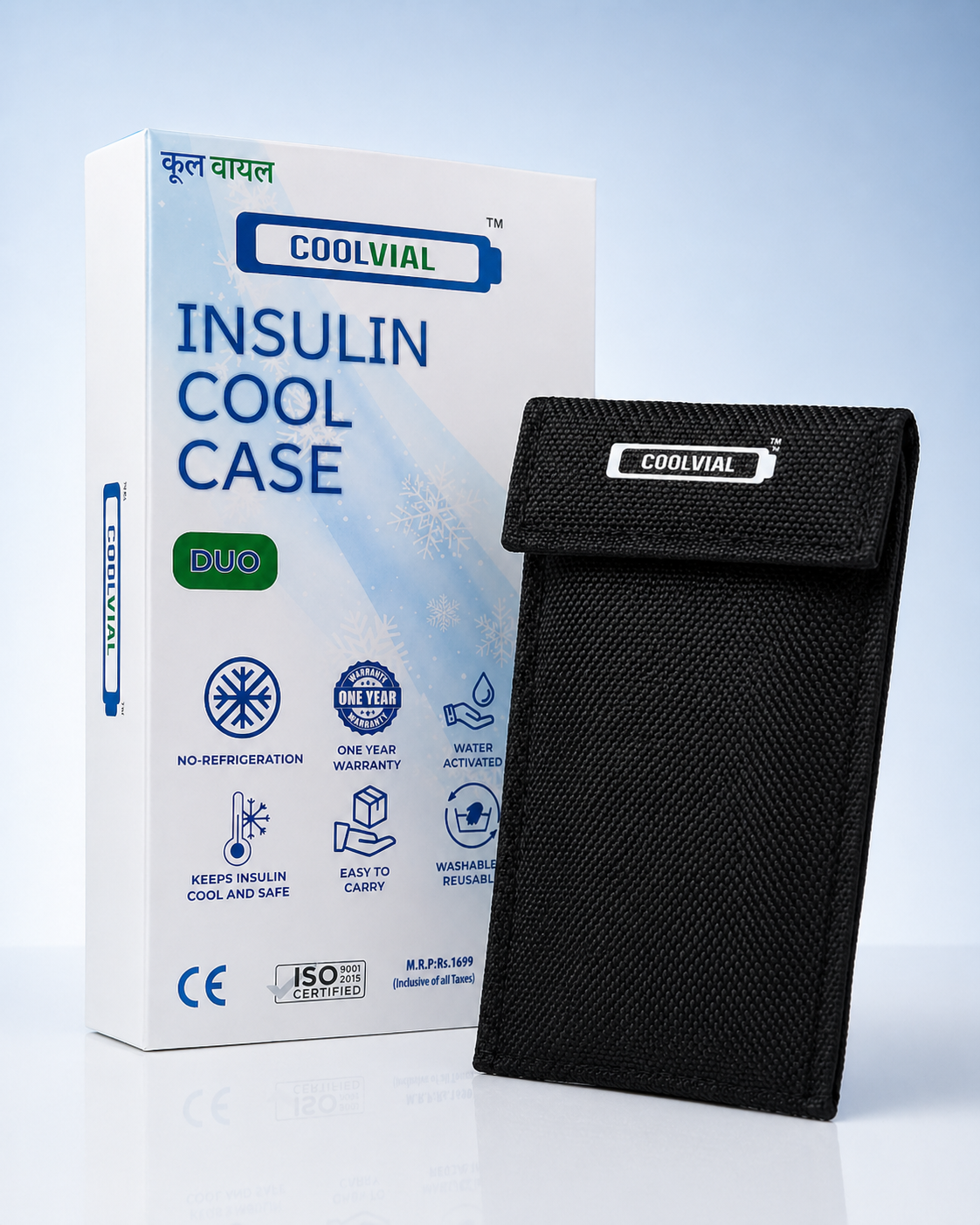
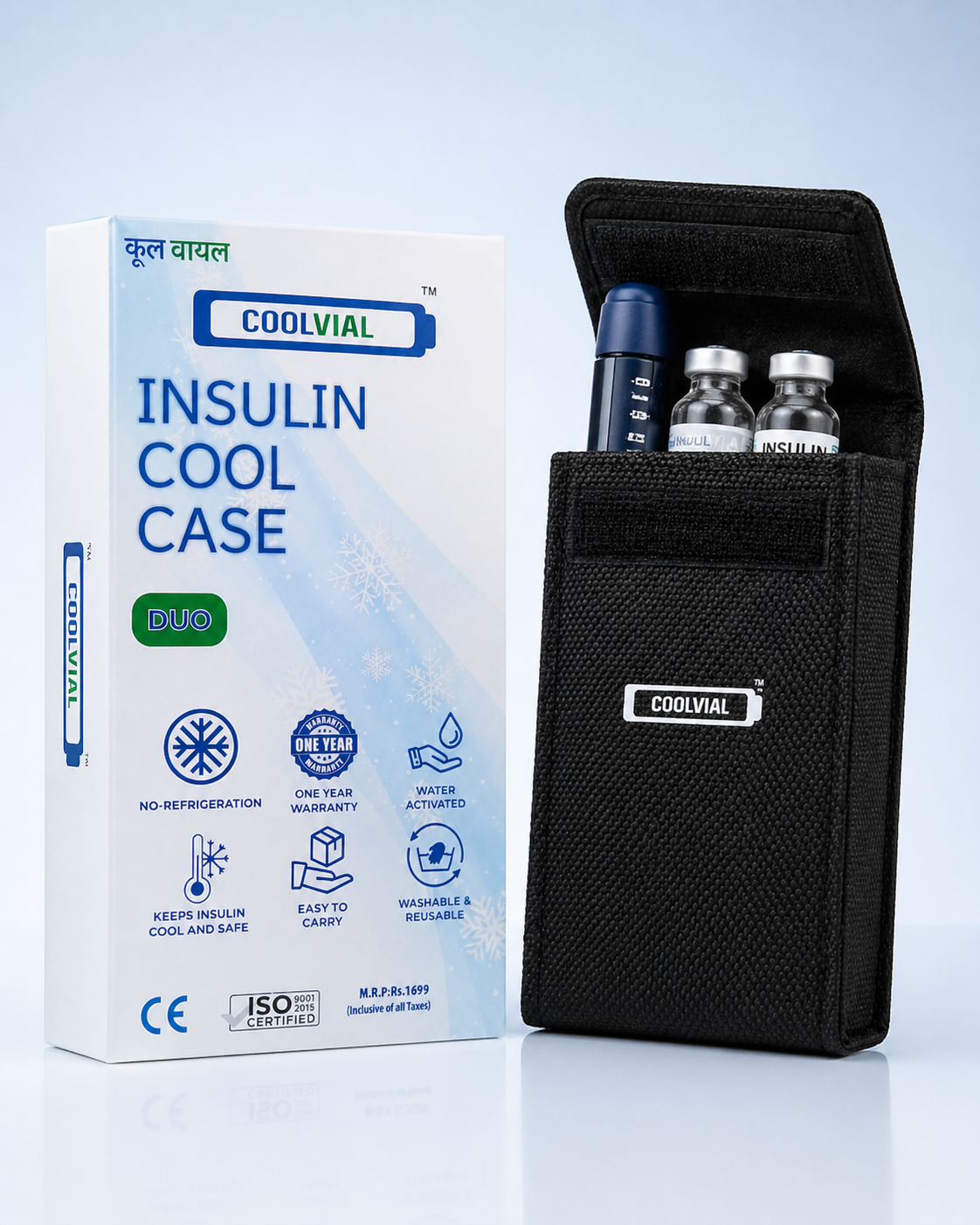
The COOLVIAL Duo insulin cool case is specifically engineered for Indian climate conditions. It holds 2 pens and 1 vial, keeping insulin cool for 12-16 hours without electricity, making it an ideal solution for Noida’s power cuts and high daytime temperatures. During the dry summer months, its evaporative cooling mechanism works optimally, maintaining the safe temperature range for insulin.
5 Essential Steps: How to Store Insulin in Noida Summer Heat — A Local's Practical Guide
COOLVIAL keeps insulin safe in India's heat. 48+ hours, no electricity needed.
- Performance: In typical Noida summer conditions (40-46°C, with varying humidity), COOLVIAL Duo can effectively keep insulin below 25°C, often even closer to 18-20°C, providing a safe buffer.
- Certifications: With CE certification and ISO 9001:2015, COOLVIAL Duo assures quality and reliability. It also comes with a 1-year warranty.
- Comparison: While similar products like FRIO (often priced around Rs 1,900) offer evaporative cooling, COOLVIAL Duo provides a robust, Made in India alternative at a more accessible price point of Rs 1,099 with code COOLHEAL, making it a smart investment for Noida residents. Another option, Outer Woods OW-12, is around Rs 999, but may not offer the same capacity or duration.
For insights into managing insulin during the rainy season, you might find our article on Noida Monsoon & Insulin — Protecting Your Vials From Humidity Damage particularly useful.
Water Quality for Insulin Coolers in Noida: RO vs. Tap Water
The effectiveness and longevity of water-activated evaporative cooling cases like COOLVIAL Duo depend significantly on the quality of water used for activation. Noida’s water supply, particularly in some older sectors and newer developments in Greater Noida and Noida Extension, is known for its hardness.
Why Water Quality Matters
- Mineral Deposits: Hard water contains high levels of minerals like calcium and magnesium. When this water evaporates from the cooling crystals or gel in your insulin case, these minerals are left behind.
- Reduced Efficiency: Over time, mineral buildup can clog the pores of the cooling material, reducing its evaporative surface area and thus diminishing its cooling efficiency.
- Hygiene: Impurities in tap water can also lead to microbial growth if the case is not properly dried and stored, although this is less common with well-designed cases.
Recommendations for Noida Residents
- Use Bottled or RO Water: For activating your COOLVIAL Duo, it is strongly recommended to use bottled water or water purified by a Reverse Osmosis (RO) system. This minimizes mineral deposits and ensures optimal performance and a longer lifespan for your cooling case.
- Avoid Direct Tap Water: Especially in areas known for hard water, such as parts of Sector 62/63 or Greater Noida, direct tap water should be avoided for activating evaporative coolers.
- Cleaning: Even with purified water, occasional gentle cleaning of the cooling pouch as per manufacturer instructions can help maintain its efficacy.
This simple step ensures your cooling case remains a reliable companion for your insulin, protecting it from Noida’s harsh summer conditions. For more general advice on insulin storage tips, you can refer to our dedicated guide.
Navigating Noida’s Neighbourhoods: Insulin Storage for Sector 18, Greater Noida, and Beyond
Noida is a city of diverse living and working environments, each presenting unique challenges for insulin storage. Whether you’re a professional working in the corporate hubs of Sector 62/63, a resident of the bustling Sector 18 (central commercial) area, or living in the expansive developments of Greater Noida or Noida Extension, understanding local nuances is key.
Storage Realities Across Noida
- Sector 18 (Central Commercial):
- Challenge: High foot traffic, frequent commutes, and often older commercial buildings that can become very hot. Many residents live in apartments that might not have continuous AC.
- Solution: Portability is crucial. A COOLVIAL Duo is ideal for carrying insulin to work or while out exploring DLF Mall of India or Atta Market, ensuring it stays cool even when you’re on the move.
- Sector 62/63 (Corporate/IT Hubs):
- Challenge: Long working hours, potential for power fluctuations in offices, and daily commutes.
- Solution: Even if your office has AC, a backup like COOLVIAL Duo provides peace of mind for the commute and any unexpected office AC failures. Many endocrinologists at Fortis Hospital Noida (Sector 62) advise patients on carrying such devices.
- Greater Noida (South) & Noida Extension (West):
- Challenge: Newer developments might experience more frequent initial power cuts. Longer travel distances to essential services like Apollo Pharmacy or MedPlus.
- Solution: Reliable portable storage is paramount. Keeping a COOLVIAL Duo ready ensures insulin is protected during extended power outages at home or during longer trips to pharmacies or hospitals like Apollo Hospital Noida (Sector 26).
- General Travel within Noida:
- Challenge: Even short trips to landmarks like Worlds of Wonder or the Botanical Garden can expose insulin to extreme heat inside vehicles.
- Solution: Never leave insulin in a parked car. Always carry it in a temperature-controlled case.
Key Takeaways for Noida Residents
- Assess Your Environment: Consider your daily routine, living situation, and local power reliability.
- Invest in Portability: A reliable, portable insulin cooling case is a game-changer for maintaining insulin integrity across Noida’s varied environments.
- Local Pharmacy Access: Pharmacies like Apollo Pharmacy, MedPlus, 1mg, 98.4 Pharmacy, and Generic Aadhaar are widespread across Noida, making insulin procurement relatively easy. However, storage after purchase is the critical step.
5 Essential Steps for Insulin Storage During Noida’s May-June Peak Heat & Power Cuts
May and June are the toughest months in Noida, where the combination of 40-46°C heat and potential power cuts creates a critical challenge for insulin users. Here’s a practical, step-by-step guide to navigate these peak conditions for how to store insulin:
1. Proactive Temperature Monitoring
- Home: Place a thermometer inside your refrigerator to ensure it consistently maintains 2°C-8°C for unopened insulin. For opened vials/pens, monitor your indoor ambient temperature, especially in non-AC rooms. If it regularly exceeds 25°C-30°C (check your specific insulin’s instructions), you need a cooling solution.
- Travel: Never rely on your car’s AC alone. Internal car temperatures can skyrocket quickly when parked, even briefly.
2. Embrace Evaporative Cooling Solutions
- Your Lifeline: A water-activated evaporative cooling case like the COOLVIAL Duo is indispensable for Noida’s summers. It provides 12-16 hours of cooling without electricity, perfect for travel, power cuts, or simply carrying insulin safely throughout the day.
- Activation: Always use bottled or RO water for activation to prevent mineral buildup and maintain efficiency. Submerge the inner pouch for 45-90 seconds (as per instructions), then gently dry the excess water before placing it in the outer cover.
- Prepare in Advance: Have your COOLVIAL Duo ready. If you anticipate a power cut or travel, activate it beforehand.
3. Smart Refrigerator Management
- Optimize Placement: Ensure your fridge is not in direct sunlight and has adequate ventilation space around it.
- Minimize Opening: During power cuts, keep the fridge door closed as much as possible to preserve the cold air inside.
- Ice Packs (Caution): While ice packs can help, never let insulin come into direct contact with them, as freezing can destroy insulin. Wrap insulin in a cloth before placing it near ice packs, or use them in a separate cooler bag.
4. Strategic Insulin Supply Management
- Don’t Hoard: While it’s tempting to stock up, avoid buying excessive amounts of insulin that you won’t use within its shelf life, especially if you struggle with proper storage.
- Rotate Stock: Use older opened vials/pens first. Keep unopened stock in the coolest part of your fridge.
- Emergency Supply: Consider having a small emergency supply in a portable cooler for unforeseen circumstances.
5 Essential Steps: How to Store Insulin in Noida Summer Heat — A Local's Practical Guide
Insulin at 2-8°C for 48+ hours. Trusted by 10,000+ Indian diabetics.
5. Consult Your Healthcare Provider
- Fortis Hospital Noida (Sector 62): Endocrinologists at reputable hospitals like Fortis Hospital Noida (Sector 62) or Max Super Speciality (Sector 19) are well-versed in local climate challenges. They can offer personalized advice based on your specific insulin type and lifestyle.
- Regular Check-ups: Discuss your insulin storage practices during your routine diabetes check-ups. They can confirm if your insulin’s potency might be compromised based on your blood sugar trends.
- Stay Informed: Keep abreast of the latest RSSDI (Research Society for the Study of Diabetes in India) guidelines for insulin storage, which are often updated to reflect Indian climate conditions.
By following these 5 critical steps, you can significantly enhance the safety and efficacy of your insulin, even during Noida’s most challenging summer months. Remember, protecting your insulin means protecting your health.
Beyond the Summer: Year-Round Insulin Care in Noida
While summer poses the most immediate threat to insulin, Noida’s other seasons also present unique storage considerations. Effective insulin management is a year-round commitment.
Monsoon Season (July-September)
- Humidity is Key: While temperatures might drop slightly, humidity levels soar. This can affect evaporative coolers (reducing their efficiency) and also promote mold growth if insulin cases are not dried properly.
- Protection: Ensure your insulin is protected from direct moisture and very high humidity. For detailed guidance, refer to our article: Noida Monsoon & Insulin — Protecting Your Vials From Humidity Damage.
Winter (October-February)
- Cold Damage: While less common in Noida, extreme cold can also damage insulin, especially if left in an unheated car overnight during a severe cold snap (temperatures can drop to 2-4°C). Freezing destroys insulin.
- Protection: Ensure insulin doesn’t freeze. If travelling in cold weather, keep it close to your body or in a well-insulated bag.
Spring (March)
- Transition: This is a milder period but temperatures can still fluctuate. It’s a good time to ensure all your cooling solutions (refrigerator, portable cases) are in good working order before the summer heat arrives.
Maintaining consistent temperature control is the overarching principle for insulin storage, regardless of the season. A reliable cooling solution like COOLVIAL Duo offers a constant layer of protection against unexpected temperature changes throughout the year, not just during the peak summer. For a more holistic approach to diabetes management in the region, consider reading our Complete Diabetes Care Guide for Noida Residents — 2026 Edition.
Frequently Asked Questions (FAQs)
Q: What is the ideal temperature range for storing insulin in Noida? A: Unopened insulin should be refrigerated between 2°C and 8°C. Once opened, most insulins can be stored at room temperature (below 25°C or 30°C, depending on the specific product) for up to 28 days, but in Noida’s summer, a cooling case is often needed to maintain this range.
Q: Can I use regular tap water to activate my evaporative insulin cooling case in Noida? A: It is strongly recommended to use bottled water or RO (Reverse Osmosis) purified water to activate your evaporative cooling case in Noida. This prevents mineral buildup from hard tap water, which can reduce the case’s efficiency over time.
Q: What should I do with my insulin during a long power cut in Noida’s summer? A: During a long power cut, transfer your insulin to a reliable water-activated evaporative cooling case like COOLVIAL Duo. Keep your refrigerator doors closed to maintain coolness as long as possible, but do not rely on it beyond 4-6 hours.
Q: How can I tell if my insulin has gone bad due to heat exposure? A: Insulin that has been exposed to extreme heat may appear cloudy, discolored, or have particles floating in it. It might also lose its potency, leading to higher-than-usual blood sugar readings. Always discard any insulin that shows these signs or if you suspect it has been compromised.
Q: Is it safe to carry insulin in my car during Noida’s summer? A: Never leave insulin in a parked car, as interior temperatures can rapidly exceed 60°C. If traveling, always carry your insulin in a dedicated cooling case like COOLVIAL Duo, keeping it with you and out of direct sunlight.
Q: Where can I buy a reliable insulin cooling case in Noida? A: You can purchase quality insulin cooling cases like COOLVIAL Duo directly from coolvial.com. While some local pharmacies like Apollo Pharmacy or MedPlus may stock specific brands, online purchase often provides better selection and offers.
Q: How does Noida’s humidity affect evaporative cooling cases? A: Evaporative cooling cases work best in dry heat. During Noida’s humid monsoon season, their efficiency might be slightly reduced compared to the drier summer months. However, they still provide significant protection against ambient temperatures far exceeding safe limits.
Conclusion: Your Partner in Diabetes Management
Navigating Noida’s extreme summer temperatures and unpredictable power cuts while managing diabetes requires diligence and the right tools. Protecting your insulin from degradation is paramount to maintaining stable blood sugar levels and, ultimately, your health. We’ve explored the unique challenges faced by Noida residents, from scorching indoor temperatures to water quality concerns, and provided practical strategies for safeguarding this vital medication.
The COOLVIAL Duo is designed to be your trusted partner in this endeavor. Made in India, CE certified, and ISO 9001:2015 compliant, it offers a reliable, electricity-free solution to keep your insulin cool for 12-16 hours, even when temperatures outside hit 40-46°C. Don’t compromise on your health or your insulin’s efficacy. Equip yourself with a solution built for Noida’s climate.
Order COOLVIAL Duo at Rs 1,099 with code COOLHEAL at coolvial.com or via WhatsApp wa.me/918766952300.
How We Researched This
This article is built upon a foundation of established medical guidelines and local insights. Our research involved consulting RSSDI (Research Society for the Study of Diabetes in India) recommendations for insulin storage, analyzing data from the ICMR-INDIAB study on diabetes prevalence, cross-referencing local Noida hospital directories (including Fortis Hospital Noida (Sector 62) and Apollo Hospital Noida (Sector 26)), and understanding the pharmacy network available through chains like Apollo Pharmacy. We also considered typical climate data for the NCR region and common challenges reported by local residents regarding power supply and indoor temperatures.
Medical Disclaimer
This article is for general information purposes only and does not constitute medical advice. Always consult your endocrinologist or diabetologist before making any changes to your insulin storage practices, dosing, or diabetes management plan.