
Reviewed by the COOLVIAL Editorial Team — specialists in insulin storage for Indian climate conditions.
Noida, a bustling hub in the National Capital Region, offers a dynamic lifestyle, but it also comes with its unique set of challenges – particularly the notoriously unpredictable power cuts. For the thousands of diabetics residing in areas like Sector 62/63, Noida Extension, or even the older parts of Greater Noida, a sudden grid shutdown isn’t just an inconvenience; it can pose a serious threat to their life-saving insulin supply. In Noida, where summer temperatures can soar to a scorching 46°C and monsoon brings its own share of outages, knowing how to manage insulin storage during a power cut is not just smart—it’s essential for survival. This 5 Essential power cut survival guide will equip you with the practical knowledge and actionable steps needed to protect your insulin when the lights go out. Based on analysis of insulin storage queries from Noida diabetics, this guide provides specific, local strategies to keep your insulin safe and effective, ensuring your diabetes management remains uninterrupted.
Table of Contents
- Understanding Noida’s Power Grid: The Local Reality
- The Golden Rules of Insulin Storage During a Power Cut
- Scenario 1: Short Outage (Under 1 Hour) – The 30-Minute Cut
- Scenario 2: Medium Outage (2-6 Hours) – Time for Active Measures
- Scenario 3: Extended Outage (6-12 Hours) – Relying on Evaporative Cooling
- Scenario 4: Prolonged Outage (24+ Hours) – Community & Emergency Resources
- COOLVIAL Duo: Your Reliable Partner for Power Cut Survival
- Beyond the Grid: Proactive Measures for Noida Diabetics
- Frequently Asked Questions (FAQs)
- Conclusion: Stay Prepared, Stay Safe
Understanding Noida’s Power Grid: The Local Reality
Noida’s electricity supply is primarily managed by Noida Power Company Limited (NPCL) in the Noida region, while areas like Greater Noida and Noida Extension fall under Uttar Pradesh Power Corporation Limited (UPPCL). Both discoms face immense pressure, especially during peak demand. The city’s power patterns are distinct and often challenging for residents, particularly those managing chronic conditions like diabetes.
Noida’s Common Power Outage Patterns:
- Monsoon Outages (July-September): Heavy rains and accompanying storms frequently lead to prolonged power cuts in areas like Sector 62/63 (known for its IT parks and corporate offices) and the rapidly developing Noida Extension (west). Waterlogging, tree falls, and cable faults are common culprits. Residents often report outages lasting several hours during this season.
- Peak Summer Load Shedding (April-June): As temperatures in the NCR climate zone soar to 40-46°C, the demand for air conditioning skyrockets. This often results in scheduled and unscheduled load shedding across the city, impacting both apartment complexes and independent houses. Older building areas in Greater Noida (south), which might lack robust generator backups, are particularly vulnerable.
- Unscheduled Faults: Everyday faults due to aging infrastructure, cable damage, or transformer issues can cause sudden, localized outages anywhere in Noida, including the bustling Sector 18.
- Maintenance Shutdowns: Planned power cuts for infrastructure upgrades or routine maintenance are communicated in advance but still require preparation.
Impact on Diabetics:
The frequent and often unpredictable nature of these power cuts directly affects insulin storage. Unopened insulin vials and pens must be stored in a refrigerator between 2°C and 8°C. Once opened, most insulins can be kept at room temperature (up to 25°C or 30°C, depending on the type) for a specific duration, typically 28 days. However, Noida’s extreme summer heat makes relying on “room temperature” storage risky, as ambient temperatures often exceed 30°C.
- Local Power Supply Insights:
- NPCL (Noida Power Company Limited): Serves most of Noida. Known for relatively better infrastructure but still susceptible to monsoon and summer stress.
- UPPCL (Uttar Pradesh Power Corporation Limited): Serves Greater Noida and Noida Extension. These areas, especially newer developments, can experience more frequent and longer outages.
- Generator and Inverter Culture: Most modern housing societies in Noida and Greater Noida have robust generator backups, offering a sense of security. However, older independent houses or buildings in less developed parts may rely solely on inverters, which have limited battery life.
- Solar Inverter Adoption: Increasingly, independent house owners in Noida suburbs are investing in solar inverter setups to combat rising electricity costs and ensure uninterrupted power, particularly for critical appliances like refrigerators. [Verify in 2026]
The Golden Rules of Insulin Storage During a Power Cut
When the power goes out, panic is the last thing you need. A clear, actionable plan is your best defense. These golden rules form the foundation of your power cut survival guide for diabetics.
- Rule 1: Never Freeze Insulin: Insulin loses its efficacy if it freezes. Do not place insulin directly on ice packs or in the freezer compartment of a refrigerator, even during a power cut.
- Rule 2: Monitor Temperature: If your insulin is exposed to temperatures outside the recommended range (2°C to 8°C for unopened, up to 25°C/30°C for opened), its potency may diminish. While a slight deviation for a short period might be acceptable, prolonged exposure or extreme temperatures are harmful.
- Rule 3: Keep Fridge Doors Closed: A closed refrigerator can maintain its internal temperature for several hours. Resist the urge to open it frequently.
- Rule 4: Have a Backup Plan: This is where a dedicated insulin cooling solution like the COOLVIAL Duo becomes invaluable. Do not rely solely on your refrigerator.
- Rule 5: When in Doubt, Discard: If you are unsure about the temperature exposure of your insulin or notice any changes (cloudiness, discoloration, clumping), it’s safer to discard it and use fresh insulin. Consult your doctor or pharmacist if you have concerns.
Scenario 1: Short Outage (Under 1 Hour) – The 30-Minute Cut
Short power interruptions are a daily occurrence in many parts of Noida, from Sector 18’s commercial hubs to the residential lanes of Sector 63. While annoying, these generally pose minimal risk to your refrigerated insulin, provided you follow one crucial rule.
- Immediate Actions for Short Outages:
- Do Not Open the Refrigerator: This is the most critical step. A well-sealed refrigerator can keep food and insulin cold for about 4 hours if unopened, and a freezer for about 48 hours if full (24 hours if half-full). For insulin, the goal is to maintain the 2-8°C range as long as possible.
- Check Local Discom Updates: Use your phone to check the NPCL or UPPCL outage map or customer care for estimated restoration times. Many societies also have WhatsApp groups where updates are shared.
- Stay Calm: For cuts under an hour, your insulin is generally safe inside the closed fridge.
Scenario 2: Medium Outage (2-6 Hours) – Time for Active Measures
Medium-duration power cuts are common during Noida’s monsoon season, affecting neighborhoods like Noida Extension and parts of Greater Noida. When the lights are out for a few hours, you need to be more proactive in protecting your insulin.
- Steps for Medium Outages:
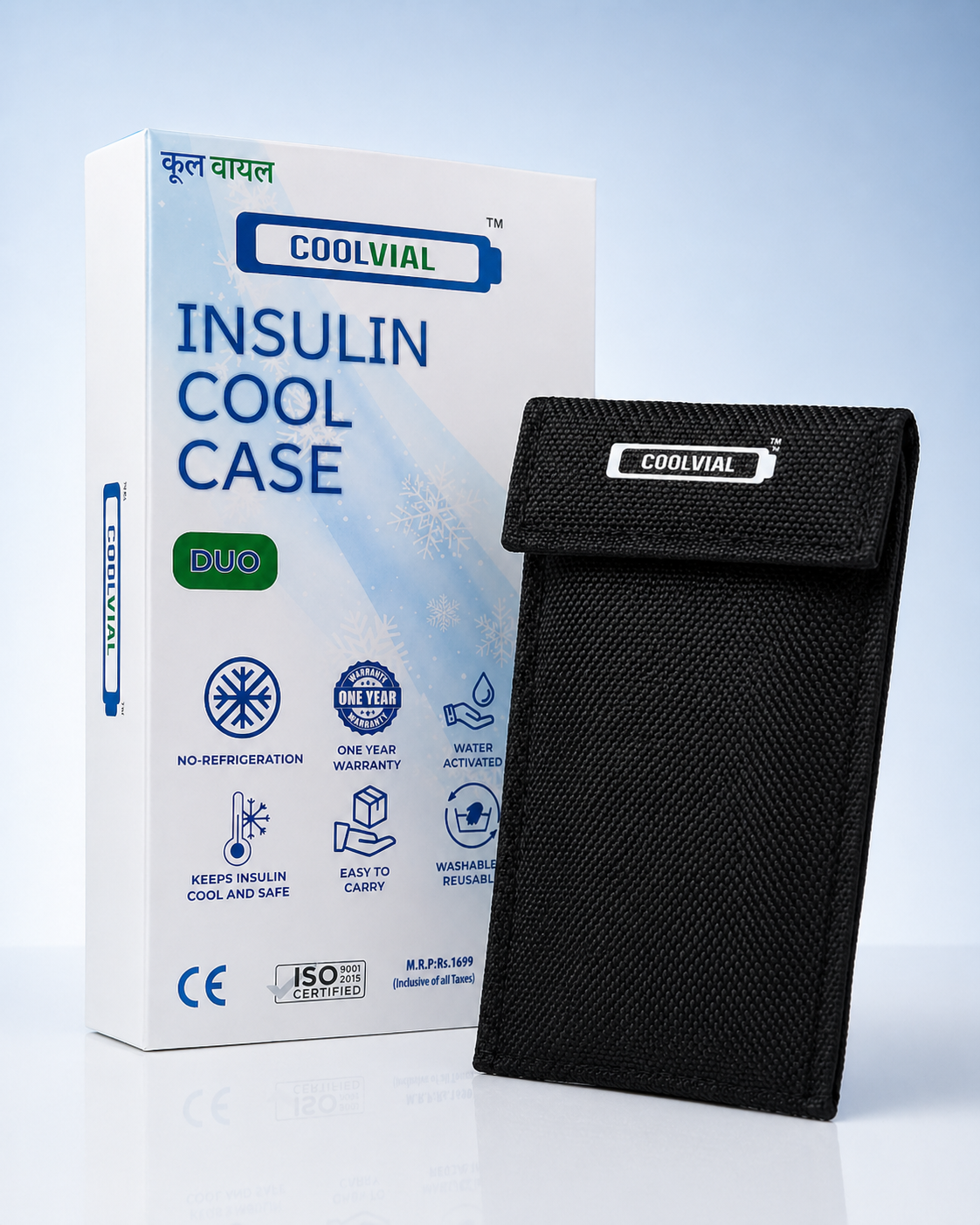
- Prepare Your Insulin Cooler: If you own an evaporative cooler like the COOLVIAL Duo, activate it immediately. Submerge the inner pouch in cold water for 60-90 seconds, then gently dry it. It will start its evaporative cooling process.
- Transfer Insulin: Carefully move your insulin pens and vials from the refrigerator to the activated cooling case. Ensure they are placed securely within the case.
- Monitor Ambient Temperature: If your home temperature exceeds 25°C (which is highly likely in Noida summers), keeping opened insulin outside a cooler is risky. The COOLVIAL Duo keeps insulin at a safe 18-26°C even in ambient temperatures of 38-40°C, providing a safe haven.
- Minimise Other Fridge Use: If you have other temperature-sensitive medications, consider moving them to the cooler as well, space permitting.
Scenario 3: Extended Outage (6-12 Hours) – Relying on Evaporative Cooling
Extended power cuts, typical during severe summer load shedding in April-June or prolonged monsoon faults, demand robust solutions. This is where active evaporative cooling becomes your primary strategy.
- Managing Extended Outages:
- Trust Your Evaporative Cooler: The COOLVIAL Duo is designed to keep insulin cool for 12-16 hours on a single activation cycle. This means it can comfortably cover most 6-12 hour outages common in Noida. Its technology relies on water evaporation to draw heat away, making it highly effective even in the extreme heat of the NCR climate.
- Reactivate as Needed: If the power cut extends beyond 12 hours, you can reactivate your COOLVIAL Duo by re-submerging its inner pouch in water. This refreshes the cooling cycle, providing another 12-16 hours of protection.
- Consider a Backup Cooler: For those with extensive insulin supplies or who travel frequently, having a second COOLVIAL insulin cool case can provide extra peace of mind.
- Stay Hydrated: While not directly related to insulin storage, maintaining your own health is paramount. Noida’s heat can be dehydrating.
Scenario 4: Prolonged Outage (24+ Hours) – Community & Emergency Resources
A power cut lasting 24 hours or more is a serious situation, especially for diabetics. Such prolonged outages might occur due to major grid failures or localized disasters. This requires leveraging community resources and knowing your emergency contacts.
- Strategies for Prolonged Outages:
- Seek Neighbours with Backup: If your independent house in Greater Noida lacks robust backup, reach out to neighbours in your society or nearby who have powerful generators or solar inverter setups capable of running a refrigerator. Explain your critical need for insulin storage.
- Identify 24-Hour Pharmacies: Noida has several 24-hour pharmacies that can often store insulin in emergencies. Key options include:
- Apollo Pharmacy: With numerous outlets across Noida, including Sector 18 and Sector 62, many operate 24/7. Call ahead to confirm their ability to store insulin.
- MedPlus: Another chain with a strong presence, some MedPlus stores offer extended hours.
- Refer to our detailed guide: 24-Hour Pharmacies in Noida for Insulin Emergencies — Updated List for more options.
- Hospital Pharmacies: In severe emergencies, hospital pharmacies are a reliable last resort.
- Fortis Hospital Noida (Sector 62): Their pharmacy is usually open 24/7 and equipped for medication storage.
- Apollo Hospital Noida (Sector 26): Another major hospital with emergency pharmacy services.
- Max Super Speciality (Sector 19): Offers 24/7 pharmacy access for critical needs.
- Contact Your Doctor: Inform your endocrinologist or diabetologist about your situation. They might offer advice or alternative solutions.
- Emergency Travel: If all local options are exhausted and your insulin supply is at risk, consider temporarily moving to a relative’s or friend’s place in a different area with power, taking your insulin in its COOLVIAL case. Always keep essential medications and a travel-ready cooling solution prepared. For more insights on managing diabetes while traveling, you can refer to general medical guidelines, such as those provided by aviation authorities on carrying medicines: (Source: https://dgca.gov.in/pages/medical-requirements.html).
COOLVIAL Duo: Your Reliable Partner for Power Cut Survival
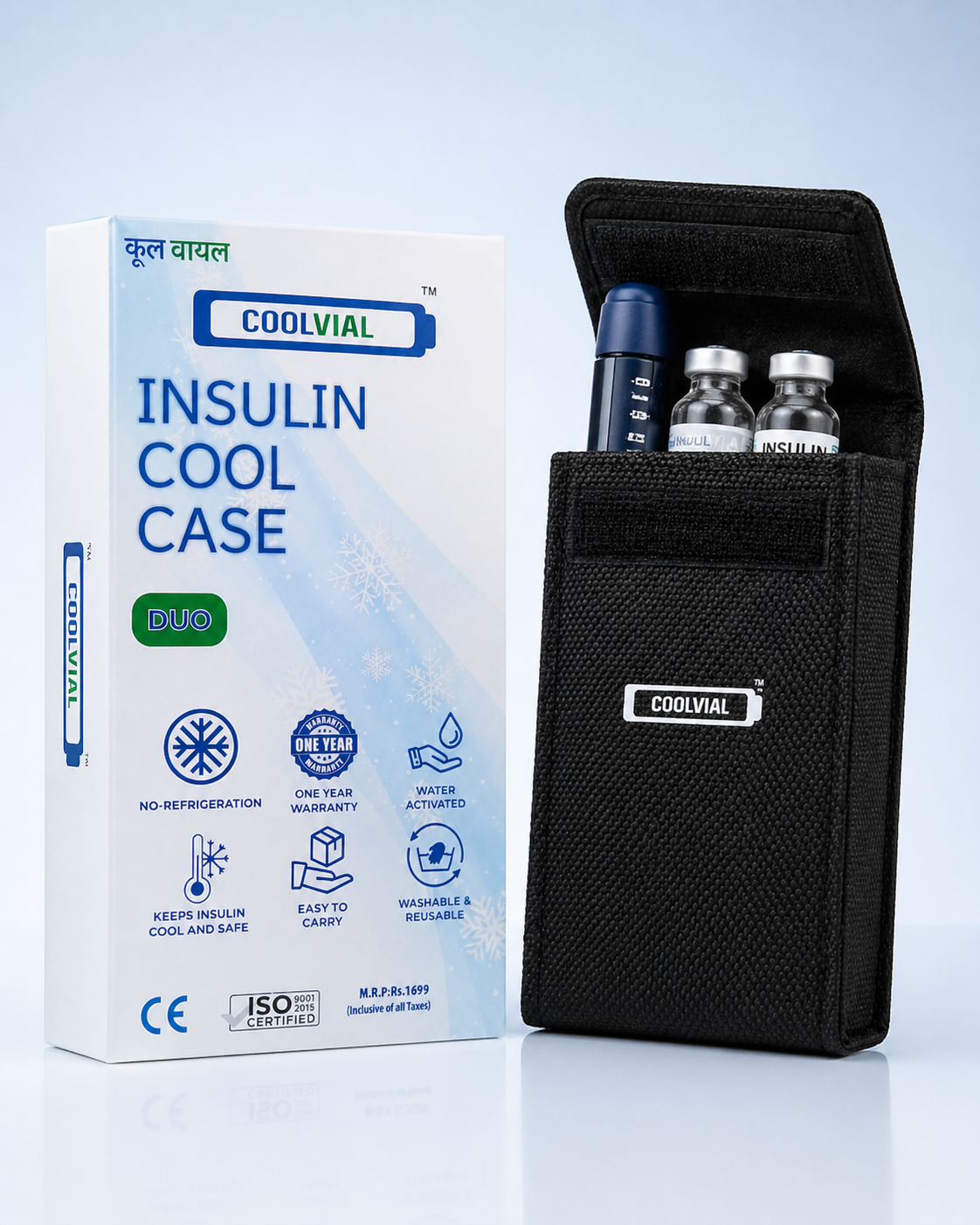
In the face of Noida’s challenging power scenario, the COOLVIAL Duo emerges as an indispensable tool for every diabetic. It’s not just a product; it’s a critical component of your personal power cut survival guide. Designed specifically for the Indian climate, it offers a simple, effective, and electricity-free solution for keeping your insulin safe.
Why COOLVIAL Duo is Ideal for Noida Diabetics:
5 Essential Power Cut Survival Tips for Diabetics in Noida — What To Do When the Grid Goes Down
COOLVIAL keeps insulin safe in India's heat. 48+ hours, no electricity needed.
- Water-Activated Evaporative Cooling: No batteries, no ice packs, no electricity needed. Simply activate with water. This makes it perfect for prolonged power cuts, unlike battery-operated coolers that eventually run out of charge.
- Optimal Temperature Range: Keeps insulin between 18-26°C for 12-16 hours, even when ambient temperatures in Noida soar to 38-40°C. This ensures your insulin retains its potency.
- Capacity for Convenience: The COOLVIAL Duo holds 2 insulin pens and 1 vial, or 3 pens, providing ample space for your daily and emergency insulin needs. This makes it more versatile than smaller single-pen cases.
- Durable and Reusable: Made for daily use and travel, it’s a long-term investment in your health security. Each activation lasts for hours, and the case itself can be reused for years.
- Made in India, for India: Understanding the local climate and specific needs, COOLVIAL is proudly designed and manufactured in India. It is also CE certified and ISO 9001:2015 compliant, ensuring quality and safety.
- Affordable Peace of Mind: Priced at just Rs 1,099 with code COOLHEAL (MRP Rs 1,699), it offers significant value compared to alternatives like FRIO (which typically retail around Rs 1,900 for similar capacity) while being a premium alternative to basic ice packs or less reliable cool bags like Outer Woods OW-12 (around Rs 999, but often without the same evaporative cooling efficiency or certifications). The 1-year warranty further assures its reliability.
Ensuring proper insulin storage is a cornerstone of effective diabetes management, especially in fluctuating temperatures and unreliable power grids. For more general advice, explore our insulin storage tips.
Beyond the Grid: Proactive Measures for Noida Diabetics
While having an immediate plan for power cuts is vital, a truly robust power cut survival guide includes proactive steps that enhance your overall preparedness. These measures are particularly relevant for Noida residents, given the city’s specific challenges.
Proactive Strategies:
- Emergency Kit Assembly:
- COOLVIAL Duo: Always kept activated or ready for activation.
- Extra Insulin Supply: Keep a small buffer (e.g., 1-2 extra pens/vials) that can be stored at room temperature for a short period if absolutely necessary.
- Blood Glucose Monitor & Strips: Ensure these are charged/have fresh batteries.
- Snacks: Non-perishable, diabetes-friendly snacks in case of prolonged outages affecting food preparation.
- Flashlight/Power Bank: For illumination and charging your phone.
- Know Your Local Resources:
- Diabetologist’s Contact: Keep your doctor’s number handy.
- Nearest 24-Hour Pharmacy: Identify at least two in your vicinity (e.g., Apollo Pharmacy in Sector 62, MedPlus in Sector 18) and know their exact location and contact numbers.
- Hospital Emergency Numbers: Save numbers for Fortis Hospital Noida (Sector 62), Apollo Hospital Noida (Sector 26), and Max Super Speciality (Sector 19).
- Community Networking:
- Society WhatsApp Groups: Participate in your housing society’s groups to get real-time updates on power situations and potentially identify neighbours who can assist.
- Local Support Groups: Connect with other diabetics in Noida. Sharing experiences and resources can be invaluable.
- Home Infrastructure Assessment:
- Inverter/Generator Check: If you live in an independent house or an older apartment building in Greater Noida, regularly check your inverter battery health or generator fuel levels.
- Consider Solar: For long-term resilience against power fluctuations and rising costs, especially in areas like Noida Extension, a solar inverter setup can be a game-changer.
- Regular Review of Storage Practices:
- Even without a power cut, ensure your refrigerator is maintaining the correct temperature (2-8°C) for your unopened insulin. Use a fridge thermometer.
- Understand the specific storage requirements for your type of insulin.
- Travel Preparedness:
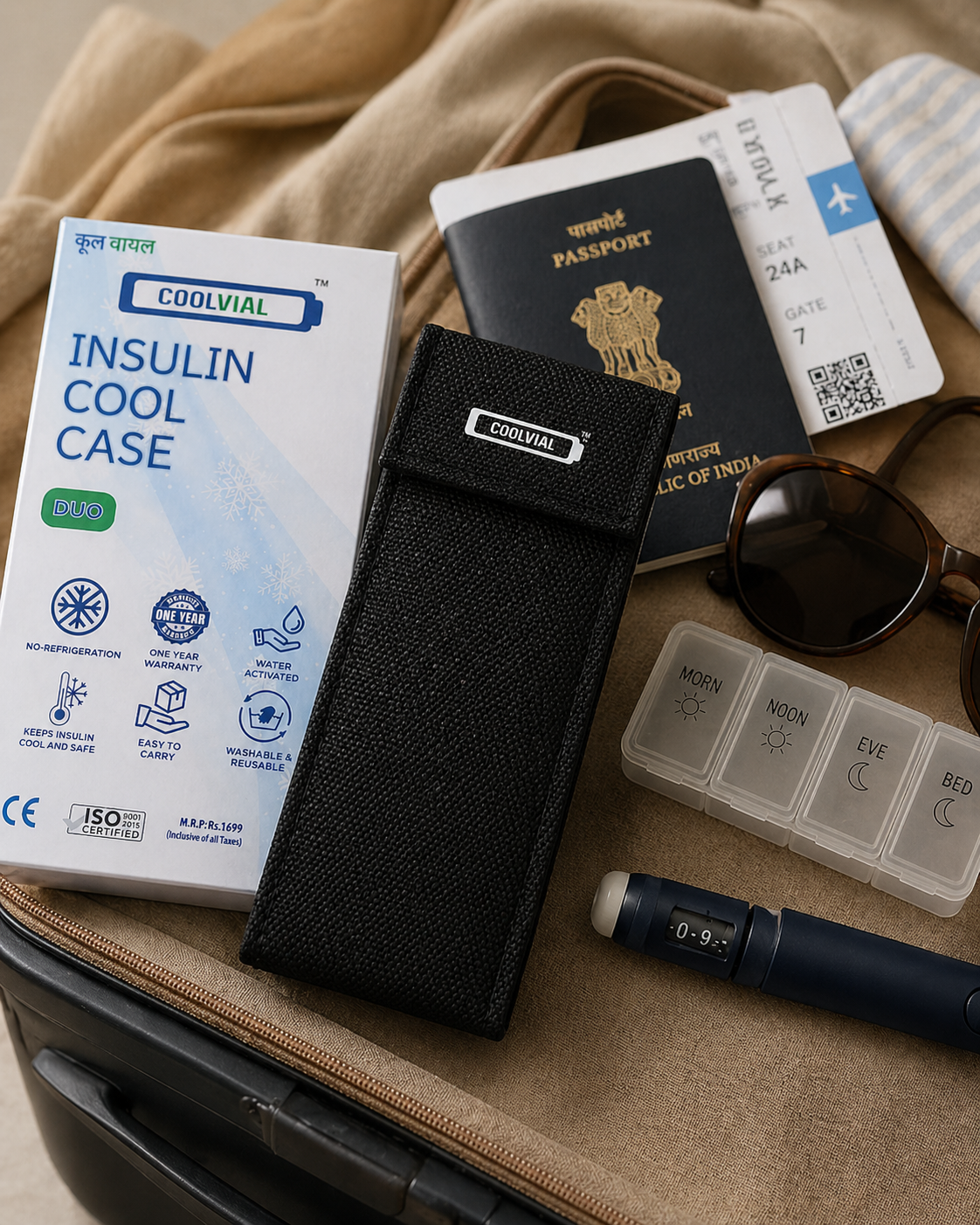
- Whether you’re traveling within India or internationally, always carry your insulin in a COOLVIAL insulin cool case. This ensures it’s protected from temperature fluctuations during transit, especially relevant for flights or long train journeys. For a comprehensive overview of managing your condition locally, refer to our Complete Diabetes Care Guide for Noida Residents — 2026 Edition.
- Also, consider reading our advice on How to Store Insulin in Noida Summer Heat — A Local’s Guide for daily challenges.
Frequently Asked Questions (FAQs)
Q: How long can insulin stay out of the fridge during a power cut? A: Unopened insulin should ideally be kept refrigerated between 2°C and 8°C. Once opened, most insulin types can be stored at room temperature (up to 25°C or 30°C, depending on the specific insulin) for up to 28 days, but this is risky in Noida’s extreme summer heat. Using an evaporative cooler like COOLVIAL Duo is recommended to maintain a safe temperature range.
Q: Can I use ice packs to keep insulin cool during an outage? A: Direct contact with ice packs can freeze insulin, rendering it ineffective. If using ice packs, ensure insulin is wrapped in a cloth or kept in a separate container to prevent direct contact and freezing. Evaporative coolers are generally safer as they maintain a stable, non-freezing temperature.
Q: What if my insulin was exposed to high temperatures during a long power cut? A: If insulin has been exposed to temperatures significantly above its recommended range (e.g., above 30°C for extended periods), its potency may be reduced. Always inspect the insulin for changes like cloudiness, discoloration, or clumping. If in doubt, it is safer to discard it and use a fresh vial or pen, and consult your doctor.
Q: Are there any specific Noida areas known for worse power cuts? A: Yes, areas like Noida Extension (west) and parts of Greater Noida (south), especially older buildings without robust generator backups, often experience more frequent and prolonged power cuts, particularly during monsoon and peak summer. Corporate/IT hubs in Sector 62/63 can also face monsoon-related outages.
Q: Should I buy extra insulin to prepare for power cuts? A: It’s wise to have a small buffer supply of insulin, perhaps one extra pen or vial, beyond what you typically use, to account for emergencies. However, ensure this extra supply can also be stored correctly. Discuss appropriate emergency supply levels with your doctor.
Q: Can I store insulin at a hospital or pharmacy during a very long power cut? A: In cases of prolonged power outages (24+ hours) where all other options are exhausted, some 24-hour pharmacies (e.g., Apollo Pharmacy, MedPlus) or hospital pharmacies (e.g., Fortis Hospital Noida, Apollo Hospital Noida) may offer temporary storage for critical medications like insulin. Always call ahead to confirm their capacity and policy.
Conclusion: Stay Prepared, Stay Safe
Living with diabetes in a city like Noida, with its dynamic climate and occasional power challenges, requires foresight and preparedness. A power cut doesn’t have to disrupt your diabetes management or compromise your health. By understanding Noida’s unique power patterns, having a clear plan for different outage durations, and investing in reliable solutions like the COOLVIAL Duo, you can ensure your insulin remains safe and effective, no matter what the grid throws at you.
Remember, proactive planning is your best defense. Equip yourself with the knowledge and tools to navigate any power situation with confidence. Your health is paramount, and with the right power cut survival guide, you’re always in control.
Order your COOLVIAL Duo today at Rs 1,099 with code COOLHEAL — coolvial.com or via WhatsApp wa.me/918766952300
Medical Disclaimer: This article is for general informational purposes only and does not constitute medical advice. Always consult your endocrinologist or diabetologist before changing insulin storage or dosing practices, or if you have any concerns about your diabetes management.
How We Researched This: Our insights are based on a comprehensive review of RSSDI guidelines, ICMR-INDIAB data on diabetes prevalence and management in India, local Noida hospital directories, and the extensive network of Apollo Pharmacy and MedPlus pharmacies. We also incorporated common queries and experiences shared by diabetics residing in the NCR region, focusing on practical, actionable advice relevant to the local climate and infrastructure.
5 Essential Power Cut Survival Tips for Diabetics in Noida — What To Do When the Grid Goes Down
Insulin at 2-8°C for 48+ hours. Trusted by 10,000+ Indian diabetics.