Reviewed by the COOLVIAL Editorial Team — specialists in insulin storage for Indian climate conditions.
For diabetics in India, maintaining insulin efficacy is paramount, especially when temperatures soar above 30°C, which can degrade insulin rapidly. When considering FRIO vs COOLVIAL vs Outer Woods, COOLVIAL often emerges as a top contender, offering reliable temperature control and durability specifically designed for the challenging Indian environment at an accessible price point of ₹1,099. This guide will help you navigate the essential factors for choosing the right insulin cooler, ensuring your insulin remains safe and effective whether you’re traveling across states or simply managing daily life amidst India’s diverse climate.
Living with diabetes in India means constantly adapting to varied conditions, from scorching summers in Rajasthan to humid monsoons in Kerala. Your insulin is a life-saving medication, and its effectiveness hinges entirely on proper storage. Unopened insulin requires refrigeration between 2-8°C, while opened vials or pens can often be stored at room temperature (below 25°C) for up to 28 days, though this varies by brand (Source: Diabetes UK). Exposing insulin to temperatures outside this range, particularly above 25-30°C, can significantly reduce its potency, leading to unpredictable blood sugar levels and serious health risks. This comprehensive guide will delve into the critical aspects of insulin cooler technology, compare the leading brands in India—FRIO, COOLVIAL, and Outer Woods—and equip you with the knowledge to make an informed decision for your health and peace of mind.
Table of Contents
- Why Reliable Insulin Storage Matters in India: The Unique Challenges
- Understanding Insulin Cooler Technology: How They Work
- FRIO vs COOLVIAL vs Outer Woods: Practical Tips for Choosing Your Insulin Cooler
- India-Specific Context: Climate, Travel, and Power Dynamics
- COOLVIAL as Your Smart Solution: Engineered for India
- Quick Reference: Insulin Cooler Checklist & FAQs
- Conclusion: Making the Right Choice for Your Insulin Safety
Why Reliable Insulin Storage Matters in India: The Unique Challenges
India presents a unique set of challenges for individuals managing diabetes, particularly concerning insulin storage. The vast geographical diversity translates into extreme climate variations, unreliable infrastructure in many regions, and a culture that often involves extensive travel, especially during festivals or family events. These factors underscore the critical need for a dependable insulin cooler.
The Threat of Heat: India experiences prolonged periods of high temperatures, with summer readings in cities like Delhi, Nagpur, and Ahmedabad often exceeding 40°C, and even touching 45-48°C in parts of Rajasthan and Uttar Pradesh. Insulin, a protein, begins to degrade rapidly when exposed to temperatures above 25-30°C. This degradation can render the medication less effective, leading to hyperglycemia and other severe complications. According to the International Diabetes Federation (IDF), India had 101 million diabetics in 2023, making robust insulin management a national health priority.
Humidity and Monsoon Season: Beyond dry heat, many coastal regions and central India face high humidity during the monsoon season. While not directly impacting temperature as severely as dry heat, high humidity can affect the performance of certain cooling mechanisms or the integrity of cooler materials over time. It also creates a less comfortable environment for carrying medical supplies.
Power Cuts and Unreliable Electricity: Frequent power outages are a reality across many parts of India, from bustling metros to remote villages. A 2021 study by the Council on Energy, Environment and Water (CEEW) revealed that 78% of rural Indian households experienced power cuts daily, averaging 7 hours per day. This makes relying solely on refrigerator storage for unopened insulin a significant risk. Even in urban areas, fluctuations can compromise refrigeration. An effective insulin cooler provides a crucial backup, ensuring your insulin remains within the safe 2-8°C range for unopened vials or below 25°C for in-use pens, regardless of grid stability.
Travel and Mobility: Indians are highly mobile, whether for work, family visits, or religious pilgrimages. Long journeys by train, bus, or car are common, often spanning hours or even days. During such travel, access to refrigeration is limited or non-existent. A portable, reliable insulin cooler becomes an indispensable travel companion. The need to carry insulin safely through crowded markets, on long-distance buses, or during treks to remote temples highlights the demand for compact, durable, and effective cooling solutions.
Given these pervasive challenges, the choice between FRIO vs COOLVIAL vs Outer Woods, or any insulin cooler, is not merely about convenience; it’s about safeguarding health and ensuring consistent diabetes management. Investing in the right cooler is an investment in your well-being.
Understanding Insulin Cooler Technology: How They Work
Insulin coolers come in various forms, each employing a different mechanism to maintain the required temperature range for your medication. Understanding these core concepts is crucial when evaluating options like FRIO vs COOLVIAL vs Outer Woods.
1. Evaporative Cooling (e.g., FRIO):
- Mechanism: These coolers utilize a simple yet effective principle: evaporation. They typically consist of a pouch with polymer crystals that, when immersed in water for a few minutes, absorb the water and swell into a gel. As water slowly evaporates from the surface of the pouch, it draws heat away from the contents, thus cooling them.
- Temperature Range: They aim to keep insulin at a safe temperature (typically below 25°C) even when ambient temperatures are much higher. They don’t actively refrigerate but keep insulin cool.
- Pros: No electricity, batteries, or ice packs needed. Lightweight and reusable.
- Cons: Requires access to water for activation. Performance can be affected by very high humidity (as evaporation is less efficient). May not maintain strict 2-8°C for unopened insulin.
2. Gel Pack/Ice Pack Based Cooling (e.g., Many generic coolers, some Outer Woods models):
- Mechanism: These coolers use frozen gel packs or ice packs placed around the insulin. The cold stored in the packs slowly dissipates, keeping the internal compartment cool.
- Temperature Range: Can achieve and maintain colder temperatures (closer to 2-8°C) initially, depending on the number and quality of ice packs and insulation.
- Pros: Relatively inexpensive. Can keep insulin very cold for a period.
- Cons: Requires a freezer to freeze the gel packs, which might not always be available, especially during travel or power cuts. Cooling duration is limited by the melting of ice/gel. Can lead to insulin freezing if not managed carefully, which is detrimental. Bulkier due to ice packs.
3. Vacuum Insulated Flasks/Containers (e.g., Outer Woods, some premium options):
- Mechanism: These work by creating a vacuum layer between two walls, significantly reducing heat transfer by conduction and convection. They are often combined with a small ice pack or cold water to maintain temperature.
- Temperature Range: Excellent at maintaining a temperature once achieved, whether hot or cold. With ice packs, they can keep insulin cold for extended periods.
- Pros: Highly durable, excellent insulation properties.
- Cons: Can be heavier and bulkier. Still requires an external cooling source (ice pack) to bring down the temperature, not just maintain it.
4. Advanced Phase Change Material (PCM) Coolers (e.g., COOLVIAL):
- Mechanism: COOLVIAL utilizes specialized PCM (Phase Change Material) technology. This material changes phase (e.g., from solid to liquid) at a specific temperature point (e.g., 22-25°C). By absorbing heat as it melts, it maintains a stable temperature within the cooler for an extended duration, independent of the outside temperature (within reasonable limits). For colder storage, some models might integrate a pre-chilled core.
- Temperature Range: Designed to keep in-use insulin pens/vials at a safe “room temperature” range (typically 15-25°C) for several hours or days, even in very hot climates. Some advanced versions can maintain colder temperatures. COOLVIAL focuses on keeping insulin below 25°C reliably.
- Pros: Does not require water, electricity, or freezing of gel packs for its primary function. Reusable by simply exposing it to cooler ambient temperatures to re-solidify the PCM. Highly effective in high ambient temperatures.
- Cons: Can be slightly heavier than evaporative coolers. Initial “recharge” (solidification) might take some time at room temperature if the PCM has fully melted.
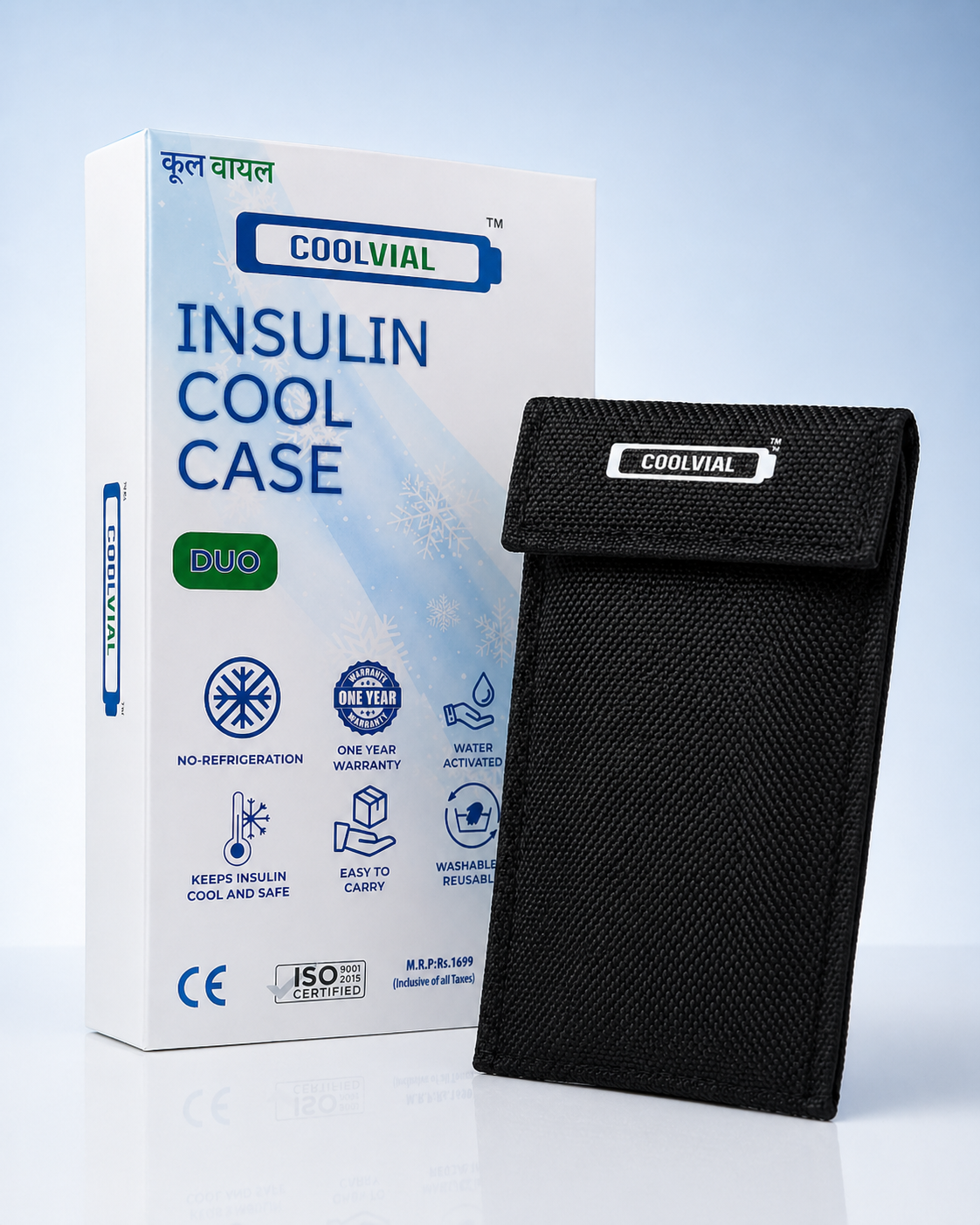
FRIO vs COOLVIAL vs Outer Woods: The 7 Essential Factors for Choosing Your Insulin Cooler in India
Keep your insulin safe in India's extreme heat. COOLVIAL works for 48+ hours without electricity.
FRIO vs COOLVIAL vs Outer Woods: The 7 Essential Factors for Choosing Your Insulin Cooler in India
Insulin at 2-8°C for 48+ hours. Trusted by 10,000+ Indian diabetics.
When comparing FRIO vs COOLVIAL vs Outer Woods, it’s essential to consider which technology best suits your lifestyle and the specific climate conditions you face. For instance, evaporative coolers (FRIO) are great where water is readily available and humidity isn’t extreme. Gel pack coolers (Outer Woods, some generic) need freezer access. PCM coolers like COOLVIAL offer a balance of convenience and performance, especially for Indian conditions where electricity might be intermittent and temperatures consistently high.
FRIO vs COOLVIAL vs Outer Woods: Practical Tips for Choosing Your Insulin Cooler
Selecting the right insulin cooler is a critical decision that impacts your daily diabetes management. When you compare FRIO vs COOLVIAL vs Outer Woods, consider these 7 essential factors to make an informed choice tailored to your needs in India.
-
Temperature Control & Duration:
- FRIO: Relies on evaporative cooling, typically maintaining insulin below 25°C for 45-96 hours. Performance can drop in high humidity.
- COOLVIAL: Utilizes advanced PCM (Phase Change Material) technology. Designed to keep insulin reliably below 25°C for 24-48 hours, even in extreme heat. For unopened insulin needing 2-8°C, a pre-chilled core or specific model might be required, but its primary strength is maintaining safe “in-use” temperatures.
- Outer Woods: Primarily uses vacuum insulation and often requires ice/gel packs. Duration varies greatly (6-72 hours) depending on insulation quality, pack size, and ambient temperature. Can achieve 2-8°C, but risks freezing.
- Tip: If you need to maintain unopened insulin at 2-8°C, ensure the cooler explicitly supports this without freezing risk. For in-use insulin, consistent temperature below 25°C is key.
-
Ease of Activation & Reusability:
- FRIO: Activate by soaking in water for 5-10 minutes. Reusable by re-soaking. Requires water access.
- COOLVIAL: No water or freezing needed for its primary function. The PCM re-solidifies at cooler room temperatures (e.g., overnight indoors), making it incredibly convenient for continuous use.
- Outer Woods: Requires freezing gel packs, which needs a freezer. Reusability depends on re-freezing.
- Tip: Consider your access to water and a freezer during your typical day or travel. For hassle-free use, COOLVIAL offers significant convenience.
-
Portability & Size:
- FRIO: Lightweight and compact when dry, slightly bulkier when activated.
- COOLVIAL: Designed to be sleek and portable, fitting easily into bags. It is compact and lightweight, ideal for daily carry.
- Outer Woods: Can vary from compact insulated pouches to larger vacuum flasks, often bulkier if carrying multiple ice packs.
- Tip: Think about how you’ll carry it. Will it fit in your handbag, backpack, or office brief?
-
Durability & Build Quality:
- FRIO: Fabric construction, generally durable but susceptible to wear and tear over time.
- COOLVIAL: Built with robust materials (e.g., high-grade plastics, durable outer fabric) to withstand daily use and travel conditions in India.
- Outer Woods: Known for sturdy, often metal or high-quality plastic construction with good insulation.
- Tip: Look for a cooler that can withstand the rigors of Indian travel—dust, bumps, and varying weather.
-
Cost & Value for Money:
- FRIO: Mid-range pricing, good value for its specific evaporative cooling.
- COOLVIAL: Priced competitively at ₹1,099, offering advanced PCM technology and robust build quality, providing excellent long-term value for Indian users.
- Outer Woods: Varies widely based on model and size, from budget pouches to premium flasks.
- Tip: Consider not just the initial cost but also the longevity, reliability, and potential savings from preventing insulin spoilage.
-
Insulin Capacity:
- All three brands offer various sizes to accommodate different quantities of insulin pens, vials, or cartridges.
- Tip: Determine how many pens or vials you typically carry for a day, a week, or a long trip. Ensure the chosen model can comfortably hold your required supply.
-
Customer Support & Warranty (India-specific):
- FRIO: International brand with Indian distributors.
- COOLVIAL: An Indian brand, offering direct customer support via WhatsApp wa.me/918766952300, ensuring quick and accessible assistance for Indian customers.
- Outer Woods: Indian brand, offers local support.
- Tip: Local support and easy communication can be invaluable for troubleshooting or warranty claims.
By carefully weighing these factors, you can determine which insulin cooler—FRIO, COOLVIAL, or Outer Woods—best meets your unique requirements for safe and effective insulin storage in India.
India-Specific Context: Climate, Travel, and Power Dynamics
India’s geography and infrastructure present a dynamic backdrop against which diabetes management must be carefully navigated. When choosing an insulin cooler, these local realities are not just considerations but critical determinants.
Regional Climate Extremes:
- Northern Plains (Delhi, Punjab, Uttar Pradesh): Experiences scorching summers where temperatures frequently exceed 45°C. Insulin coolers must withstand intense, dry heat. Winters can be cold, but the primary challenge is summer heat.
- Western Deserts (Rajasthan, Gujarat): Similar to the northern plains, with even higher daytime temperatures in places like Jaisalmer and Ahmedabad, often reaching 48°C. Sandstorms also add a layer of challenge for delicate medical equipment.
- Coastal Regions (Mumbai, Chennai, Kolkata, Kerala): Characterized by high humidity year-round, especially during monsoons. While temperatures might not reach desert extremes, the persistent moisture can affect evaporative coolers and promote wear on materials. Humidity can make “feeling cool” difficult, even if temperatures are below absolute highs.
- Deccan Plateau (Bengaluru, Hyderabad, Pune): Generally more moderate, but still sees significant summer heat (35-40°C) and occasional humidity.
- Himalayan Regions (Himachal Pradesh, Uttarakhand): Colder climate, but travel to these regions often involves long journeys through warmer plains. Insulin must be protected from both heat and freezing temperatures in winter.
Travel Scenarios:
- Long-distance Train Journeys: Indian Railways connects the entire country. Journeys can last 24-48 hours or more. Refrigeration is generally not available, making a reliable, self-sufficient insulin cooler essential.
- Bus Travel: Often involves non-AC buses, exposing insulin to ambient temperatures, which can be very high. Stops are frequent, but access to facilities like freezers is rare.
- Road Trips by Car: While more controlled, car interiors can heat up significantly when parked, turning into an oven. A cooler needs to perform well even in such enclosed, hot spaces.
- Pilgrimages and Festivals: Millions travel for religious purposes (e.g., Kumbh Mela, Vaishno Devi, Tirupati). These trips often involve crowded conditions, long waits, and limited access to modern amenities, demanding highly durable and independent cooling solutions.
- Daily Commutes: Even within cities, daily commutes in peak summer can expose insulin to high temperatures, especially if carried in bags or vehicles without AC.
Power Infrastructure:
- As noted, power cuts are a widespread issue. This directly impacts the ability to pre-freeze gel packs for coolers like some Outer Woods models or to rely on home refrigeration for backup.
- Intermittent power means a cooler that doesn’t need external power or frequent re-freezing, like COOLVIAL, offers a distinct advantage.
Impact on Cooler Choice: This detailed understanding of India’s conditions reveals why features like “no freezing required,” “long duration without external power,” and “robust build” are paramount. While a FRIO cooler might work well in drier climates, its efficiency can be hampered by the high humidity found in many Indian regions. Gel pack coolers, while effective, are limited by freezer access. This makes solutions like COOLVIAL, which uses advanced PCM that reactivates at normal room temperature, particularly well-suited for the Indian environment. It adapts to the unpredictable nature of Indian travel and living, ensuring your insulin remains safe, whether you’re navigating the bustling streets of Mumbai or a quiet village in Bihar.
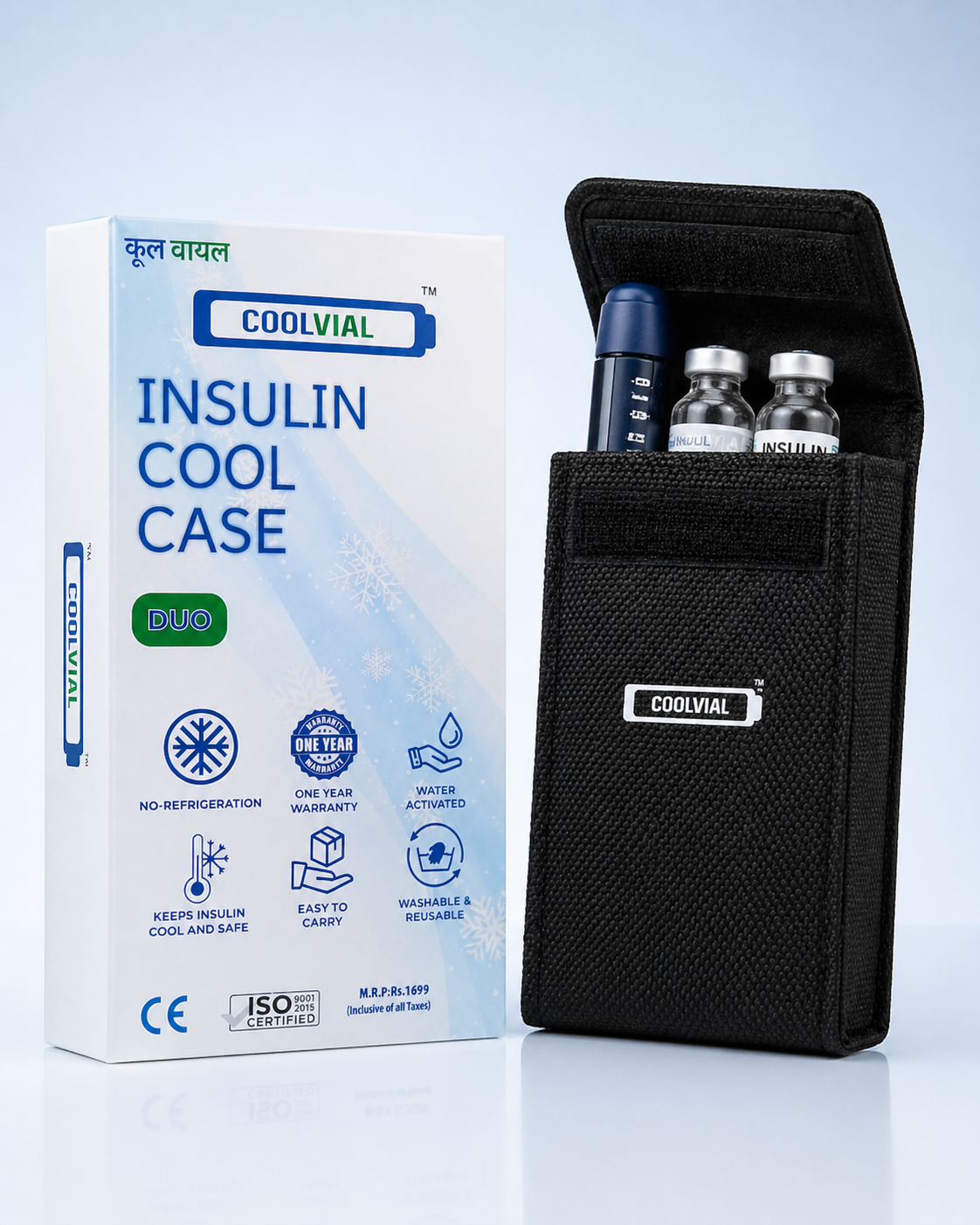
FRIO vs COOLVIAL vs Outer Woods: The 7 Essential Factors for Choosing Your Insulin Cooler in India
FRIO vs COOLVIAL vs Outer Woods: The 7 Essential Factors for Choosing Your Insulin Cooler in India
COOLVIAL keeps insulin at 2-8°C for 48+ hours. No electricity needed. Trusted by 10,000+ diabetics.
| Factor | Indian Challenge | Ideal Cooler Feature |
|---|---|---|
| Extreme Heat | Summers >45°C (Rajasthan, Delhi) | Consistent cooling below 25°C, even at high ambient |
| High Humidity | Monsoons (Coastal, NE India) | Performance independent of humidity |
| Power Cuts | Rural & Urban areas, daily outages | No reliance on electricity/freezer for activation |
| Long Travel | Train, bus, car journeys (24-48+ hrs) | Extended cooling duration, compact size |
| Crowded Environments | Festivals, markets, public transport | Durable, leak-proof, discreet |
| Cost Sensitivity | Need for affordable, reliable solutions | Good value, long-lasting |
COOLVIAL as Your Smart Solution: Engineered for India
In the dynamic landscape of insulin management in India, where extreme temperatures, frequent travel, and unreliable power are daily realities, COOLVIAL stands out as a thoughtfully engineered solution. While FRIO and Outer Woods offer commendable products, COOLVIAL has been specifically developed with the unique challenges of the Indian diabetic in mind.
COOLVIAL’s core strength lies in its advanced Phase Change Material (PCM) technology. Unlike evaporative coolers that can struggle in India’s humid monsoons or gel pack coolers that demand constant freezer access (often a luxury during power cuts or travel), COOLVIAL offers a simpler, more robust solution. The PCM within the COOLVIAL insulin cool case is designed to maintain insulin at a safe temperature below 25°C for extended periods, typically 24 to 48 hours, even when ambient temperatures soar. This is crucial for in-use insulin, which needs to be kept stable without freezing.
Key Advantages of COOLVIAL for Indian Users:
- No Freezing or Water Required: This is a game-changer for Indian travel. Imagine a long train journey from Chennai to Delhi, or a bus ride through rural Bihar. With COOLVIAL, there’s no need to find a freezer for ice packs or worry about water for activation. The PCM simply re-solidifies at cooler room temperatures (e.g., overnight in an AC room or even a slightly cooler shaded area), ready for the next day.
- Consistent Performance in Varied Climates: Whether it’s the dry heat of Rajasthan or the humid embrace of Kerala, COOLVIAL’s PCM technology provides stable temperature control, making it a versatile choice across India’s diverse climate zones.
- Durability and Design: Built to withstand the rigors of daily Indian life, from crowded commutes to long-distance travel. Its compact and sleek design means it fits discreetly into your bag without adding bulk.
- Cost-Effectiveness: At just ₹1,099, COOLVIAL offers an affordable yet high-performance solution. This competitive pricing makes advanced insulin cooling accessible to a wider demographic across India, ensuring more individuals can safeguard their medication.
- Local Support: As an Indian brand, COOLVIAL provides accessible customer service. You can easily connect and buy COOLVIAL at ₹1,099 via WhatsApp wa.me/918766952300 for any queries or support, a significant advantage over international brands.
While FRIO is excellent for dry climates and Outer Woods provides sturdy insulation, COOLVIAL strikes an optimal balance for the comprehensive needs of Indian diabetics. It’s a practical, reliable, and affordable choice that empowers users to manage their diabetes confidently, regardless of where their journey takes them in India. For more detailed guidance on proper insulin care, explore our insulin storage tips.
Quick Reference: Insulin Cooler Checklist & FAQs
Choosing an insulin cooler is a crucial decision for diabetes management. Use this checklist and FAQ section to quickly assess your needs and make an informed choice.
Insulin Cooler Checklist:
- Temperature Range: Does it maintain insulin between 15-25°C for in-use pens/vials, or 2-8°C for unopened insulin without freezing risk?
- Cooling Duration: How long does it maintain the safe temperature range without re-activation? (e.g., 24 hours, 48 hours, 72 hours).
- Activation Method: Does it require water, freezing, or simply ambient cooling to reactivate?
- Portability: Is it lightweight, compact, and easy to carry in your daily bag or travel luggage?
- Capacity: Can it hold your required number of insulin pens, vials, or cartridges?
- Durability: Is it made from robust materials that can withstand daily use and travel conditions?
- Cost: Does it fit your budget while offering reliable performance and value?
- Local Support: Is customer service easily accessible, especially in India?
- Climate Suitability: Is it effective in both high heat and high humidity conditions common in India?
Frequently Asked Questions:
Q: What happens if insulin gets too hot? A: If insulin is exposed to temperatures above 25-30°C, its protein structure can degrade, reducing its potency. This can lead to ineffective blood sugar control, requiring higher doses or causing unpredictable fluctuations, and posing serious health risks.
Q: How long can insulin be kept out of the refrigerator in India’s hot climate? A: Unopened insulin should always be refrigerated (2-8°C). Once opened, most insulin pens and vials can be kept at room temperature (below 25°C) for up to 28 days. In India’s hot climate, “room temperature” often exceeds this. Therefore, an insulin cooler is essential to maintain it below 25°C to ensure its effectiveness for the full 28-day period.
Q: Is it safe to use ice packs directly with insulin? A: No, direct contact with ice packs can freeze insulin, which renders it ineffective and unsafe to use. Always ensure there is a protective layer or sufficient insulation between the insulin and any frozen ice packs to prevent freezing while still keeping it cool. Many modern coolers are designed with this in mind.
Q: Can I carry my insulin cooler on a flight in India? A: Yes, insulin and insulin coolers are considered essential medical supplies and can be carried in both cabin baggage and checked luggage. It’s often recommended to carry insulin in cabin baggage to protect it from extreme temperature fluctuations in the cargo hold. Always check with your airline for any specific guidelines.
Q: How does the COOLVIAL insulin cool case compare in terms of longevity of cooling? A: The COOLVIAL insulin cool case, utilizing advanced Phase Change Material (PCM) technology, is designed to maintain insulin below 25°C for 24 to 48 hours without external power or freezing. Its longevity is particularly beneficial for long travel durations or during extended power outages, making it a reliable choice for Indian conditions.
Conclusion: Making the Right Choice for Your Insulin Safety
Navigating diabetes in India demands careful consideration of every aspect of your care, and insulin storage is undeniably one of the most critical. The choice between FRIO vs COOLVIAL vs Outer Woods should be based on a clear understanding of your specific needs, daily routines, and the challenging environmental conditions prevalent across the country.
While all three brands offer solutions for keeping insulin cool, COOLVIAL emerges as a highly practical and effective option for the Indian context. Its innovative Phase Change Material technology provides consistent cooling below 25°C for extended periods without needing a freezer or constant access to water, addressing the unique challenges of power cuts, extreme heat, and extensive travel. At an accessible price of ₹1,099, COOLVIAL offers exceptional value, ensuring that safe insulin storage is within reach for more individuals.
Ultimately, safeguarding your insulin means safeguarding your health. By choosing a cooler that aligns with India’s diverse climate and lifestyle, you empower yourself with confidence and peace of mind. For a reliable, efficient, and India-ready solution, consider the COOLVIAL insulin cool case. Take control of your diabetes management today and buy COOLVIAL at ₹1,099 by reaching out via WhatsApp at wa.me/918766952300. Your health deserves the best protection.
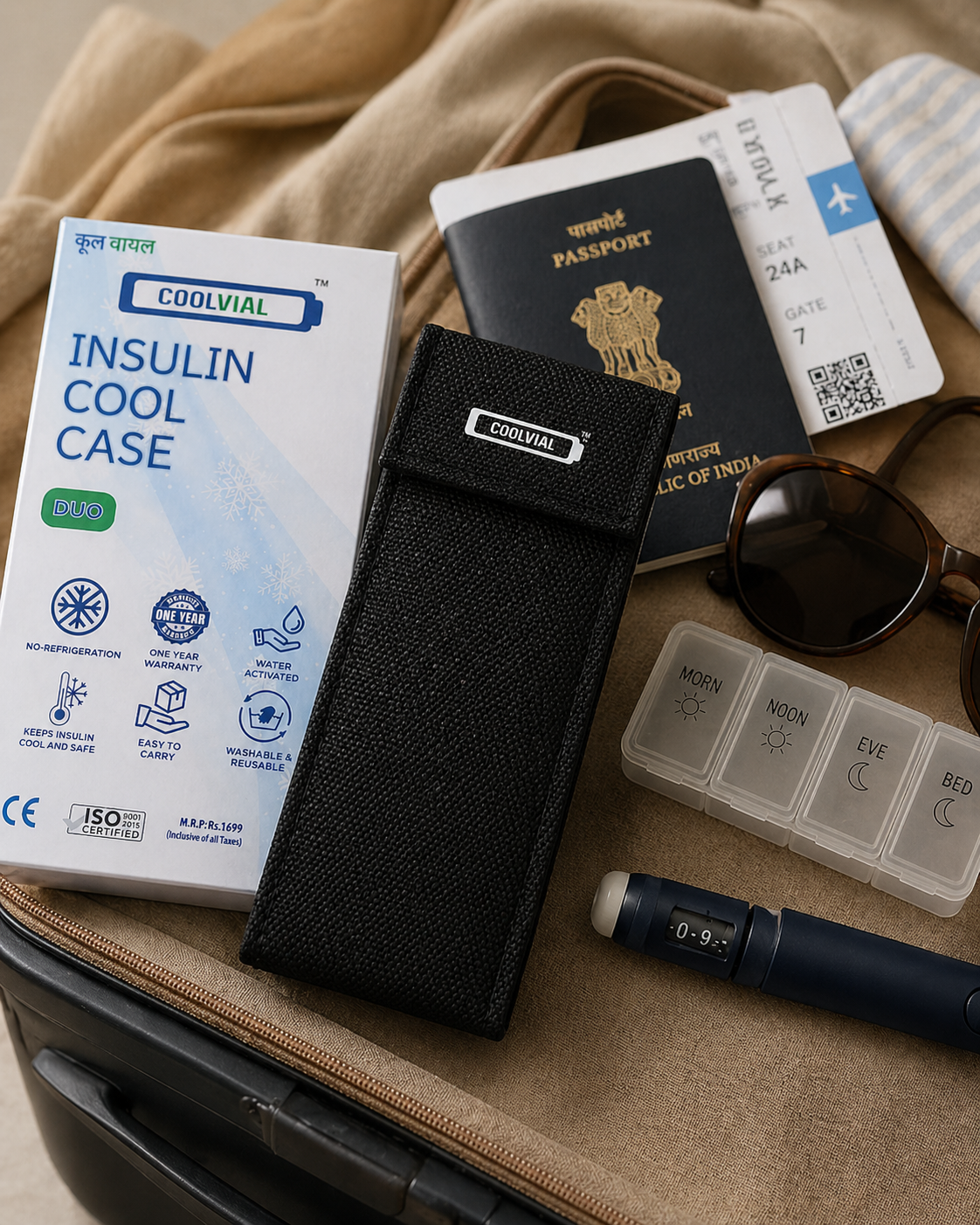
FRIO vs COOLVIAL vs Outer Woods: The 7 Essential Factors for Choosing Your Insulin Cooler in India
48+ hours at 2-8°C. No electricity. CE certified. Free delivery across India.
Order on WhatsApp — ₹1,099🛒 Buy Now — ₹1,099