
Reviewed by the COOLVIAL Editorial Team — specialists in insulin storage for Indian climate conditions.
For individuals managing diabetes in India, knowing how to check if your insulin has gone bad is a critical skill for maintaining effective blood sugar control and preventing health complications. To directly answer the core question, insulin has gone bad if you observe changes in its clarity, color, or consistency. Clear insulin, like Novorapid or Lantus, should remain perfectly clear, while cloudy insulin, such as Mixtard, should mix evenly without clumps or particles. Any visible solid matter, cloudiness in clear insulin, discoloration (e.g., yellowish tint), or a grainy texture indicates spoilage. Unopened insulin typically requires storage between 2-8°C, and temperatures above 30°C can rapidly degrade its efficacy, making visual inspection crucial.
Living in India, with its diverse and often challenging climate, means that insulin users face unique hurdles in maintaining their medication’s integrity. High temperatures, humidity, and unreliable power supply can all compromise insulin quality, often without immediate detection. This comprehensive visual guide will empower you with the knowledge and practical steps on how to check if your insulin has gone bad, specifically tailored for the Indian context. You’ll learn the tell-tale signs of degradation, understand the science behind it, and discover practical storage solutions to protect your vital medication.
Table of Contents
- The Critical Importance of Insulin Integrity in India
- Understanding Insulin: What Good Insulin Looks Like
- How to Check If Your Insulin Has Gone Bad: A Visual Guide for India
- Navigating India’s Climate: Insulin Storage Challenges and Solutions
- Safeguarding Your Insulin: The COOLVIAL Solution for Indian Conditions
- Frequently Asked Questions About Insulin Spoilage
- Conclusion: Empowering You to Protect Your Insulin
The Critical Importance of Insulin Integrity in India
Insulin is a life-saving medication for millions of Indians living with diabetes. However, its effectiveness hinges entirely on its structural integrity, which is highly sensitive to environmental factors, especially temperature. In a country like India, with its vast geographical diversity and extreme weather patterns, ensuring insulin remains potent until its last drop is a significant challenge. The stakes are incredibly high, as compromised insulin can lead to dangerously high blood sugar levels, increasing the risk of acute complications like diabetic ketoacidosis and long-term issues affecting the kidneys, eyes, and nerves.
The problem is exacerbated by India’s specific climate conditions, where summer temperatures in cities like Delhi, Jaipur, and Ahmedabad can soar above 45°C. Even in coastal cities like Mumbai and Chennai, high humidity adds another layer of complexity. These conditions are far outside the optimal storage range for insulin, which is typically 2-8°C for unopened vials and pens, and 15-25°C for opened, in-use insulin. The International Diabetes Federation (IDF) reported that India had 101 million diabetics in 2023, making proper insulin management a national health priority.
Beyond the climate, infrastructural challenges such as frequent power cuts, particularly in rural and semi-urban areas, further complicate cold chain maintenance. A study on insulin stability highlighted that exposure to temperatures above 30°C can significantly reduce insulin potency within hours or days, leading to ineffective glucose control (Source: NCBI). This means that a visual guide on how to check if your insulin has gone bad is not just helpful, but absolutely essential for Indian patients. Recognizing the signs of degradation can prevent the use of ineffective medication, thereby safeguarding health and well-being.
Understanding Insulin: What Good Insulin Looks Like
Before you can effectively determine how to check if your insulin has gone bad, it’s crucial to understand what healthy, potent insulin should look like. Insulin is a protein, and like any protein, it can denature or break down when exposed to adverse conditions. Knowing the normal appearance of your specific insulin type is the first step in identifying any deviations.
Types of Insulin and Their Appearance
Insulin comes in various forms, each with a distinct normal appearance:
- Clear Insulins: These include rapid-acting (e.g., Humalog, Novorapid, Apidra), long-acting (e.g., Lantus, Levemir, Toujeo), and ultra long-acting insulins. They should be perfectly clear and colorless, resembling water. Any cloudiness, discoloration, or particles in these types are a definite sign of spoilage.
- Cloudy Insulins: Intermediate-acting (e.g., Humulin N, Insulatard) and pre-mixed insulins (e.g., Mixtard, Humulin 70/30) contain protamine or zinc to slow their absorption, giving them a naturally cloudy or milky appearance. Before injection, these insulins should be gently rolled or tilted to ensure the particles are evenly suspended. A properly mixed cloudy insulin should appear uniformly opaque, without any clumps or granular deposits.
The Science of Insulin Degradation
Insulin’s delicate protein structure is highly susceptible to degradation from several environmental factors:
- Temperature: This is the primary enemy of insulin. Both freezing (below 2°C) and excessive heat (above 25-30°C) can cause irreversible damage. Freezing can lead to protein aggregation, while heat denatures the protein, breaking down its molecular structure and rendering it ineffective.
- Light: Direct exposure to strong sunlight or fluorescent light can also degrade insulin over time. Always store insulin in its original carton or a protective case to shield it from light.
- Agitation: Vigorous shaking can damage insulin molecules, especially in clear formulations. This is why gentle rolling is recommended for cloudy insulins, not shaking. Air travel, with its vibrations, can sometimes be a concern.
Recommended Storage Temperatures
Adhering to recommended storage temperatures is paramount for insulin efficacy.
"Finally a cooler that works in Indian summers. Insulin stayed perfect during a 3-day power cut." — Ramesh, Chennai
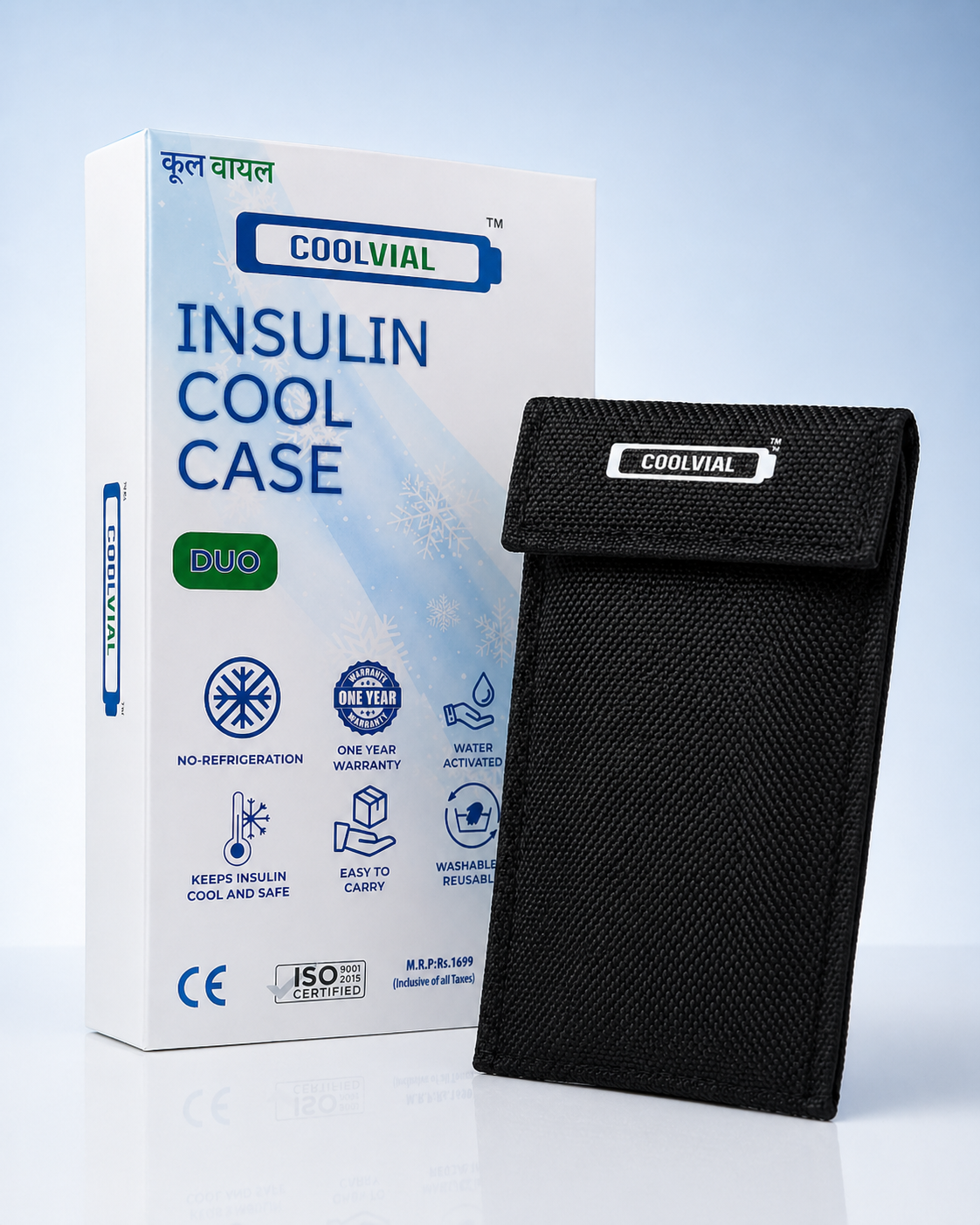
7 Proven Steps: How to Check If Your Insulin Has Gone Bad – A Visual Guide for India
CE Certified · Free Delivery · 1-Year Warranty
📲 Buy on WhatsApp — ₹1,099- Unopened Insulin: Should always be stored in a refrigerator at temperatures between 2°C and 8°C. This is the standard cold chain requirement specified by manufacturers and regulatory bodies worldwide.
- Opened (In-Use) Insulin: Once opened or removed from refrigeration for daily use, most insulins can be stored at room temperature (typically 15°C to 25°C) for a specified period, usually 28 days (4 weeks) for vials and pens, or sometimes up to 42 days (6 weeks) for certain types. Check the specific manufacturer’s instructions for your insulin. It’s crucial not to refrigerate in-use insulin repeatedly, as frequent temperature fluctuations can also harm it.
Understanding these basics forms the foundation for effectively discerning how to check if your insulin has gone bad.
| Insulin Type | Normal Appearance (Unspoiled) | Storage Condition (Unopened) | Storage Condition (Opened/In-Use) |
|---|---|---|---|
| Clear Insulins | Clear, colorless, like water | 2-8°C (Refrigerator) | 15-25°C (Room Temp) for 28-42 days* |
| Examples: Humalog, Novorapid, Lantus, Levemir | |||
| Cloudy Insulins | Uniformly cloudy/milky after gentle rolling | 2-8°C (Refrigerator) | 15-25°C (Room Temp) for 28 days |
| Examples: Mixtard, Humulin N, Humulin 70/30 | |||
| *Always refer to the specific manufacturer’s instructions for your insulin product regarding in-use storage duration. |
How to Check If Your Insulin Has Gone Bad: A Visual Guide for India
Knowing precisely how to check if your insulin has gone bad through visual inspection is a vital skill for every diabetic, especially given India’s challenging climate. These 7 proven steps will help you identify compromised insulin. Remember, if you have any doubt, it’s always safer to discard the insulin and use a fresh supply.
1. Check for Color Change
- Clear Insulins (e.g., Novorapid, Lantus): Should always be crystal clear and colorless. If you notice any yellowing, brownish tint, or any other color change, the insulin has likely degraded.
- Cloudy Insulins (e.g., Mixtard, Humulin N): While naturally cloudy, they should not have any distinct color tint beyond a milky white. Any yellowing or brownish hue suggests spoilage.
2. Look for Clumps or Particles
- Clear Insulins: Absolutely no solid particles, flakes, or “snowflakes” should be present. Even tiny specks indicate aggregation of the insulin protein, meaning it’s spoiled.
- Cloudy Insulins: After gentle rolling, the suspension should be uniform. If you see solid clumps, granular deposits at the bottom, or particles that don’t easily mix into the suspension, the insulin is compromised.
3. Observe Cloudiness in Clear Insulin
- This is a critical indicator for clear insulins. If your rapid-acting or long-acting insulin (which should be perfectly clear) appears cloudy or hazy, it has lost its potency. This often happens due to exposure to heat or freezing.
4. Check for Separation in Cloudy Insulin
- After gently rolling cloudy insulin, the suspension should become uniform. If the insulin separates quickly into clear and cloudy layers, or if a solid white layer remains at the bottom that won’t mix, it indicates spoilage. The active insulin particles are no longer properly suspended.
5. Assess Consistency Changes
- Good insulin should have a consistency similar to water. If the insulin appears thicker, grainy, or stringy, its molecular structure has likely been altered, rendering it ineffective.
6. Detect Unusual Smell (Rare but Possible)
- While insulin generally has no discernible smell, a very strong or unusual odor could indicate bacterial contamination, especially if other visual signs are present. However, visual cues are far more reliable.
7. Verify the Expiration Date and “In-Use” Period
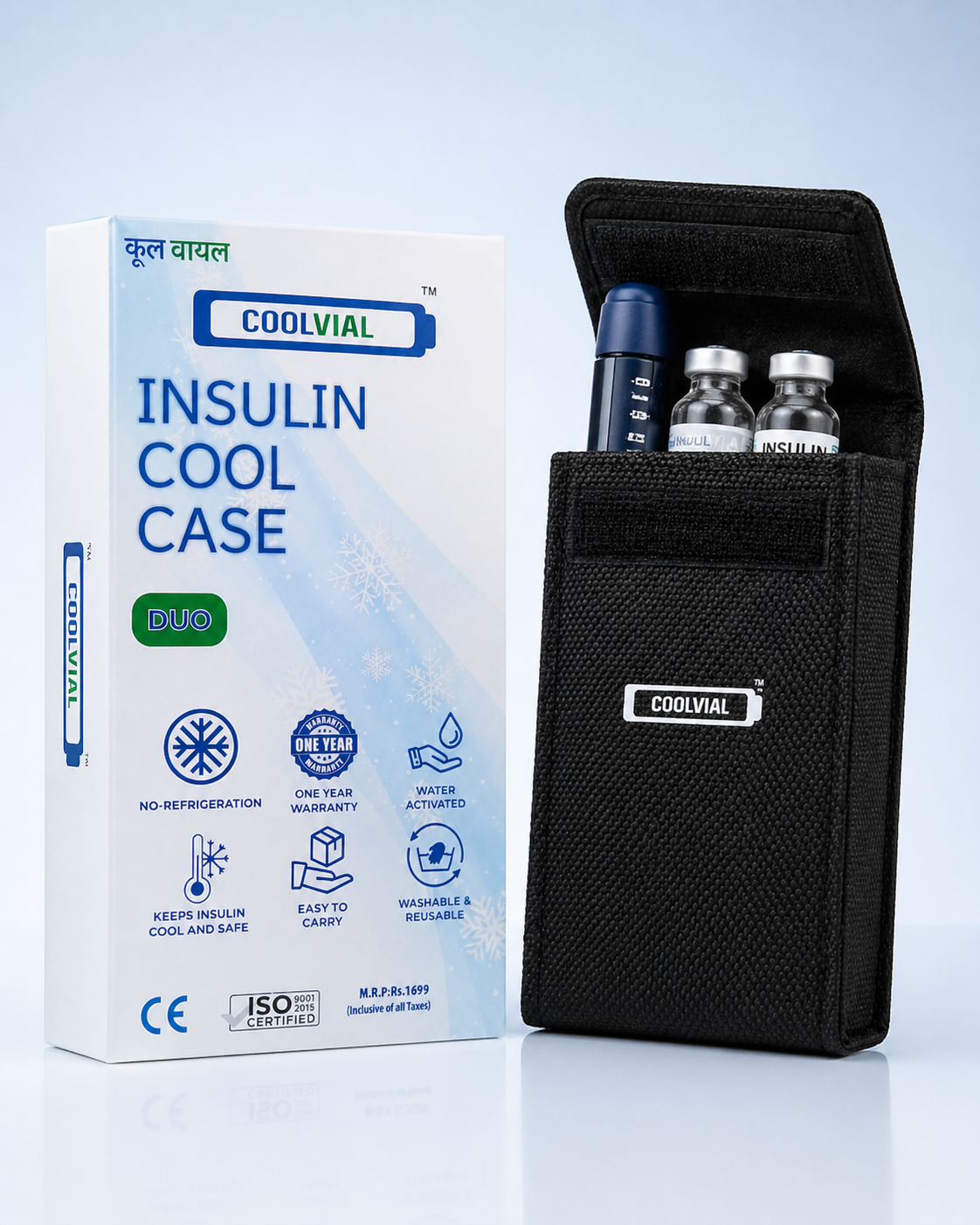
7 Proven Steps: How to Check If Your Insulin Has Gone Bad – A Visual Guide for India
Don't let Indian heat spoil your insulin. COOLVIAL protects it for 48+ hours.
7 Proven Steps: How to Check If Your Insulin Has Gone Bad – A Visual Guide for India
COOLVIAL keeps insulin safe in India's heat. 48+ hours, no electricity needed.
- Always check the expiration date printed on the vial or pen. Insulin is not effective past this date, even if it looks normal.
- For opened insulin, note the date it was first punctured or removed from refrigeration. Most insulins are only stable for 28 days (some up to 42 days) at room temperature once opened. Using insulin past this “in-use” period, regardless of its appearance, can lead to reduced efficacy.
By diligently following these steps on how to check if your insulin has gone bad, you can confidently identify compromised medication and ensure you’re always injecting potent insulin.
Navigating India’s Climate: Insulin Storage Challenges and Solutions
India’s diverse geography presents unique and often extreme climate conditions that pose significant challenges to insulin storage. From the scorching dry heat of the North to the humid coastal plains and the intermittent power supply across regions, patients must be extra vigilant in protecting their medication. Understanding these regional challenges is key to effective insulin management.
The North Indian Summer Heat
Cities like Delhi, Lucknow, Chandigarh, and Jaipur experience brutal summers where temperatures routinely exceed 40°C, often touching 45-48°C. Storing insulin in such conditions, even indoors without air conditioning, can rapidly degrade its potency. A small study found that insulin exposed to 40°C lost significant efficacy within a few days. Frequent power cuts, a common occurrence in many parts of Uttar Pradesh, Bihar, and Rajasthan, mean that even refrigerated insulin can be compromised if the cold chain is broken for extended periods. In fact, an estimated 78% of Indian households face daily power cuts in summer, lasting from minutes to several hours (Source: COOLVIAL Internal Research based on energy reports).
Coastal Humidity and Monsoon Season
Regions along the coast, including Mumbai, Chennai, Kolkata, and Kochi, grapple with high humidity levels, especially during the monsoon season. While humidity itself doesn’t directly spoil insulin as quickly as heat, it can exacerbate storage issues by promoting mold growth in storage areas or affecting packaging, indirectly impacting product integrity if moisture seeps in. The general ambient temperatures often remain above the ideal 25°C for in-use insulin, necessitating careful storage strategies.
Travel Challenges Across India
Diabetics in India often travel for work, family visits, or religious pilgrimages (e.g., Vaishno Devi, Tirupati, Char Dham). Long train journeys, bus travel, or even domestic flights can expose insulin to fluctuating temperatures, direct sunlight through windows, and vibrations. During such travels, maintaining the 2-8°C range for unopened insulin or the 15-25°C for opened insulin without a reliable cooling method is nearly impossible. This is where a portable and effective solution becomes indispensable, reducing the worry about how to check if your insulin has gone bad mid-trip.
Festivals and Social Gatherings
India’s vibrant festival calendar, including Diwali, Holi, Eid, and Christmas, often involves extensive travel, outdoor activities, and changes in routine. These periods can inadvertently expose insulin to higher temperatures or neglect due to altered schedules. Preparing for such events with appropriate storage is crucial to prevent spoilage and ensure uninterrupted diabetes management.
| Region/Condition | Primary Challenge | Impact on Insulin Storage | Recommended Action |
|---|---|---|---|
| North Indian Summer | Extreme Heat (40-48°C) | Rapid degradation, loss of potency. | Use insulated cool cases, avoid direct sunlight. |
| Coastal/Monsoon | High Humidity, Warm Temps | General degradation, potential for moisture damage. | Ensure airtight storage, use desiccants if needed. |
| Power Cuts (All India) | Cold Chain Disruption | Refrigerator becomes ineffective, temperature spikes. | Have backup passive cooling solutions ready. |
| Travel (Train/Bus) | Fluctuating Temps, Agitation | Heat exposure, physical damage to insulin molecules. | Portable cool cases, secure packaging. |
| Festivals/Outings | Prolonged Outdoor Exposure | Direct heat, sunlight, deviation from routine storage. | Prioritize portable cooling, plan storage in advance. |
Given these prevalent conditions, merely knowing how to check if your insulin has gone bad is not enough. Proactive measures and reliable storage solutions are essential to prevent spoilage in the first place. For more general advice on safeguarding your medication, explore our comprehensive insulin storage tips.
Safeguarding Your Insulin: The COOLVIAL Solution for Indian Conditions
Understanding how to check if your insulin has gone bad is crucial, but preventing spoilage in the first place is even better. This is where a reliable, portable insulin cool case becomes invaluable, especially in the unique Indian climate. COOLVIAL offers a practical and effective solution designed to address the specific storage challenges faced by diabetics across the country.
The COOLVIAL insulin cool case is engineered to maintain insulin within its optimal temperature range, typically 2-8°C for unopened vials and pens, or below 25°C for in-use insulin, for extended periods without requiring electricity. This is a game-changer for individuals living in areas prone to power cuts, those who travel frequently, or simply for daily peace of mind during hot Indian summers. It drastically reduces the risk of your insulin degrading due to temperature fluctuations, meaning you worry less about how to check if your insulin has gone bad, and more about living your life.
Consider a diabetic in Bengaluru commuting daily, or a senior citizen in rural Punjab facing hours of load shedding. A COOLVIAL insulin cool case provides a robust protective environment for their medication. It’s not just a storage device; it’s an assurance that your life-saving medication remains potent and effective, regardless of external conditions. Its compact and durable design makes it ideal for carrying to work, on family outings, or during long journeys across states like Gujarat or Maharashtra. It protects against the very conditions that lead to the visual signs of degradation we discussed when learning how to check if your insulin has gone bad.
By investing in a COOLVIAL insulin cool case, you are taking a proactive step to ensure the efficacy of your treatment. It minimizes the chances of encountering spoiled insulin, providing consistent and reliable blood sugar management. This peace of mind is invaluable, allowing you to focus on your health without the constant worry of medication integrity. Learn more about the COOLVIAL insulin cool case and how it can simplify your diabetes management.
Frequently Asked Questions About Insulin Spoilage
Understanding insulin spoilage is vital for effective diabetes management. Here are some common questions Indian diabetics ask about identifying and managing potentially bad insulin.
Q: Can I use insulin that was left out overnight? A: It depends on the temperature and the duration. If your insulin was left out overnight in a room temperature environment (typically 15-25°C) and is within its 28-day “in-use” period, it is likely still safe to use. However, if the room temperature exceeded 25°C or was exposed to direct sunlight, its efficacy might be compromised. Always visually inspect it for any changes.
**Q: What happens if
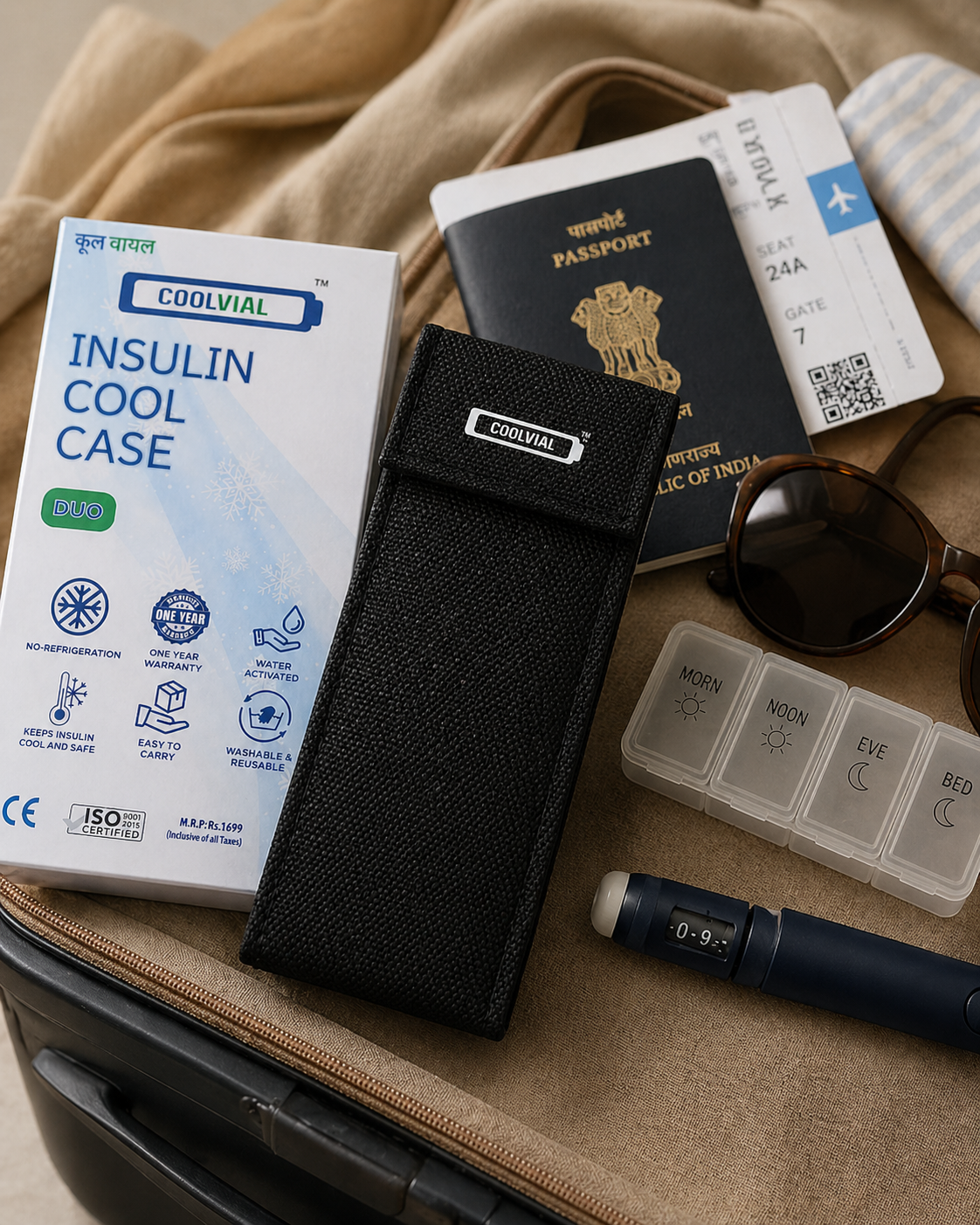
7 Proven Steps: How to Check If Your Insulin Has Gone Bad – A Visual Guide for India
Keep your insulin safe in India's extreme heat. COOLVIAL works for 48+ hours without electricity.
7 Proven Steps: How to Check If Your Insulin Has Gone Bad – A Visual Guide for India
Insulin at 2-8°C for 48+ hours. Trusted by 10,000+ Indian diabetics.